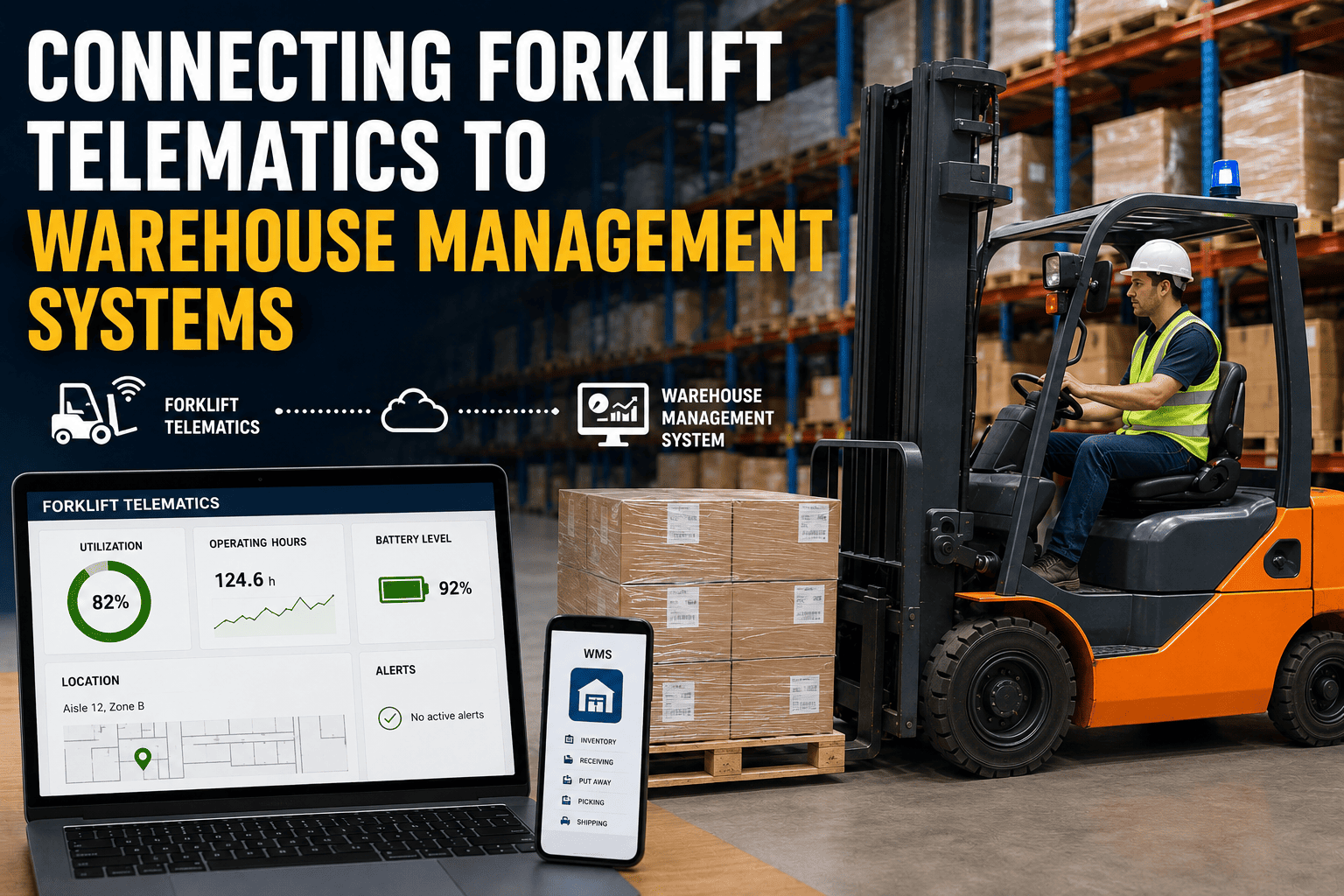
Most warehouses run two separate brains. The forklift telematics system knows exactly where every truck is, how fast it's moving, and when it's sitting idle. The warehouse management system knows exactly which pallet needs to move next, which dock is waiting, and which order is late. The problem is these two brains rarely talk to each other. Dispatchers still radio drivers by guesswork, forklifts drive empty miles between tasks, and managers pull two separate reports just to understand one shift. Connecting forklift telematics to your WMS closes that gap, turning two disconnected data streams into one system that tells your forklifts exactly what to do next.
Connecting forklift telematics to a warehouse management system lets the WMS assign tasks based on real-time forklift location, load status, and operator availability instead of fixed routes or radio calls. Warehouses that integrate the two typically cut empty travel distance by 15 to 20 percent, reduce idle time significantly, and process orders faster because the right truck gets the right task automatically.
What Connecting Telematics And WMS Actually Means
Forklift telematics on its own tells you where a truck is and how it's being driven. A warehouse management system on its own tells you what needs to move and where it should go. Neither one, alone, closes the loop. Integration means the two systems exchange live data continuously: the WMS pushes task and order information to the telematics platform, and the telematics platform pushes forklift location, availability, and load status back to the WMS. The result is a dispatch engine that assigns work based on what is actually happening on the floor right now, not a fixed route printed at the start of a shift.
Data That Flows From The WMS To The Forklift
Order priority, pick lists, putaway locations, and dock appointment times move from the WMS into the telematics system so every truck knows the next task without a radio call.
Data That Flows From The Forklift Back To The WMS
Real-time position, travel speed, load weight, battery charge, and operator identification move back into the WMS so the software always knows which truck is actually free to take the next job.
Why This Two-Way Exchange Matters
A one-way connection only tells you what happened after the fact. A two-way connection lets the WMS make a better dispatch decision the moment a truck becomes available, which is where most of the time savings come from.
FleetRabbit links live forklift telematics data with your warehouse management system so dispatch happens automatically, not over the radio. Sign up free and connect your first vehicles today, or book a demo to see the integration on your own floor plan.
Before And After: What Changes On The Floor
- Dispatchers radio drivers manually for every task
- Drivers pick the nearest job, not the most urgent one
- Idle trucks sit unnoticed while orders wait
- Two separate reports needed to see what happened
- Congestion builds in the same aisles at peak hours
- WMS assigns tasks directly to the nearest free truck
- High-priority orders are routed first, automatically
- Idle time is flagged the moment it happens
- One dashboard shows fleet activity and order flow together
- Traffic is spread across aisles based on live positions
Where The Payoff Shows Up First
Warehouses that connect telematics to their WMS usually see the earliest results in three places: how far forklifts travel per task, how long trucks sit idle between jobs, and how quickly orders move from pick to dock. These are the numbers that are hardest to see manually and easiest to fix once the systems are talking to each other.
| Operational Area | Typical Impact | Why It Improves |
|---|---|---|
| Travel Distance | 15 to 20 percent reduction | GPS location combined with warehouse layout mapping shortens the path between tasks |
| Idle Time | Noticeably lower per shift | Idle trucks are flagged and reassigned instead of sitting unused between tasks |
| Order Turnaround | Faster pick-to-dock time | Tasks route straight to the nearest available truck instead of waiting for a radio call |
| Aisle Congestion | Fewer bottlenecks at peak hours | Live location data spreads traffic instead of funneling every truck through the same zone |
| Reporting Time | Single dashboard, less manual work | Fleet and order data sit in one place instead of two systems that need to be compared by hand |
Getting The Integration Right
Start With The Data You Already Have
Most telematics systems and most WMS platforms already track more data than they share. The first step is mapping which fields matter most, usually location, task status, load capacity, and priority, rather than trying to connect everything at once.
Give Every Operator A Digital Identity
Tasks can only route to the right truck if the system knows which operator is on which forklift. Operator login through the telematics device keeps task assignment and safety checks tied to the right person for every shift.
Test On One Zone Before Going Fleet-Wide
Running the integration on a single aisle or dock zone first makes it easy to compare performance against the old process before rolling it out across the whole warehouse.
A Common Mistake To Avoid
Turning on every alert and data field at once overwhelms dispatchers and operators. Start with the handful of signals that change a dispatch decision, then expand from there.
FleetRabbit brings live forklift data and warehouse task data into a single view, so dispatch, safety, and reporting all work from the same source of truth. Try it with your own fleet through a free sign-up, or walk through your specific setup with our team by booking a 30-minute demo.
Bringing It Together
Forklift telematics and a warehouse management system are already collecting most of the data a warehouse needs to run more efficiently. The gap is not more data, it's the missing connection between the two. Once location, task, and order information flow in both directions, dispatch stops being a guessing game and starts being a decision the software makes for you in real time. That single change is usually where the fastest, most visible improvement in a warehouse's daily flow comes from.
FleetRabbit connects your forklift telematics directly to your warehouse management system, so every truck knows its next task the moment it's free. See the difference on your own floor with a free trial or a live walkthrough.