Contractor vehicles on a manufacturing plant floor operate in the most dangerous intersection in industrial logistics — where your safety rules meet someone else's training, where your OSHA obligations meet a subcontractor's compliance record, and where your production schedule meets a third-party driver who has never run your facility before. A contract material handler unfamiliar with your pedestrian crossing zones, a subcontractor forklift operator whose certification you've never verified, a third-party delivery vehicle that shouldn't be in Bay 12 during first-shift changeover — these aren't hypothetical risks. They're the daily operational reality of every manufacturing facility that runs contractor fleets alongside permanent staff, and they represent some of the highest-consequence safety and liability exposures in industrial operations. Book a demo to see how Fleet Rabbit manages contractor fleet coordination across manufacturing facilities.
Fleet Rabbit's contractor fleet coordination platform gives manufacturing plant managers, safety directors, and operations leaders a unified intelligence layer for every vehicle operating on their facility floor — owned, leased, or contracted. Real-time location visibility, contractor operator certification tracking, safety zone enforcement, and incident documentation work identically for a permanent employee on a reach truck and a subcontractor on a third-party delivery vehicle. This guide gives manufacturing operations leaders a complete framework for building safe, compliant, and coordinated contractor fleet programs across their facilities. Start your free trial today.
Key Insight
OSHA's General Duty Clause holds manufacturing facility operators responsible for the safety of contractor personnel working on their premises — regardless of employment status. A subcontractor forklift operator injured due to inadequate site coordination is a recordable incident for your facility. Fleet Rabbit's unified contractor fleet visibility platform closes the accountability gap between your safety obligations and your contractor's compliance record.
The Four Contractor Fleet Coordination Failure Points
Most manufacturing facilities that experience contractor vehicle incidents share the same structural gaps — not in their permanent fleet management, which is often well-governed, but in the specific coordination breakdown points that occur when third-party vehicles enter their operational environment. Fleet Rabbit is designed to close all four failure points simultaneously.
01
No Pre-Entry Certification Verification
The Gap
Contractor operators arrive at the facility gate with certifications that exist on paper at their employer's office — not verified, not current, and not accessible to your safety team. OSHA 29 CFR 1910.178 applies to every powered industrial truck operator on your premises, regardless of who employs them.
Fleet Rabbit Fix
Contractor operator certifications are uploaded and verified in Fleet Rabbit before site access is granted. Expiry alerts fire at 30, 60, and 90 days. No valid certification, no vehicle authorisation.
02
Zero Visibility Once Contractors Are on Site
The Gap
Contractor vehicles disappear into the facility and reappear at shift end — with no location data, no zone compliance record, and no evidence of where they operated during their time on your floor. Near-misses go unrecorded. Zone violations go undetected.
Fleet Rabbit Fix
Fleet Rabbit's RTLS tracking covers contractor vehicles identically to permanent fleet assets — live position, zone entries, dwell time, and speed events logged continuously from site entry to exit.
03
Separate Safety Rules for Contractors vs. Permanent Staff
The Gap
Speed limits, pedestrian zone rules, and restricted area protocols that your permanent fleet follows automatically through telematics enforcement are communicated to contractor operators verbally during a 10-minute site induction — and never verified again.
Fleet Rabbit Fix
Safety zone geofences, speed thresholds, and restricted area rules apply identically to all vehicles on Fleet Rabbit — permanent and contractor. Violations trigger the same alert workflow regardless of who's driving.
04
Incident Documentation Gaps at Contractor Handover
The Gap
When a contractor vehicle is involved in an incident, the documentation trail — operator certification at time of incident, zone location, speed data, prior warning history — exists in fragmented systems across your facility and the contractor's company. OSHA investigators and insurers require your records.
Fleet Rabbit Fix
Every contractor vehicle event — location, speed, zone compliance, certification status, and prior coaching — is archived in Fleet Rabbit's compliance vault under your facility's record, instantly retrievable for OSHA inspections or incident investigations.
Contractor Fleet Coordination: Facility Type Risk Profile
The contractor fleet coordination challenge varies significantly by manufacturing environment — not just in scale, but in the specific risk vectors that third-party vehicles introduce. Understanding your facility's risk profile is the first step to deploying the right coordination controls.
Automotive Assembly
JIT delivery vehicles in active production zones
OSHA General Duty + OEM supplier compliance
Real-time zone enforcement
+44% incident reduction
Food & Beverage Processing
Sanitation & maintenance contractors near production
FSMA + OSHA 1910.178 combined obligation
Certification + zone separation
+38% compliance rate
Pharmaceutical / GMP
Unqualified contractor access to cleanroom zones
FDA 21 CFR + GMP vehicle access protocols
Access control + audit trail
100% audit-ready records
E-Commerce / Distribution
High-volume carrier vehicles in pick-zone overlap
OSHA pedestrian-vehicle separation
Traffic routing + real-time tracking
+51% zone compliance
Heavy Industrial / Steel
Heavy contractor transport in high-impact zones
OSHA 1910.178 + insurance requirements
Impact detection + certification
+36% liability reduction
Contractor Fleet Visibility
Every vehicle on your floor. One dashboard.
Fleet Rabbit covers contractor and permanent fleet vehicles with identical real-time tracking, zone enforcement, and compliance documentation — so your safety obligations don't stop at the edge of your own payroll.
Fleet Rabbit Platform Capabilities for Contractor Fleet Coordination
Fleet Rabbit's contractor fleet coordination platform is purpose-built for the operational complexity of managing third-party vehicles alongside permanent fleet assets in manufacturing environments. Each capability directly addresses a documented risk category in contractor fleet management — from pre-entry certification verification through post-incident documentation.
Pre-Entry
Capability A
Contractor Operator Certification Portal
Before a contractor operator touches a powered industrial truck on your manufacturing floor, Fleet Rabbit's pre-entry certification portal verifies OSHA 1910.178 forklift certifications, site-specific induction completions, equipment class qualifications, and medical clearances against your facility's access requirements. Certifications are uploaded digitally by the contractor company, reviewed and approved by your safety team, and stored in Fleet Rabbit's compliance archive. Automated expiry alerts at 30, 60, and 90 days ensure no lapsed certification goes undetected — and no uncertified contractor operator ever receives vehicle authorisation on your floor.
OSHA 1910.178 verification
Digital cert upload
Expiry alerts
Equipment class matching
Live Tracking
Capability B
Unified Contractor & Permanent Fleet Location Dashboard
Fleet Rabbit's RTLS-powered plant floor dashboard displays contractor and permanent fleet vehicles on the same live map — updated in under two seconds, accurate to sub-metre precision in UWB-equipped facilities. Plant supervisors see every vehicle's current position, assigned zone, and real-time compliance status simultaneously. When a contractor vehicle enters a restricted zone, approaches a pedestrian crossing above safe speed, or dwells in a production area beyond its authorised window, the alert reaches the supervisor's dashboard and mobile device before the situation escalates. No separate contractor tracking system, no blind spots, no radio check-ins.
Sub-metre RTLS accuracy
Unified live map
Real-time zone alerts
Speed monitoring
Safety
Capability C
Contractor Safety Scorecard & Behaviour Monitoring
Fleet Rabbit generates per-contractor and per-operator safety scorecards using the same telematics-driven methodology applied to your permanent fleet — hard impacts, speed threshold breaches, restricted zone entries, and pedestrian proximity events scored continuously across every shift. Contractor company fleet managers receive their own scorecard access, creating shared accountability for vehicle behavior on your floor. When a contractor's safety score falls below facility threshold, Fleet Rabbit's automated coaching workflow triggers a documented corrective action — assigned to your site safety team and the contractor's manager simultaneously, with timestamped acknowledgment required from both parties.
Per-contractor scorecards
Shared accountability access
Auto coaching triggers
Dual acknowledgment
Compliance
Capability D
Site Traffic Management & Zone Access Control
Manufacturing facilities running mixed permanent and contractor fleets face their highest pedestrian-vehicle conflict risk at zone boundaries — loading docks where delivery vehicles meet reach trucks, production corridors where contractor maintenance vehicles cross active pick paths, and shift changeover windows when contractor entry coincides with peak pedestrian movement. Fleet Rabbit's geofence-based zone access control assigns permitted zones to every contractor vehicle profile, enforces time-window restrictions automatically, and generates real-time alerts when contractor vehicles operate outside their authorised parameters — giving site traffic managers the control layer that verbal inductions and painted floor lines can never provide.
Geofence zone assignment
Time-window restrictions
Pedestrian conflict alerts
Dock traffic management
Documentation
Capability E
Contractor Incident Documentation & Compliance Archive
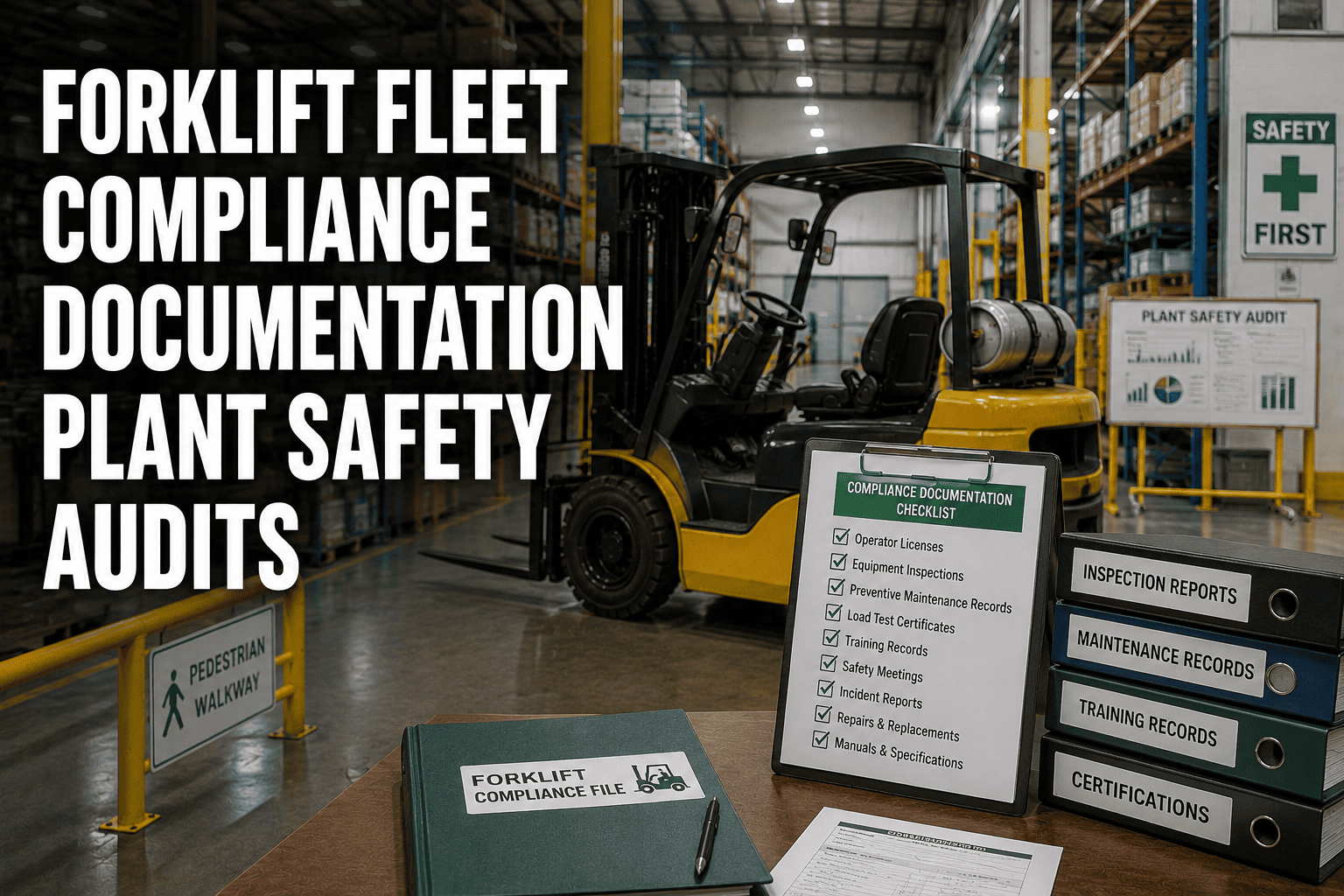
Every contractor vehicle event on your manufacturing floor — location history, speed profile, zone compliance record, certification status at time of incident, impact detection data, and prior coaching history — is stored in Fleet Rabbit's compliance archive under your facility's record. When an OSHA investigator, insurance adjuster, or legal team requests documentation for a contractor vehicle incident, your safety team exports the complete evidence package in minutes — demonstrating the site coordination protocols, safety enforcement actions, and certification verification processes that protect your facility from liability claims and regulatory citations arising from contractor vehicle operations on your floor.
Complete event archive
Instant audit export
OSHA-ready records
Insurance documentation
Frequently Asked Questions: Contractor Fleet Coordination in Manufacturing
Is a manufacturing facility legally responsible for contractor vehicle incidents on their premises under OSHA?
Yes — and this is the most consequential legal reality in contractor fleet management. OSHA's General Duty Clause (Section 5(a)(1) of the OSH Act) requires employers to provide a workplace free from recognised hazards for all workers on their premises, including contractor personnel. When a contractor vehicle incident occurs on your manufacturing floor, OSHA investigators assess whether your facility had adequate coordination protocols in place — including site induction records, zone enforcement evidence, certification verification documentation, and incident response procedures. Facilities that cannot produce this documentation face willful or serious violation citations regardless of whether the contractor operator was your employee. Fleet Rabbit's contractor coordination platform is specifically designed to generate the documented safety management evidence that protects your facility's regulatory standing.
How does Fleet Rabbit handle contractor vehicles that arrive with their own telematics systems already installed?
Fleet Rabbit supports two integration approaches for contractor vehicles arriving with existing telematics: API-based data integration that pulls location and event data from the contractor's telematics provider into Fleet Rabbit's unified dashboard, and supplementary device deployment where Fleet Rabbit's compact onboard units are fitted to contractor vehicles for the duration of their site engagement. For short-term contractor engagements, Fleet Rabbit's portable device kits can be assigned to contractor vehicles at the facility gate and retrieved at departure — giving your plant the same real-time visibility and compliance recording for contractor assets as for permanent fleet vehicles, without requiring contractors to modify their own telematics configurations. Your Fleet Rabbit implementation specialist will assess the optimal integration approach for your contractor fleet mix during onboarding.
Can contractor companies access Fleet Rabbit data about their own operators and vehicles on our site?
Yes — Fleet Rabbit's contractor portal access model allows you to grant contractor company managers a restricted dashboard view showing their own operators' safety scorecards, certification status, zone compliance records, and coaching histories on your facility. This shared visibility model creates a joint accountability structure: your safety team manages the facility-level compliance programme, while contractor managers maintain oversight of their operators' performance on your floor without accessing permanent fleet data or other contractors' records. Shared scorecards have proven highly effective at driving contractor operator behaviour improvement — operators and their managers who can see their own performance data in real time modify behaviour faster than those subject only to facility-side enforcement actions.
How quickly can Fleet Rabbit be deployed for contractor fleet coordination in an existing manufacturing facility?
Fleet Rabbit's manufacturing contractor coordination deployment follows a structured three-phase onboarding process: facility floor mapping and zone configuration in week one, permanent fleet device installation and dashboard setup in week two, and contractor portal configuration and operator registration in week three. Most manufacturing facilities achieve full contractor fleet visibility within 21 days of deployment commencement — including live location tracking for all contractor vehicle types, certification verification workflows, and zone enforcement geofencing calibrated to their specific plant layout. Facilities with existing Fleet Rabbit permanent fleet deployments can extend contractor coordination capabilities within 5–7 days through a configuration-only process that requires no additional hardware installation on permanent fleet assets.
Complete Contractor Fleet Coordination — From Gate Entry to Shift End
Fleet Rabbit gives manufacturing facilities the unified visibility, certification management, safety enforcement, and compliance documentation to run contractor fleet programmes with the same rigour as permanent fleet operations — protecting workers, reducing liability, and satisfying OSHA accountability obligations across every vehicle on your floor.
Pre-entry certification verification for every contractor operator
Real-time unified tracking for contractor and permanent fleet
Identical safety scoring for contractors and permanent operators
Geofence zone access control and site traffic management
OSHA-ready incident documentation and compliance archive
Shared contractor portal access for joint accountability
May 28, 2026
By Taylor
All Posts