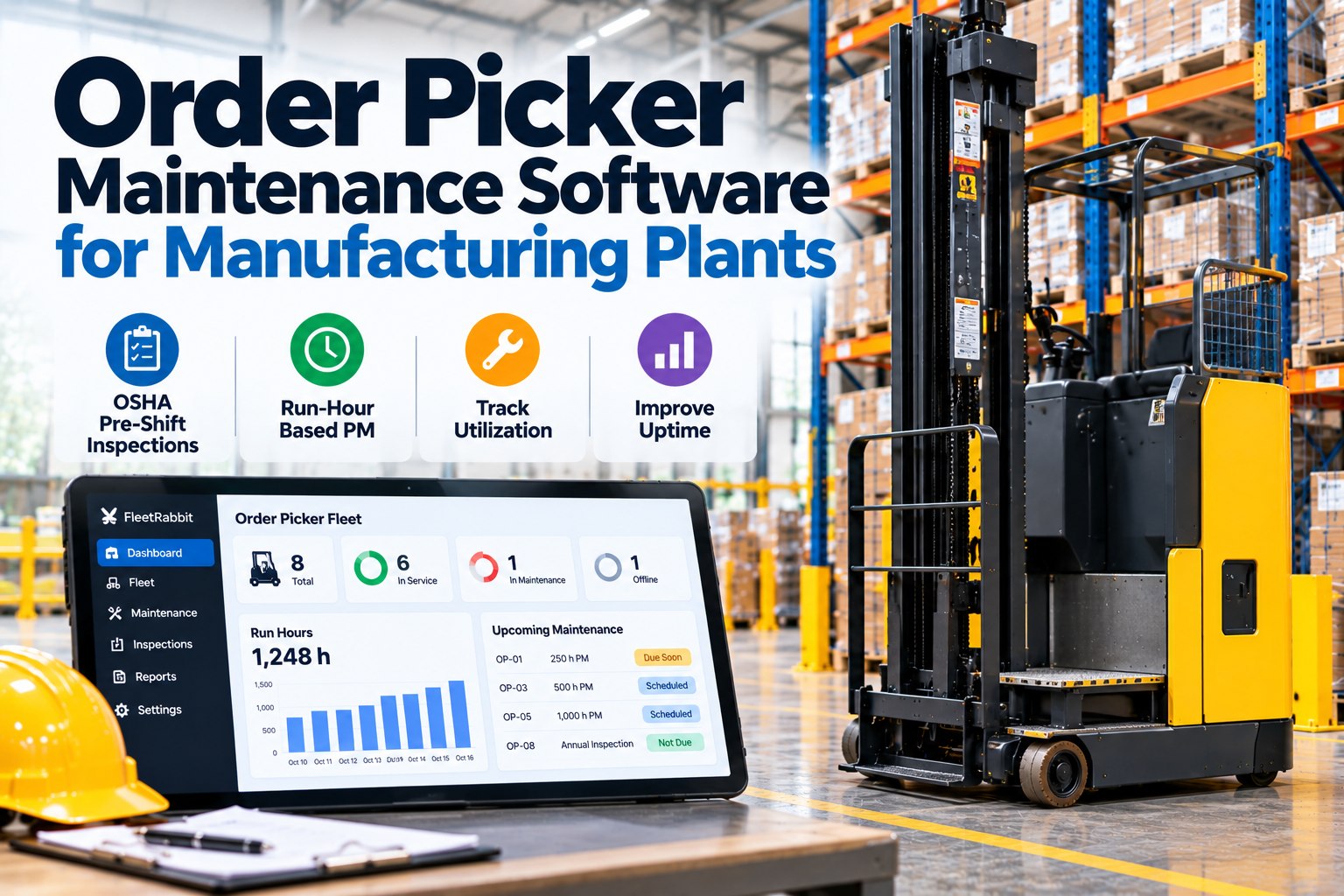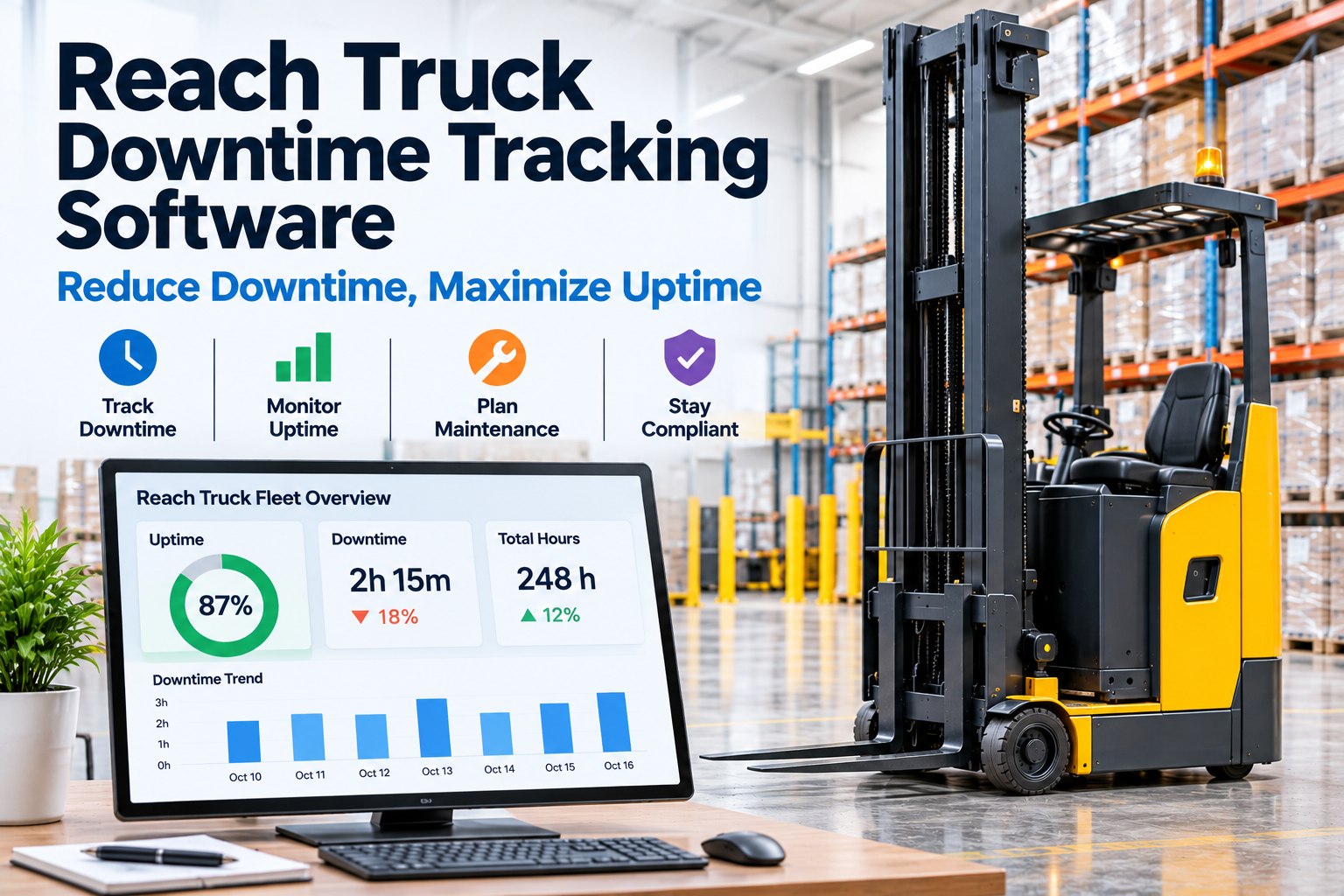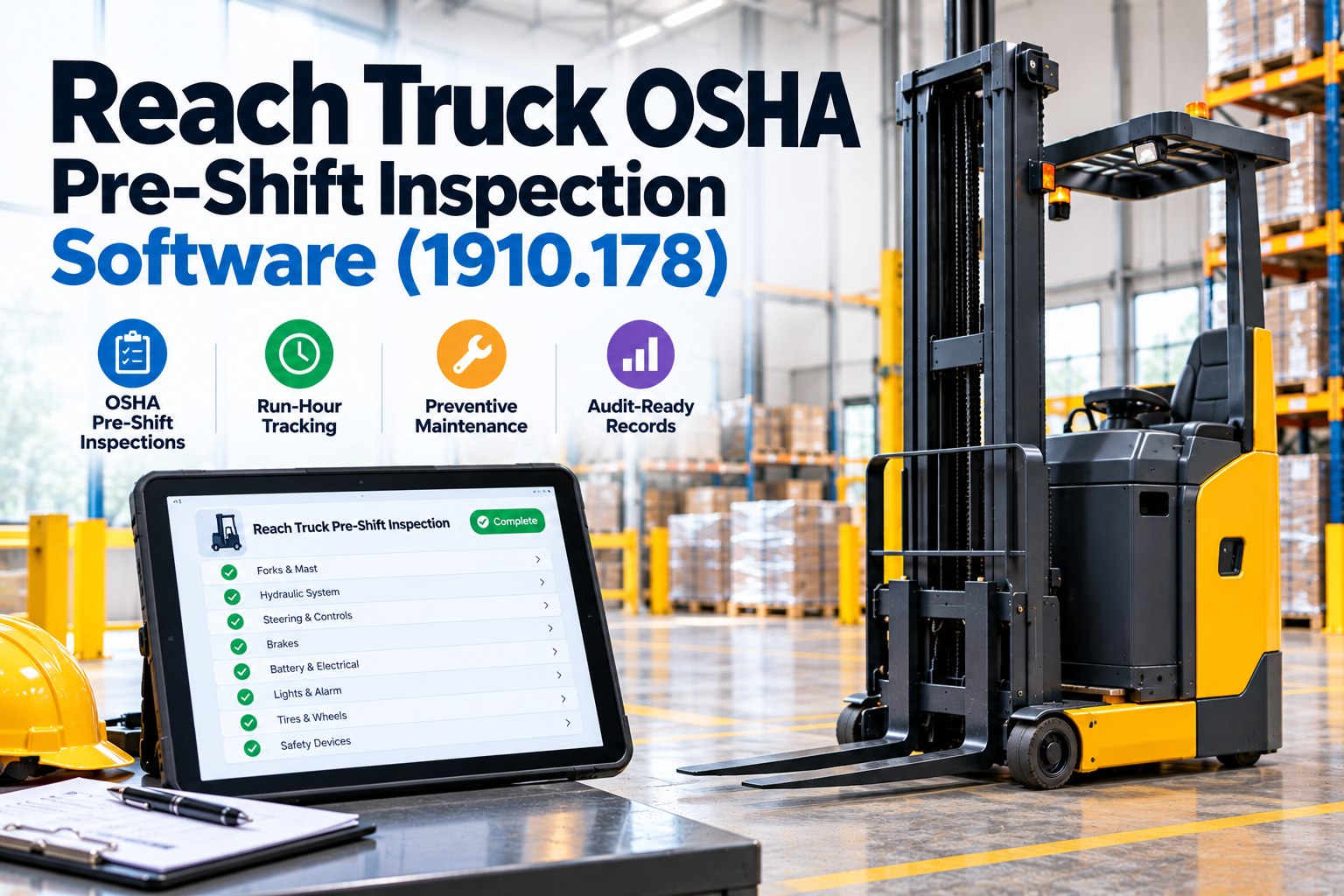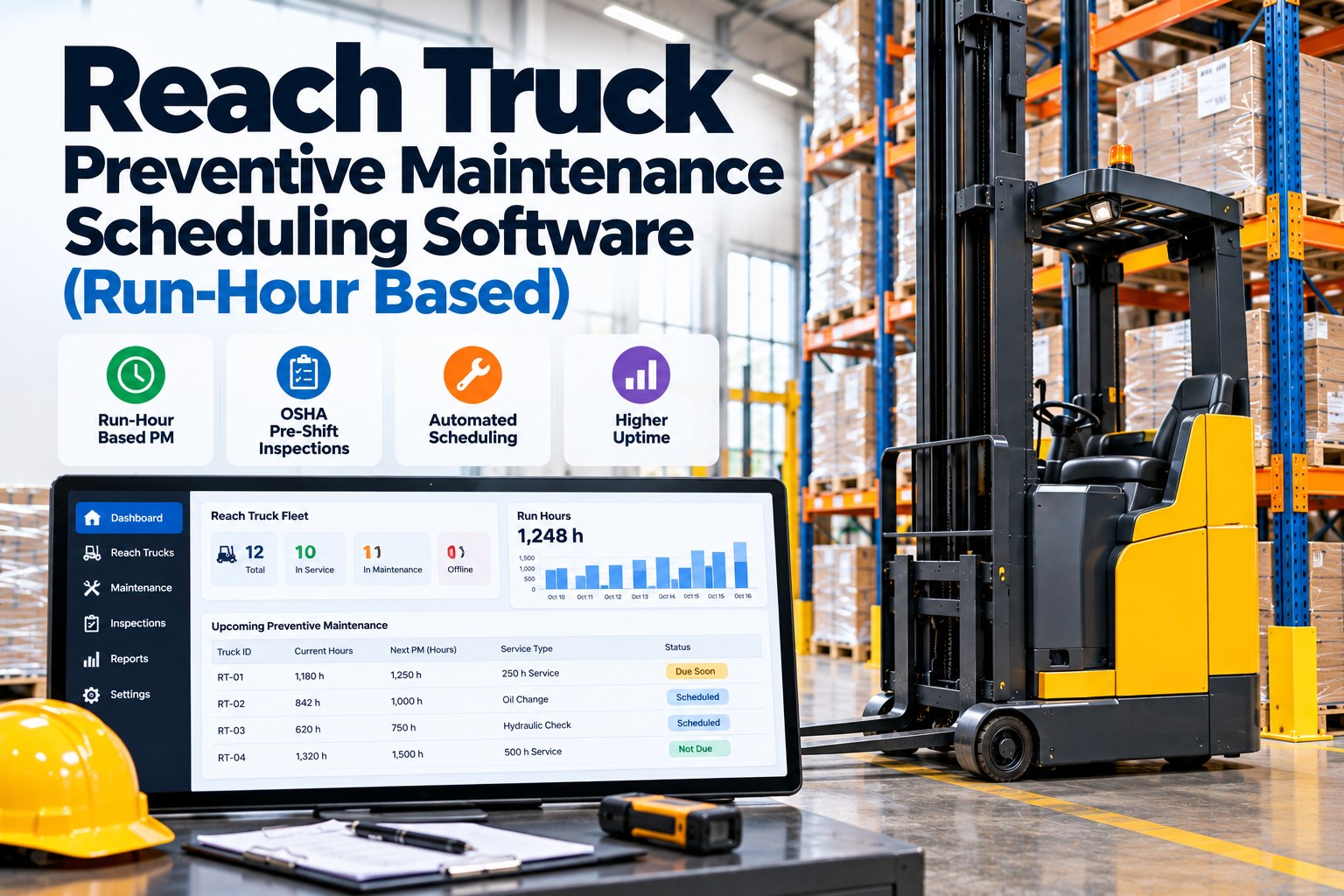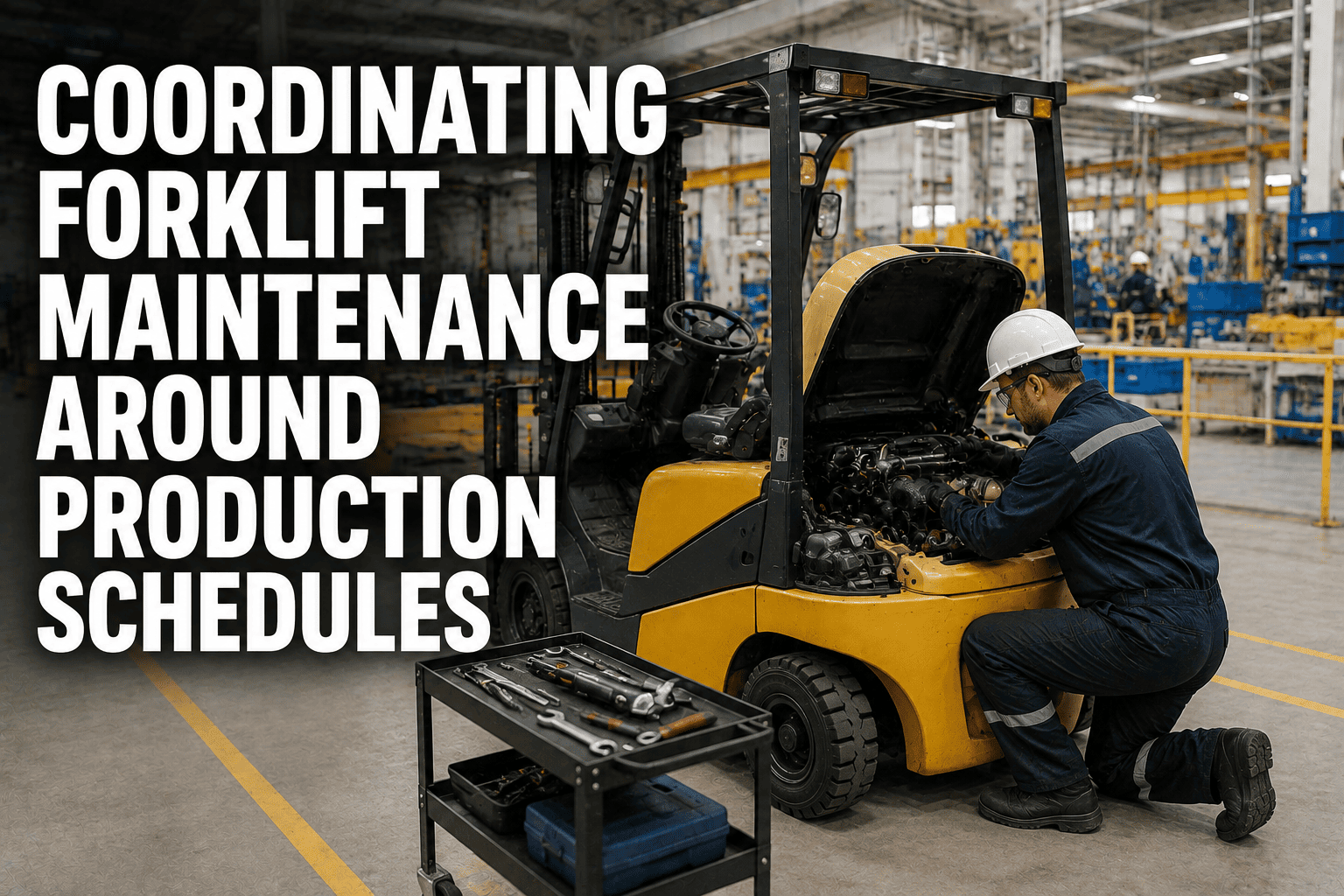
In a manufacturing plant, the battle between production and maintenance is constant. Pulling a forklift for service during a critical run hurts productivity, but skipping it hurts even more when the truck breaks down mid-shift. Coordinating forklift maintenance around production schedules is essential for balancing uptime and reliability. FleetRabbit times maintenance to the production schedule so plants never have to choose. You can sign up for FleetRabbit to modernize your plant, or book a demo to see our platform.
Over 40 percent of forklift preventative maintenance is skipped because it conflicts with production runs. This leads to a 60 percent increase in unplanned, catastrophic breakdowns. Coordinating PMs with production schedules using telematics reduces unplanned downtime by 50 percent, ensuring maintenance happens without stalling the line.
The True Cost of Poor Maintenance Timing
The true cost of poor maintenance timing extends far beyond the immediate repair bill. When a manufacturing plant fails to coordinate forklift PMs with production schedules, the financial damage ripples across the entire operation. The immediate loss of the truck is obvious, but secondary costs often exceed the primary impact. An unplanned breakdown during a critical run stalls the line, backing up outbound shipments and delaying the entire plant's output. Furthermore, emergency repair labor costs 2 to 3 times more than scheduled maintenance because technicians must drop planned work to respond to the crisis.
Why Production and Maintenance Clash
Production and maintenance clash because their primary metrics are fundamentally opposed. Production is measured by uptime and output, meaning they want every truck moving 24/7. Maintenance is measured by reliability and safety, meaning they need to pull trucks offline for preventative care. Without a centralized system that connects these two departments, they are forced into a verbal war. A mechanic says the truck needs an oil change, a production supervisor says they need it for 4 more hours, and the PM gets skipped. This disconnect is the root cause of catastrophic equipment failure.
The Danger of Skipping PMs
The danger of skipping PMs is that it creates a false sense of efficiency. A production supervisor thinks they saved 30 minutes by delaying an oil change, but they have actually guaranteed a 4-hour outage next week. Skipping PMs accelerates wear on critical components, turning a 50-dollar filter replacement into a 5,000 dollar transmission failure. When the truck finally breaks down, it will happen during the busiest shift, causing maximum damage. To stop this, you can sign up for FleetRabbit to modernize your plant, or book a demo to see our platform.
FleetRabbit aligns your forklift PMs with your production schedule, ensuring maintenance happens during planned downtime. Stop skipping critical services and stalling your line. Start your free trial today to balance uptime and reliability.
Strategies for Schedule Coordination
Effective schedule coordination requires a shift from reactive pleading to data-driven planning. The first strategy is linking PM intervals to plant downtime. A system that tracks engine hours can schedule a PM to trigger during a shift change or a planned line halt. The second strategy is automated maintenance scheduling. The system should automatically generate work orders based on actual usage, not a calendar date. The third strategy is shared dashboards, ensuring production and maintenance teams look at the same data and plan together.
| Maintenance Trigger | Production Impact | Coordination Flaw | FleetRabbit Solution |
|---|---|---|---|
| Calendar Date | PM falls during a critical run | Ignores actual truck usage and plant schedule | Engine-hour triggered PMs |
| Verbal Request | Production refuses to release truck | No visibility into PM urgency | Shared dashboard showing maintenance deadlines |
| Shift Change | Missed handoff leads to skipped PM | No automated work order generation | Automated PM alerts during shift lulls |
| Breakdown | Catastrophic line stall | Reactive maintenance chaos | Predictive alerts preventing the breakdown |
| Planned Downtime | Zero impact on production | Hard to track without a unified system | Links plant schedule to maintenance bay |
Linking PM Intervals to Plant Downtime
Linking PM intervals to plant downtime is the most critical step in eliminating the maintenance war. A plant that runs 24/5 has natural lulls during shift changes or weekend shutdowns. FleetRabbit's system tracks real-time engine hours and automatically schedules the PM to occur during these lulls. Instead of a mechanic demanding a truck at 2 PM during a critical run, the system schedules the truck for 6 AM before the main shift starts. This ensures the truck gets its required service without ever impacting production quotas.
Automated Maintenance Scheduling
Automated maintenance scheduling removes the human element from the coordination war. When a forklift hits its 250-hour PM interval, FleetRabbit automatically generates a work order. The system flags the truck on the production dashboard, showing the supervisor exactly when the PM must be completed. If the supervisor tries to ignore the alert, the system escalates the warning to the plant manager. This automation ensures that PMs are not forgotten or intentionally skipped, holding both departments accountable for the truck's reliability.
Using Telematics for Flexible PMs
Using telematics for flexible PMs means maintenance is triggered by actual wear, not a calendar. A forklift used heavily during a 3-day production surge might hit its PM interval on a Thursday. A forklift sitting idle might not hit it for a month. FleetRabbit's telematics track true engine hours, ensuring the heavily used truck gets serviced immediately, while the idle truck is left alone. To implement this, you can sign up for FleetRabbit to modernize your plant, or book a demo to see our platform.
How FleetRabbit Balances Uptime and Reliability
FleetRabbit is engineered to connect the maintenance bay directly to the production floor. Our platform combines engine-hour tracking, automated work orders, and shared dashboards into a single system. We understand that production and maintenance are natural enemies, but they share the same goal: keeping the plant running profitably. Our system provides the exact data needed to schedule PMs without stalling the line, ensuring both departments can hit their metrics without fighting over truck access.
Real-Time Production Visibility
Real-time production visibility means the maintenance team knows exactly what the plant is doing. If FleetRabbit sees a truck is due for a PM, but the telematics show the truck is critical to a high-volume run, the system suggests a slight delay to the next shift change. This intelligent scheduling prevents the mechanic from demanding a truck that production desperately needs. It creates a cooperative environment where maintenance is planned around reality, not a rigid calendar.
Shared Maintenance Dashboards
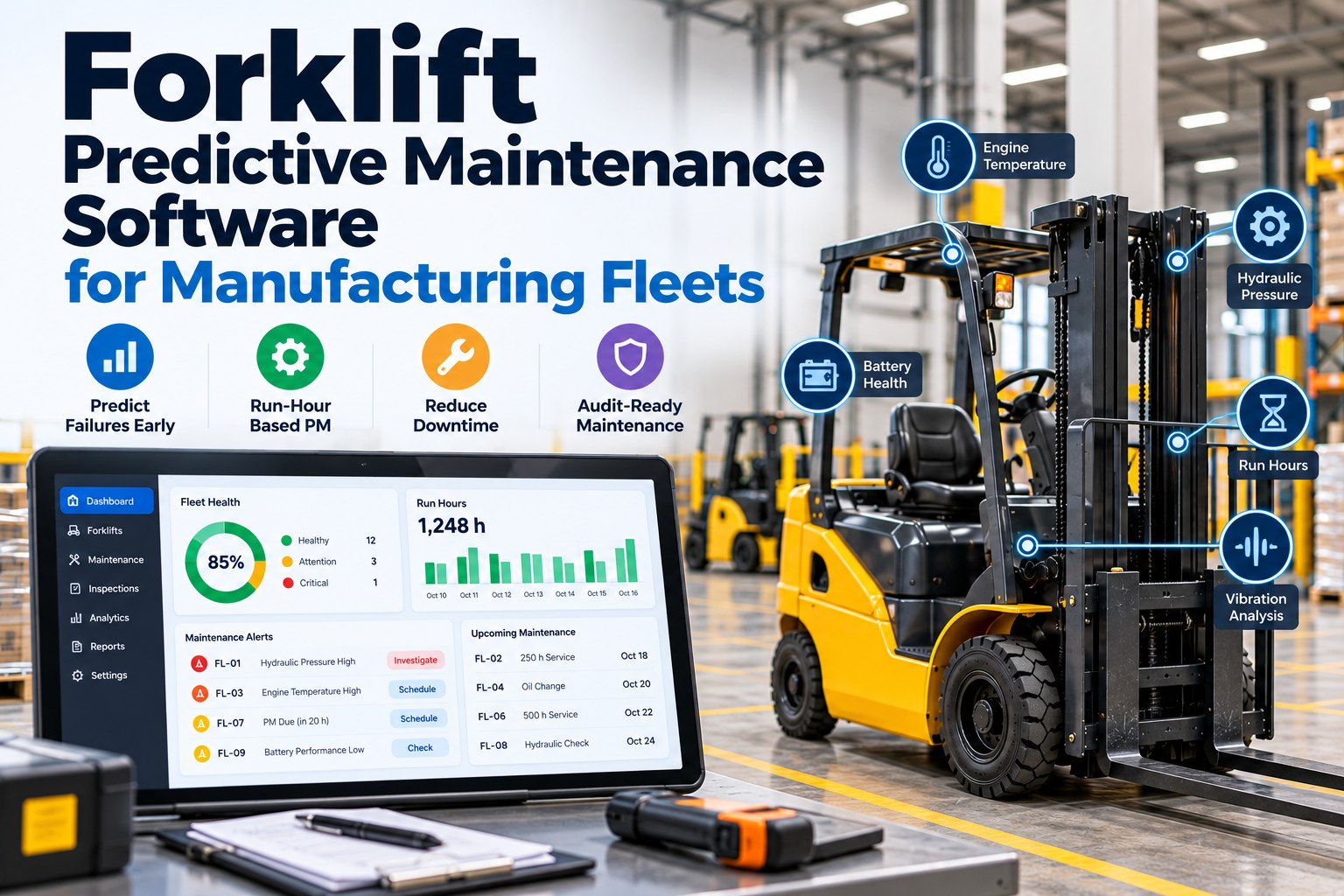
Shared maintenance dashboards force the two departments to look at the same screen. The FleetRabbit dashboard displays a color-coded grid of all forklifts. Green means the truck is clear, yellow means a PM is approaching, and red means the PM is overdue and the truck must be pulled. When production sees a red flag, they know they must release the truck. When maintenance sees green, they know the truck is needed on the floor. This shared visibility eliminates the verbal war and aligns both teams on a single source of truth.
Key Takeaways for Plant Coordination
Coordinating forklift maintenance around production schedules is the most critical step in maximizing plant uptime and protecting equipment. Relying on verbal handoffs and calendar-based PMs is a guaranteed way to stall production lines and destroy reliability. A data-driven, telematics-based approach to scheduling ensures maintenance happens during planned lulls, never during critical runs. Plants that fix this process see a massive reduction in unplanned downtime and a huge boost in cross-department cooperation.
Implementing a comprehensive platform like FleetRabbit automates PM scheduling, links intervals to engine hours, and provides shared dashboards. The return on investment is immediate, not just in saved repair costs, but in eliminated line stalls, improved safety, and extended asset lifecycles. Manufacturing plants demand efficiency, and FleetRabbit provides the exact digital tools needed to deliver it.
The path forward is clear. Evaluate your current maintenance coordination and ask how often PMs are skipped due to production demands. If you are relying on verbal wars, you are losing money. Plant managers who address scheduling systematically protect their profitability and operational reliability. You can sign up for FleetRabbit to modernize your plant, or book a demo to see our platform.
Frequently Asked Questions About Maintenance Timing
Every skipped PM is a guarantee of a catastrophic breakdown during your busiest shift. FleetRabbit coordinates maintenance with your production schedule, ensuring reliability without sacrificing uptime. See a 50 percent reduction in unplanned downtime within weeks. Start your free trial today with no credit card required.