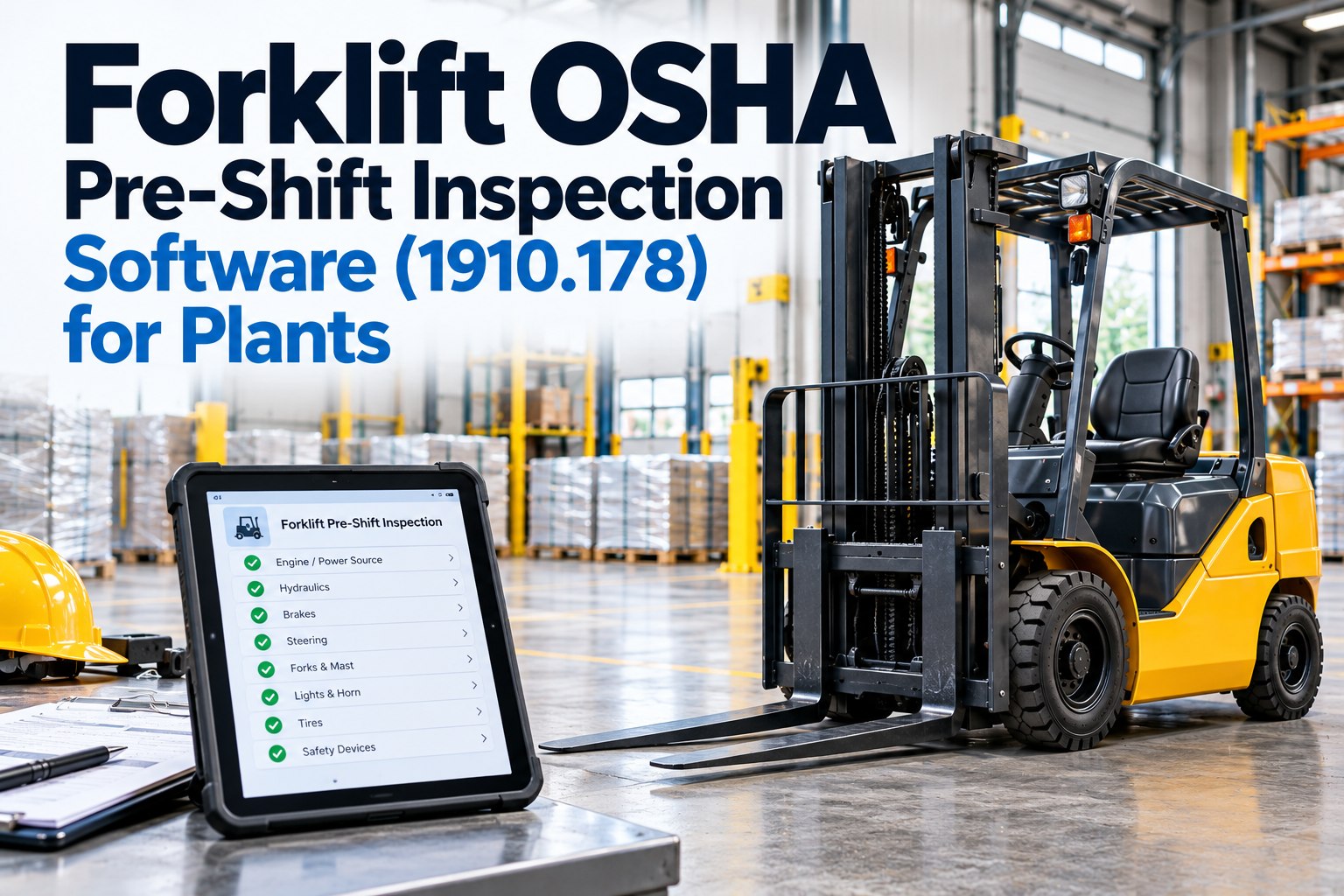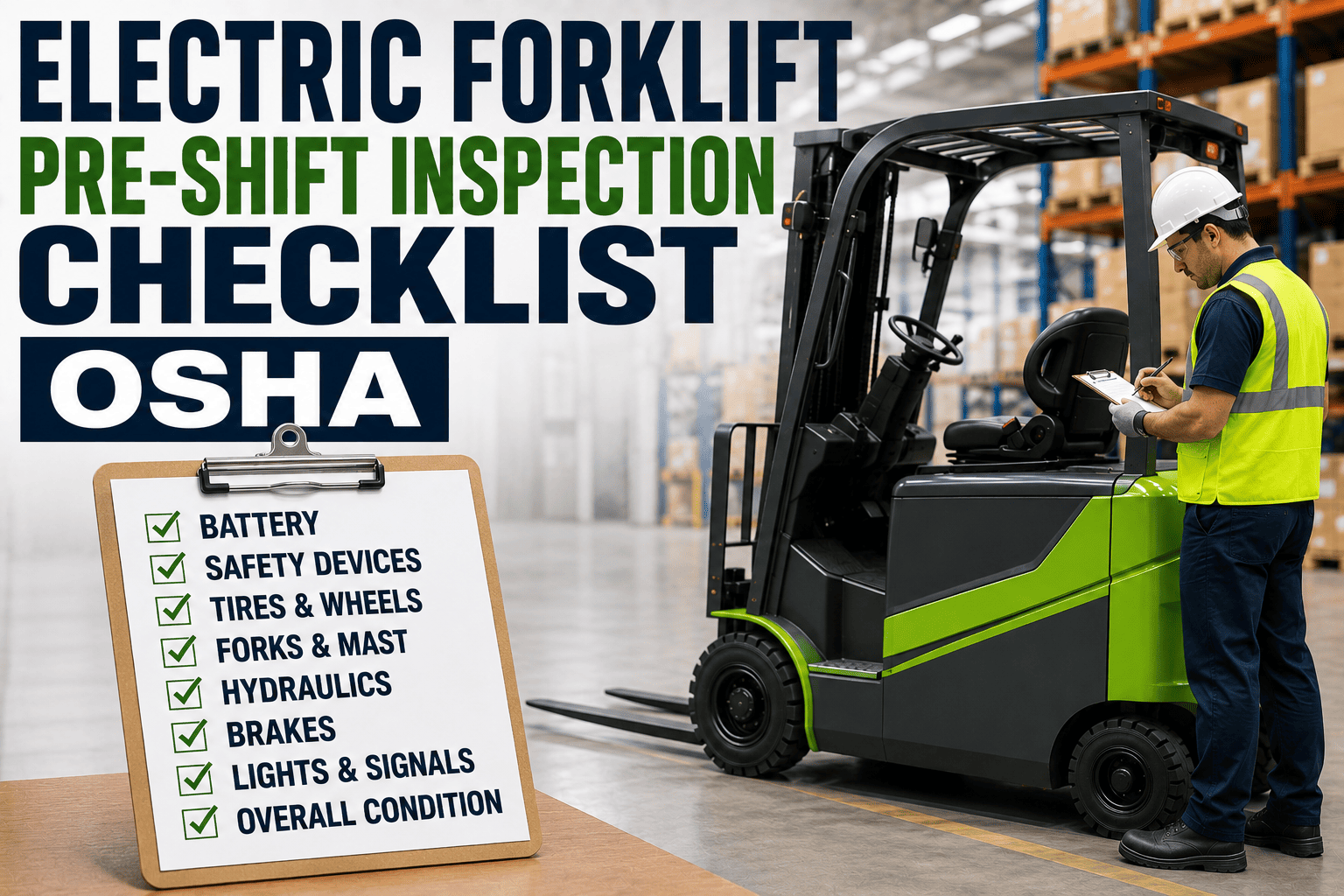
OSHA doesn't require a fancy inspection program. It requires a forklift to be checked before it's put to work, every shift, every time, with a record that shows it happened. For electric forklifts, that means working through two distinct sets of checks: what you can see and touch with the truck powered off, and what actually functions once the key turns on. Skip either half and you're either missing a cracked hose you could have caught by looking, or trusting brakes and a horn you never actually tested. This checklist walks through both, the way OSHA lays them out, so nothing gets missed before a truck rolls onto the floor.
An electric forklift pre-shift checklist has two parts: KEY OFF checks, covering the overhead guard, mast, forks, tires, battery, and hydraulic fluid level by visual inspection, and KEY ON checks, covering gauges, steering, brakes, lights, horn, and load-handling controls by actually operating them. OSHA 29 CFR 1910.178 requires these operational tests be confirmed functional before a truck goes into service, and any failure on a KEY ON test is an out-of-service condition, not something to note and monitor.
Two Checks, One Shift
Every OSHA-aligned electric forklift inspection splits into a walkaround with the power off and a set of functional tests once the key is on. Treating these as one combined glance-over is where most missed defects happen.
KEY OFF: What To Check Before The Truck Powers On
KEY ON: What To Test Once The Truck Powers Up
Any KEY ON Failure Means The Truck Stays Parked
A slow tilt response, a brake that doesn't hold, or a horn that doesn't sound isn't a note-it-and-move-on item. Under OSHA's operational test requirement, a functional failure takes the truck out of service until it's repaired, not just flagged for later.
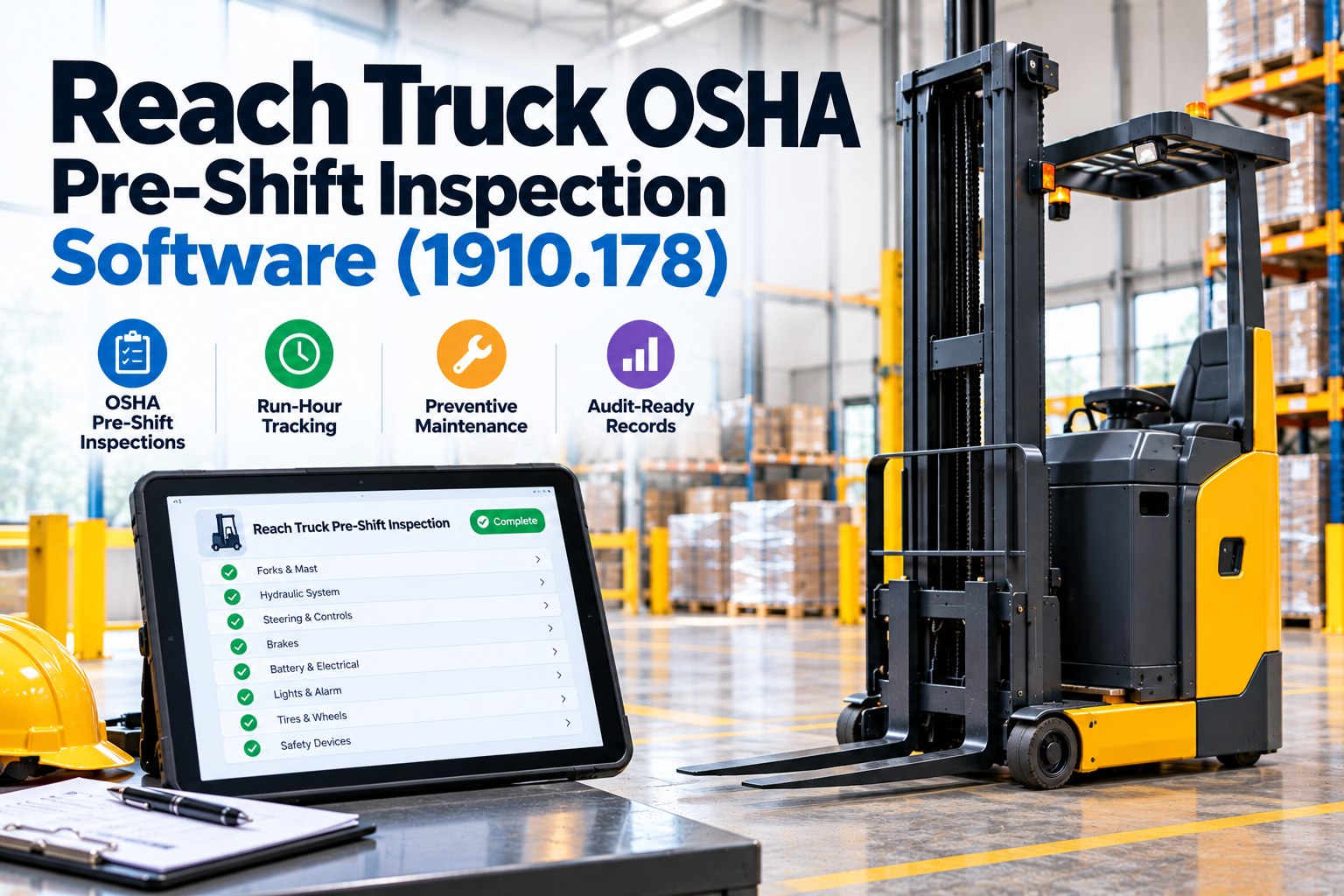
FleetRabbit walks operators through KEY OFF and KEY ON checks on their device, flags failed items instantly, and keeps every record ready for an OSHA audit. Sign up free to run your first digital inspection, or book a demo to see it on your own checklist.
Battery Checks Deserve Their Own Attention
Electric forklifts have a set of checks that gas and propane trucks simply don't need, and skipping them is one of the most common gaps in an otherwise thorough inspection.
Listen As Much As You Look
An abnormal motor whine, clicking, or grinding on startup, or an unusual electrical or burning smell, are early warning signs of a developing fault. These are easy to miss on a checklist that only asks operators to look, which is why a good pre-shift process asks them to listen too.
Why Records Matter As Much As The Check Itself
OSHA 29 CFR 1910.178 requires the inspection itself, but a facility with no record of it happening has little to show an inspector beyond a verbal assurance. Written documentation isn't always explicitly mandated in every jurisdiction, but facilities that keep clear inspection records are in a far stronger position during an audit or after an incident.
| Compliance Question | What Good Practice Looks Like |
|---|---|
| How often should checks happen | Before each shift, or at minimum every 24 hours of active use |
| What should a record include | Truck ID, date, shift, inspector name, pass or fail per item, and any defects noted |
| What happens after a failed item | The truck is removed from service and the defect is logged until it's repaired |
| How long should records be kept | A common practice is retaining inspection records for at least a few years for audit readiness |
| Paper or digital | Either can satisfy the requirement, but digital records are far easier to retrieve and search during an audit |
FleetRabbit timestamps every KEY OFF and KEY ON check, ties it to the operator and truck, and stores it for instant retrieval when an OSHA inspector asks. Get started with a free sign-up, or book a 30-minute demo to see your compliance records in one place.
Frequently Asked Questions
The Bottom Line
A thorough electric forklift pre-shift inspection isn't complicated, it just has to be complete, every shift, without shortcuts. Walking through the KEY OFF visual checks and the KEY ON functional tests in order, catching battery-specific issues early, and keeping a clear record of every check is what separates a facility that's genuinely audit-ready from one that's hoping an inspector never shows up unannounced.
FleetRabbit turns this checklist into a guided digital inspection your operators can't rush through or skip, with every result stored and ready for an OSHA audit. See it running on your own fleet with a free trial or a live walkthrough.