Walk any manufacturing floor and you will still find it: a laminated clipboard hanging off a forklift mast, a stack of pre-shift inspection sheets curling at the edges in a filing cabinet, a maintenance log that hasn't been updated since the afternoon shift. Paper feels harmless because it is familiar, but it is quietly one of the most expensive things a plant still runs on. Every sheet that gets lost, backdated, or filled out from memory instead of from the truck is a gap in your safety record and a blind spot in your maintenance program, and most plants never add up what that gap actually costs until an audit or an incident forces the question.
OSHA's daily forklift inspection rule alone accounts for one of the most frequently cited violations in industrial settings, and serious citations now run over 15,000 dollars per instance. Paper checklists cannot stop an uninspected forklift from being driven, cannot flag a developing defect trend, and cannot produce a record that survives close scrutiny after an incident. Plants that move the entire forklift workflow onto a digital system remove all three failure points at once, and typically complete inspections up to 50 percent faster in the process.
Two Ways to Run the Same Forklift Fleet
The equipment on your floor does not change when you go paperless. What changes is whether the record of how that equipment is inspected, maintained, and operated actually reflects reality. Here is what the same forklift workflow looks like under each system.
- Operator signs a sheet without walking around the truck
- Defects get mentioned verbally, then forgotten by shift change
- Inspection sheets pile up in a binder nobody reviews
- Maintenance history lives in someone's memory, not a system
- Audit prep means hours pulling files from a cabinet
- Operator completes a guided checklist on the truck itself
- A flagged defect creates a work order automatically
- Every inspection is timestamped and tied to an operator ID
- Maintenance history is searchable across the entire fleet
- Audit-ready reports generate in minutes, not hours
Where Paper Actually Breaks Down
Paper does not fail all at once. It fails in small, quiet ways that compound across a fleet until a defect that should have been caught in week one causes a real problem in month three.
The Checklist Gets Signed, Not Completed
Studies of paper-only facilities have found operators skip the actual walkaround on a meaningful share of shifts, signing the form out of habit rather than inspecting the truck. A hydraulic leak or worn fork can sit undetected for weeks under that pattern.Defects Are Reported, Then Lost
An operator mentions a brake issue to a supervisor verbally. The supervisor means to write it up later. By the next shift, the detail is gone and the truck is still running.Records Go Missing When You Need Them Most
After an incident, investigators ask for six months of inspection history. Pages are missing, some are duplicated, and a few look suspiciously identical, exactly the kind of gap that turns a routine review into a serious liability finding.Nobody Sees the Pattern Until It Is a Failure
A fork wearing thin, a battery losing charge faster each week, a hydraulic seal weeping fluid: these show up gradually across many single-page paper forms that nobody is cross-referencing, so the pattern only becomes visible once the part actually fails.FleetRabbit turns pre-shift checklists, defect reports, and maintenance logs into one connected digital record, tied to the truck and the operator, every time. Sign up to try it on your fleet, or book a demo to see a live walkthrough.
Paper vs Digital, Side by Side
The gap between the two systems is easiest to see when you line up how each one handles the exact same task.
| Workflow Task | Paper Checklist | Digital Checklist |
|---|---|---|
| Pre-Shift Inspection | Sign-off can happen without a real walkaround; no way to verify | Guided steps on the truck itself, timestamped and operator-linked |
| Defect Reporting | Verbal handoff or a note that may never reach maintenance | Automatic work order created the moment a defect is flagged |
| Maintenance History | Scattered across binders, hard to search or compare | Centralized and searchable by truck, date, or component |
| Audit Preparation | Hours spent pulling files, some records incomplete or missing | Report generated in minutes, complete and time-stamped |
| Trend Detection | Impossible to spot patterns across single-page paper forms | Automatic flags when a component trends toward failure |
What Going Paperless Actually Covers
Eliminating paper is not just about digitizing one form. A forklift workflow generates records at several points, and each one carries the same risk if it stays on paper.
Pre-Shift and Post-Shift Inspections
The daily walkaround is the most frequently cited compliance requirement for a reason: it is the easiest step to skip when it lives on a clipboard. A digital checklist on the truck itself makes the inspection part of starting the shift rather than an afterthought.
Maintenance and Repair Logs
A digital log ties every repair to the truck's full history, so a technician can see that the same hydraulic seal has failed twice before deciding whether to replace the whole assembly instead of patching it again.
Work Order Generation
When a defect is flagged digitally, the work order should generate itself, not wait for someone to remember to file it. That single step closes the biggest gap paper leaves open.
Operator Certification Records
Training and recertification dates are easy to lose track of on paper across a large workforce. A digital record flags upcoming expirations automatically, well before an operator is caught driving on an expired certification.
The Real Cost of Staying on Paper
Most plants underestimate what paper is actually costing them because the cost is spread thin across lost time, missed defects, and audit exposure rather than showing up as one obvious line item.
A single recordable forklift injury averages tens of thousands of dollars in medical, investigation, and administrative costs, and a serious OSHA citation for a missed inspection now runs well over 15,000 dollars per violation. Layer in the hours spent manually pulling records during an audit, the repair costs of catching a defect late instead of early, and the mid-size plants that have quantified the full picture often find their paper-based inspection program costs well into six figures a year once every hidden cost is counted.
FleetRabbit connects inspections, work orders, and maintenance history into one system your team can trust during a normal shift and defend during an audit. Sign up free today, or book a demo to see how fast the switch really is.
How FleetRabbit Removes the Clipboard Completely
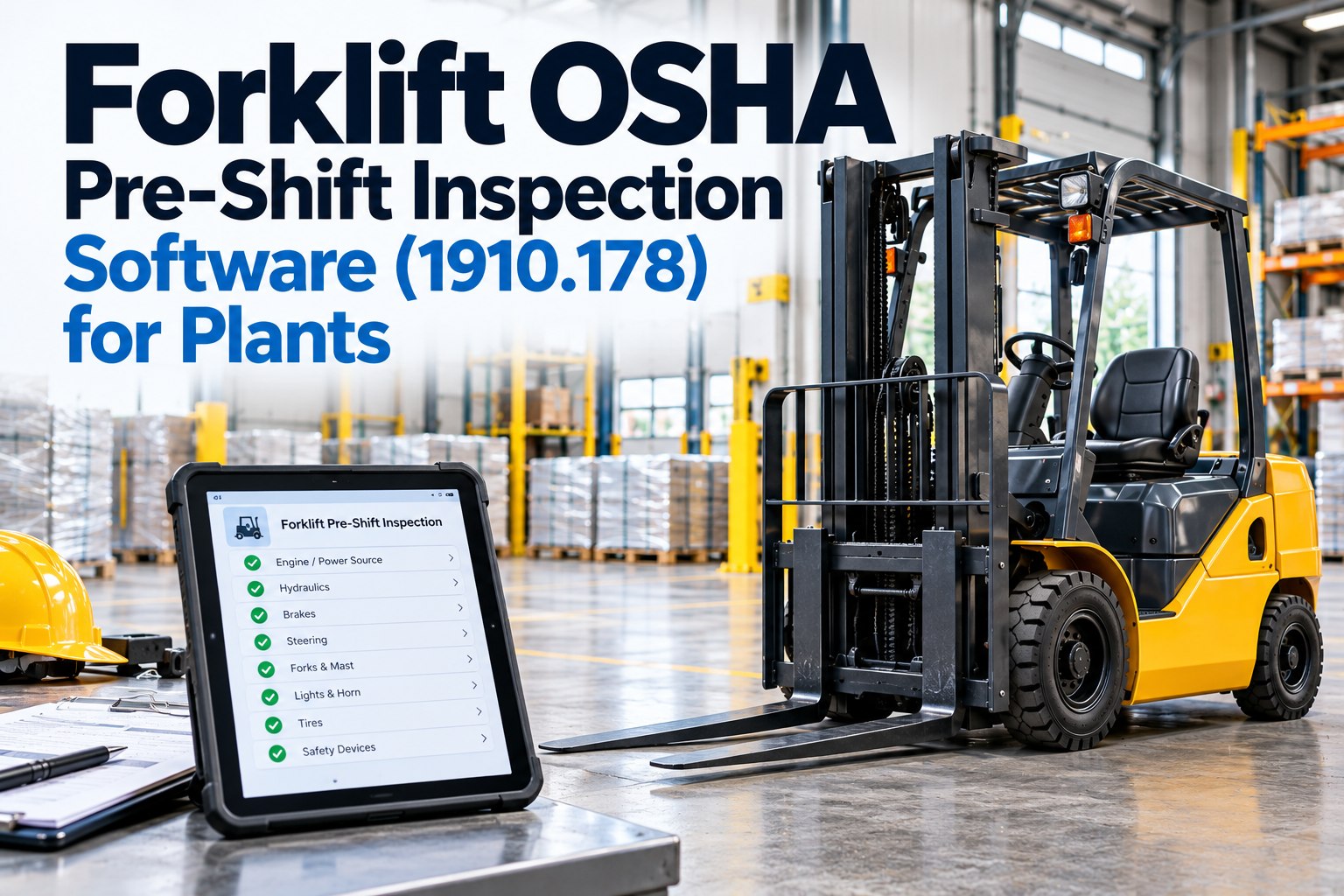
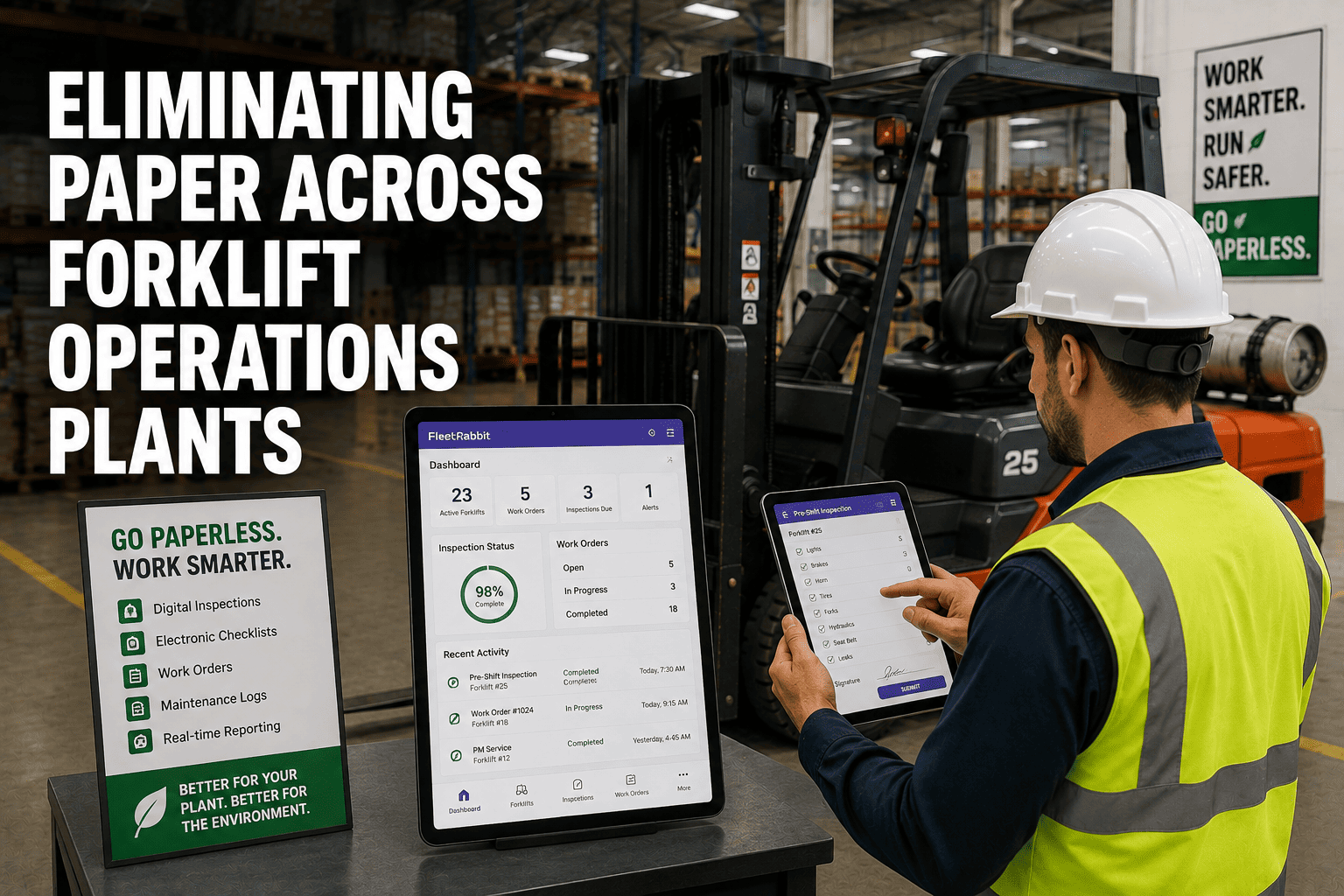
Going paperless only works if the digital replacement is easier to use than the clipboard it replaces, not just more thorough. FleetRabbit builds the entire forklift workflow around that idea. Operators complete guided pre-shift and post-shift checklists directly on a mobile device, with every entry automatically timestamped and tied to their operator ID. A flagged defect does not wait for a supervisor to notice a note on a form, it generates a work order the moment it is reported, routing straight to the maintenance team.
Every inspection, repair, and certification record lives in one searchable history per truck, so patterns that used to hide across dozens of separate paper forms become visible immediately. When an audit does happen, the report that used to take hours to assemble from a filing cabinet is ready in minutes, complete and accurate because it was captured correctly the first time.
What Plants Notice First
Faster shift starts because the checklist takes less time to complete than a paper form, fewer defects slipping through because nothing depends on someone remembering to write it down, and audit conversations that go from stressful to routine because the records were never in question to begin with.
Frequently Asked Questions
The Clipboard Was Never the Point
No plant actually wants paper. It survives out of habit, because it has always been there and switching feels like extra work. But every sheet that gets signed without a real inspection, every defect that gets mentioned and forgotten, and every audit that turns into a scramble through filing cabinets is a cost that paper hides in plain sight. The workflow itself, checking the truck, reporting a problem, fixing it, and proving it happened, does not need to change when you go digital. It just finally works the way it was supposed to all along.
FleetRabbit replaces paper checklists, scattered logs, and missing work orders with one connected digital workflow built for forklift operations. See fewer missed defects, faster audits, and records you can actually trust. Get started with no credit card required.