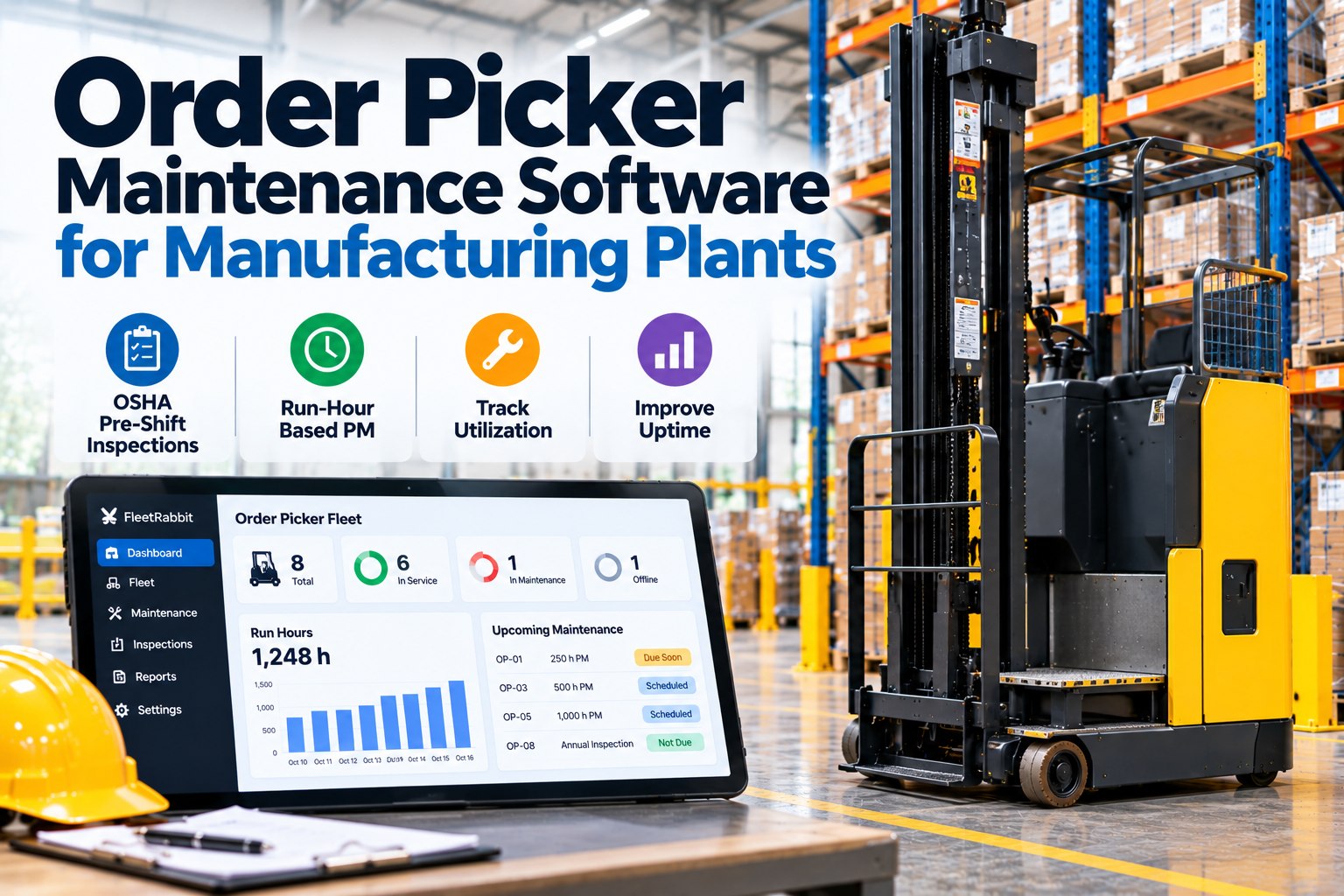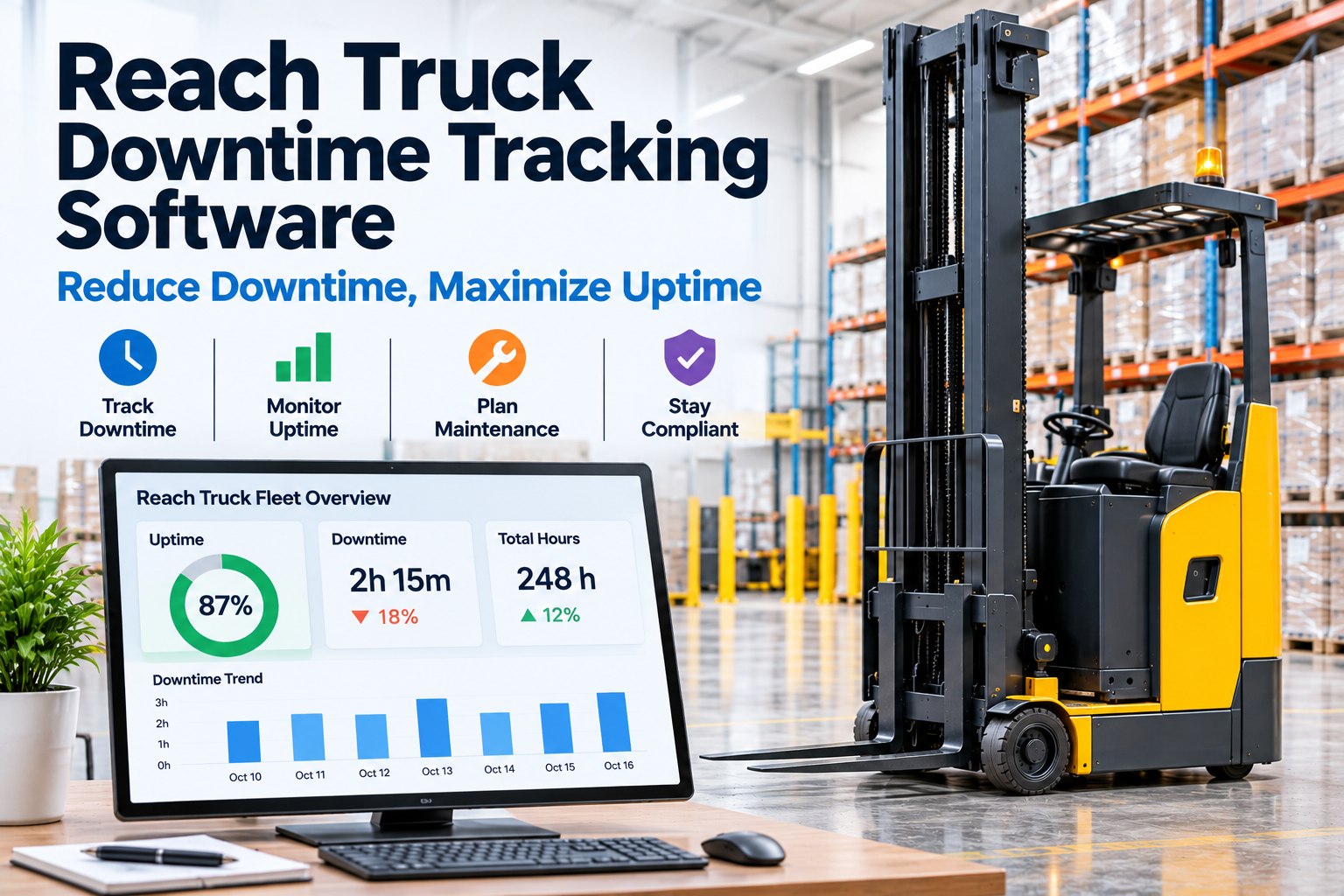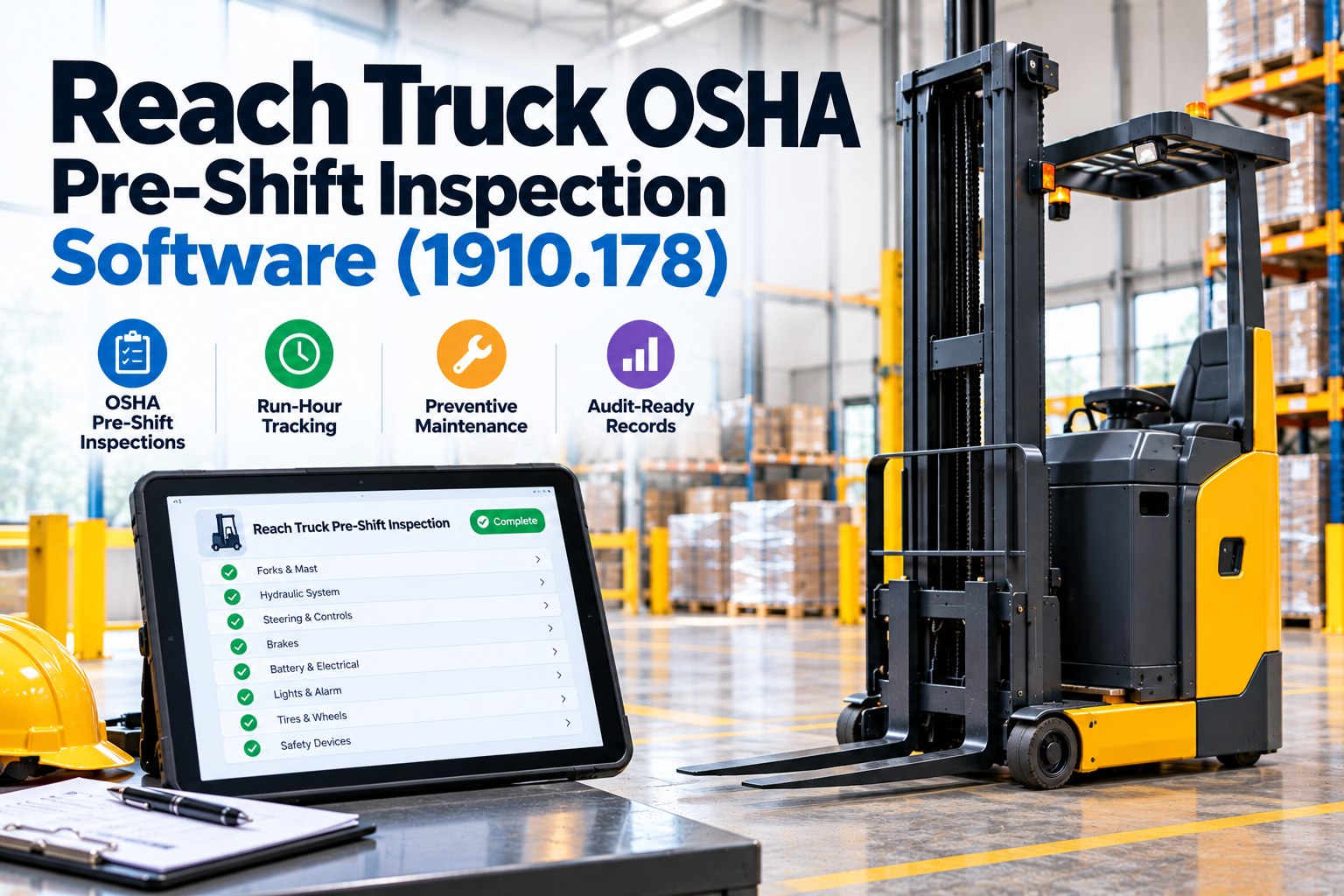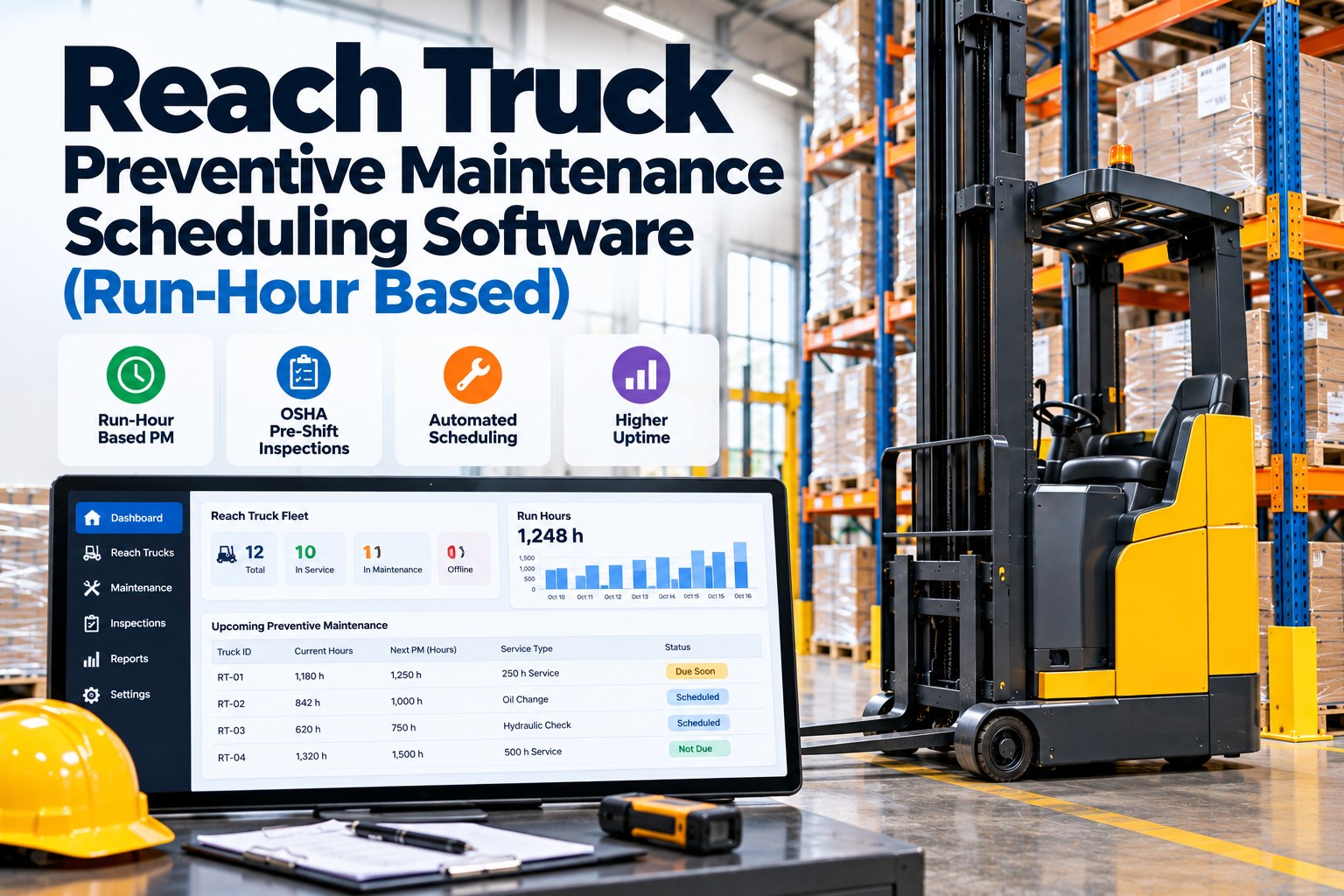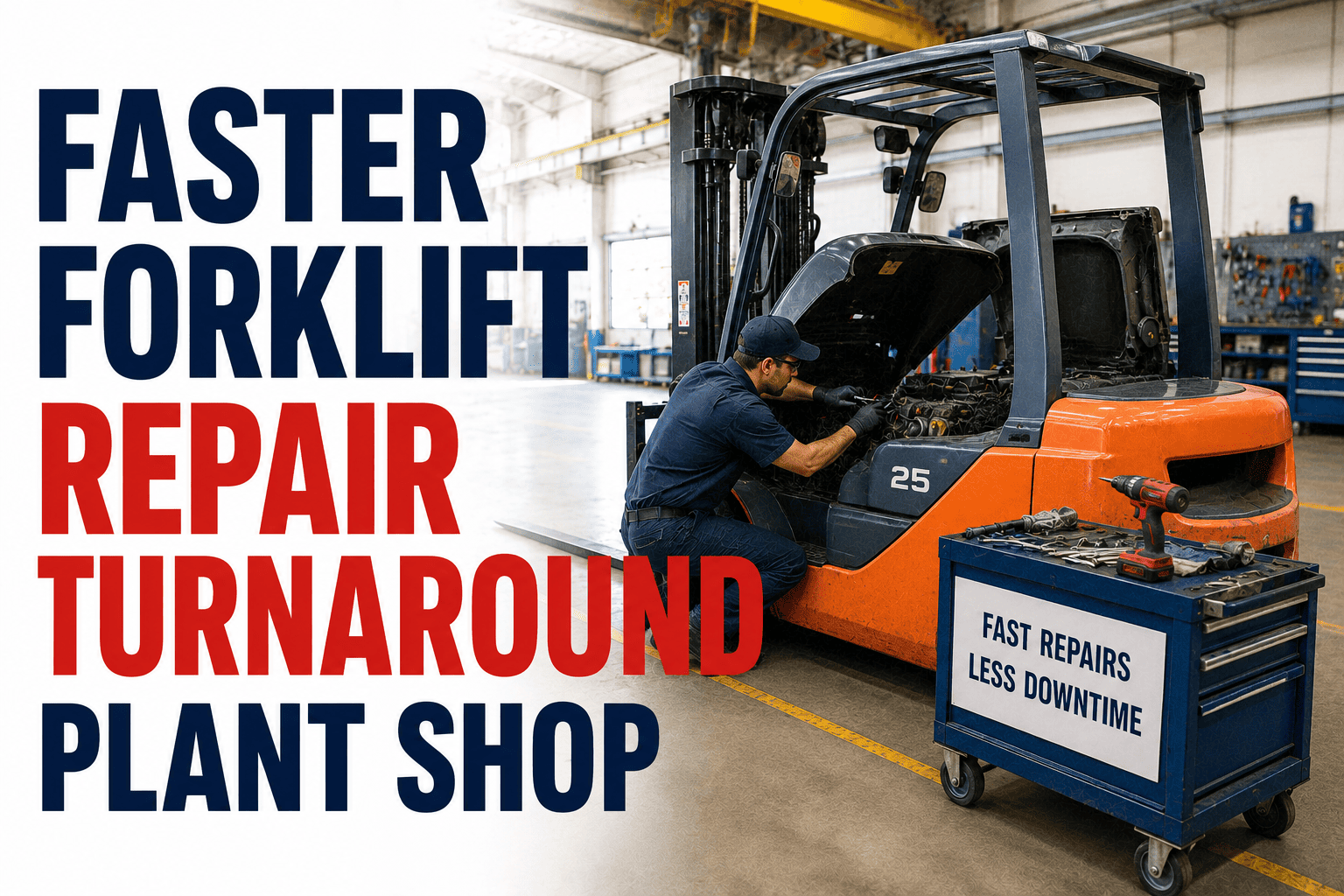
A forklift limping into the maintenance bay rarely stays there because the repair itself is hard. Most of the clock time gets eaten before a wrench ever touches the truck, in the gap between someone reporting the problem, a technician actually picking it up, and the right part being on the shelf when they do. For a plant running production on a schedule, that gap is the difference between a two-hour fix and a truck parked for two days.
Across fleet benchmark data, the average gap between a work order being created and a technician actually starting the job runs about 6.7 days, with a median 31-minute delay in routing alone. The repair itself is often the shortest part of the timeline. Plants that put parts-ready work orders and full equipment history in front of technicians routinely cut that turnaround by half or more.
Where The Hours Actually Disappear
Plant maintenance shops rarely lose time inside the repair itself. Technicians are skilled, and once they are standing at the truck with the right part in hand, most forklift repairs move quickly. The time disappears in the connective tissue around the job: knowing a truck needs attention, assigning the right technician, locating the correct part, and confirming the fix before the truck goes back to the floor. Each handoff that depends on someone remembering to make a phone call or walk across the shop adds hours that never show up as billed labor but absolutely show up as downtime.
Why Routing Speed Matters More Than Repair Speed
Benchmark data across maintenance operations shows a median 31-minute delay in just the initial routing step, the gap between a problem being reported and a technician being assigned to it. That sounds small until it repeats across every reported issue, every shift, every week. A shop that routes work orders instantly, rather than relying on someone noticing a note or a radio call, removes that delay entirely and lets technicians start closer to the moment the problem was actually found.
The Real Cost Of A Parked Forklift
A forklift sitting in the shop is not just a maintenance line item. It is capacity the production floor no longer has, routes that other trucks now have to absorb, and in busy plants, a scramble to find a spare unit. The longer a truck sits waiting rather than being actively repaired, the more that single breakdown ripples into everyone else's schedule.
FleetRabbit pushes digital work orders straight to the right technician with full equipment history attached, so nothing sits waiting on a whiteboard note. Start your free trial and see how fast your shop can move once routing is automatic.
The Repair Timeline, Stage By Stage
Breaking the timeline into its actual stages shows exactly where a plant shop can claw back hours, and which delays are the most expensive to leave unmanaged.
| Stage | Typical Delay | What Causes It | How To Shrink It |
|---|---|---|---|
| Issue Reported | Minutes to several hours | Verbal reports, paper tags, or messages that depend on someone passing them along | Let operators log issues digitally the moment they happen, from the truck or a mobile device |
| Work Order Routed | 31 minutes median | Manual assignment depending on a supervisor being available to hand off the job | Auto-route based on technician availability and truck priority |
| Diagnosis Begins | Hours to a full day | Technician lacks prior repair history and starts troubleshooting from scratch | Attach full equipment history to every work order automatically |
| Parts Confirmed | Hours to several days | Part not in stock, or nobody checks inventory until diagnosis is fully complete | Order likely parts as soon as a probable cause is identified, not after full diagnosis |
| Repair Completed | 30 minutes to a few hours | Usually the fastest stage once the technician has the part in hand | Keep this stage fast by removing every delay upstream of it |
| Truck Returned To Floor | Minutes | Sign-off and communication back to the production line or supervisor | Close the work order digitally so the floor knows the truck is ready immediately |
Parts Availability Is The Single Biggest Lever
A truck can sit fully diagnosed and still unrepaired for hours or days simply waiting on a part. This is consistently the largest single contributor to slow turnaround in plant shops, larger than diagnosis time or even technician availability in many cases. The fix is not necessarily carrying more inventory. It is ordering parts the moment a likely cause is identified rather than waiting for a full diagnosis to close out, so the part is arriving while the technician is still confirming the problem instead of after.
Give Technicians History, Not Guesswork
A technician who can see that a truck's hydraulic issue was flagged twice in the past 90 days starts the job already knowing where to look. Without that history, every repair starts cold, and small recurring issues get treated as brand new problems each time, burning hours that a five-second history check would have saved.
What Fast Shops Do Differently
Plant shops with the shortest turnaround times are not necessarily the ones with the most technicians on staff. They are the ones where nobody has to remember what happens next. A technician finishing one repair already knows their next assignment. A maintenance supervisor can see technician and bay load without walking the floor to check. Work orders carry parts status, priority, and history automatically, so no repair starts from zero information.
Proactive Maintenance Shrinks Emergency Volume
The fastest way to reduce repair turnaround is to reduce how often trucks need emergency repair in the first place. Every dollar spent on proactive, scheduled maintenance saves roughly four to five dollars in emergency repair and downtime cost, because catching a developing issue early avoids the longer, more complex repair that follows a full failure.
FleetRabbit centralizes work orders, parts status, and equipment history so technicians and supervisors always know what happens next. Book a demo and walk through your shop's current turnaround with our team.
Frequently Asked Questions
Most forklift downtime happens before a technician ever touches the truck. FleetRabbit routes work orders instantly, attaches full repair history, and keeps parts status visible so your shop moves from reported to repaired in hours, not days. Start your free trial today, or book a demo to see it running against your shop's current workflow.