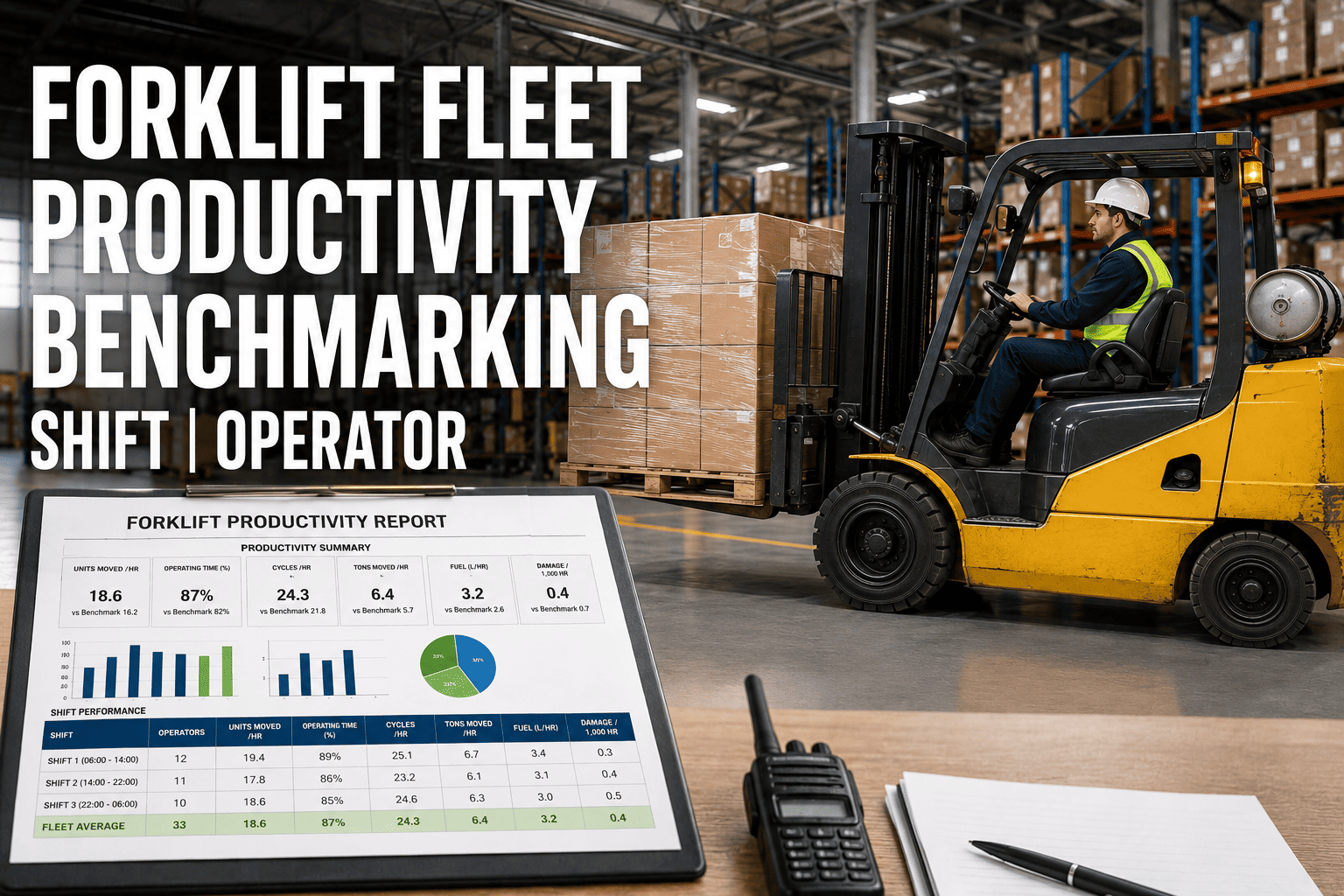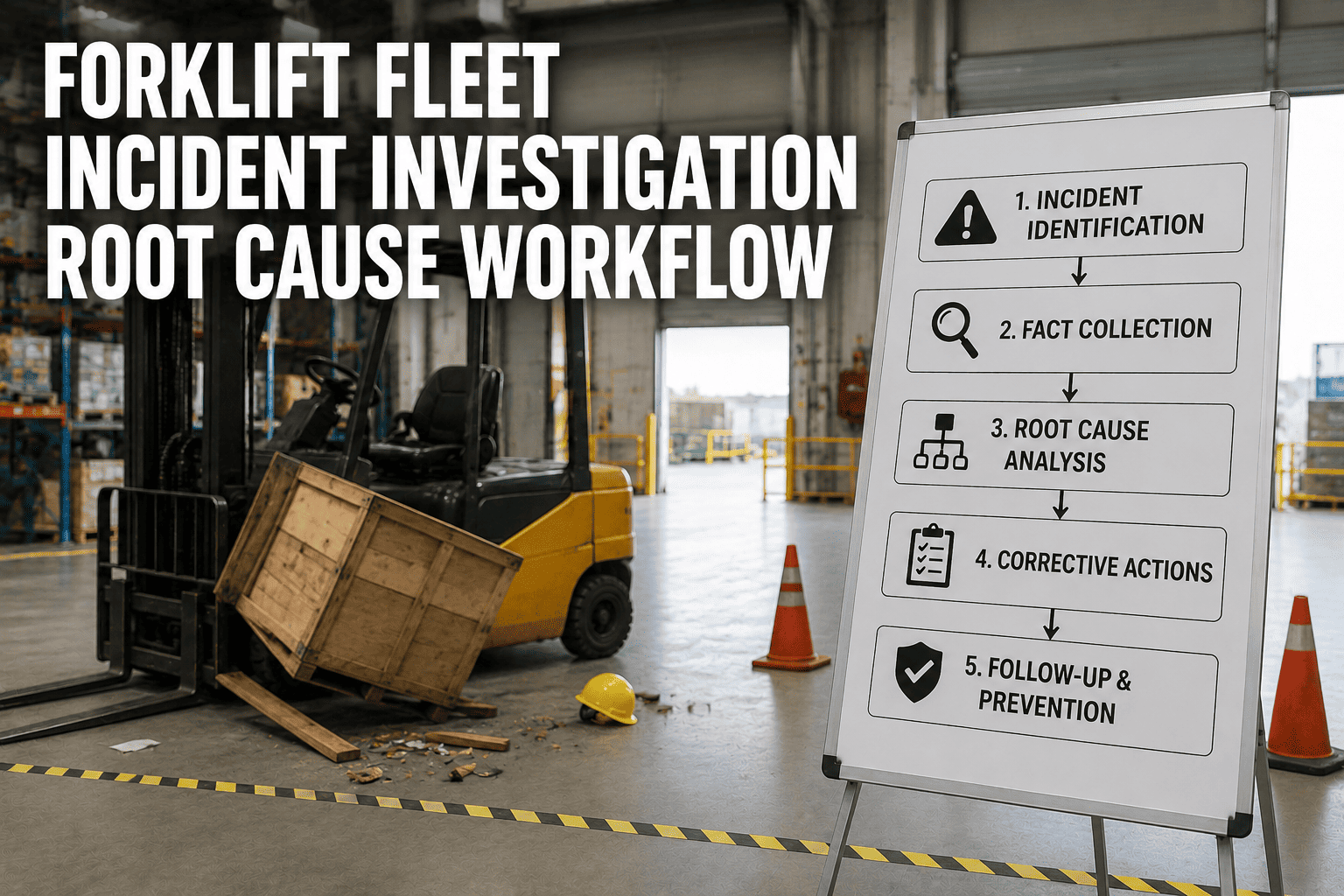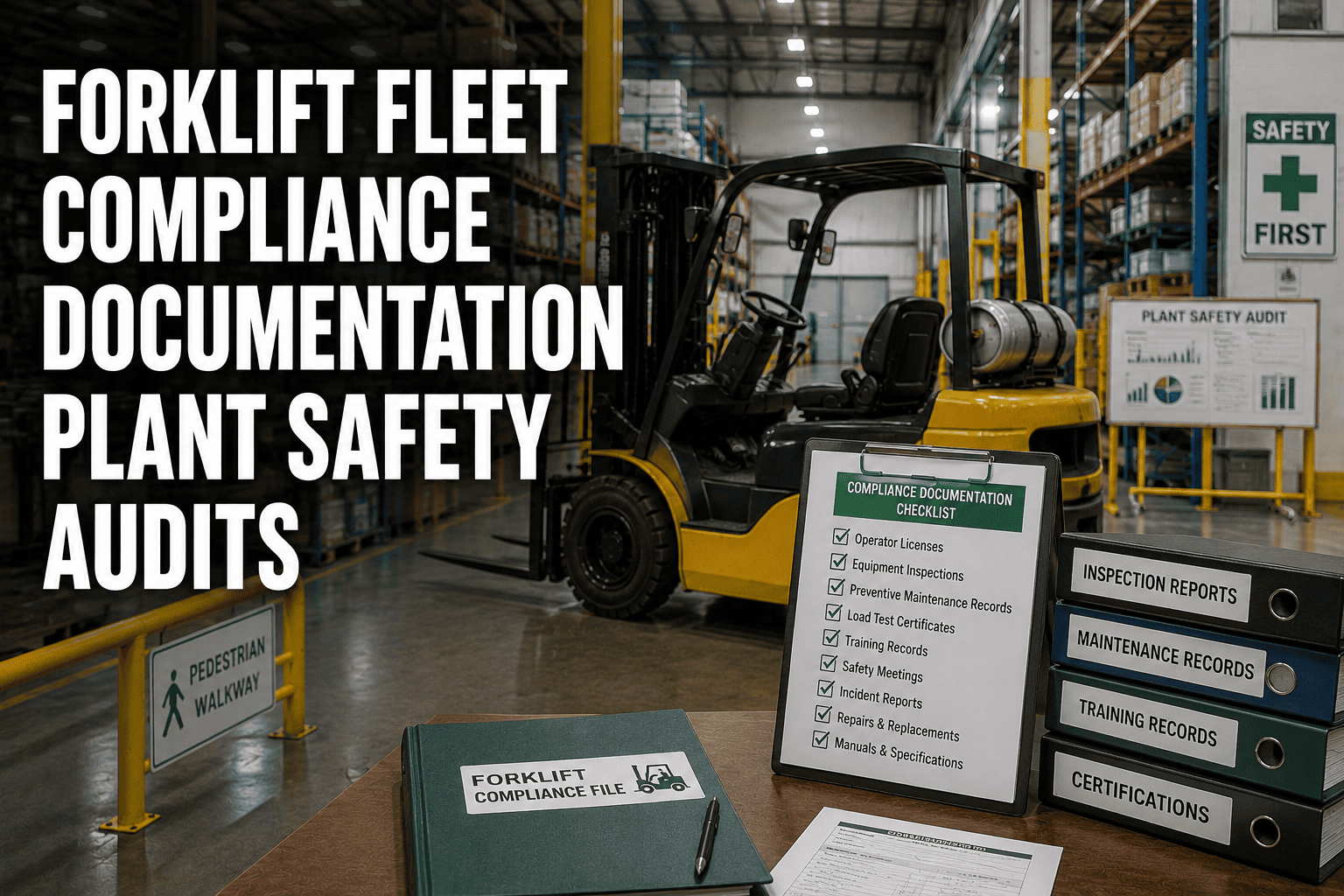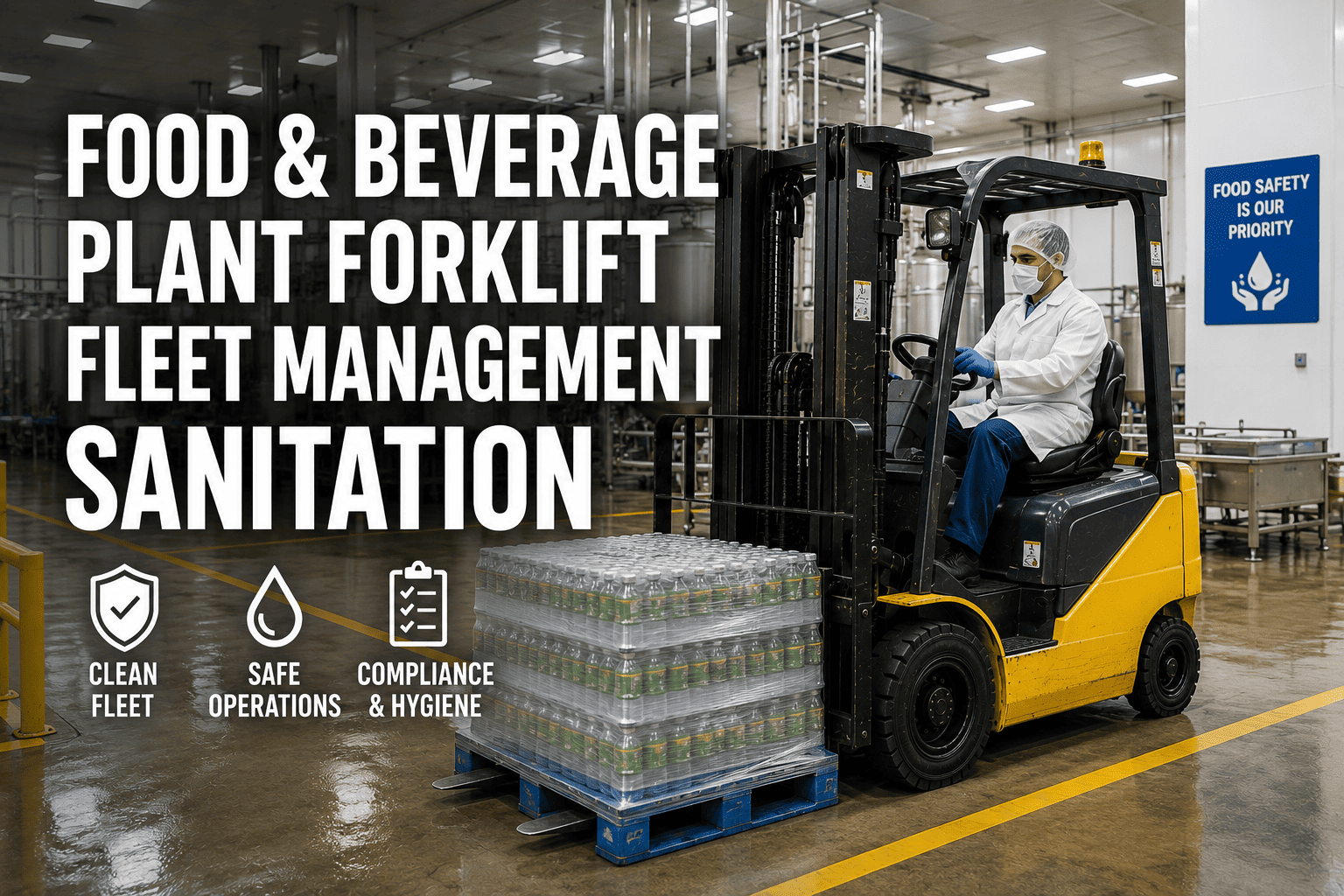
Walk into a dairy processing plant or a bottling facility and you'll notice something most warehouses don't have to think about: the forklifts get washed down as often as the floors. A lift truck that rolls through a chilled storage room, then out to an ambient loading dock, then back through a sanitizer rinse before its next run isn't just moving pallets, it's carrying a food safety risk on every wheel and hydraulic seal it touches. For food and beverage plants, forklift fleet management isn't just about uptime. It's about staying audit-ready every single shift.
FDA, USDA, and HACCP auditors treat lift trucks operating near food contact zones as part of the sanitation program, not just equipment. Corrosion, trapped moisture, and unsealed electricals in wash-down areas are among the most commonly cited findings in food plant equipment audits. Plants that track forklift maintenance and cleaning cycles digitally typically resolve audit questions in minutes instead of days, and cut equipment-related sanitation findings significantly year over year.
The Sanitation Risks Hiding in Your Forklift Fleet
A forklift built for a general warehouse and a forklift built for a food plant look similar from a distance, but the differences matter the moment an inspector gets close. Repeated wash-downs, cold-to-warm temperature swings, and wet floors create failure points that standard equipment was never designed to handle.
What Auditors Actually Look For on the Fleet
Food safety auditors don't inspect forklifts the way a maintenance shop does. They're checking whether the equipment itself could become a contamination pathway, and whether your records prove it's been controlled.
Surface and Material Condition
Auditors look for stainless or coated surfaces without chipped paint, exposed rust, or bare metal in food contact and food-adjacent zones. A single flaking bracket near a production line is enough to trigger a documented finding.
What Plants Miss
Wear often starts in spots operators never look at closely, like the underside of forks or inside wheel wells, which is exactly where inspectors check first.
Cleaning and Maintenance Records
Paper logs that can't be produced quickly, or that show gaps between scheduled wash-downs and inspections, raise more questions than the equipment itself. Auditors want to see a clear, unbroken record.
What Plants Miss
A missing signature or an undated entry from three months ago can turn a routine walk-through into a longer conversation with the audit team.
Battery and Hydraulic Fluid Handling
Leaks near food zones are treated as contamination events, not just maintenance issues. Auditors check for drip trays, sealed compartments, and food-grade hydraulic fluid where required.
What Plants Miss
A slow hydraulic seep that maintenance considers minor can be exactly what an auditor photographs as a critical finding.
FleetRabbit gives food and beverage plants photo-verified inspection records, wash-down and maintenance history, and real-time alerts on the forklifts working your coldest and wettest zones. Start your free trial or book a demo to see your audit trail built automatically.
Cold Chain Zones vs. Ambient Zones: Different Rules, Same Fleet
Most food and beverage plants run one fleet across very different environments, which means maintenance and inspection needs shift depending on where a truck spends its shift.
| Zone Type | Primary Risk | Maintenance Focus |
|---|---|---|
| Freezer / Deep Cold | Battery performance drop, seal stiffening, condensation on return to ambient | Cold-rated battery checks, seal inspection, gradual warm-up protocols |
| Wash-Down Zones | Corrosion, water intrusion into electricals, sanitizer chemical exposure | Post-wash drying checks, sealed component inspection, coating touch-ups |
| Ambient Production Floor | Standard wear, hydraulic leaks near food-adjacent lines | Routine fluid checks, drip tray inspection, tire and brake condition |
| Dock and Receiving | Weather exposure, pedestrian traffic, dock seal interaction | Brake and visibility checks, tire wear from transitions, dock seal clearance |
Building a Sanitation-Ready Maintenance Program
Passing an audit isn't about scrambling before the inspector arrives. It's about running a maintenance program that keeps every truck defensible on any given day.
Track Wash-Down Cycles Alongside Maintenance
Cleaning schedules and maintenance schedules are usually managed separately, but food plants get the most value when both live in one record, so a technician can see exactly when a truck was last washed and last inspected.
Practical Step
Flagging any truck that misses a scheduled wash-down or inspection window automatically prevents the gap from surfacing for the first time during an audit.
Set Zone-Specific Inspection Checklists
A checklist built for ambient warehouse equipment misses the details that matter in a freezer or wash-down bay. Zone-specific checklists catch corrosion, seal wear, and moisture issues before they become citations.
Practical Step
Reviewing which zones generate repeat findings points directly at where checklists need more detail or where equipment may need to be reassigned.
Keep Digital, Photo-Verified Records
When an auditor asks for two years of maintenance history on a specific unit, pulling it up in seconds instead of digging through binders changes the tone of the entire visit.
Practical Step
Photo documentation attached to each inspection gives auditors visual proof, not just a checkbox, which speeds up review significantly.
Quick Benchmarks for Food Plant Fleets
Frequently Asked Questions
Sanitation compliance depends on equipment records that hold up under scrutiny, not scattered paper logs. FleetRabbit tracks maintenance, wash-down cycles, and inspections for every truck in your fleet, so you walk into every audit already prepared. Start your free trial with no credit card required, or book a demo to see it running in a facility like yours.