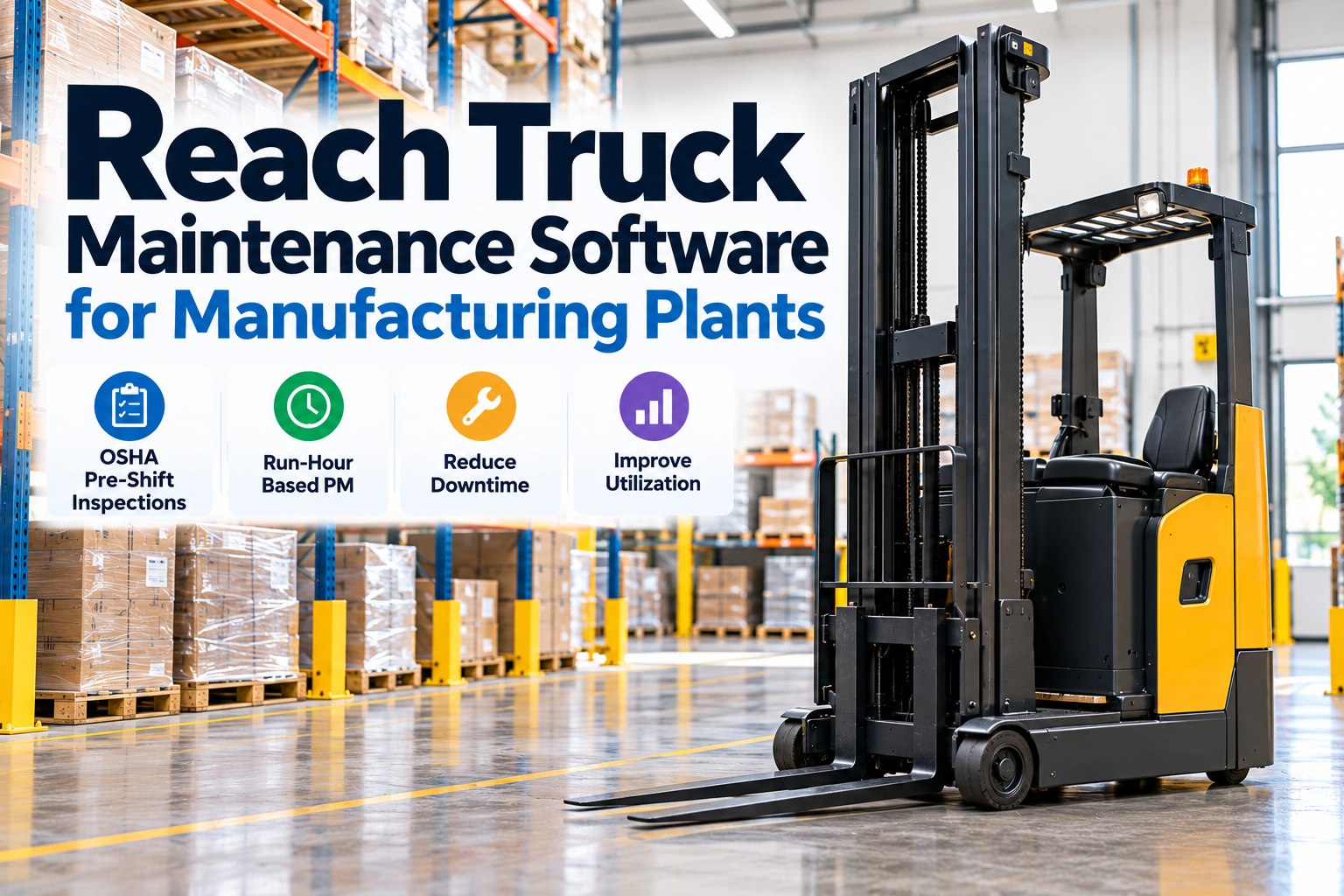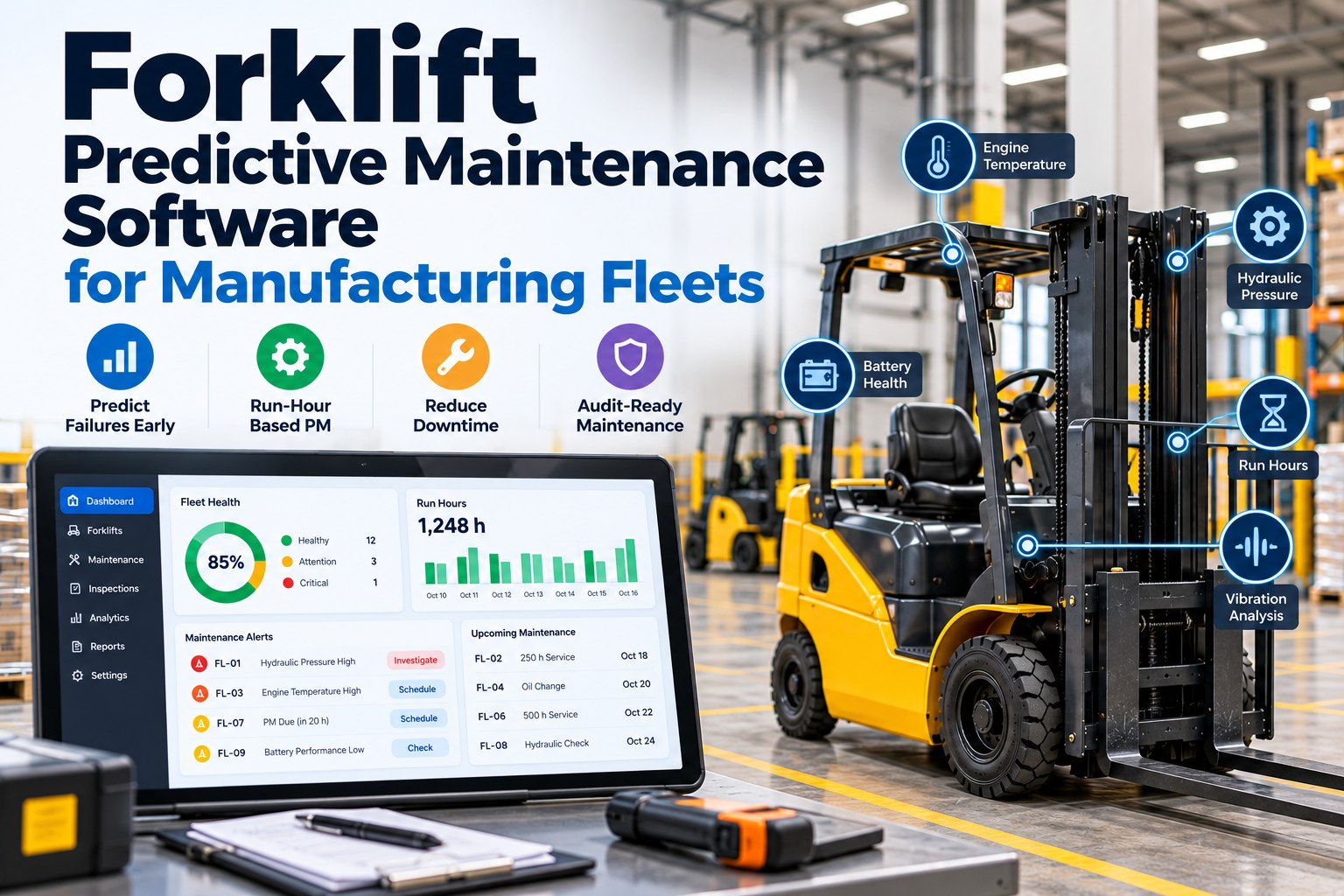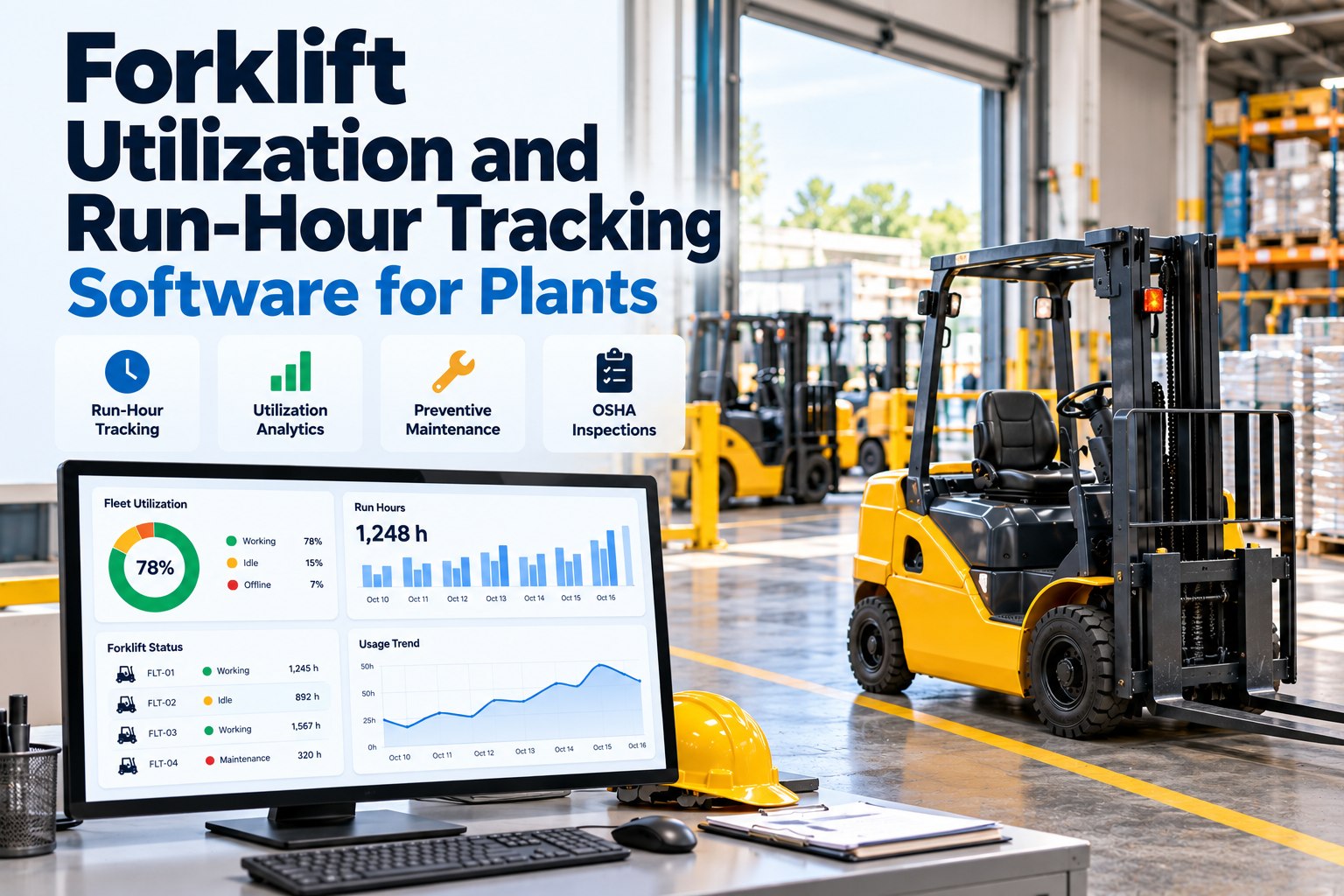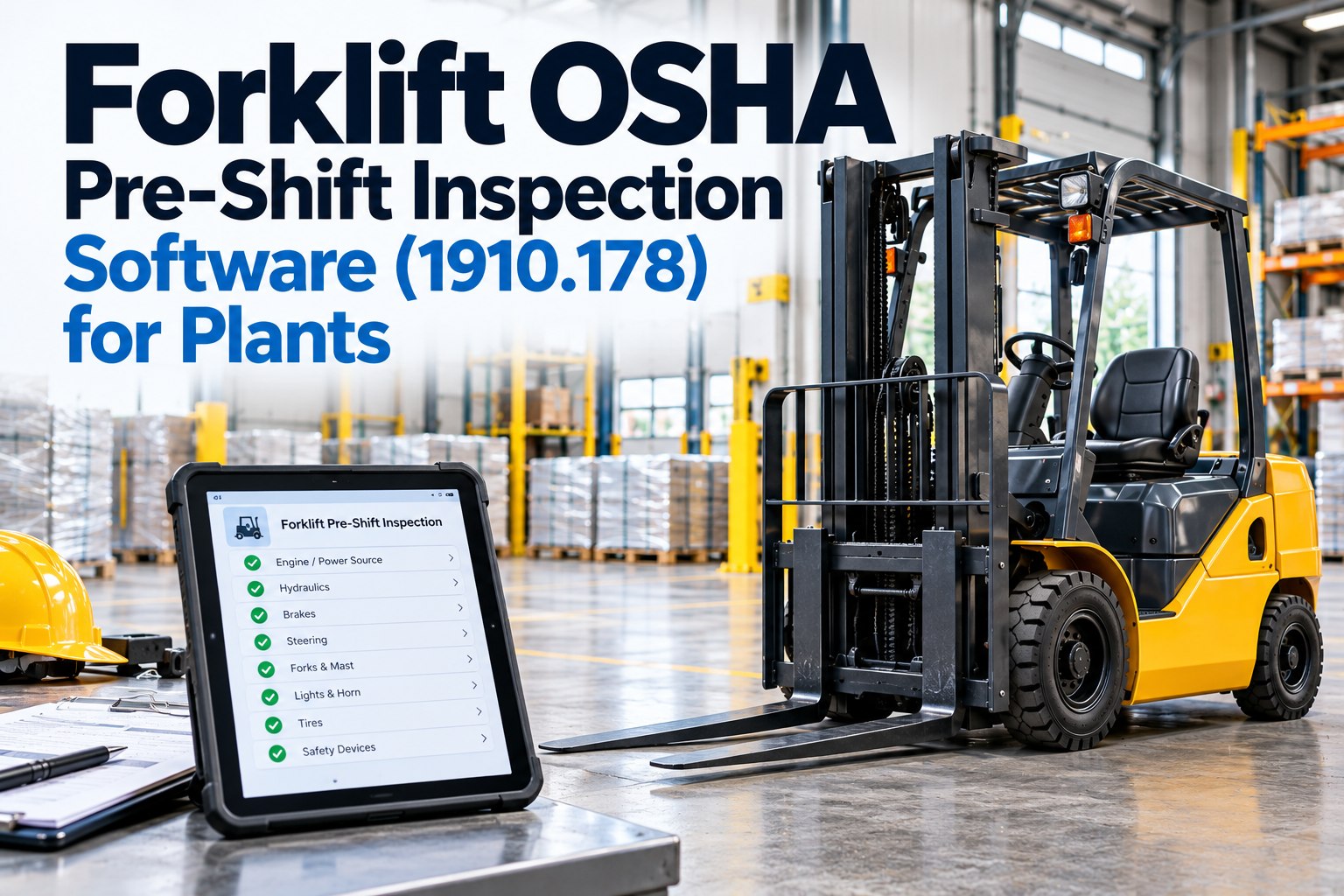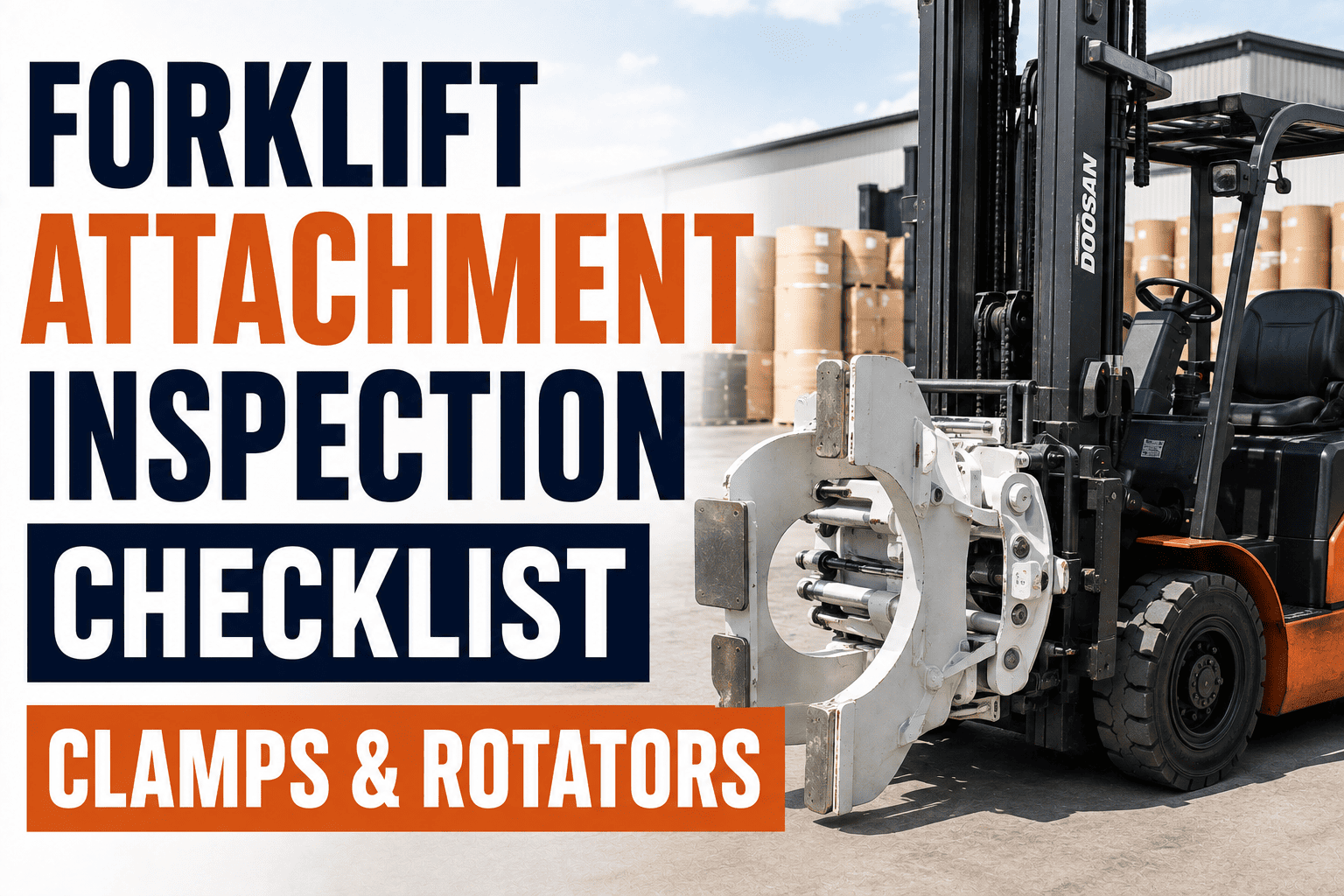
Bolt a rotating clamp or a paper roll handler onto a forklift and you haven't just added a tool, you've built a different machine. The center of gravity shifts, the rated capacity drops, and the wear points that need checking are nowhere on the standard forklift inspection form. Most facilities still run one generic checklist across every truck in the fleet, attachments and all, which means the exact parts most likely to fail are the ones nobody is actually looking at.
Every attachment changes a forklift's rated capacity, so OSHA 29 CFR 1910.178 requires an updated capacity plate matching the specific attachment, operator retraining before first use, and inspection points beyond the standard truck checklist. Clamps, rotators, and forks each need their own daily checks covering hydraulic connections, wear limits, locking pins, and capacity plate legibility.
Why One Checklist Can't Cover Every Attachment
A forklift equipped with a rotating clamp for paper rolls has inspection points a standard fork truck simply doesn't have, and that difference isn't cosmetic. OSHA is explicit that each type and configuration of powered industrial truck is unique, and checklists should be modified for the truck type and whatever attachment is mounted to it. A generic template applied to a clamp truck, a rotator, and a plain fork truck alike misses the specific wear patterns each one develops.
The reason comes down to physics as much as regulation. An attachment adds weight and shifts the load center further from the forklift's fulcrum point, which reduces how much the truck can safely lift. That's why a modified capacity plate is mandatory the moment an attachment goes on, and why OSHA treats an unloaded forklift carrying an attachment as though it were partially loaded rather than empty. A checklist that doesn't verify this plate matches the attachment currently mounted is missing the single most important check in the whole inspection.
Three Attachment Types, Three Different Risk Profiles
Clamps, rotators, and forks fail in different ways, which is exactly why they need separate inspection points rather than one shared list.
FleetRabbit builds a separate digital checklist for each attachment type on your fleet, so a clamp truck, a rotator, and a plain fork truck each get the checks that actually apply to them.
The Attachment Inspection Checklist
A complete attachment inspection runs across four checkpoints regardless of which attachment is mounted, then adds the type-specific items covered further below.
| Checkpoint | What To Verify | Reject If |
|---|---|---|
| Capacity Plate | Plate reflects the current attachment, is securely mounted, and legible from the operator seat | Plate missing, mismatched to attachment installed, or unreadable |
| Mounting and Pins | Attachment locked to the carriage, locking pins fully seated, no play under load | Pin not fully engaged, visible movement between attachment and carriage |
| Hydraulic Connections | Hoses free of cracks or leaks, fittings tight, auxiliary controls return to neutral | Fluid leak visible, hose showing wear or bulging, control that doesn't return to neutral |
| Function Cycle Test | Cycle the attachment through its full range before the first lift of the shift | Any hesitation, unusual noise, or drift during the cycle test |
Clamp-Specific Checks
Beyond the four core checkpoints, a clamp attachment needs its grip system verified directly. Check that the clamp pads are intact and free of embedded debris that could reduce contact surface, and confirm the hydraulic pressure holding the clamp closed matches the manufacturer's spec for the load being handled. A clamp that looks fine sitting open on the ground can still be dangerously under-gripping once it closes on an actual load, which is why this needs a functional test, not just a visual one.
Rotator-Specific Checks
Rotators put hydraulic hoses through a full range of rotation, so routing matters as much as hose condition. Confirm hoses aren't pinched, twisted, or snagging on the mast at any point in the rotation cycle, and check that the rotation mechanism stops and locks cleanly at the intended position without drift. A rotator that continues to creep after the operator releases the control is a load-drop risk that a quick end-of-cycle check will catch before it becomes an incident.
Fork-Specific Wear Checks
Forks wear gradually at the heel, the point where the vertical and horizontal sections meet, and that wear directly reduces the fork's load rating even when the tine still looks straight to the eye. Measure blade thickness against the manufacturer's minimum, check both tines sit at the same angle so a load doesn't tilt, and inspect the heel closely for cracking, since that's the highest-stress point on the entire fork. Telescoping forks on reach and turret trucks add an extension mechanism that needs its own check for smooth travel and a secure locked position at full extension.
FleetRabbit logs every attachment inspection with photo evidence, so a fork that's slowly wearing past its rated thickness gets flagged with data behind it, not just a supervisor's memory of "it's been fine so far."
Training And Retraining Requirements
Attachments don't just change what gets inspected, they also change who's qualified to operate the truck. OSHA requires operators to be retrained whenever a new attachment is added to a forklift, because a clamp or rotator changes the truck's handling, visibility, and mechanical limitations in ways that general forklift training doesn't cover. An operator who's certified on a plain fork truck isn't automatically qualified to run that same truck once a carton clamp is installed.
This is where inspection and training overlap in practice. A checklist that includes an attachment-specific function test also serves as a quick competency check, since an operator unfamiliar with a rotator's controls is more likely to miss subtle drift or hesitation during that test. Facilities managing several attachment types across a mixed fleet can book a demo with FleetRabbit to see how attachment checklists and operator assignments are managed together in one system.
Building A Documented Attachment Inspection Program
The capacity plate, the pin engagement, the hydraulic connections, and the type-specific wear points all need to be checked before the first lift of every shift, and all of it needs to be provable after the fact. A generic paper form that doesn't distinguish between a clamp truck and a rotator gets filled out the same way regardless of what's actually mounted, which defeats the purpose of having attachment-specific checks in the first place.
A digital checklist solves this by presenting the right form automatically based on which attachment is registered to that truck, timestamps every completed inspection, and flags a failed item straight to maintenance instead of leaving it on a clipboard. Facilities that want this level of attachment-specific tracking without building it manually can sign up for FleetRabbit and configure separate checklists for every attachment type in the fleet.
Clamps, rotators, and forks each fail differently, and a generic form catches none of it reliably. FleetRabbit gives every attachment on your fleet its own digital inspection, logged and photo-verified before the first lift.