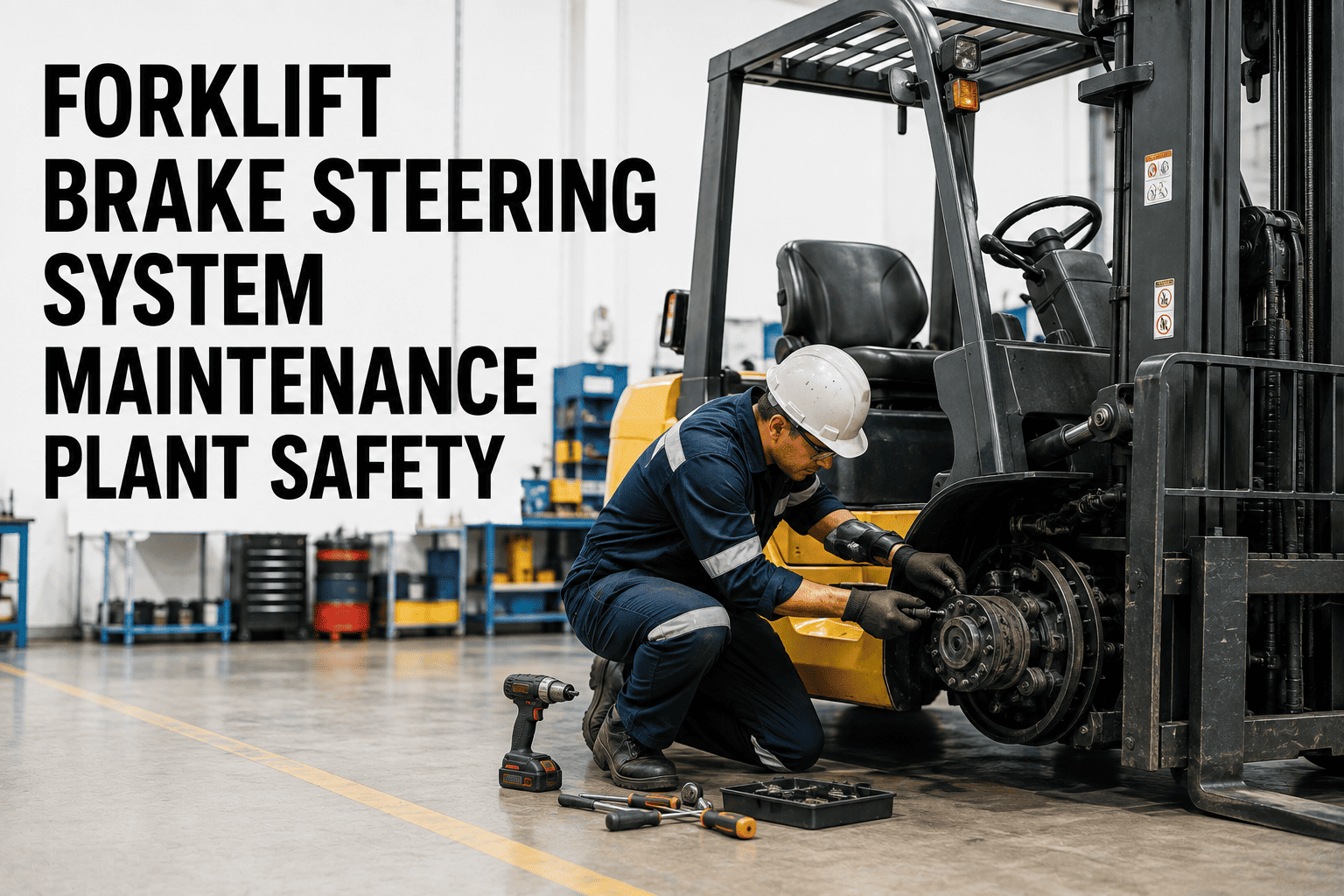
A forklift that stops a half second late or turns a few degrees wider than expected rarely announces itself as dangerous. The pedal still goes down, the wheel still turns, and the operator finishes the shift without incident. But brake and steering wear moves in that direction quietly, and when it finally crosses the line from sluggish to unsafe, the result is a tip-over or a collision rather than a warning light. Plant safety teams that treat brake and steering checks as a genuine daily discipline, not a box to tick, are the ones who catch that decline before it becomes an incident report.
Brake and steering malfunctions cause roughly 5 to 6 percent of forklift incidents, and nearly all of them trace back to inspection or maintenance that was skipped, delayed, or left incomplete. OSHA 1910.178(q)(7) requires brakes, steering, and hydraulics to be tested before every shift, and a low pedal, spongy brake feel, or excessive steering play is an immediate out-of-service condition. FleetRabbit turns that requirement into a tracked, auditable habit across every truck and every shift, so worn components get caught before they fail.
Why Brake and Steering Wear Is Different From Other Forklift Problems
Most forklift maintenance issues degrade gradually and give plenty of warning: a hydraulic leak spreads visibly, a tire wears down over weeks, an engine runs rough before it stalls. Brake and steering systems behave differently. A forklift can perform normally on flat, light-load travel right up until the moment it needs full stopping power on a ramp or a hard turn with a heavy load, and that is precisely when a worn component fails. This is why signing up for a free trial of a system that tracks brake and steering service intervals, rather than relying on operators to notice something subtle, closes a gap that manual inspection alone tends to miss.
The Regulatory Line You Cannot Cross
OSHA is explicit on this point: brakes, steering, and hydraulics must be functionally tested before the truck goes into service each shift, and any defect affecting safe operation takes the forklift out of service immediately, not on a "monitor it" basis. A forklift with a low brake pedal, a spongy brake feel, or noticeable steering play does not get a pass because the plant is behind schedule. Documenting that check, and proving it happened, is what separates a compliant plant from one exposed to citation and liability after an incident.
Where the Documentation Usually Breaks Down
Paper inspection sheets get signed without the check actually happening, especially on rushed shifts or when an operator is new. The gap is not usually dishonesty; it is a checklist item that feels routine until the one day it was not. Digital, timestamped inspection records close that gap because a supervisor can see exactly which truck, which operator, and which shift a brake or steering check was skipped, and act on it the same day rather than after an incident.
The Warning Signs Plant Teams Miss Most Often
What Happens When These Signs Get Ignored
Brake and steering failures make up a smaller share of total forklift incidents than operator error, but the incidents they cause tend to be severe. Tip-overs remain the leading cause of forklift-related fatalities, and a worn brake or a steering system with excessive play is one of the most direct mechanical paths to a tip-over, particularly when a loaded truck takes a corner too fast or needs to stop suddenly on a ramp. The mechanical failure is rarely sudden from a maintenance record's point of view; it shows up first as a note that gets deferred, then as an incident.
| System | Failure Point | Consequence If Ignored | Inspection Frequency |
|---|---|---|---|
| Service Brake | Worn linings, low fluid, air in lines | Extended stopping distance, tip-over on hard stop | Every shift, before use |
| Parking Brake | Cable stretch, worn shoes | Truck rolls on grade when unattended | Every shift, before use |
| Steering Linkage | Worn tie rods, loose column mounting | Delayed response, loss of control in tight turns | Every shift, before use |
| Power Steering | Pump wear, low fluid, hose leaks | Uneven assist, sudden binding mid-turn | Every shift plus weekly fluid check |
FleetRabbit puts OSHA-aligned brake and steering checks on every operator's phone, timestamps every result, and alerts supervisors the moment a truck fails a test, so a worn component never quietly stays in service.
Building a Brake and Steering Check Into Every Shift
A thorough pre-shift check does not need to take long, but it does need to happen in the same order, every time, by every operator. Consistency is what turns an inspection from a formality into a genuine safety control.
Why Documentation Matters as Much as the Check Itself
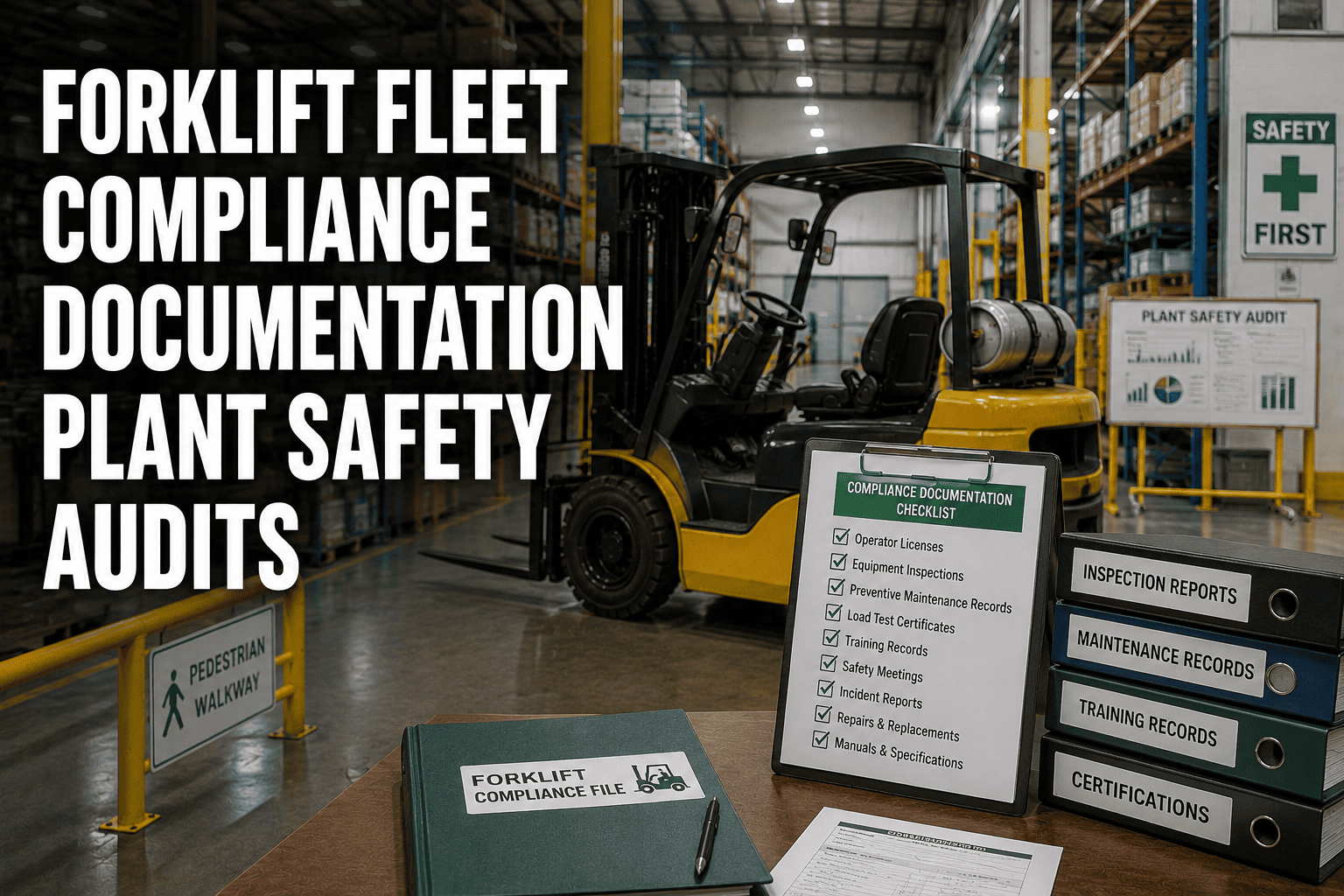
An inspection that happens but is never recorded protects no one after an incident. Written, timestamped records prove due diligence to OSHA, give maintenance teams a real history of which trucks develop brake or steering issues repeatedly, and give supervisors a same-day alert instead of finding out weeks later that a check was being rushed or skipped. Plants that want this running without relying on paper sheets can start a free trial and have every truck's inspection history visible from day one.
Spotting Repeat Offenders Before They Become a Pattern
A single truck that fails a brake or steering check more than once in a month is telling you something a paper form will not surface on its own: a specific component or a specific operating condition is wearing that truck faster than the rest of the fleet. Tracking inspection results digitally makes that pattern visible in weeks rather than months, giving maintenance teams a chance to intervene with a targeted repair before the pattern turns into an incident.
Frequently Asked Questions
Brake and steering failures give little warning before they turn into a tip-over or collision. FleetRabbit makes every pre-shift check digital, timestamped, and impossible to quietly skip, so your plant catches wear before it becomes an incident. Start free and see your fleet's inspection status today.