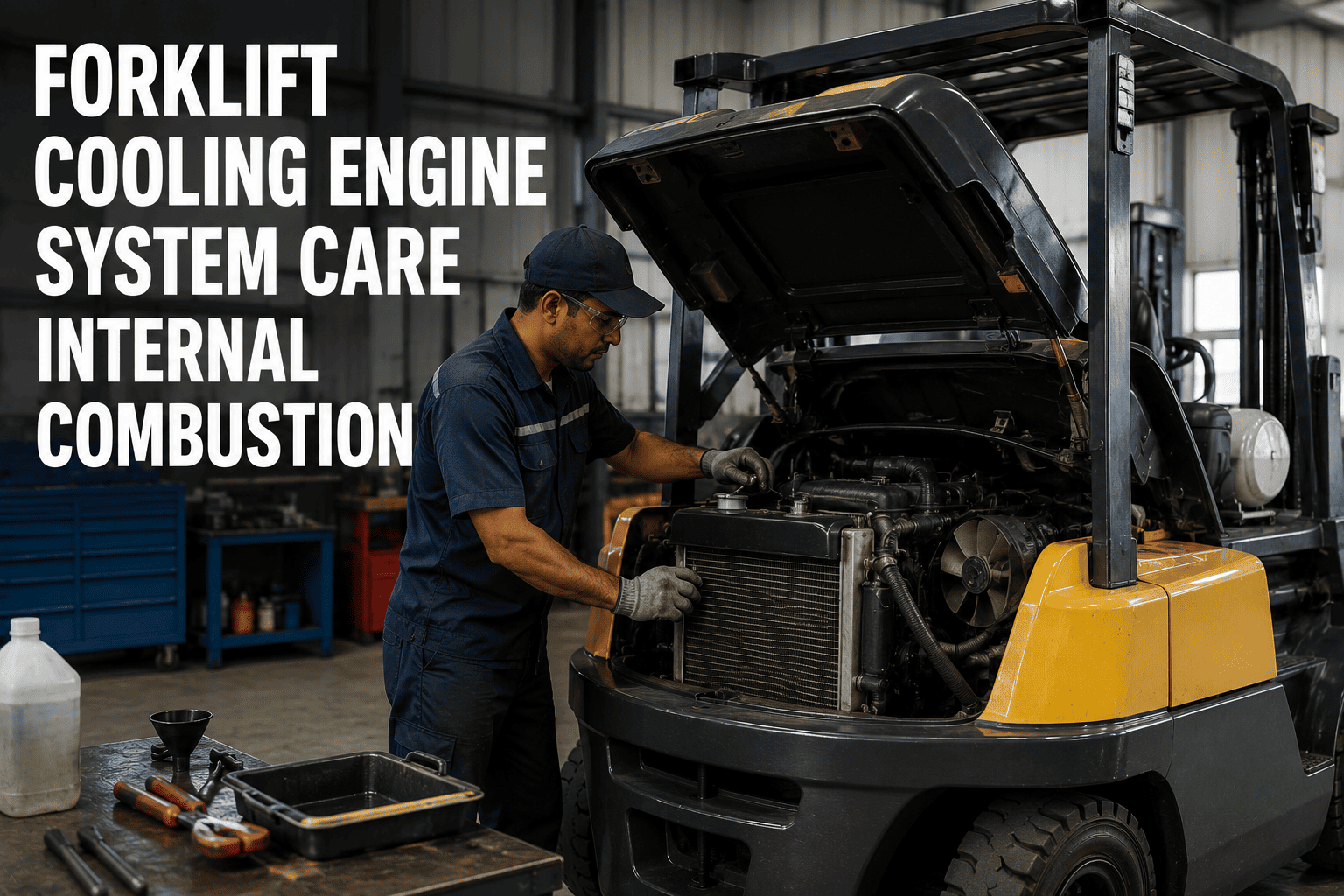
Every internal combustion forklift has a temperature gauge, and most operators glance at it about as often as they check the clock, which is to say rarely, until the needle is already climbing into the red. By then the engine has usually been running hot for longer than anyone realized, and the damage from that stretch of heat does not reverse itself once the truck cools back down. Overheating is one of the few forklift problems that gets dramatically worse the longer it goes unnoticed, which makes cooling and engine system care one of the highest-leverage maintenance habits an internal combustion fleet can build.
Forklift overheating is almost always traceable to one of five causes: low coolant, a clogged radiator, a worn fan belt, a leaking water pump, or the wrong coolant type. A single overheating incident can cost over 600 dollars in just a few hours of downtime, before repair costs are counted. Checking coolant before every shift and clearing radiator debris every 500 to 600 operating hours prevents the vast majority of these failures. FleetRabbit tracks engine hours and cooling system service intervals automatically so heat-related damage gets caught before it reaches the engine.
The Chain Reaction Behind Every Overheating Incident
An internal combustion forklift's cooling system exists to move heat away from the engine as fast as combustion generates it. Coolant absorbs heat inside the engine block, the radiator releases that heat into the surrounding air, and the fan and water pump keep everything circulating on schedule. When any single link in that chain weakens, whether it is coolant that has dropped below the safe line or a radiator fin clogged with warehouse dust, the whole system loses its margin for error. The engine does not fail the moment that margin disappears; it fails the first time it is pushed hard on a hot day, a heavy load, or a long shift without a break, which is exactly when a plant can least afford the downtime.
Why Manufacturing Floors Make This Worse
Warehouse and plant floors generate a steady supply of dust, packaging debris, and fine particulate that gets pulled straight into a forklift's radiator core through normal fan operation. Outdoor yard trucks face the same problem from dirt and grit. Over weeks, that buildup restricts airflow through the radiator fins exactly the way a clogged filter restricts airflow through an HVAC system, and the truck loses cooling capacity long before anyone notices a visible problem. Fleets that want visibility into which trucks are approaching their cleaning interval without relying on a technician remembering can start a free trial and get automated service reminders tied to actual engine hours.
The Hidden Cost of "It Cooled Down, So It's Fine"
A forklift that overheats and is allowed to cool naturally often returns to normal operation, which creates a dangerous impression that nothing serious happened. In reality, repeated heat cycling stresses gaskets, warps components slightly with each event, and shortens engine life even when no single incident causes an obvious failure. The damage is cumulative and largely invisible until a head gasket or major engine component finally gives out, at which point the repair bill is far larger than the coolant top-off that would have prevented it.
Five Causes Behind Nearly Every Overheating Incident
What an Overheating Incident Actually Costs
A single overheating event can sideline a forklift for several hours while it cools and gets inspected, and the downtime alone during that window commonly runs past 600 dollars once lost productivity and diverted work are counted. That figure climbs sharply if the incident causes internal damage, since head gasket or engine component repairs following an overheating failure run into the thousands rather than hundreds. The frustrating part is that nearly every one of these incidents traces back to a check that takes under a minute.
| Maintenance Task | Recommended Frequency | What It Prevents |
|---|---|---|
| Check Coolant Level | Before every shift | Sudden overheating from low fluid, the most common failure cause |
| Clean Radiator Debris | Every 500 to 600 operating hours | Gradual airflow restriction that reduces cooling capacity |
| Inspect Fan Belt Tension | Weekly or per manufacturer schedule | Slipping belt reducing fan and water pump speed |
| Check for Coolant Leaks | Every shift, visual check under truck | Slow coolant loss from hoses, seals, or water pump |
| Pressure Test Cooling System | Per manufacturer service interval | Weak radiator cap or hidden leak points not visible externally |
FleetRabbit tracks engine hours for every internal combustion truck and flags cooling system service before dust buildup or coolant loss becomes an overheating incident, so heavy duty cycles never catch your fleet off guard.
Protecting Your Fleet Through Hot Duty Cycles
Heat and humidity make every weak point in a cooling system fail faster, and heavy, continuous duty cycles remove the natural cooldown periods a truck would otherwise get between tasks. A few adjustments during demanding periods go a long way toward keeping engines inside their safe operating range.
Building Recovery Time Into Heavy Shifts
Short scheduled breaks during long, hot shifts give the engine a chance to shed accumulated heat before it compounds, and they double as a natural checkpoint for a quick coolant or radiator glance. Plants running extended shifts through summer months often see their overheating incidents cluster in the final hours of a shift, precisely when trucks have had the least opportunity to recover.
Using Engine Hour Data to Time Radiator Cleaning
Calendar-based cleaning schedules miss the difference between a truck running light duty indoors and one running heavy loads outdoors in dust and heat. Engine hour tracking closes that gap by triggering a cleaning reminder based on actual use rather than the date, which keeps high-duty trucks ahead of buildup instead of catching up after a gauge reading has already spiked. Fleets ready to move off calendar-based scheduling can sign up for a free trial and set hour-based cooling alerts within the same day.
Frequently Asked Questions
Overheating rarely announces itself until real damage has already begun. FleetRabbit tracks engine hours and cooling system service across your entire internal combustion fleet, so heavy duty cycles never turn into an unplanned engine repair. Start free and see your fleet's cooling status today.