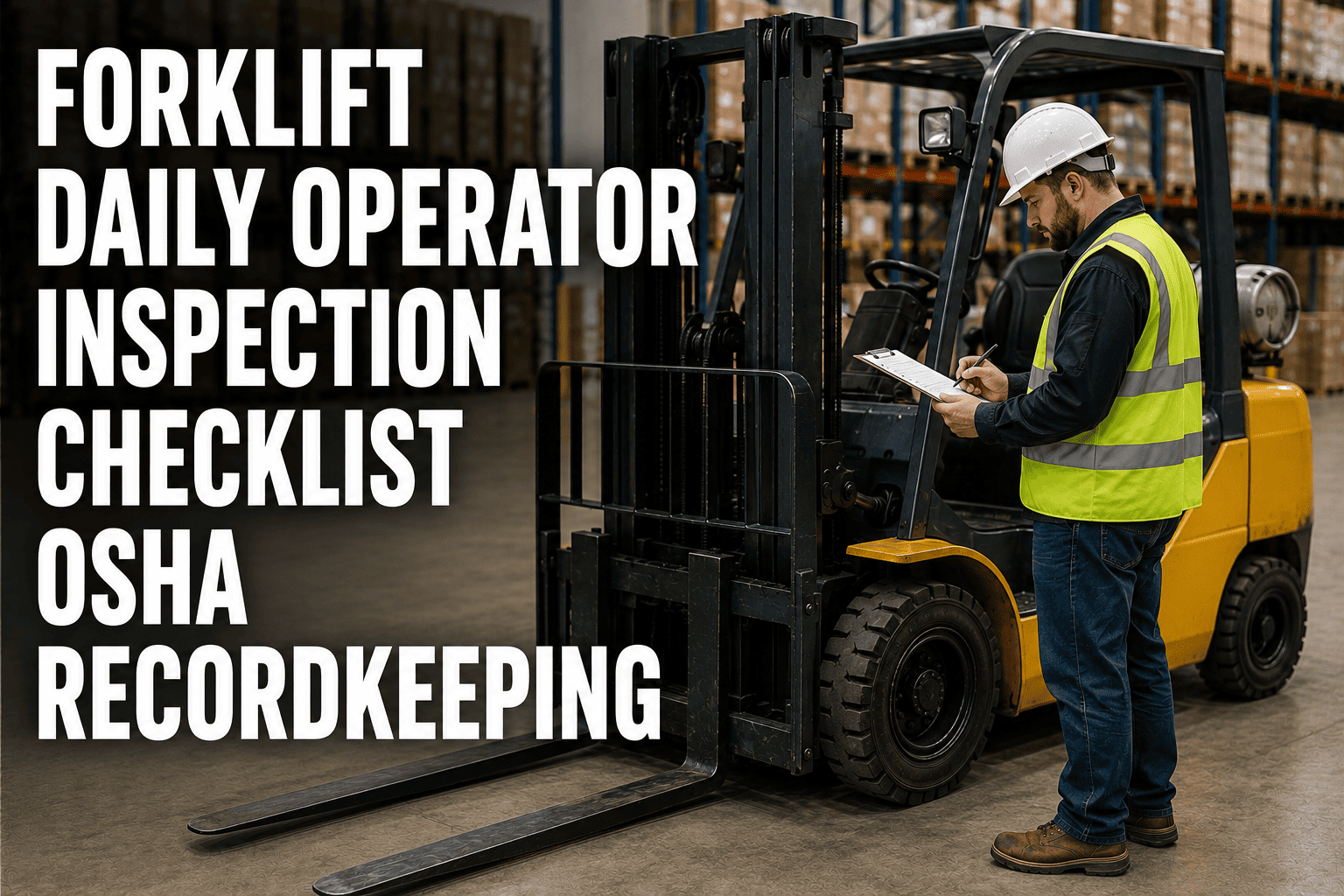
A forklift that ran perfectly yesterday can fail today, and nothing about a cracked fork, a slow hydraulic leak, or a worn brake pad is visible from across the warehouse floor. The only thing standing between a normal shift and an incident report is a documented inspection completed by the operator before the key ever turns. OSHA does not treat this as a suggestion. It is a standing requirement under federal regulation, and a missing or incomplete record is one of the easiest things for an inspector to flag during an audit.
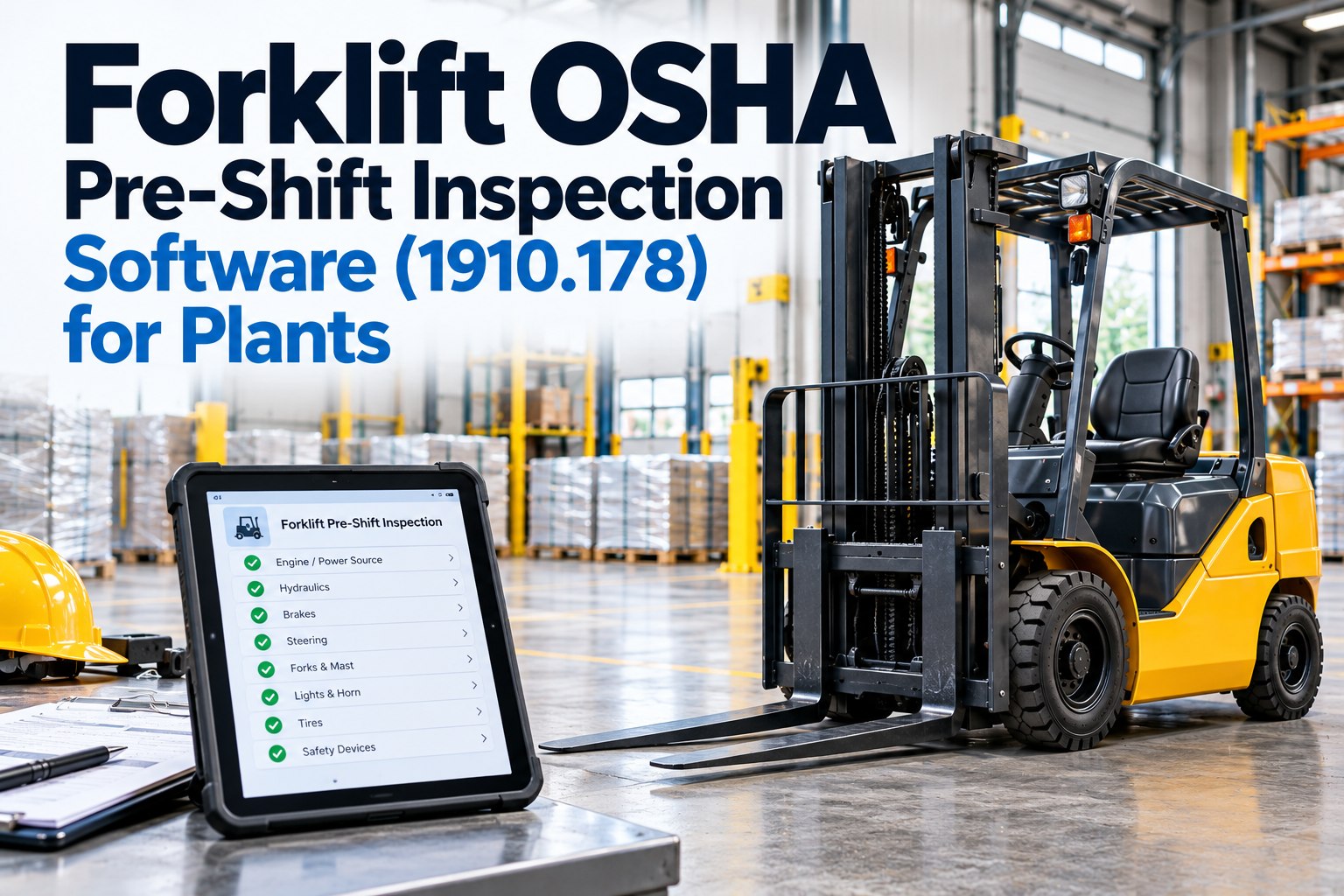
OSHA 29 CFR 1910.178(q)(7) requires every forklift to be inspected before it is placed in service each shift, with defects documented and the truck removed from service until repaired. A compliant daily inspection covers forks, mast, hydraulics, brakes, tires, lights, and operator controls, takes 5 to 10 minutes, and the resulting record must be retained to prove the check happened. Skipping it contributes to roughly 85 forklift-related fatalities and 34,900 serious injuries reported annually in the United States, and OSHA penalties for a missing inspection record now run up to 16,550 dollars per serious violation and as much as 165,514 dollars for willful or repeat violations.
Forks and Blades
Cracks, bends, heel wear, no unauthorized welding repairs.
Mast and Chains
Chain wear and stretch, roller and rail condition, proper lubrication.
Hydraulic System
Fluid level at the sight glass, contamination check, no active leaks.
Brakes and Pedals
Service and parking brake response, smooth pedal return to neutral.
Tires and Wheels
Chunking, flat spots, or debris on solid tires; tread and pressure on pneumatic.
Lights and Horn
Headlights, warning lights, backup alarm, and horn all functioning.
Fluid Leaks
Check the floor beneath the truck first, then oil, coolant, and battery.
Operator Controls
Deadman seat sensor, steering response, and instrument panel warnings.
What OSHA Actually Requires for Daily Inspections
The regulation itself is short and direct. 29 CFR 1910.178(q)(7) states that industrial trucks must be examined before being placed in service and must not be placed in service if the examination shows any condition adversely affecting the safety of the vehicle. For a single-shift operation, that means once daily. For a plant running around the clock, it means an inspection at the start of every shift, since the truck a night operator inherits may have accumulated wear the day operator never saw.
The Two-Stage Inspection Framework
A compliant inspection is not a single glance at the truck. It follows two distinct stages, and skipping either one leaves gaps an auditor will notice.
Stage One: Engine-Off Walk-Around
With the truck parked on level ground, parking brake set, and key removed, the operator walks the entire machine checking forks, mast, tires, overhead guard, and the floor beneath the truck for leaks before touching a single control.
Stage Two: Engine-On Functional Test
Once the walk-around is clear, the operator starts the truck and tests brakes, steering, horn, lights, hydraulic lift and tilt function, and the deadman seat sensor that should stop the truck from operating without an operator present.
An active fluid leak found during either stage is treated as an immediate out-of-service condition under 29 CFR 1910.178(p)(4), meaning the truck does not run until a qualified technician clears it.
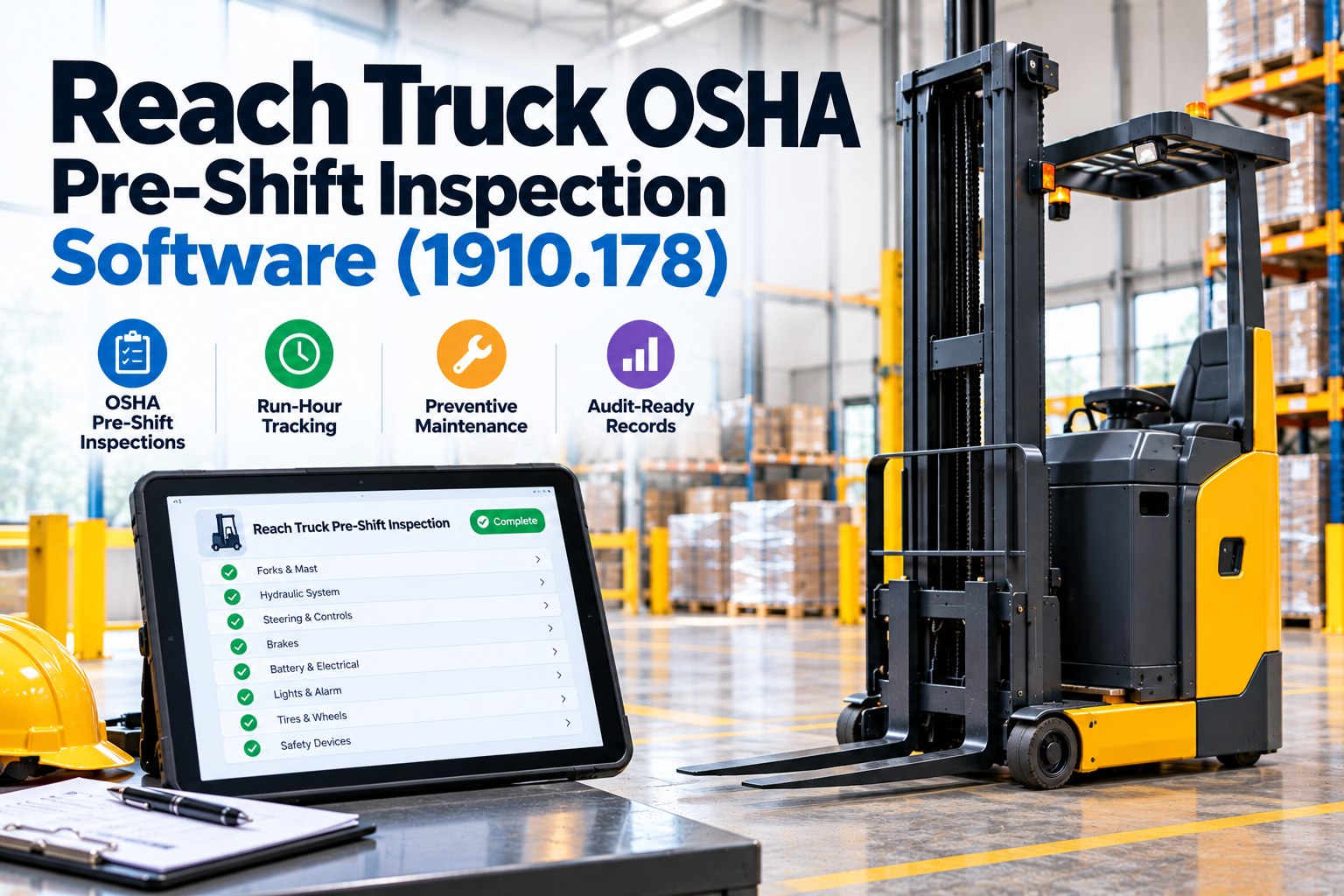
FleetRabbit walks operators through the engine-off and engine-on checks in order, flags failed items instantly, and locks a defective truck out of service automatically. Sign up for a free trial and digitize your inspection process this week.
The Complete Daily Inspection Checklist
Every truck type has its own quirks, but the core categories below apply across electric, propane, and diesel forklifts, adjusted for power-type-specific items like battery connectors or tank mounting.
| Category | Check | Fail Condition |
|---|---|---|
| Forks | Cracks, bends, heel wear, tip height difference | Any crack, bend over 3 degrees, or heel wear below 90 percent |
| Mast and Carriage | Chain tension, lubrication, roller and rail wear | Visible stretch, dry chain, or damaged rollers |
| Hydraulics | Fluid level, contamination, hose condition | Low fluid, visible contamination, or active leak |
| Brakes | Service brake, parking brake, pedal return | Delayed response or pedal that does not return to neutral |
| Tires | Wear pattern, inflation, damage | Chunking, flat spots, or sidewall damage |
| Deadman Sensor | Seat presence detection stops truck function | Truck operates without operator in the seat |
Power-Type-Specific Additions
Electric trucks add a battery charge, connector, and electrolyte check. Propane trucks require tank mounting and a leak test on the hose and fittings. These checks differ enough by power type that a generic checklist alone is not sufficient without site-specific adjustment.
What a Compliant Inspection Record Must Include
A completed inspection that is never documented is functionally the same as one that never happened, at least from an auditor's perspective. The record itself carries as much weight as the inspection.
How Long to Keep Records
OSHA expects inspection and training records to be retained for one to three years, though many facilities keep them for the full life of the equipment to support audit readiness, warranty claims, and incident investigations if one ever occurs.
The Real Cost of Skipping Inspections
A significant share of these incidents and citations trace directly back to skipped pre-shift checks and defects that were noticed but never documented or acted on. The inspection itself is only half the requirement. The record proving it happened is the other half, and it is usually the record, not the equipment, that an inspector finds missing first.
FleetRabbit captures truck ID, operator, timestamp, and every checked item automatically, so your inspection records are complete the moment the last item is checked. Book a demo to see the record trail in action.
The daily forklift inspection is one of the smallest time investments in a plant's entire safety program and one of the most consequential when it gets skipped. A five to ten minute check, done consistently and documented completely, is what stands between a routine shift and a citation, an incident, or worse. Plants that treat the inspection and the record as equally non-negotiable are the ones that walk into an OSHA audit with nothing to worry about.
FleetRabbit guides every operator through a complete pre-shift inspection and keeps every record timestamped and ready for review. Start free and see your first digital inspection today, no credit card required.