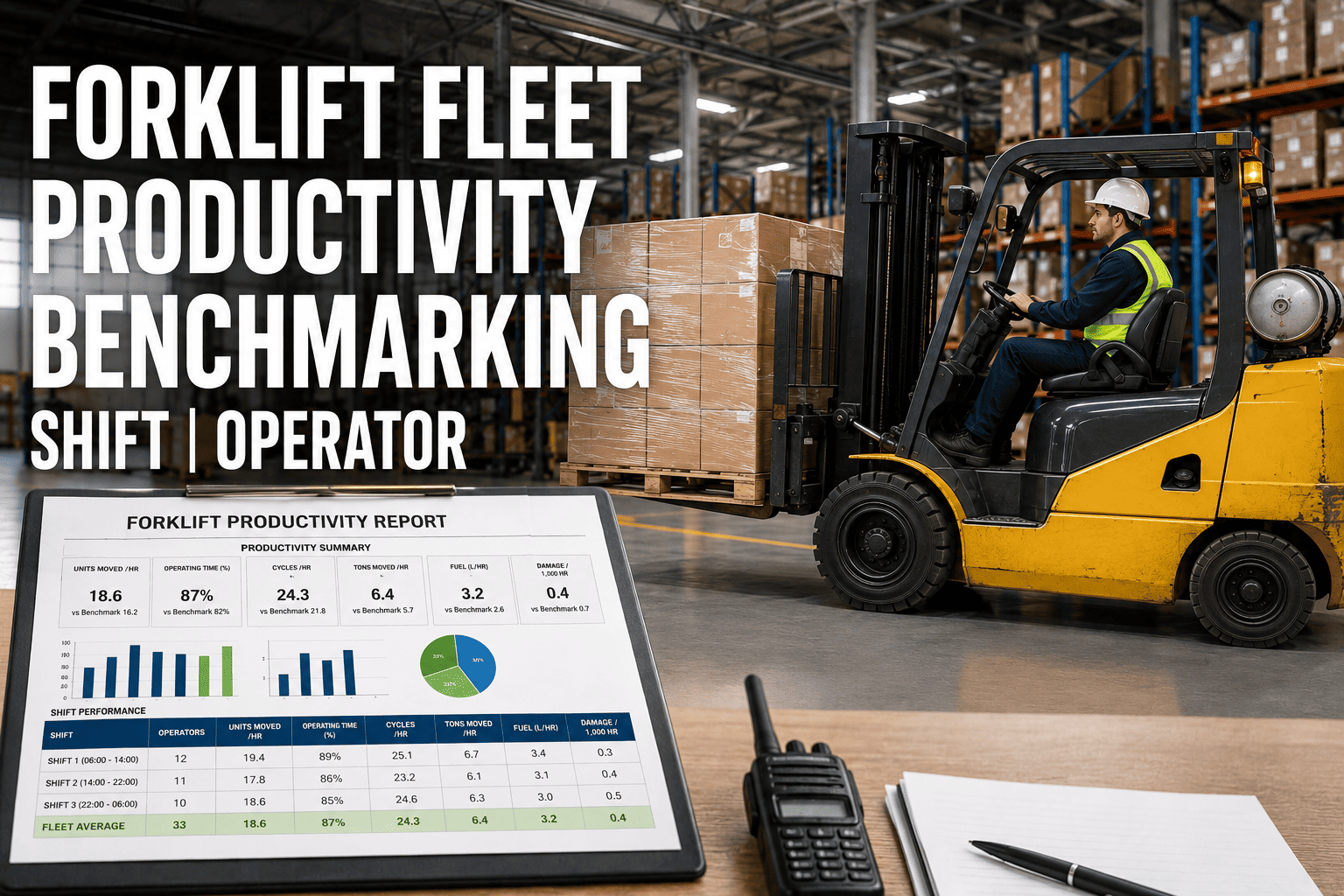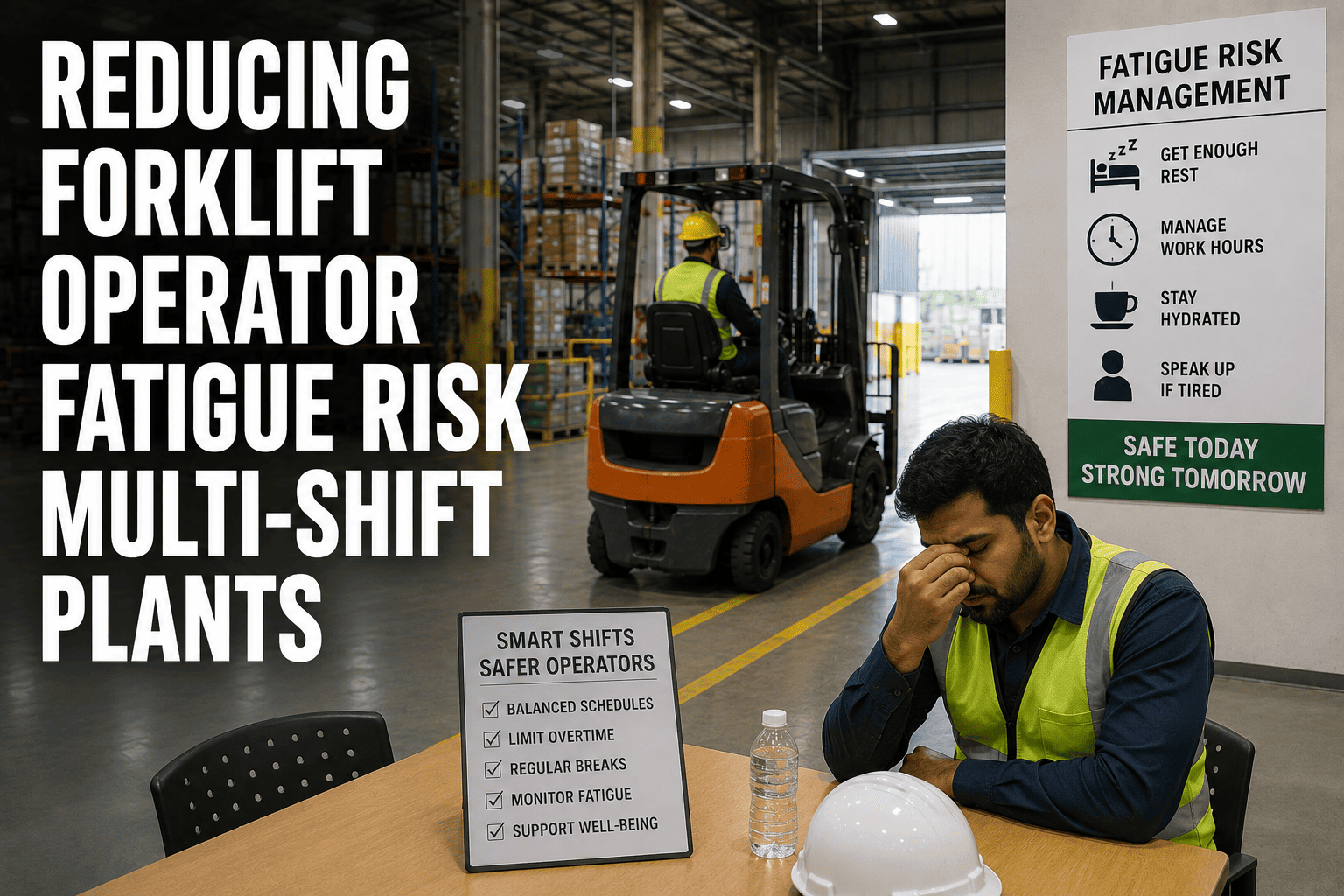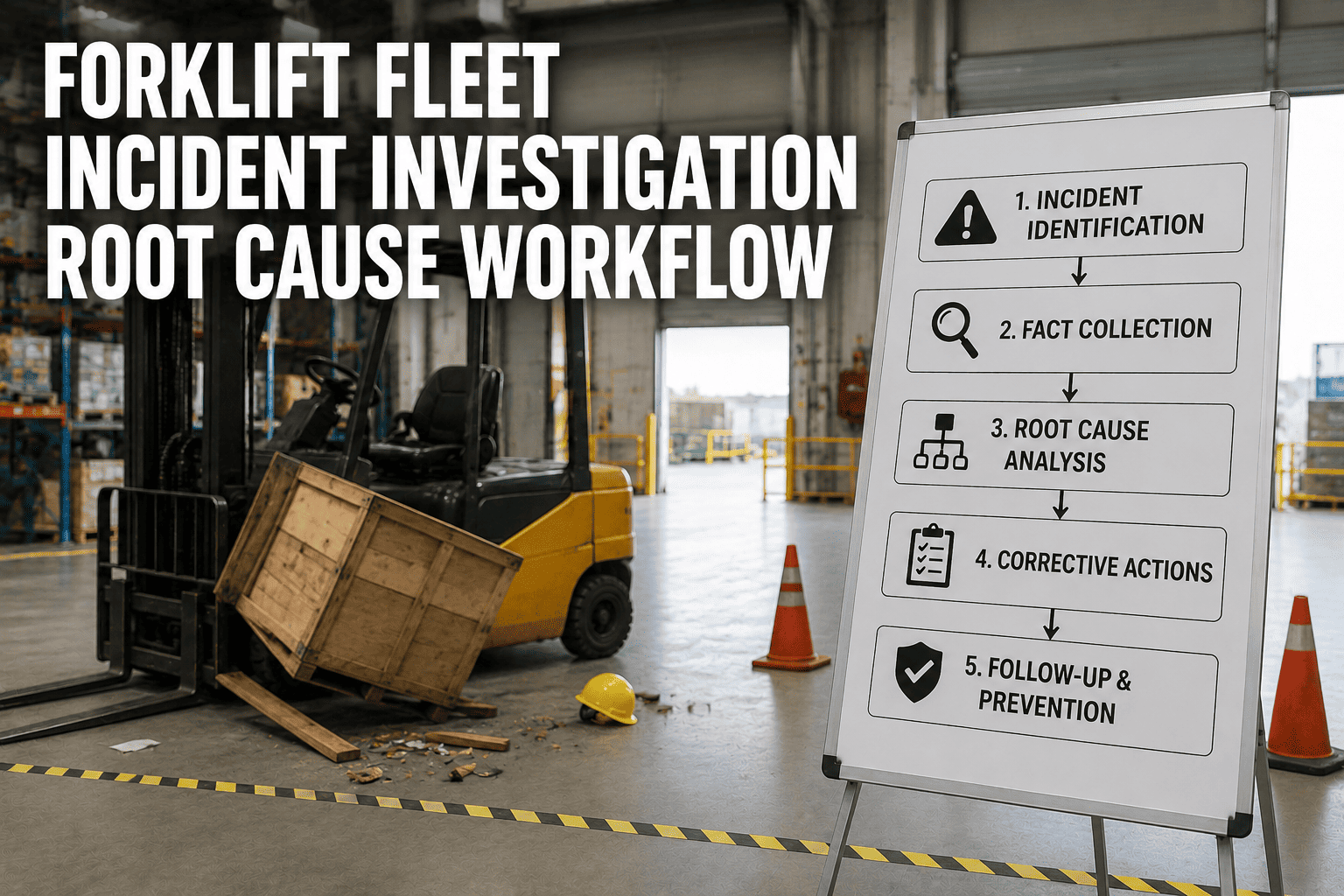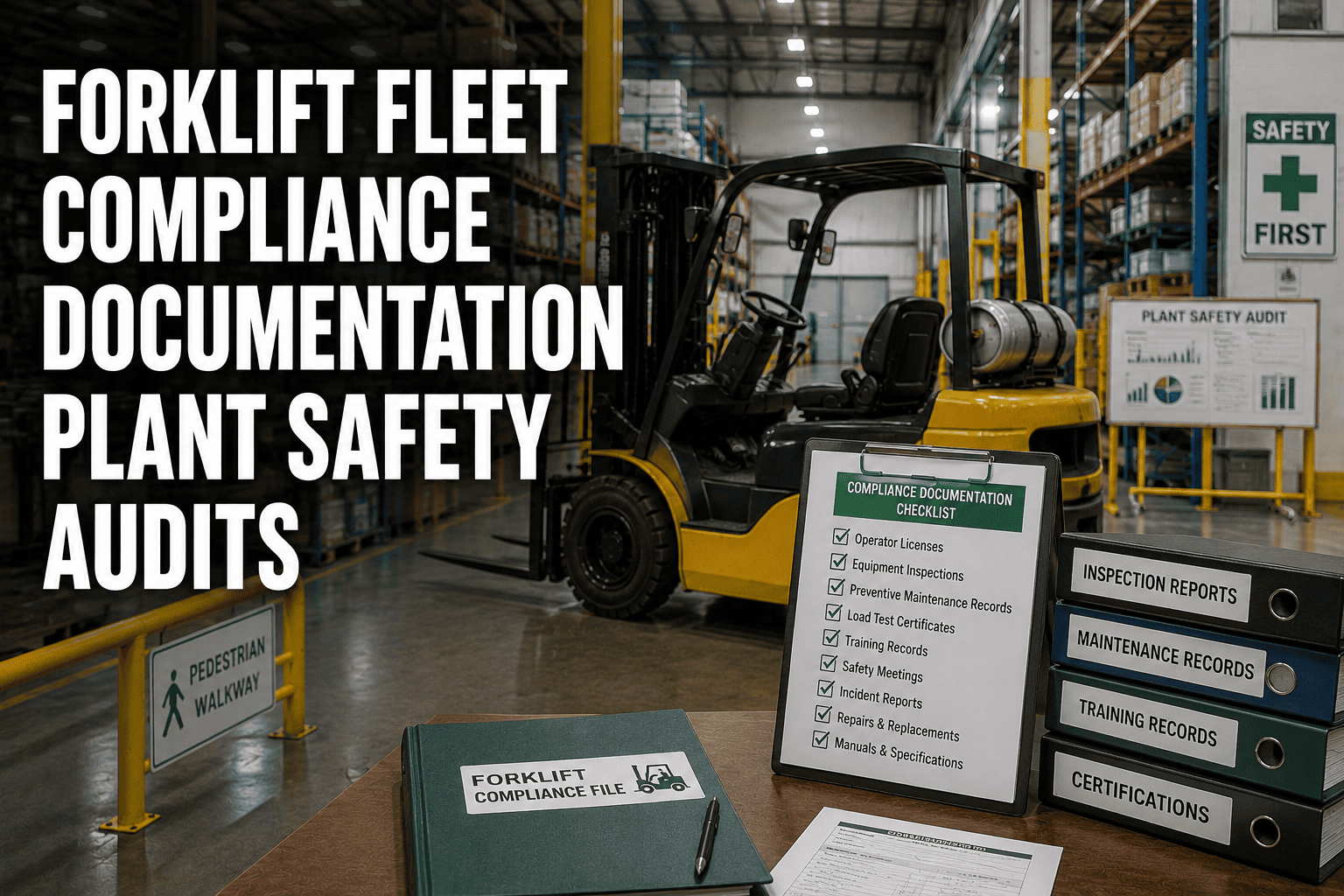
An OSHA inspector rarely announces a visit in advance, and when one walks onto your floor, the first thing they ask for is rarely a forklift itself. It's the paperwork behind it: who was trained, when the truck was last inspected, and whether a defect was caught and fixed before the shift began. Powered industrial trucks consistently rank among OSHA's most cited standards, and a large share of those citations have nothing to do with unsafe driving. They come from records that exist somewhere in a binder or a filing cabinet but cannot be produced, complete, in the minutes an inspector is standing in front of you.
Plant safety audits for forklift fleets center on four record types: daily pre-shift inspection logs, operator certification files, refresher training documentation, and maintenance history. Roughly three of the five most common forklift citations trace back to missing or incomplete records rather than unsafe operation. Serious violations can run up to 16550 dollars each, and willful or repeat violations can reach 165514 dollars, which makes documentation one of the highest-leverage areas of forklift compliance.
The Four Records Every Forklift Audit Asks For
When an inspector requests forklift documentation, the request almost always falls into one of four categories. Knowing what each one must contain, before the audit happens, is what separates a five-minute file pull from a scramble through a filing cabinet.
Daily Pre-Shift Inspection Logs
Every powered industrial truck must be checked before it goes into service each shift, and the log has to prove that the check actually happened. That means recording who performed the inspection, when it happened, what was found, and what was done about any defect. A truck with a defect that stayed in service anyway is one of the fastest ways to turn a routine walkthrough into a serious citation.
Operator Certification Files
This is the single most-cited record category. A valid certification file needs four specific fields: the name of the operator it applies to, the date formal and practical training was completed, the date of the workplace performance evaluation, and the name of the person who conducted the training or evaluation. A file missing even one of those fields fails an audit, even if the training itself took place exactly as required.
Refresher Training Documentation
Refresher training is required after an accident, a near-miss, observed unsafe operation, or a change in the type of truck an operator runs, and it resets the three-year certification clock. Facilities that cannot show when refresher training was triggered and completed are exposed even if the operator was, in practice, perfectly safe.
Maintenance And Defect History
Beyond daily checks, a documented maintenance history shows that recurring issues were tracked and repaired rather than patched over. Inspectors use this history to see whether a truck involved in an incident had a pattern of ignored warning signs leading up to it.
FleetRabbit captures inspection logs, certification files, refresher training, and maintenance history automatically, so every field is filled and every record is timestamped. Sign up to digitize your first fleet's records, or book a demo to see an audit pulled up in real time.
What Missing Documentation Actually Costs
Penalty amounts scale with how the violation is classified, and documentation gaps rarely stay isolated. A missing certification field often points to a pattern across an entire operator roster, which is exactly what turns a single citation into a much larger one.
| Violation Type | Typical Trigger | Penalty Range | How Documentation Prevents It |
|---|---|---|---|
| Serious Violation | An incomplete inspection log or a certification record missing one required field | Up to 16550 dollars | Enforced required fields catch gaps before an inspector does |
| Willful Or Repeat Violation | A previously cited gap that was never corrected across the fleet | Up to 165514 dollars | Fleet-wide visibility flags the same gap on every truck, not just the one inspected |
| Expired Certification | An operator past the three-year renewal window without a documented trigger | Cited per operator affected | Automated renewal alerts before the certification clock runs out |
| Missing Inspection Log | A truck placed in service without a documented pre-shift check | Cited per shift affected | Digital logs completed at the point of inspection, not reconstructed later |
Building A Documentation System That Survives An Audit
Paper systems tend to fail audits not because the training or the inspection never happened, but because the record proving it happened cannot be found fast enough or is missing a required detail. Moving records into a single digital system closes that gap.
Capture Records At The Point Of Work
Pre-shift inspections completed on a tablet or mobile device at the truck itself are far less likely to be skipped or backfilled later than a paper checklist filed at the end of a shift.
Enforce Required Fields Automatically
A digital certification record that will not save without the operator name, training date, evaluation date, and evaluator name removes the single most common reason a "trained" operator still triggers a citation.
Set Renewal Alerts Before The Clock Runs Out
Automated reminders ahead of the three-year certification deadline mean recertification happens on schedule instead of being discovered during an inspection.
What A Ready Audit Folder Looks Like
When an inspector asks for records, an audit-ready facility can produce, within minutes, a complete certification file for every operator on the floor, a current inspection log for every truck in service, refresher training dates for any operator who triggered one, and a maintenance history showing defects were tracked to resolution. Sign up for a free trial to build that folder automatically, or book a demo to see a full audit pull walked through live.
Frequently Asked Questions
Inspection logs, certification files, refresher training, and maintenance history, all in one place, complete, and pulled up in seconds instead of hours. FleetRabbit keeps your forklift fleet audit-ready every day, not just the day an inspector shows up.