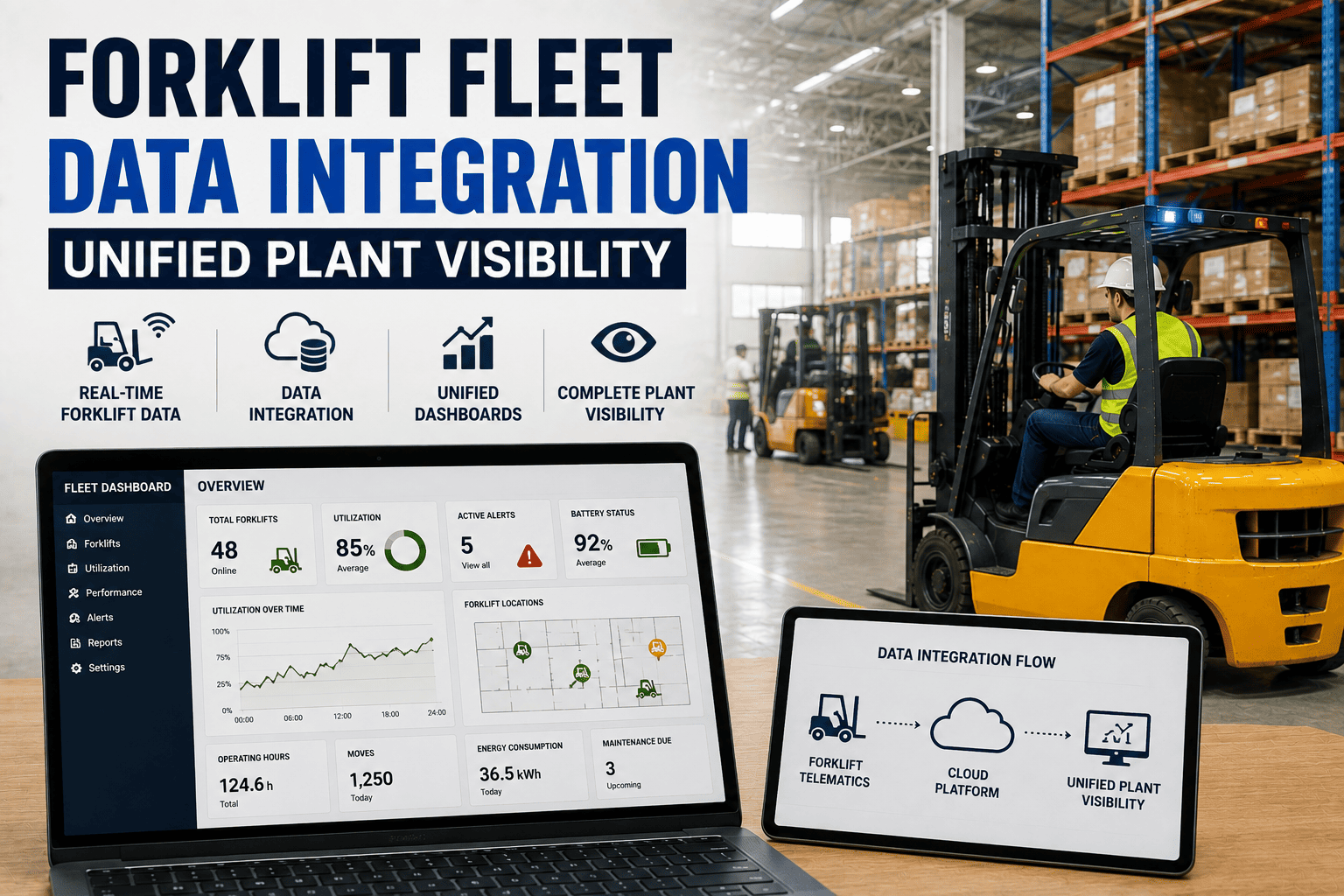
Ask a plant manager how their forklifts are performing and you'll usually get four different answers from four different screens. Maintenance has its own log of repairs. Safety keeps a separate record of near-misses and violations. Operations tracks utilization in a spreadsheet nobody updates consistently. ERP holds the asset and cost data but never talks to any of the other three. None of these systems are wrong on their own, but none of them show the whole plant either. Forklift data integration means pulling maintenance, utilization, safety, and ERP data into one connected view, so a decision made in one area is informed by everything happening around it.
Forklift fleet data integration connects maintenance records, utilization tracking, safety events, and ERP asset data into a single system instead of four separate ones. Plants that unify this data catch the patterns that stay invisible in silos, such as a driver whose habits are both triggering safety alerts and accelerating brake wear, and typically see measurable reductions in downtime and repair costs once maintenance decisions are informed by real usage and safety data together.
Four Systems, One Blind Spot
Most plants aren't missing data. They're missing the connection between the data they already collect. Each department has good reasons for tracking what it tracks, but when the four core data sources stay separate, the patterns that matter most never surface.
The Cost Of Keeping Them Separate
When these four sources never meet, a truck can fail three inspections, rack up excessive brake wear, and post a rising repair bill, all while every one of those signals sits in a different system. By the time anyone connects the dots, the plant has already absorbed the downtime.
A Pattern That Only Shows Up When Data Is Combined
An operator who repeatedly triggers proximity or impact alerts in high-traffic zones is often the same operator whose truck needs brakes and tires replaced sooner than the fleet average. Safety data and maintenance data tell that story together. Neither one tells it alone.
FleetRabbit pulls maintenance, utilization, safety, and ERP asset data into a single dashboard so plant leaders stop reconciling four reports before every decision. Sign up free to connect your first vehicles, or book a demo to see your own data unified.
How Data Moves Once It's Unified
Integration isn't about dumping every data point into one screen. It's about letting each source inform the others automatically, so the system flags patterns a person scanning four reports would likely miss.
What Changes When The Silos Come Down
| Question A Plant Manager Asks | Answer In Silos | Answer When Unified |
|---|---|---|
| Which truck should we retire first | A guess based on age or a maintenance team's memory | A ranked list based on repair cost, downtime, and depreciation together |
| Which operator needs coaching | Only visible after a serious incident report | Flagged early from combined safety and wear patterns on the same truck |
| Are we running the right number of trucks | Assumed based on headcount, rarely verified | Answered directly from utilization data across every shift and zone |
| What is this fleet actually costing us | An ERP figure updated on a fixed schedule | A live number reflecting current repair, downtime, and usage trends |
Fewer Reports, Faster Decisions
When maintenance, utilization, safety, and ERP data live in one place, a plant manager doesn't need to wait for four separate reports to be compiled and cross-referenced by hand before making a call on staffing, repairs, or replacement.
FleetRabbit connects directly with major ERP systems and pulls in maintenance, utilization, and safety data automatically, so nothing gets left in a spreadsheet. Try it yourself with a free sign-up, or talk through your current setup on a 30-minute demo call.
Frequently Asked Questions
The Bottom Line
Every plant already has the data it needs to run a safer, more efficient forklift fleet. It's just spread across four systems that were never designed to talk to each other. Unifying maintenance, utilization, safety, and ERP data doesn't mean collecting more information, it means finally being able to see the connections in the information you already have. That's usually where the biggest, fastest improvements in plant visibility come from.
FleetRabbit unifies your maintenance, utilization, safety, and ERP data into one connected view, so plant decisions are based on the complete picture, not a partial one. See it running on your own fleet with a free trial or a live walkthrough.