Walk any manufacturing floor and you will see it in minutes: a forklift rolling past a pedestrian walkway a little too fast, a lift truck parked in a fire lane because it was the closest spot, or a battery left off charge overnight because nobody logged where it was plugged in. None of this shows up on paper until an incident report does. Fleet managers know exactly how many forklifts they own, but very few know exactly where each one is right now relative to the zones that matter most.
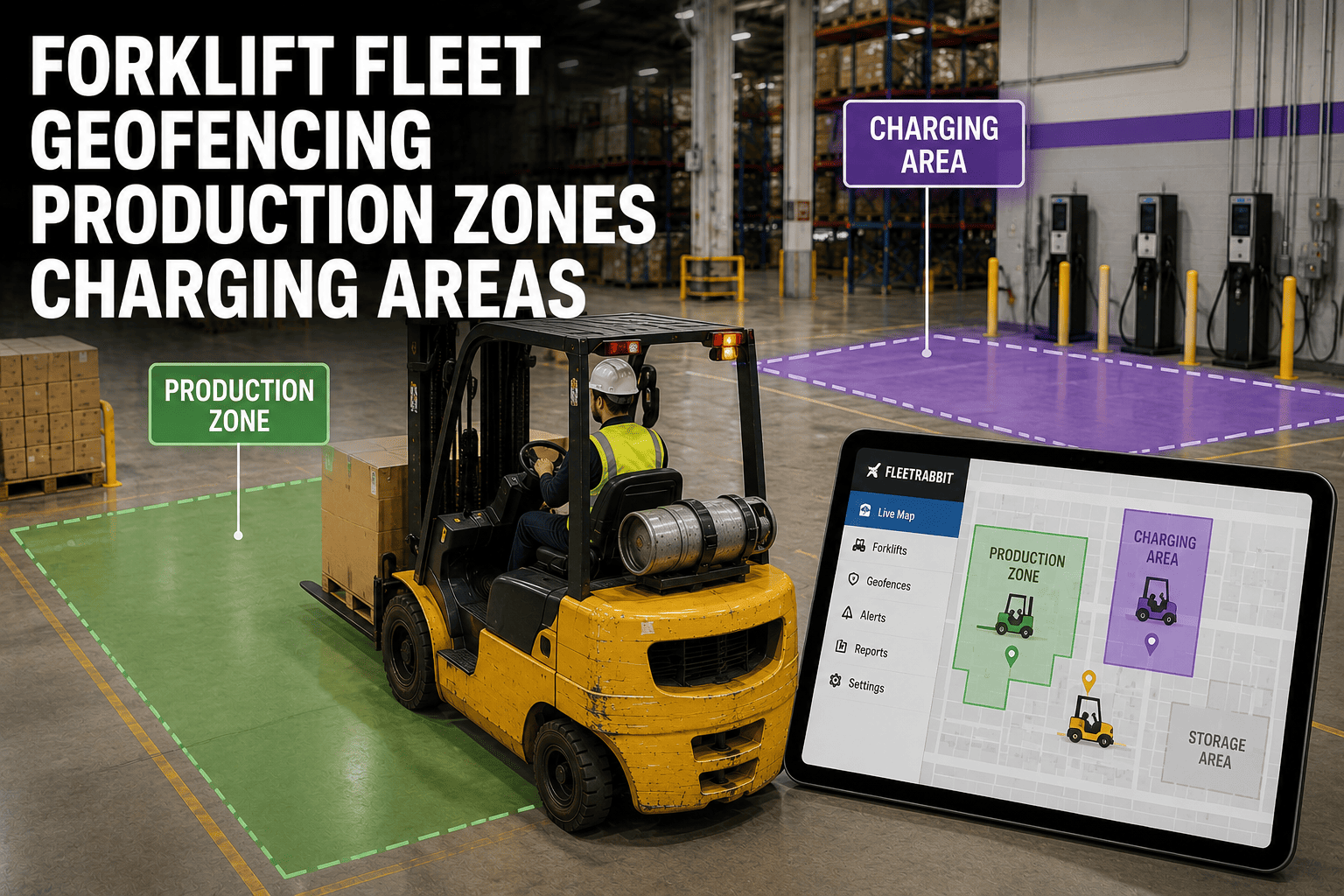
Forklift fleet geofencing draws digital boundaries around production zones, charging bays, pedestrian aisles, and restricted areas, then triggers automatic alerts the moment a truck enters, exits, lingers, or speeds inside them. Fleets using geofencing typically cut unauthorized zone entries and pedestrian near-misses by a wide margin within the first few months, while charging area geofences reduce battery damage from missed or interrupted charging cycles. You can see how this looks on your own floor by starting a free trial with FleetRabbit.
How Forklift Geofencing Actually Works
Geofencing sounds technical, but the concept is simple once you see it in action. A digital boundary is drawn over a real location using GPS or facility mapping data, and every forklift fitted with a tracking sensor is watched against that boundary in real time. The three moving parts below are what turn a paper floor plan into a live safety and productivity system.
The Blind Spot Most Plants Never Measure
Forklifts are consistently one of the more dangerous pieces of equipment on any industrial floor. Government workplace safety data points to tens of thousands of forklift-related injuries recorded across U.S. facilities every year, with a meaningful share involving pedestrians struck in shared aisles and roughly a quarter of serious incidents linked to tip-overs near turns, ramps, or congested zones. Industry analysts also note that around one in ten forklifts on the road is involved in some kind of incident annually. What almost all of these events have in common is a location problem: the truck was somewhere it should not have been, moving faster than it should have been, or lingering where it was creating risk.
Why Zone Awareness Beats Zone Signage
Painted floor lines and posted speed limits rely entirely on an operator remembering and choosing to follow them, shift after shift, for years. A geofence does not get tired at the end of a double shift. It flags the deviation the moment it happens, so a supervisor is dealing with a warning instead of an incident report.
Where This Matters Most on the Floor
Production lines with tight tolerances, charging rooms with ventilation and spill requirements, and pedestrian-heavy corridors near breakrooms or shipping desks are the three areas where a few feet of unmonitored drift causes the most expensive outcomes.
FleetRabbit lets you draw production, charging, and restricted zones directly over your facility layout and start receiving live alerts the same day. Try it with three vehicles at no cost, or talk through your floor plan with our team first.
Geofencing Production Zones: Keeping Trucks Where They Belong
Production zones are usually the tightest, busiest, and least forgiving areas of a plant. Assembly lines, robotic work cells, and quality inspection bays cannot tolerate a forklift clipping a corner or idling in a walkway. Geofencing turns each of these areas into a monitored boundary instead of an honor system.
Restricted Zone Alerts
When a forklift crosses into a line it is not authorized to enter, a live alert reaches the floor supervisor and the operator's handset at the same moment, so the correction happens before product, equipment, or a person is put at risk.
Speed-Controlled Zones
Corridors near workstations and pedestrian crossings can be assigned a maximum speed. Crossing that threshold inside the zone logs an event and notifies safety staff, building an evidence-based case for coaching instead of relying on guesswork.
| Zone Type | Primary Risk | Geofence Response |
|---|---|---|
| Assembly Line Cells | Collision with equipment or personnel | Instant alert on unauthorized entry, entry logged for review |
| Pedestrian Corridors | Struck-by incidents at blind corners | Speed cap enforcement with automatic overspeed logging |
| Quality and Inspection Bays | Product damage from improper access | Access restricted to certified operators, entry timestamped |
| Loading Dock Approach | Congestion and blocked emergency exits | Dwell-time alerts when a truck lingers past a set limit |
Charging Area Geofencing: Protecting Batteries and Uptime
Charging bays create a different kind of risk. Electric forklift batteries are expensive, sensitive to how and when they are charged, and easy to damage through inconsistent habits that never get tracked. A geofenced charging zone turns a vague routine into a measurable one.
Preventing Deep Discharge and Missed Charging Cycles
When a truck's battery drops below a safe threshold and the vehicle has not entered the charging zone, a geofence-triggered alert flags it immediately. This single change prevents the deep discharge cycles that quietly shorten battery lifespan and lead to premature replacement costs.
Stopping Interrupted Charges
Pulling a battery off the charger too early is one of the most common causes of reduced battery capacity over time. A geofence around the charging bay can confirm a full charging duration was completed before logging the truck as available for dispatch.
Measuring the Impact on Your Floor
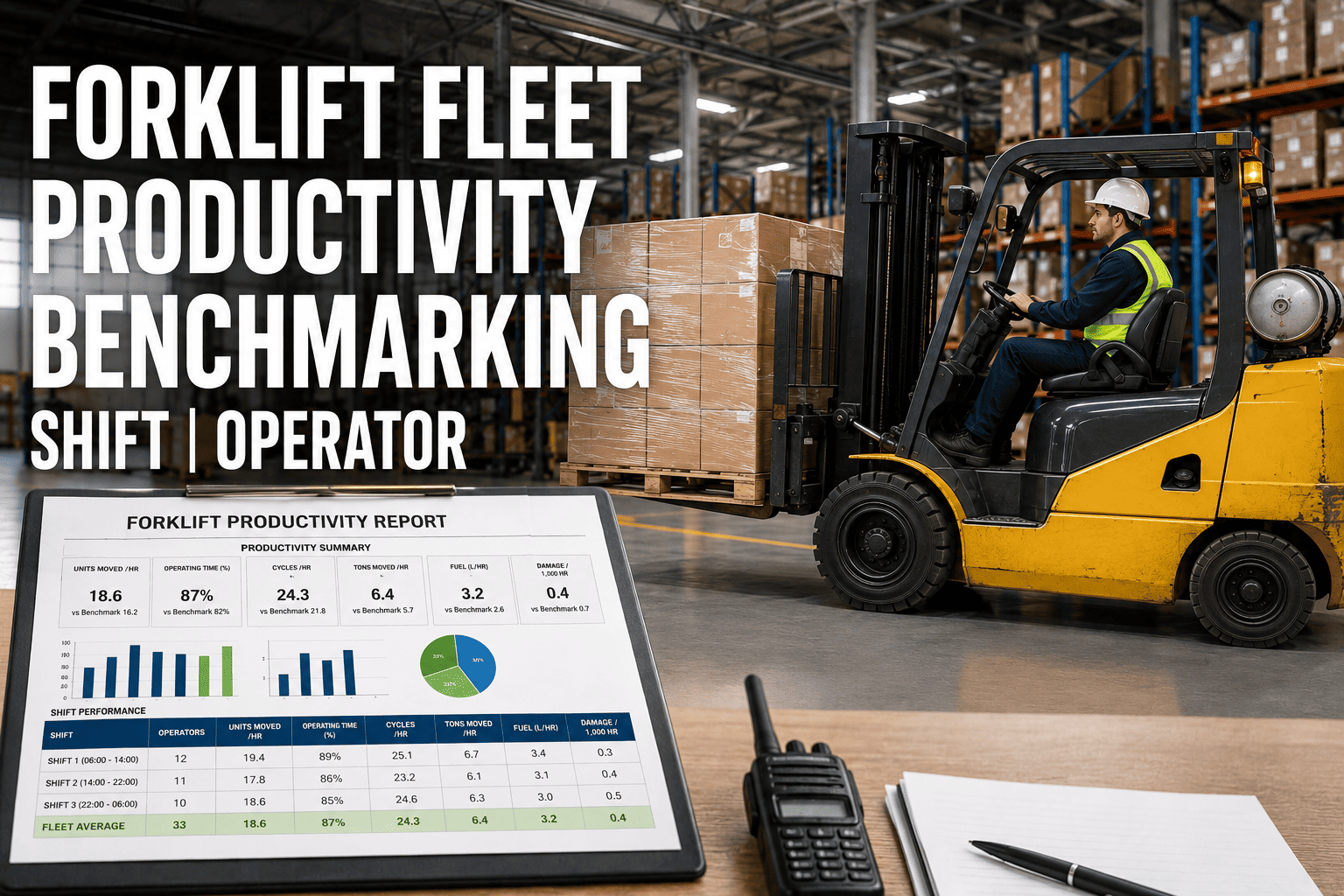
The value of geofencing shows up in numbers you can track from month one. Unauthorized zone entries, average speed in pedestrian corridors, dwell time in charging bays, and the number of trucks returned to service on an incomplete charge are all metrics that were invisible before and become a simple dashboard afterward. Plants that put geofencing in place typically see a sharp drop in unauthorized zone entries within the first 60 to 90 days, alongside fewer near-miss reports and a measurable improvement in average battery lifespan across the fleet. If you want to see what these numbers look like against your own floor plan, it is worth taking fifteen minutes to book a demo with the FleetRabbit team.
FleetRabbit combines zone alerts, speed monitoring, and charging compliance in one dashboard, so your team catches a problem the moment it starts instead of reading about it in an incident report.
Forklift incidents and battery failures rarely come from a single dramatic event. They build up from small, unmonitored drifts, a few extra seconds in the wrong aisle, a charge pulled ten minutes early, a corner taken a little too fast. Geofencing closes that gap by turning your floor plan into a live system that watches those details for you. If your plant is ready to see its own zones mapped and monitored, start a free trial with FleetRabbit or book a short demo to walk through your facility layout with our team.
From production lines to charging bays, FleetRabbit's geofencing turns your facility map into a live safety and uptime system. Set up your first zone today, no credit card required.