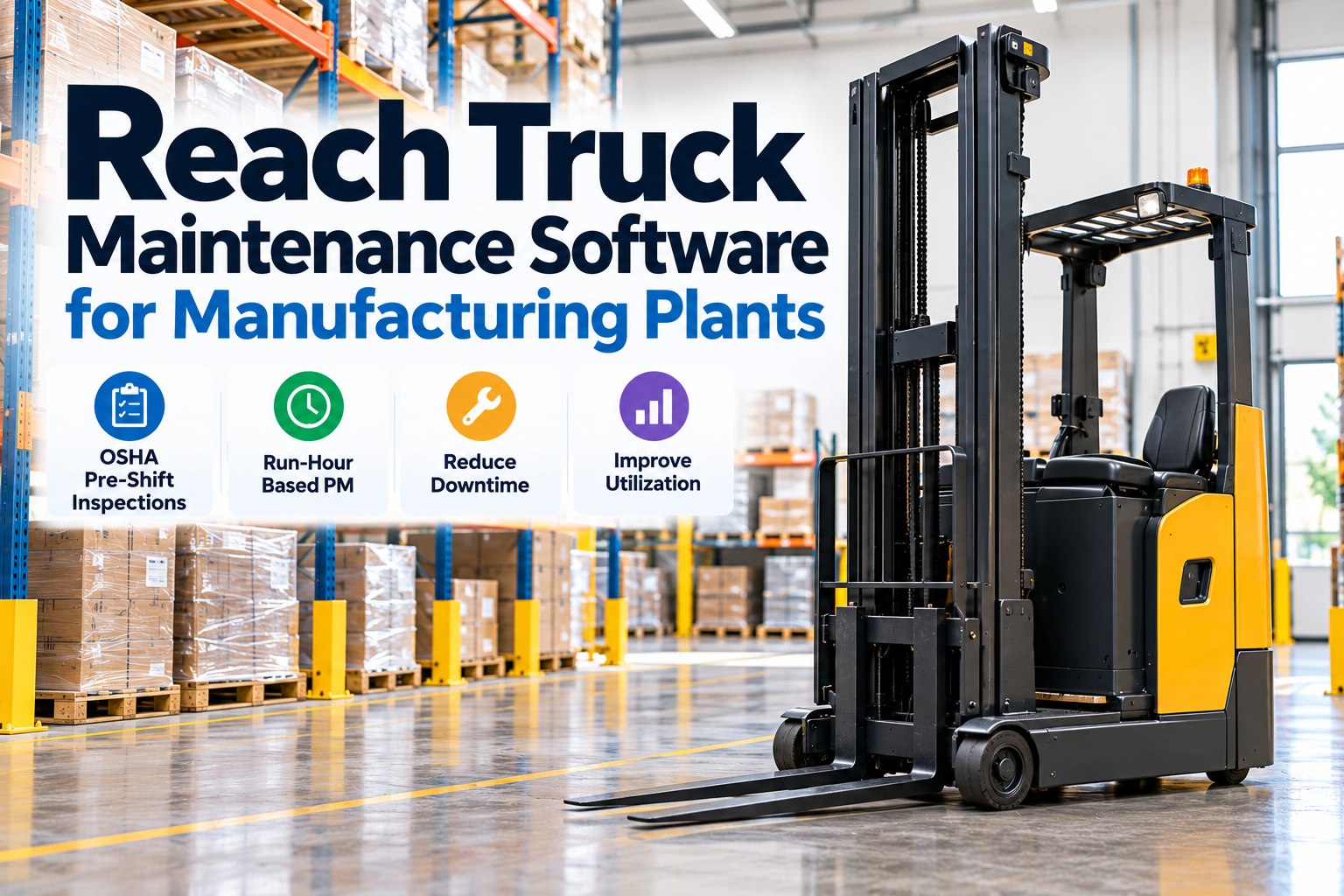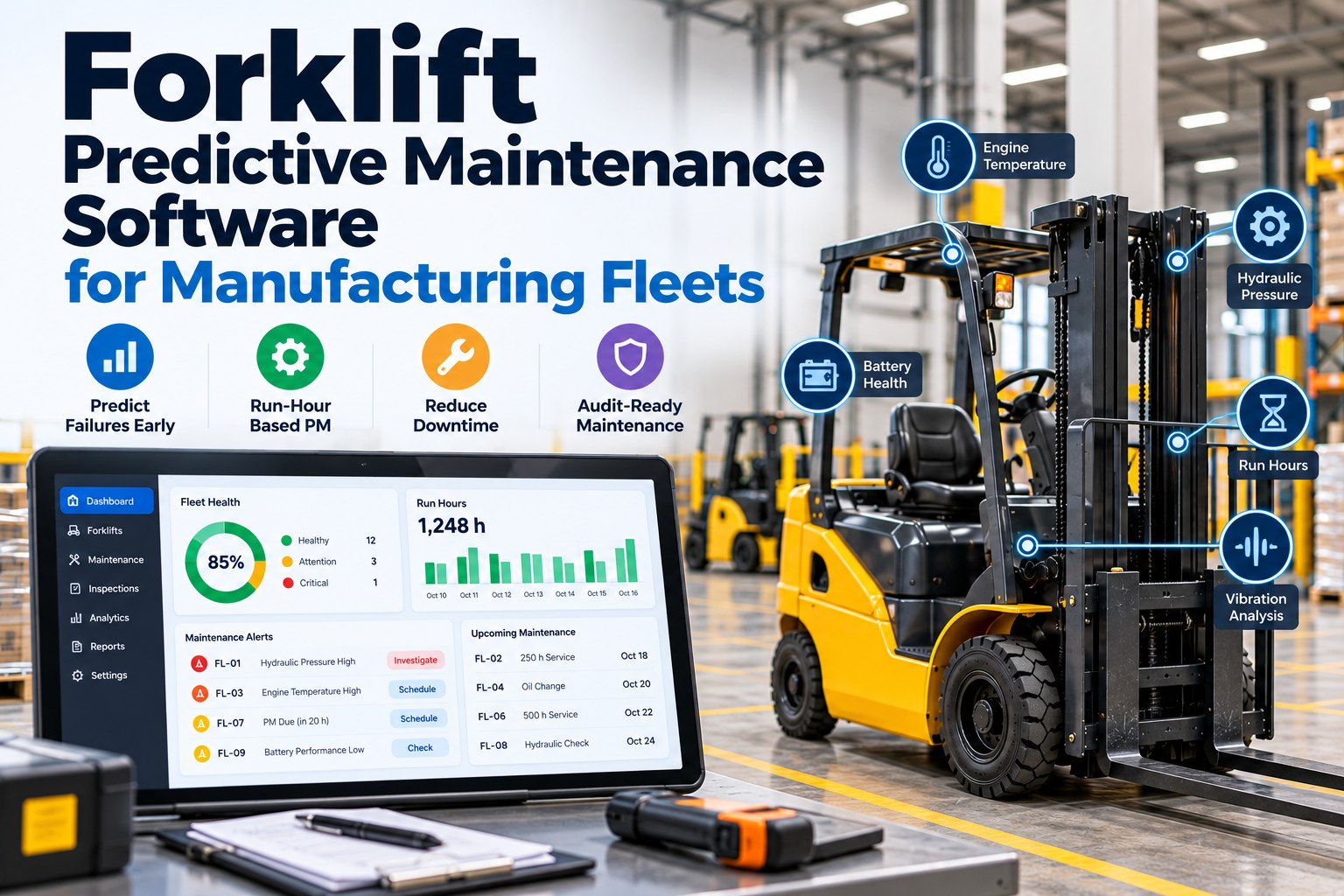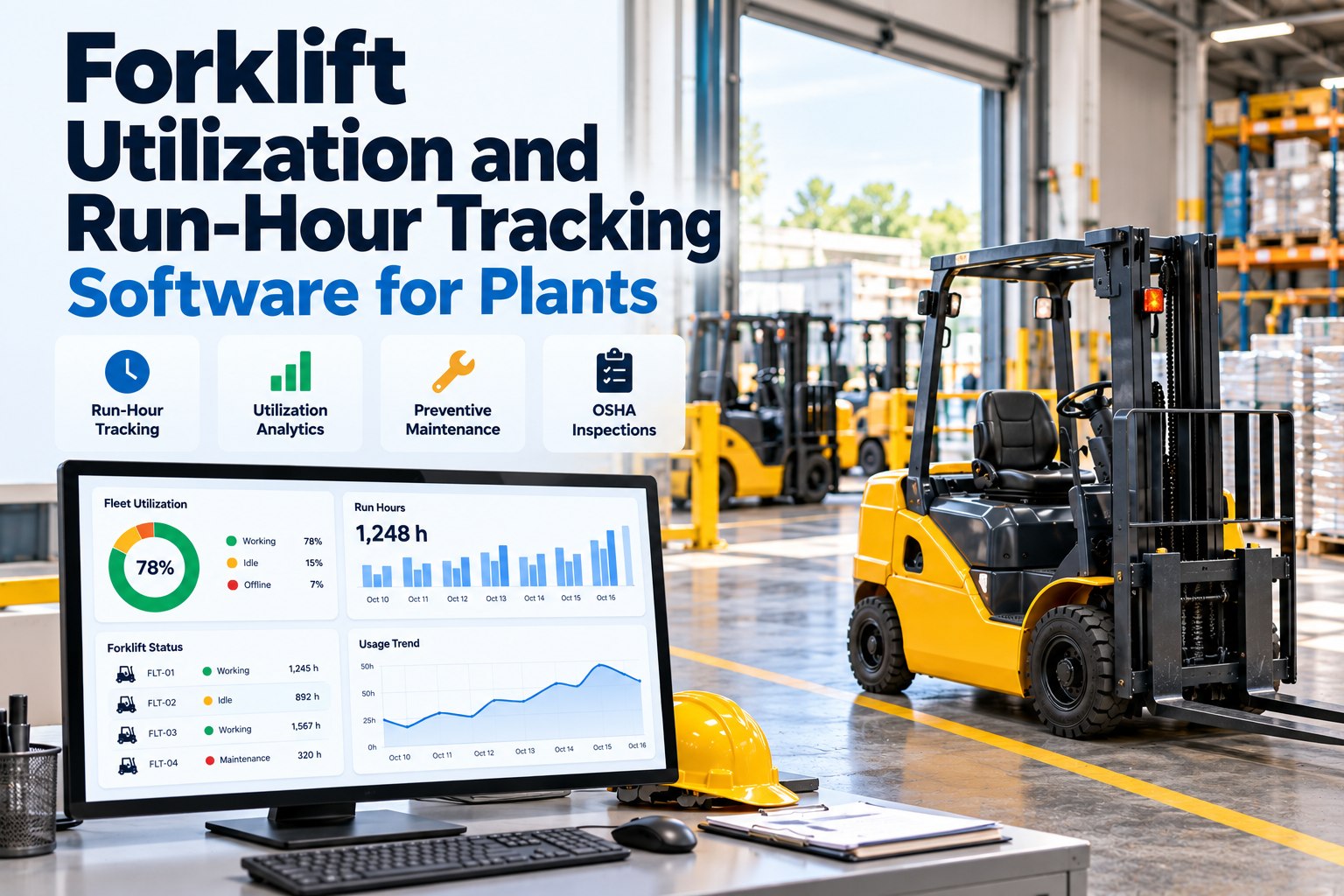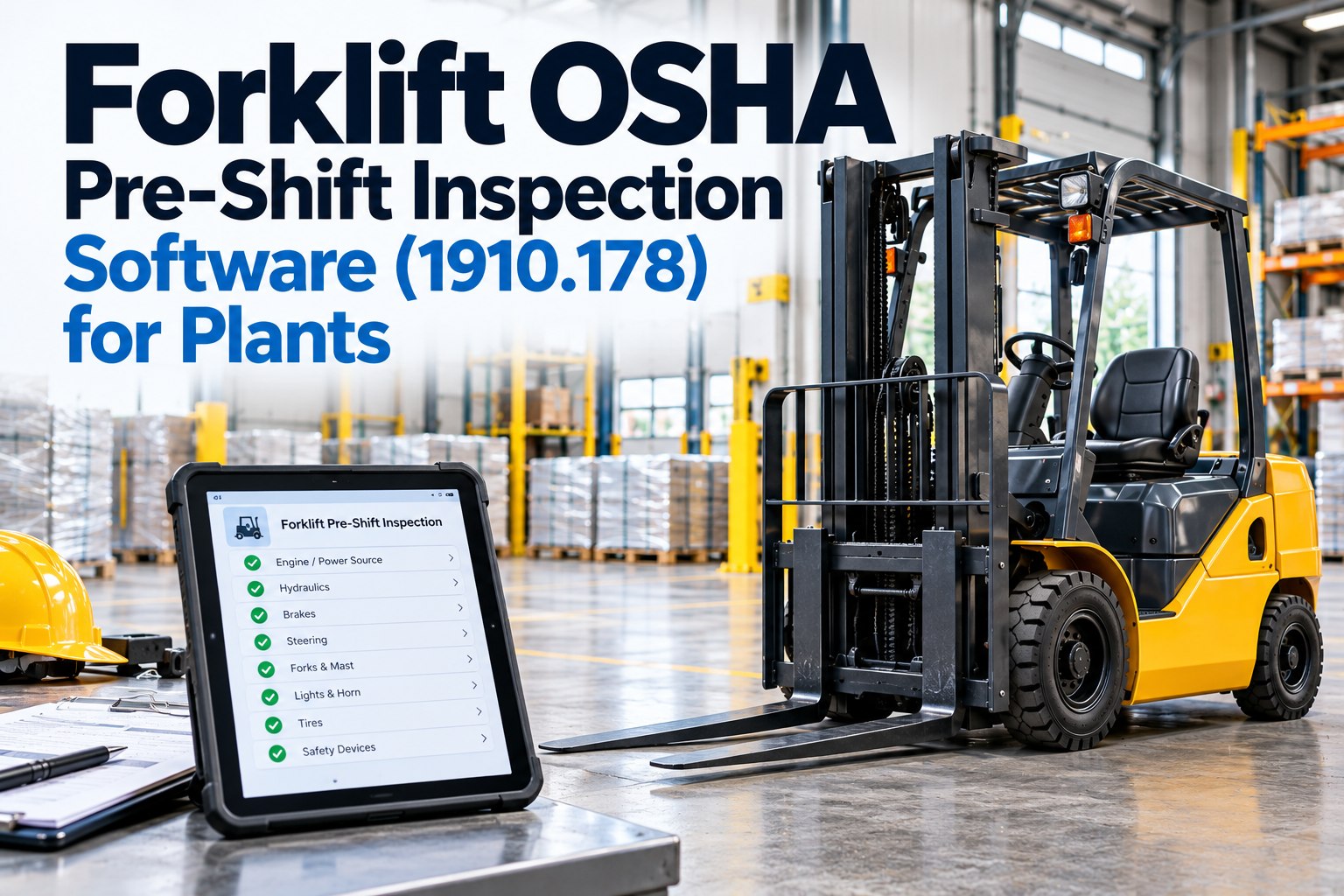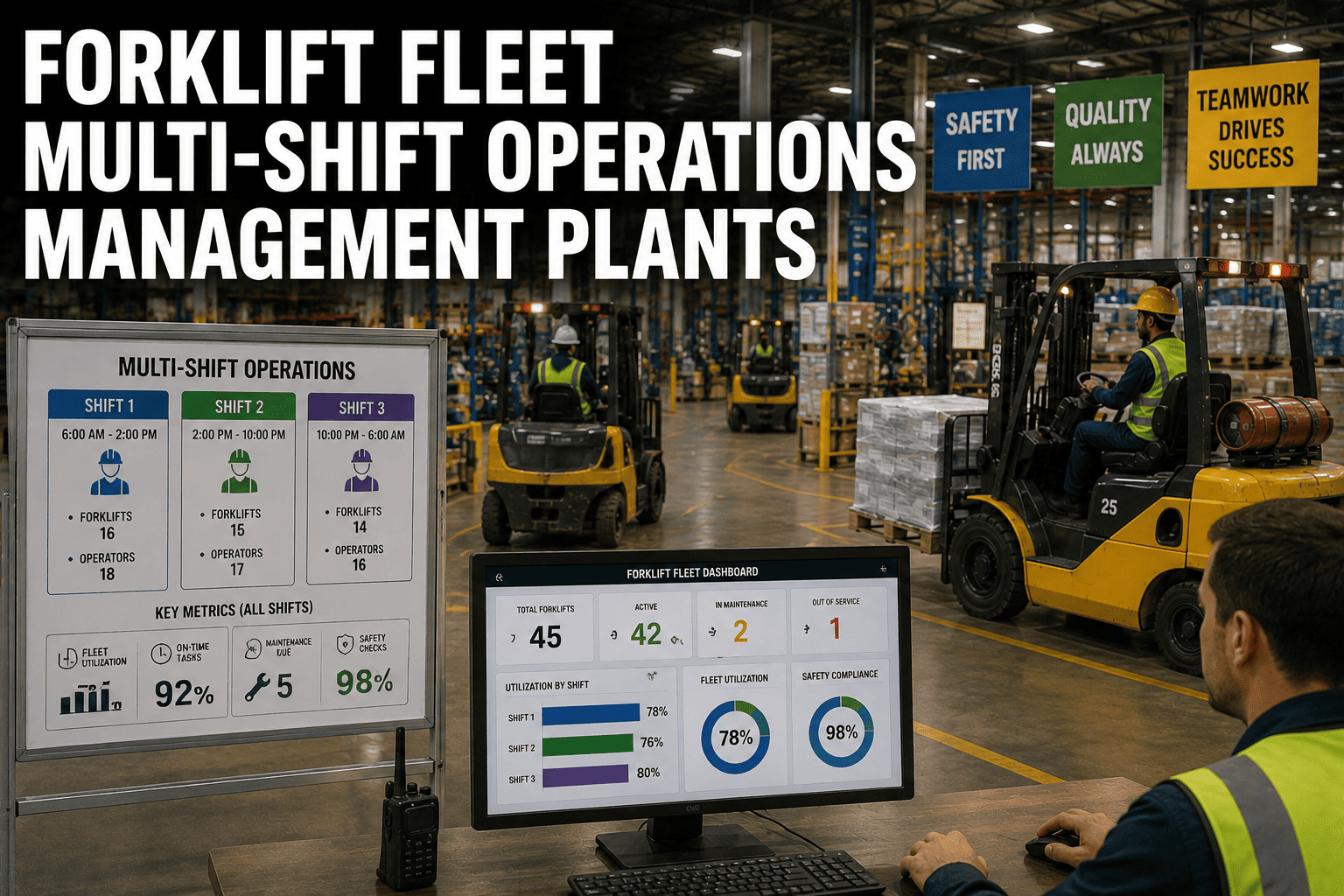
A single-shift warehouse gets a quiet window every night. Trucks park, batteries charge, mechanics inspect, and everything resets before the doors open again. Multi-shift plants do not get that window. The forklift that finishes Shift A rolls straight into Shift B with a different operator behind the wheel, then into Shift C before anyone has a real chance to catch a developing fault. Run hours stack up around the clock, the same handful of trucks quietly absorb most of the workload, and small problems that would surface during a normal overnight pause instead ride straight through to the next shift and the one after that.
Multi-shift forklift fleet management means tracking run hours, inspections, and maintenance across every shift and every operator on a single truck, not just once a day. Plants running two or three shifts typically push individual forklifts to 4,000 to 6,000 run hours per year, roughly double a single-shift operation, which pulls maintenance intervals forward by months. Facilities that track run hours and rotate load across shifts recover 15 to 20 percent of hidden fleet capacity and cut unplanned downtime by 30 to 42 percent within the first year.
Shift A
Pre-shift inspection logged, truck runs 8 hours, minor fault noted but not flagged loudly enough to stop the line.
Shift B
New operator, no visibility into Shift A's note, truck runs another 8 hours with the same fault worsening unseen.
Shift C
Fault becomes a breakdown mid-shift, taking the truck out of rotation exactly when coverage is already thinnest.
Why 24-Hour Operations Break Standard Fleet Management
Most fleet management habits were built around a single daily cycle: one inspection, one operator, one set of run hours per truck per day. Multi-shift plants multiply every one of those variables. A truck built for a single operator might see three different drivers in 24 hours, each with their own habits, their own pre-shift checklist completion rate, and their own tolerance for reporting a rattle or a soft brake pedal. Maintenance schedules built on calendar days rather than actual motor hours quietly fall behind, because a truck running three shifts accumulates a month of single-shift wear in about ten days.
The Handover Gap
The riskiest moment in a multi-shift operation is not the shift itself, it is the ten minutes between shifts. Paper logs get left in a cab, verbal handoffs get skipped during a busy changeover, and the incoming operator has no reliable way to know what the outgoing operator noticed. That gap is where small mechanical issues turn into full breakdowns, and where uncertified or unassigned operators sometimes end up behind the wheel simply because the truck was sitting there running.
Why Calendar-Based Maintenance Fails Here
A maintenance plan that services every truck every 90 days works fine for an eight-hour operation. On a three-shift floor, that same truck has already blown past its motor-hour service threshold twice before the calendar date arrives, running on borrowed time in between.
FleetRabbit ties run hours, inspections, and faults to the operator and shift, not just the vehicle, so nothing gets lost in the handover. Sign up for a free trial and see your fleet's real shift-by-shift picture this week.
The Four Failure Points of Multi-Shift Fleets
Plants running around the clock tend to lose ground in the same four places, regardless of industry. Each one compounds the others, which is why multi-shift downtime often feels sudden even though the causes built up over weeks.
| Failure Point | What Goes Wrong | Typical Impact |
|---|---|---|
| Handover Gaps | Faults noted by one operator never reach the next shift's driver | Minor issues escalate into mid-shift breakdowns |
| Uneven Run-Hour Load | Operators default to the closest or most familiar truck | A few trucks burn out early while others sit underused |
| Charging and Refueling Queues | Battery or fuel windows overlap shift-change traffic | Trucks sit idle waiting for a bay instead of working |
| Certification Blind Spots | No live check on which operator is certified for which truck | Compliance exposure and higher incident risk per shift |
Distributing Run Hours Across Shifts
The fastest fix for uneven wear is visibility into which trucks are actually absorbing the most run hours. Once that data exists, supervisors can rotate assignments so no single truck silently becomes the workhorse of the fleet while newer or less convenient units sit nearby doing far less.
Step One: Baseline Every Truck's Weekly Hours
Pull motor-hour data for every truck across a full week covering all shifts, not just the day shift, to see the real spread rather than an assumed even split.
Step Two: Flag the Outliers
Any truck running 20 percent or more above the fleet average is a candidate for rotation or a closer maintenance interval before it becomes the next breakdown.
Step Three: Rebuild the Assignment Pattern
Assign trucks by shift and zone rather than leaving the choice to whichever unit is parked closest, spreading wear evenly across the full fleet.
A Shift Handover That Actually Works
Closing the handover gap does not require a longer changeover, it requires the right information to move automatically instead of relying on memory or a clipboard left on a seat.
Digital Pre-Shift Inspection
Every operator completes a digital checklist tied to their certification before the truck can be dispatched.
Live Fault Flagging
A noted issue follows the truck automatically, visible to the very next operator regardless of shift.
Operator-to-Vehicle Match Check
The system confirms the incoming operator is certified for that specific truck before access is granted.
Shift-Boundary Maintenance Window
Trucks nearing a service threshold are pulled at the handover point, not mid-shift during peak production.
FleetRabbit flags developing faults, verifies operator certification per truck, and schedules maintenance at shift boundaries instead of mid-production. Book a demo and walk through how it fits your current shift pattern.
A multi-shift floor never gets to pause and reset, which means the systems managing it cannot afford to pause either. The plants that keep round-the-clock fleets reliable are not running newer trucks or bigger maintenance crews, they are running visibility that follows the truck across every shift, every operator, and every handover instead of resetting at midnight along with the calendar.
FleetRabbit tracks run hours, faults, and certifications across every shift so nothing falls through the handover gap. Start free and see your first full 24-hour picture within days, no credit card required.