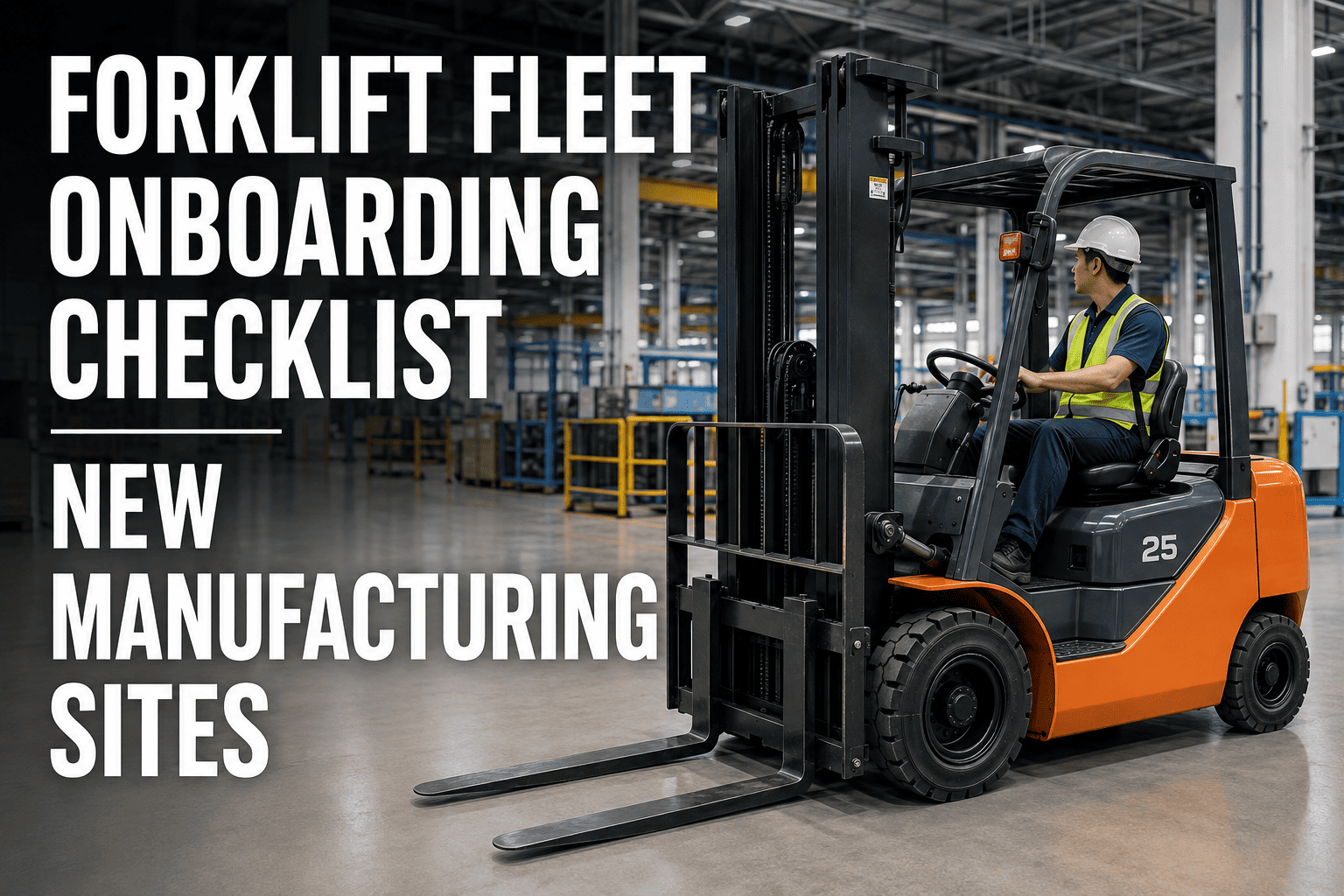
Standing up a new manufacturing site means dozens of systems going live at once, and the forklift fleet is one of the easiest to get wrong. Trucks arrive before asset records exist, operators start moving product before certifications are logged, and the first pre-shift inspection often happens on a scrap of paper because the real process was never built. None of that shows up as a problem on day one. It shows up three months later as a missing maintenance history, an operator running equipment they were never certified on, and a fleet manager trying to reconstruct records that should have existed from the start.
A forklift fleet onboarding checklist for a new site covers four phases: asset setup before trucks arrive, operator certification and inspection process in week one, maintenance scheduling and compliance documentation in weeks two through four, and ongoing review after go-live. Sites that follow a structured onboarding sequence avoid the record gaps and compliance exposure that come from starting fleet operations with paper processes and no baseline data.
Phase One: Before Trucks Arrive
The best time to build asset records is before a single forklift rolls onto the floor, not after. Whatever gets set up in this phase becomes the baseline every future inspection, work order, and compliance report will reference.
Create an Asset Record Per Truck
Log make, model, serial number, fuel type, and delivery date for every forklift before it enters service.
Assign Truck IDs and Zones
Give each unit a unique ID and map it to the zone or department it will primarily serve on the floor.
Set Baseline Maintenance Intervals
Pull manufacturer-recommended service intervals for each model so schedules exist from the first day of operation.
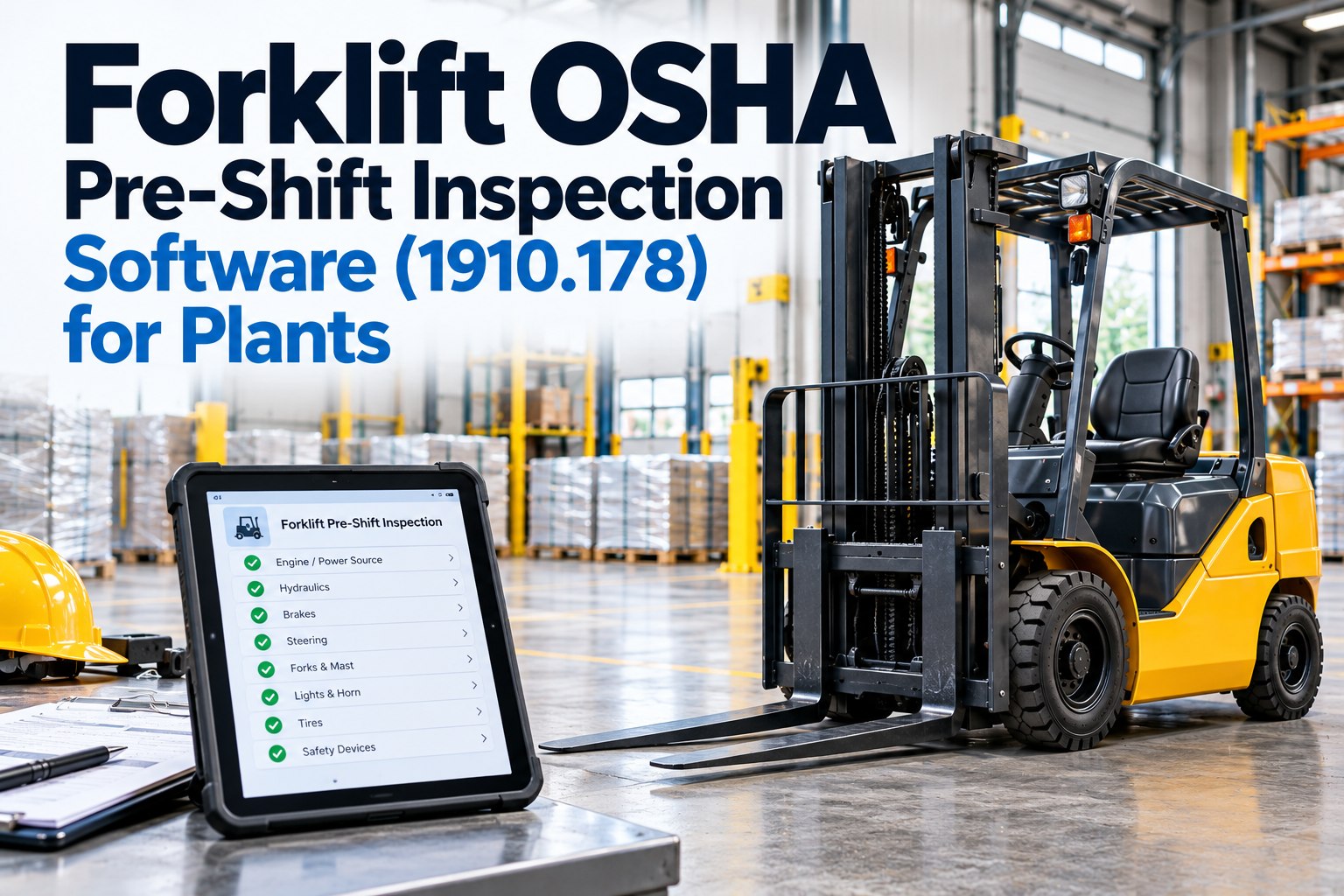
Build the Digital Inspection Form
Configure a pre-shift checklist covering forks, mast, hydraulics, brakes, and tires before operators need one.
Why This Phase Gets Skipped
Site launches run on tight timelines, and fleet setup competes with dozens of higher-visibility tasks. The problem is that asset records built retroactively are almost always incomplete, and gaps discovered during an audit are far more expensive to fix than the hour it takes to log a truck properly on delivery.
FleetRabbit sets up asset records, maintenance intervals, and digital inspection forms before your first truck hits the floor. Sign up for a free trial and have your new site's fleet structure ready in days.
Phase Two: Week One
Once trucks are on-site and asset records exist, the focus shifts to people. Operators need to be certified for the specific equipment they will run, and the daily inspection habit needs to start on day one, not after the first near-miss.
Log Operator Certifications
Record which operators are certified for which truck types, per 29 CFR 1910.178 training requirements.
Run Model-Specific Training
Walk operators through inspection points that vary by brand, since controls and battery access differ across models.
Launch Pre-Shift Inspections
Require every truck to pass a documented pre-shift check before entering service, with defects logged immediately.
Confirm Reporting Escalation
Make sure a failed inspection notifies maintenance immediately and removes the truck from service automatically.
The Cost of Skipping This Step
Forklift-related incidents in the United States average roughly 85 fatalities and tens of thousands of serious injuries annually, and OSHA data consistently ties a meaningful share of these back to skipped pre-shift inspections. A new site with no established inspection habit is at its highest risk in exactly this first week, before routines settle in.
What a Compliant Record Looks Like
At minimum, every completed inspection should capture the date, operator name, truck ID, results, and any defect noted, retained for at least one year and ideally for the life of the equipment.
Phase Three: Weeks Two to Four
With daily habits established, the second month is about layering in the recurring maintenance cadence and compliance documentation that keeps the fleet audit-ready long after the initial excitement of a new site fades.
| Task | Cadence | Owner |
|---|---|---|
| Pre-Shift Inspection | Every shift, before operation begins | Assigned operator |
| Weekly Systems Check | Once per week per truck | Shift supervisor |
| Monthly Preventive Maintenance | Once per month per truck | Maintenance technician |
| Quarterly Compliance Review | Once per quarter across the fleet | Fleet or EHS manager |
Building the Audit Trail Early
Documentation failures, not visible equipment defects, account for a large share of forklift-related compliance penalties. Setting the recurring maintenance and review cadence within the first month means the site never has a gap in its record from day one onward.
FleetRabbit schedules pre-shift, weekly, monthly, and quarterly checks automatically and keeps every record in one place from the first day of operation. Book a demo to see how a new site gets set up end to end.
Phase Four: Ongoing Review
Onboarding does not end at the 30-day mark. The habits and records built in the first month need a regular review cycle to stay accurate as the site scales, new trucks join the fleet, and new operators are certified.
Refresh Training Quarterly
Run a short inspection habit refresher every quarter, since compliance habits naturally degrade over time.
Review Certification Expirations
Check upcoming refresher training deadlines, required at least every three years or after an incident.
Audit Defect Closure Rates
Confirm defects flagged during inspections are actually resolved and closed out, not just logged and forgotten.
Onboard New Trucks the Same Way
Apply the same four-phase process to every truck added after go-live, not just the original fleet.
A new site only gets one chance to start its forklift fleet on the right footing. Sites that follow a structured four-phase onboarding sequence, asset setup, operator certification, maintenance cadence, and ongoing review, never have to go back and reconstruct records that should have existed from day one. The plants that skip straight to production without this groundwork are the ones scrambling months later when an audit, an incident, or a simple maintenance question exposes exactly how many gaps were left behind.
FleetRabbit builds the asset records, inspection forms, and maintenance schedules your new site needs before the first truck rolls in. Start free and have your fleet structure ready within days, no credit card required.