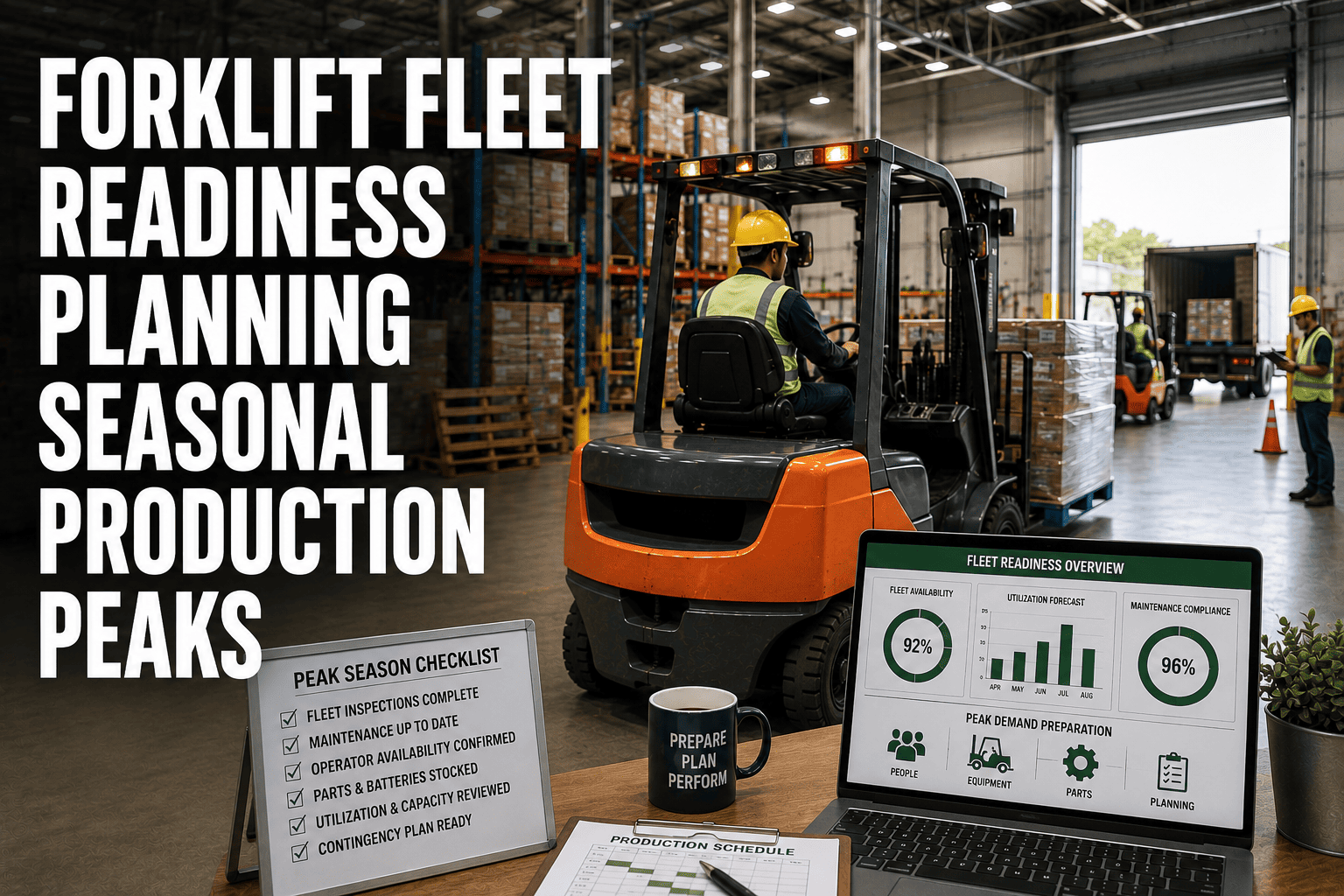
Every plant that runs a seasonal peak knows the feeling of October turning into a scramble. Order volume climbs faster than expected, the core fleet starts running double shifts to keep up, and the phone call to a rental provider for extra capacity lands right when every other plant in the region is making the same call. By the time the need is obvious, the good options are already gone. Fleet readiness for seasonal peaks is not a phone call made in a panic. It is a plan built months earlier, using data from the last peak to prepare for the next one.
Seasonal forklift rental markets tighten as the peak approaches, and providers generally ask for two to three months of notice to guarantee availability and pricing. Plants that begin planning in late summer for a Q4 surge consistently get better equipment choice and rates than those that wait until the surge has already started. A fixed fleet pushed into double or triple shifts to cover peak volume without added capacity sees accelerated wear and a higher rate of breakdowns at the exact moment downtime is most costly.
Why A Fleet That Looks Fine In Q2 Breaks Under Peak Load
A fleet sized for baseline volume rarely fails because the trucks are unreliable. It fails because peak volume asks that same fleet to do far more than it was ever intended to handle, and the strain shows up exactly where a plant can least afford it.
Baseline Fleets Carry No Buffer For A Surge
A fleet built around average daily volume has little slack left when order volume climbs sharply. Every truck ends up doing more work, more hours, with less time between shifts for the inspection and upkeep that normally keeps small issues from becoming breakdowns.
Rental Markets Tighten As Everyone Reaches At Once
The same seasonal pattern that strains one plant's fleet strains every plant's fleet in the same region at the same time. Rental inventory that was plentiful in August is often committed by October, leaving late planners with fewer truck types and higher rates.
No Baseline Data Means No Real Plan
Without a clear picture of how last year's peak actually stressed the fleet, which trucks ran hardest, which broke down, and when the strain started, planning for the next peak becomes a guess rather than a plan.
FleetRabbit tracks utilization and reliability across every truck, so you can see exactly which units strained hardest during your last peak and plan capacity ahead of the next one. Sign up to see your fleet's peak-season data, or book a demo to build a readiness plan with our team.
A Readiness Timeline For Your Next Peak
Fleet readiness works best as a sequence rather than a single decision. Spacing the work out ahead of the peak gives each step room to actually happen instead of being compressed into a last-minute scramble.
| Timing Before Peak | What To Review | Action To Take |
|---|---|---|
| 4 To 5 Months Out | Last year's peak utilization and breakdown history by truck | Identify which trucks are likely to strain first and by how much |
| 3 Months Out | Projected volume against current fleet capacity | Contact rental providers early while inventory and rates are favorable |
| 6 To 8 Weeks Out | Maintenance backlog and open defects across the core fleet | Close out repairs before peak volume starts, not during it |
| 2 To 3 Weeks Out | Rental delivery schedule and operator assignment | Confirm equipment arrival dates and match trucks to trained operators |
Building Readiness Into How The Fleet Is Managed
A one-time push before a single peak season helps, but the plants that handle every peak well tend to treat readiness as a standing part of fleet management rather than a seasonal fire drill.
Track Utilization Year-Round, Not Just Near Peak
Watching utilization trends across the full year makes the early signs of a coming surge visible weeks before volume actually spikes, giving the readiness timeline more room to work.
Turn Breakdown History Into A Forecast
The trucks that struggled most in last year's peak are usually strong candidates to struggle again unless something changes. Reviewing that history ahead of time turns a repeat problem into a planned fix.
A Simple Peak Readiness Checklist
Pull last peak's utilization and breakdown data, flag any truck that ran above a safe utilization ceiling, reach out to rental providers at least two to three months ahead of the surge, and clear the maintenance backlog before peak volume begins rather than during it. Sign up for a free trial to pull this data automatically, or book a demo to build a readiness plan for your next peak.
Frequently Asked Questions
The plants that handle seasonal surges well are not lucky, they are prepared. FleetRabbit turns last season's utilization and reliability data into a readiness plan for the next one, so your fleet is ready before demand climbs, not scrambling once it does.