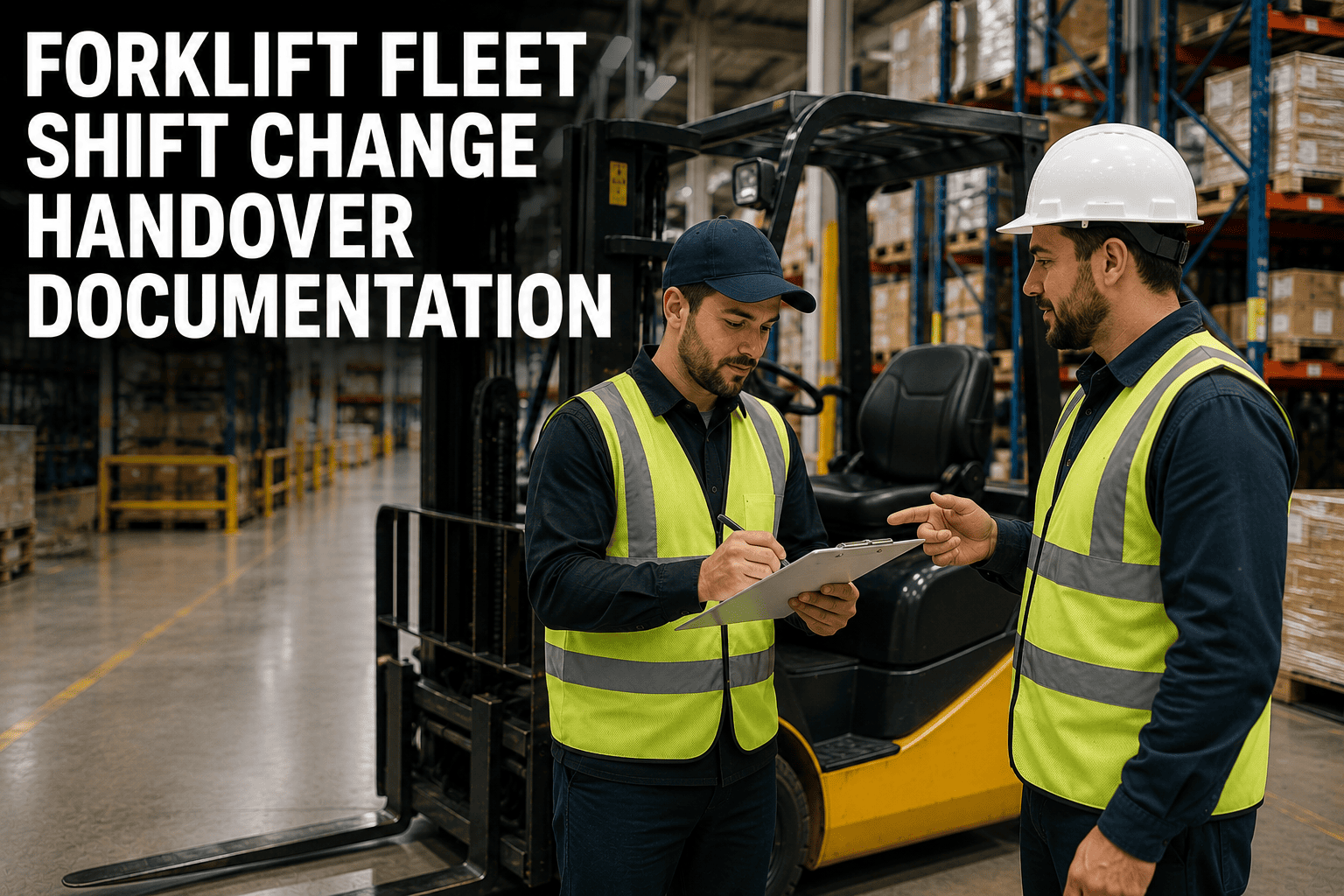
The forklift runs fine at 6:58 AM. By 7:05, a new operator has climbed in, and nobody mentioned that the mast was making a faint grinding noise for the last hour of the previous shift, or that the left fork tip has a hairline crack someone noticed but didn't write down. Ten minutes later that operator is lifting a full pallet on a machine whose real condition only one person in the building actually knows. This is how most forklift incidents start, not with a dramatic failure, but with information that simply never crossed the shift line.
Forklift shift-change handover documentation is the record that transfers truck condition, hour meter reading, open issues, and any incidents from an outgoing operator to the incoming one. A complete handover captures machine status, not just a signature, and takes under two minutes when digitized. Plants that formalize this step cut equipment-related near misses tied to unreported damage and catch developing mechanical issues days before they become an unplanned breakdown.
Why Shift Handovers Quietly Fail
A shift handover is the structured transfer of responsibility from one operator to the next, and it only works if the incoming operator can answer a few basic questions within minutes: what is the current condition of this truck, what changed during the last shift, and what should I watch for right now. Most paper-based handover systems fail one of these questions, not because operators are careless, but because a signature on a clipboard captures compliance, not context.
Condition Gets Lost
A noise, a slow leak, or a worn fork tip noticed at 2 PM rarely survives a verbal, rushed handover at shift change.
Accountability Gets Blurry
Without a timestamped record, it becomes impossible to know which shift caused new damage found later in the day.
Small Issues Compound
An issue flagged but never logged gets re-discovered by three different operators before anyone actually fixes it.
FleetRabbit logs hour meter readings, flagged issues, and inspection status at every shift change automatically, so the next operator starts informed instead of guessing. Sign up free and put a real handover record behind every truck.
What a Complete Handover Record Should Capture
A shift handover report is one of the most important pieces of shop floor documentation, yet it is often treated as an afterthought. At minimum, a forklift handover record needs to answer the same questions any reliable operations handover answers, adapted to a single piece of moving equipment rather than an entire system.
Hour Meter and Fuel or Charge Level
The exact reading at handover time, so the incoming operator knows remaining run time and maintenance intervals stay accurate.
Visual and Mechanical Condition
Any damage, unusual noise, warning light, or wear noticed during the shift, no matter how minor it seemed at the time.
Attachment and Tire Status
Confirmation that forks, clamps, and tires were inspected and are securely fastened and free of visible defect.
Incidents or Near Misses
Any bump, tip, dropped load, or close call during the shift, logged with enough detail for the next operator and for safety review.
Open Maintenance Requests
Whether an issue has already been reported to maintenance, so the incoming operator isn't the one left chasing it down.
Why the Format Matters as Much as the Content
Even a thorough verbal handover has a shelf life of a few minutes before details blur. A digital solution tracks information automatically and in real time, producing a detailed, accurate handover report without adding to the outgoing operator's workload. That distinction, between a record that exists and a record that gets read, is what separates a handover process that protects the fleet from one that just checks a compliance box.
Paper Logs Versus Digital Handovers
The two approaches look similar on the surface, a form gets filled out at shift change either way, but the gap in reliability shows up the moment something actually goes wrong and someone needs to trace what happened.
- Details fade or get skipped during a rushed shift change
- No timestamp tying condition to a specific operator or hour
- Sits in a binder until someone manually reviews it, if ever
- Photos of damage are rarely attached or easy to find later
- Condition, hours, and issues captured in under two minutes
- Every entry timestamped and tied to the operator on record
- Flagged issues route straight to maintenance automatically
- Photos attach directly to the record for instant reference
The Real Cost of an Incomplete Handover
An incomplete handover rarely causes a problem the same day. The cost shows up weeks later, when a fork that was cracked at the start of the month finally fails under load, or when an insurance review asks who last inspected a truck involved in an incident and the honest answer is nobody can say for certain. Records are your legal shield during audits or accident investigations, and a gap in the handover trail is exactly the kind of gap that turns a routine review into a liability question. Book a demo to see how FleetRabbit closes that gap on your own fleet.
Frequently Asked Questions
Every handover is a chance to protect the next operator, the next inspection, and the next audit. FleetRabbit turns a rushed clipboard signature into a real, timestamped record of truck condition, so nothing gets lost between shifts again.