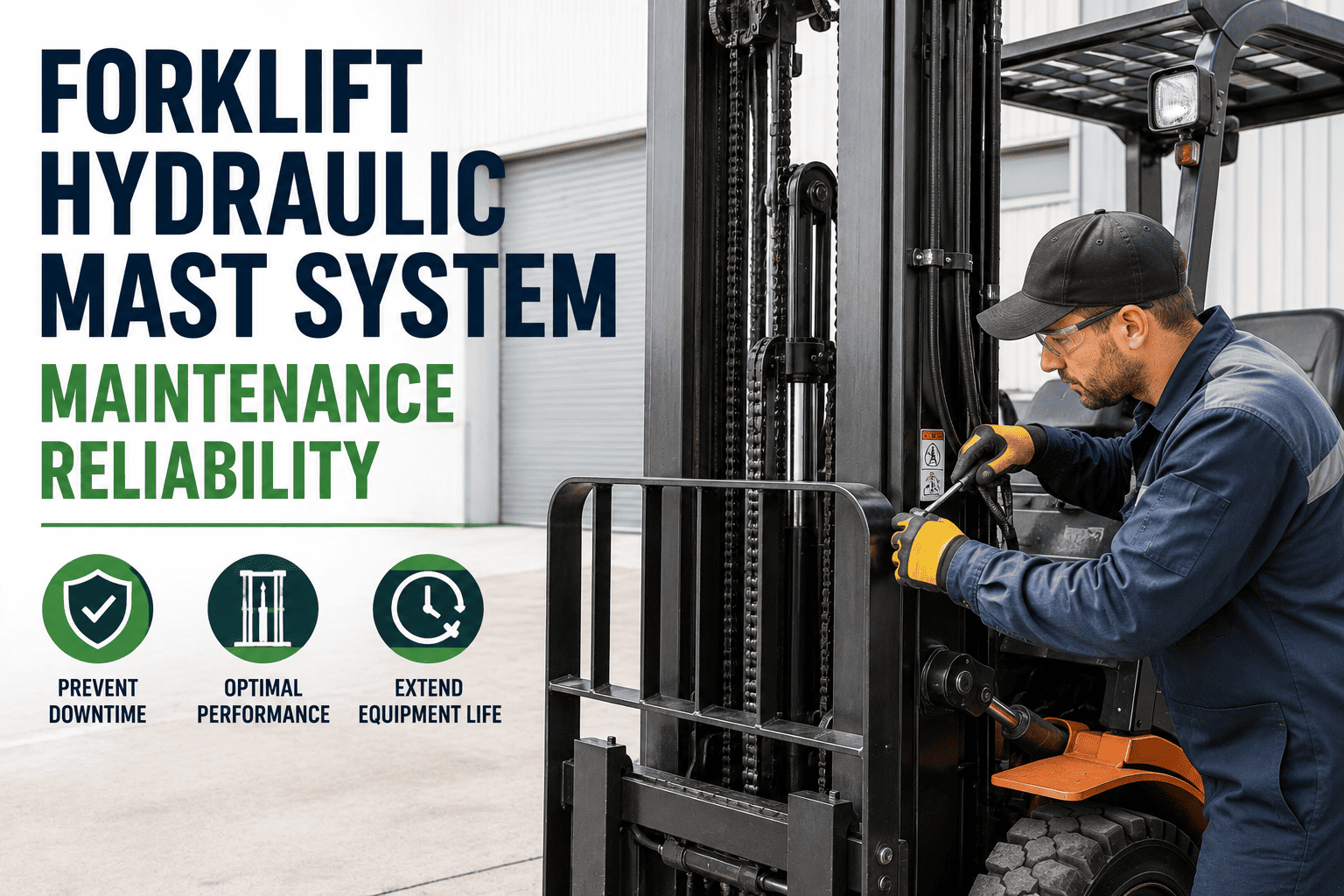
A forklift's hydraulic system is doing something most operators never think twice about: holding a suspended load in the air using nothing but pressurized fluid and a handful of seals. When that system is healthy, lifting is smooth and controlled. When it isn't, the failure modes aren't minor. A burst hose under 3,000 PSI can spray fluid with enough force to break skin. A worn seal can let a raised load drift downward on its own. Neither of those is a maintenance inconvenience, they're safety incidents waiting for the wrong moment.
Forklift hydraulic and mast system maintenance centers on keeping fluid clean and at the correct level, inspecting hoses and seals for wear, and testing for mast drift on a regular schedule. Contaminated hydraulic fluid is responsible for up to 75 percent of all hydraulic system failures, making fluid condition the single highest-leverage thing a maintenance program can control. Catching hose cracks, seal leaks, and drift early prevents both sudden load drops and expensive component rebuilds.
The System Behind Every Lift
Four components carry the weight of every hydraulic lift, and understanding what each one does makes it obvious why a failure anywhere in the chain matters.
Six Warning Signs You Shouldn't Wait On
Hydraulic and mast problems rarely appear without warning. These signs typically show up well before a component fails completely, giving maintenance teams a real window to act.
FleetRabbit logs fluid checks, hose inspections, and drift test results per truck, flagging warning signs before they become safety incidents. Sign up free and connect your first three trucks today.
How To Run A Mast Drift Test
Mast drift testing is one of the simplest, highest-value checks a maintenance team can run, and it directly measures whether the cylinder seals are holding pressure the way they should.
Why Fluid Contamination Deserves The Most Attention
Of every factor that leads to hydraulic failure, contaminated fluid is the biggest single contributor, responsible for an estimated 75 percent of hydraulic system problems. Dirt, moisture, and degraded fluid accelerate wear on seals, cylinders, and pumps simultaneously, which is why a simple fluid check often prevents far more expensive failures elsewhere in the system.
Checking Fluid The Right Way
Always check hydraulic fluid with the forks fully lowered and the mast vertical, so all fluid has returned to the reservoir for an accurate reading. Fluid that needs regular topping off signals a leak, since a healthy hydraulic system should not consume fluid under normal operation.
A Practical Inspection Rhythm
Different checks belong at different frequencies. Trying to do everything daily wastes time; waiting for annual inspections to catch everything invites failure. The table below lays out a reasonable rhythm most fleets can build from.
| Check | Frequency | What You're Looking For |
|---|---|---|
| Fluid Level & Condition | Every shift to weekly | Correct level, clear or slightly amber color, no foaming or discoloration |
| Hose & Fitting Inspection | Weekly to monthly | Cracks, bulges, abrasion, and leakage around fittings |
| Mast Drift Test | Monthly | Downward drift under load exceeding 1 inch over 60 seconds |
| Filter Inspection | Per manufacturer interval | Clogging or damage restricting fluid flow to the system |
| Chain Wear Check | Per manufacturer interval | Elongation over 3 percent, pitting, and deformed links |
Consistency is what makes this rhythm work. A single thorough inspection doesn't protect a truck for the next six months, but a rhythm that's actually followed catches problems while they're still a filter change instead of a full cylinder rebuild. If your plant's hydraulic inspections are living on paper or scattered across different technicians' memory, a quick demo call can show you what a consolidated, trackable version looks like.
Frequently Asked Questions
FleetRabbit turns hydraulic and mast inspections into tracked, trackable data across your whole fleet, catching fluid contamination, hose wear, and mast drift before they become safety incidents. Book a demo to see it in action, or sign up and start tracking today.