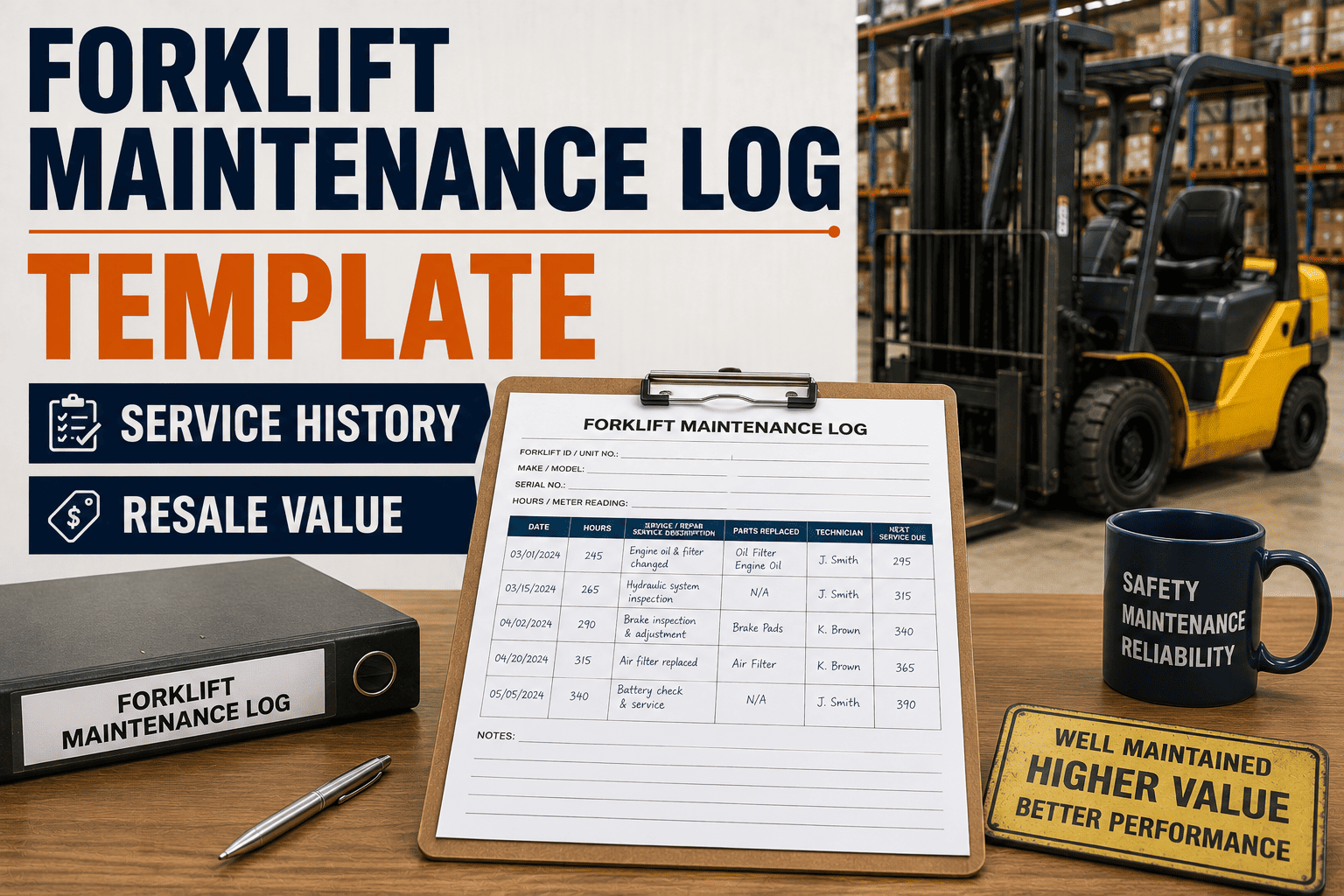
Two forklifts, same model, same year, same hours on the clock, can sell for very different prices. The one with a complete maintenance log walks a buyer through every oil change, filter swap, and brake service in order. The one without it asks the buyer to trust a number on the hour meter and hope for the best. Appraisers and dealers consistently pay more for the first truck, because a documented history removes the guesswork that makes buyers negotiate hard or walk away. A forklift maintenance log template is what turns routine service into a paper trail your fleet can cash in on later. Sign up free and FleetRabbit will keep that log complete automatically, from the first day a truck joins your fleet.
A forklift maintenance log template is a running record of every service event a truck receives across its working life, including oil and filter changes, hydraulic and brake work, tire replacement, battery service, and repairs, each with a date, hour meter reading, technician name, and parts used. Equipment appraisers report that forklifts with complete, documented service records can resell for meaningfully more than comparable units with unknown maintenance history, and buyers routinely ask for this log before they make an offer.
What a Documented Log Actually Changes at Resale
The difference between a truck with a clean log and one without shows up the moment a buyer sits down to evaluate it. One conversation moves quickly toward a price. The other slows down into questions the seller usually cannot answer.
- Buyer can verify every hour meter reading against real service dates
- Appraisers price the truck on documented condition, not guesswork
- Negotiation starts near asking price instead of a steep discount
- New owner knows exactly what maintenance is due next
- Buyer assumes the worst about deferred maintenance and prices accordingly
- Appraisers apply a condition discount to offset the unknown risk
- Deals stall or fall through during due diligence
- New owner starts a maintenance schedule from zero, blind to wear patterns
What Belongs on the Log
A maintenance log is only useful if it reads the same way for every entry, whether the service happened three years ago or three days ago. Consistency is what lets a buyer scan it in five minutes and trust what they see.
Every Entry Needs Six Fields
Date of service, hour meter reading at time of service, type of work performed, parts and fluids used, technician or shop name, and cost. Skipping the hour meter reading is the most common gap, and it is the one detail buyers check first against the truck's current display.
Group Entries by System
Organizing the log by system, engine and fluids, hydraulics, brakes, tires, mast and chains, battery and electrical, makes it far easier for a buyer or technician to spot a pattern, like a mast that has needed chain adjustments three times in two years.
| Log Category | What to Record | Why Buyers Look Here First |
|---|---|---|
| Fluids and Filters | Oil, hydraulic fluid, coolant, and filter change dates and intervals | Shows whether the truck was kept on schedule or run past due |
| Tires | Replacement dates, tread type, and hour meter at swap | Tire condition is often the first thing a buyer inspects in person |
| Brakes and Hydraulics | Pad, hose, and cylinder service with dates and parts used | Safety systems buyers will not take on faith without a record |
| Battery and Electrical | Battery age, watering schedule, charger service, cell testing results | Battery health can swing an electric forklift's value significantly |
| Major Repairs | Component failures, root cause, replacement parts, technician notes | Reveals whether problems were fixed properly or patched temporarily |
FleetRabbit captures every scheduled service and repair against the truck's real hour meter the moment it happens, so the log is already complete and exportable the day you decide to sell or trade in. Sign up free and start building that record today.
Timing the Sale Around Your Log
A maintenance log does more than support a price, it also tells you when to sell. Forklifts depreciate steadily with age and hours, and dealers generally pay the most for trucks under about four years old with fewer than roughly five thousand hours. A log that shows consistent preventive service up to that point gives you the strongest case for trading in before the truck crosses into higher-hour, higher-discount territory.
Reading Your Own Log Before You List
Before a sale, review the log for gaps rather than waiting for a buyer to find them. A missing oil change interval or an unexplained multi-month gap in service invites questions you would rather answer on your own terms, or fix before the truck ever gets inspected.
Presenting the Log to a Buyer
Hand over the log alongside proof of ownership and the original purchase invoice, organized by date or by system, whichever is easier to scan. A log a buyer has to dig through is barely better than no log at all, while one that reads cleanly builds the same confidence a clean vehicle history report gives a car buyer.
Making the Log Part of Daily Operations
A maintenance log that only gets updated before a sale is really just a reconstruction project, and buyers can usually tell the difference. The log works best when every technician logs the hour meter and parts used at the moment the work is done, not from memory a week later. Book a demo and see how FleetRabbit keeps that record building itself in the background of your normal maintenance workflow.
FleetRabbit logs every scheduled service and repair against real telematics data, so your fleet's maintenance history is complete, accurate, and ready to show a buyer the moment you decide to sell.