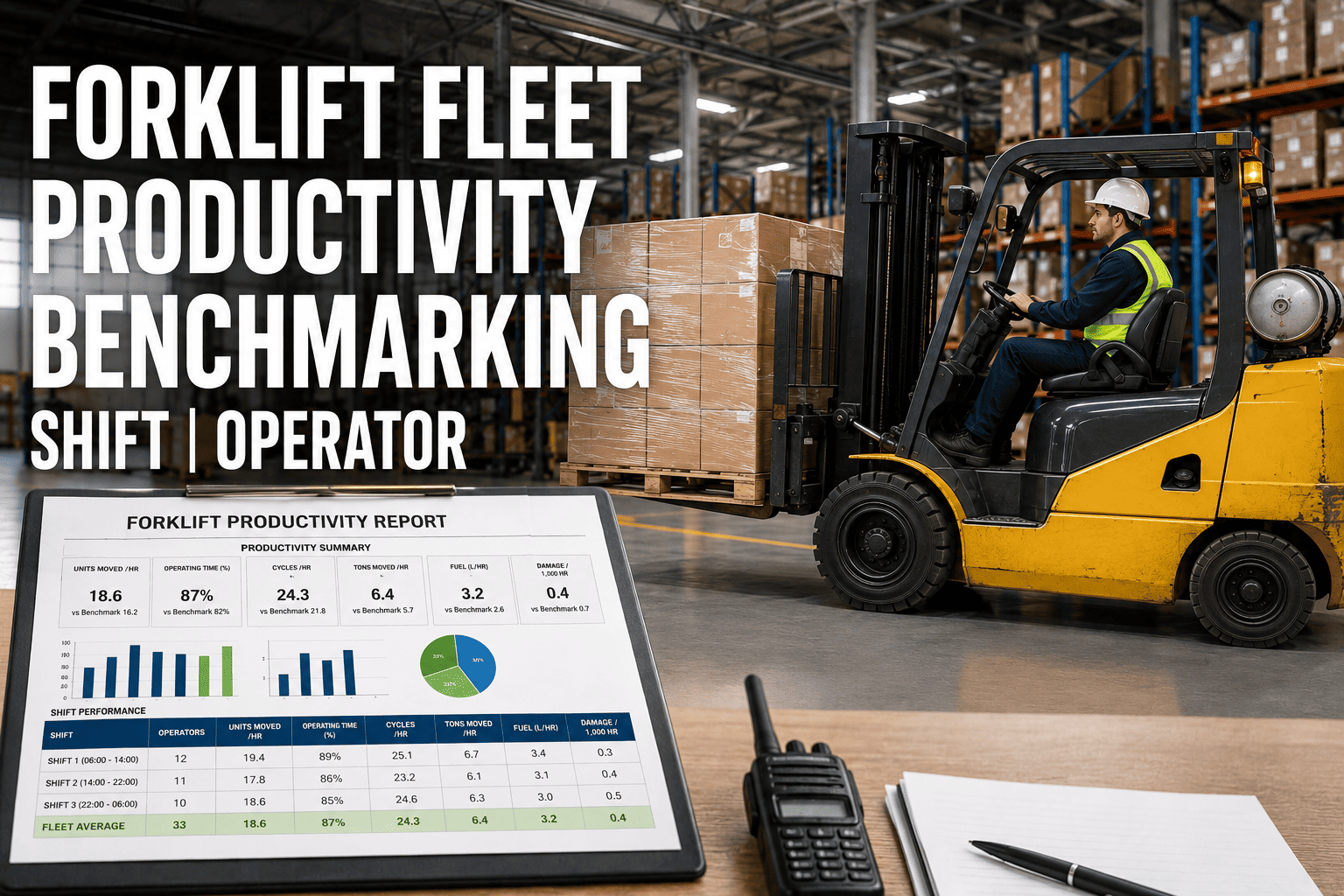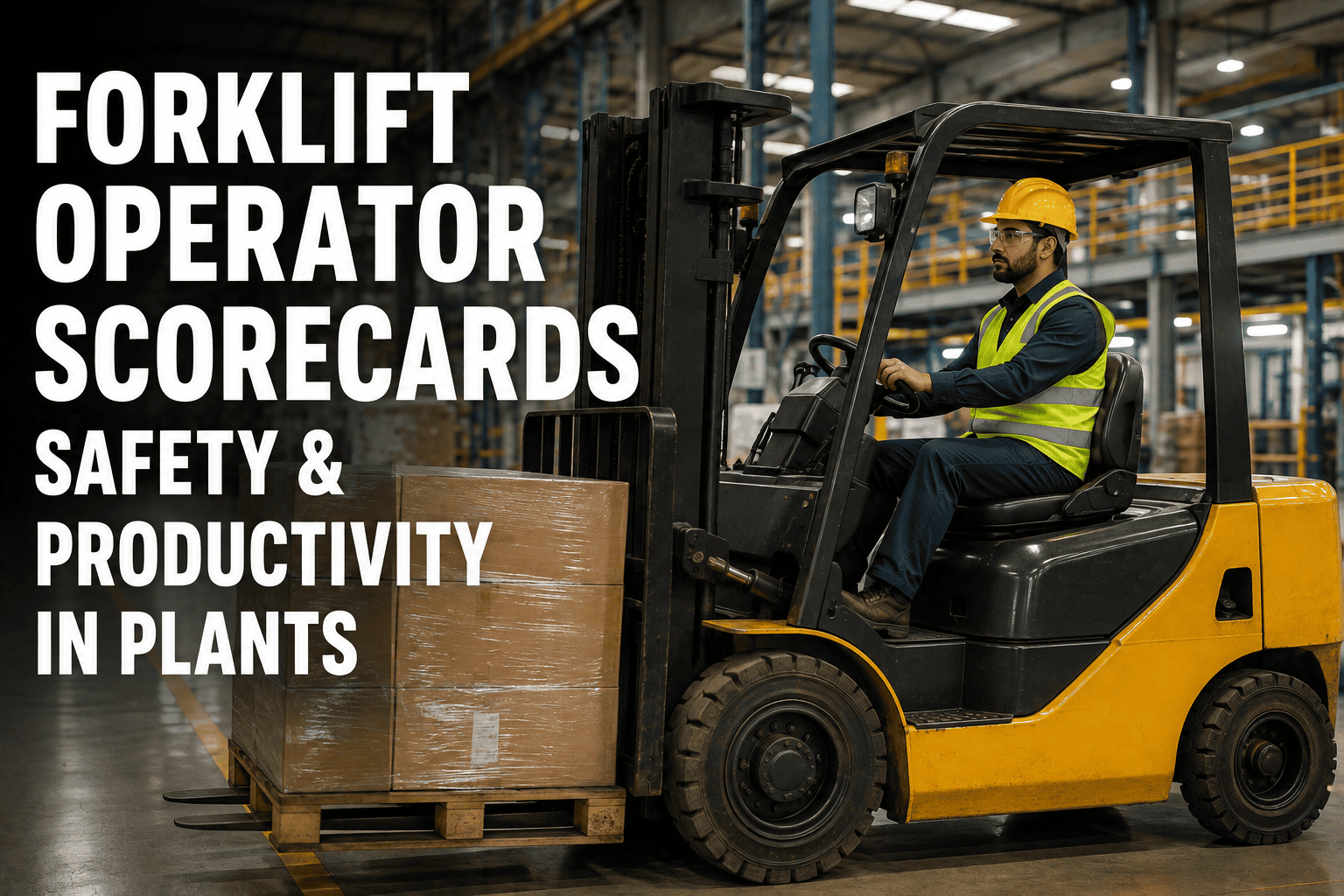
Ask any plant manager who their best forklift operator is, and you will usually get a name based on gut feeling: the fast one, the one who never complains, the one who has been there the longest. Ask them to prove it with data, and most go quiet. Meanwhile the operator running the hardest zone with the oldest truck often looks worse on paper than the one coasting through an easy, low-traffic aisle. That gap between perception and reality is exactly what turns a scorecard into either a tool people trust or a reason good operators quit.
A forklift operator scorecard turns safety events, equipment impacts, productivity, and compliance into a single, weighted score per operator, adjusted for the conditions each shift actually faced. Done well, it replaces guesswork with evidence, cuts equipment damage costs, and gives operators a clear, fair path to improve. Done poorly, it punishes operators for factors outside their control and drives turnover. See how a context-weighted scorecard looks on your own floor with a free FleetRabbit trial.
Anatomy of a Fair Scorecard
A scorecard operators trust is built from four weighted categories, not one raw number. Each pillar carries its own weight, and the final score reflects the full picture of how an operator performed, not just how many pallets moved.
Why Most Operator Scorecards Fail
Most scorecards break down not because the metrics are wrong, but because they ignore context. An operator working the busiest aisle on the oldest truck will always show more impact events than someone gliding through an open, low-traffic zone on a new lift. A flat scorecard treats those two people the same, and operators notice within weeks. The fastest way to lose trust in any scoring system is to let it feel arbitrary.
The Cost of Getting It Wrong
When scorecards feel unfair, plants see two things happen at once: strong operators start looking for work elsewhere, and weaker operators learn to game the metrics that get watched most closely, like slowing down near sensors instead of actually driving safer. Neither outcome improves the floor.
The Fix: Context-Weighted Scoring
A context-weighted scorecard adjusts expectations based on zone congestion, truck age, shift length, and task difficulty before comparing operators against each other. The same raw event count means something different in a tight production aisle than it does in an open yard, and the score should reflect that difference.
| Practice | Flat Scorecard | Context-Weighted Scorecard |
|---|---|---|
| Impact Events | Counted equally regardless of zone difficulty | Benchmarked against typical events for that zone and shift |
| Productivity | Compared across all operators using one target | Compared within task type and equipment class |
| Equipment Age | Not factored into safety or productivity scores | Adjusted for known handling differences on older trucks |
| Coaching Trigger | Based on raw score falling below a fixed line | Based on a trend deviating from that operator's own baseline |
FleetRabbit pulls safety events, impact data, productivity, and compliance into one context-weighted scorecard per operator, automatically adjusted for zone and equipment differences. Try it free with your current fleet, or walk through a live scorecard with our team.
From Score to Action: Closing the Coaching Loop
A number on a dashboard changes nothing on its own. What moves the needle is what happens the moment a score slips. A context-weighted scorecard should trigger a specific, timestamped coaching conversation tied to the exact event that caused the drop, not a vague end-of-quarter review.
Automatic Coaching Triggers
When an operator's trend line moves against their own baseline, a coaching assignment is generated automatically and logged the moment it is completed, creating a documented training trail rather than a memory of a hallway conversation.
Recognition, Not Just Correction
The same system that flags a decline should also flag consistent improvement. Operators who move from the bottom of their peer group toward the top deserve visible recognition, not silence, if the scorecard is going to feel like a fair system rather than a surveillance tool.
What Changes When Scoring Gets Fair
Plants that move from gut-feel reviews to context-weighted scorecards typically see equipment damage costs fall as targeted coaching replaces blanket policies, alongside better retention among operators who previously felt penalized for working the harder zones. Cycle time and load completion data also tend to improve simply because operators can finally see, in real numbers, exactly what a good shift looks like. If you want to see what a scorecard would look like for your own floor and shift patterns, it is worth taking a few minutes to book a demo with the FleetRabbit team.
Operators can tell the difference between a system built to catch them and one built to help them. A context-weighted scorecard does the latter by measuring what actually happened, adjusted for what each shift actually demanded. If your plant is ready to replace gut-feel reviews with fair, evidence-based scoring, start a free trial with FleetRabbit or book a short demo to see a scorecard built around your own operators.
FleetRabbit turns safety, impact, productivity, and compliance data into one fair, context-weighted score per operator, with coaching triggered automatically the moment it matters. Get started today, no credit card required.