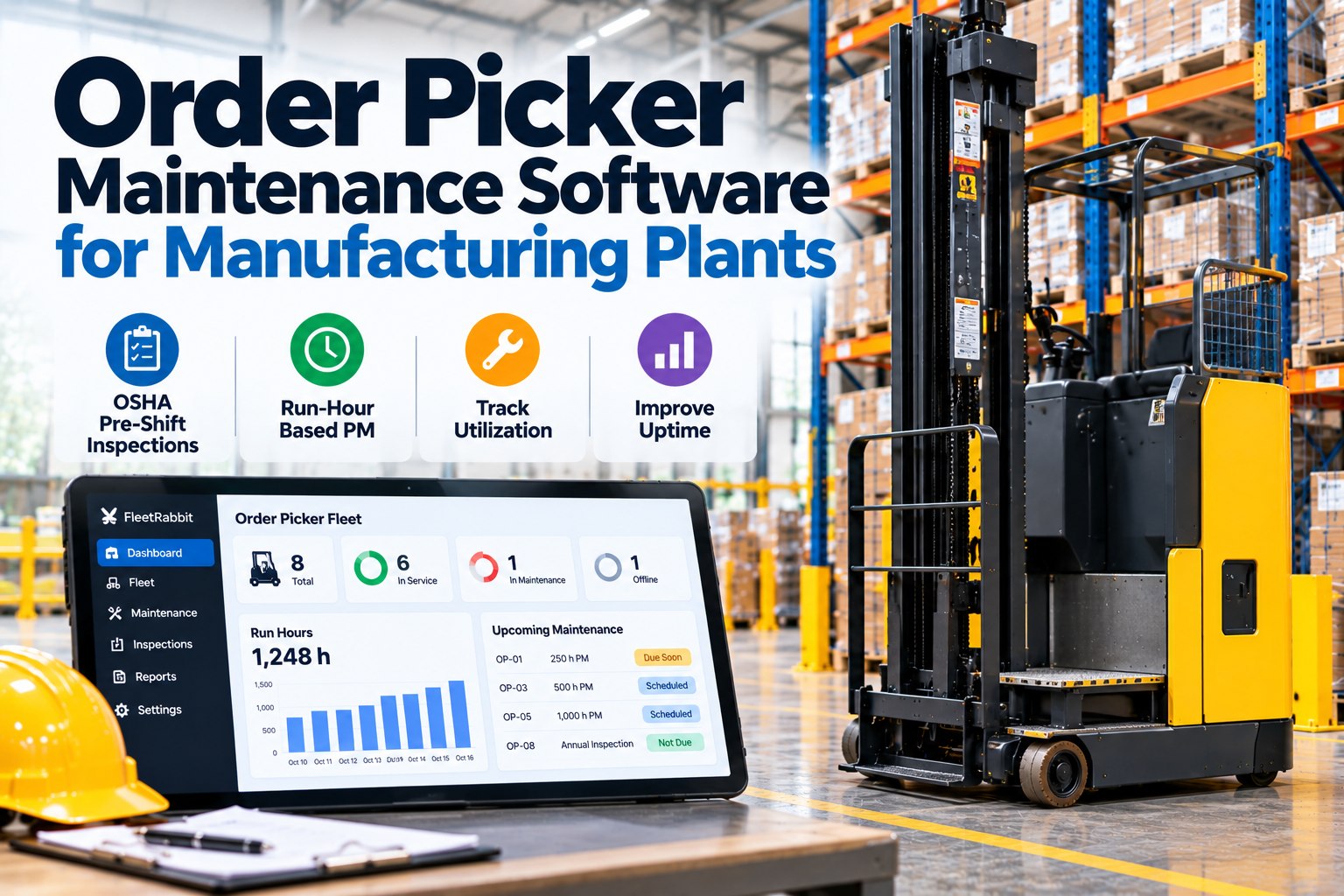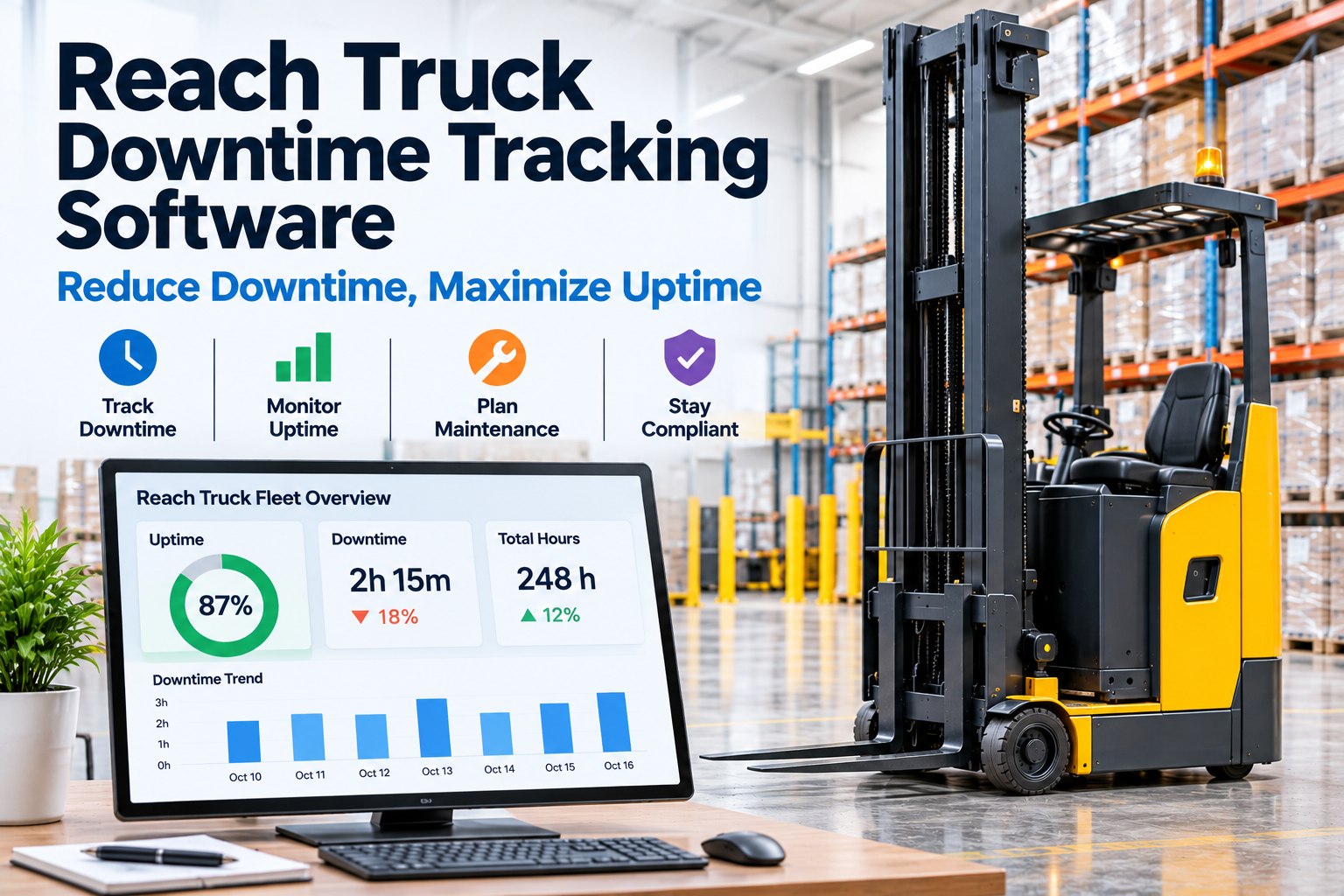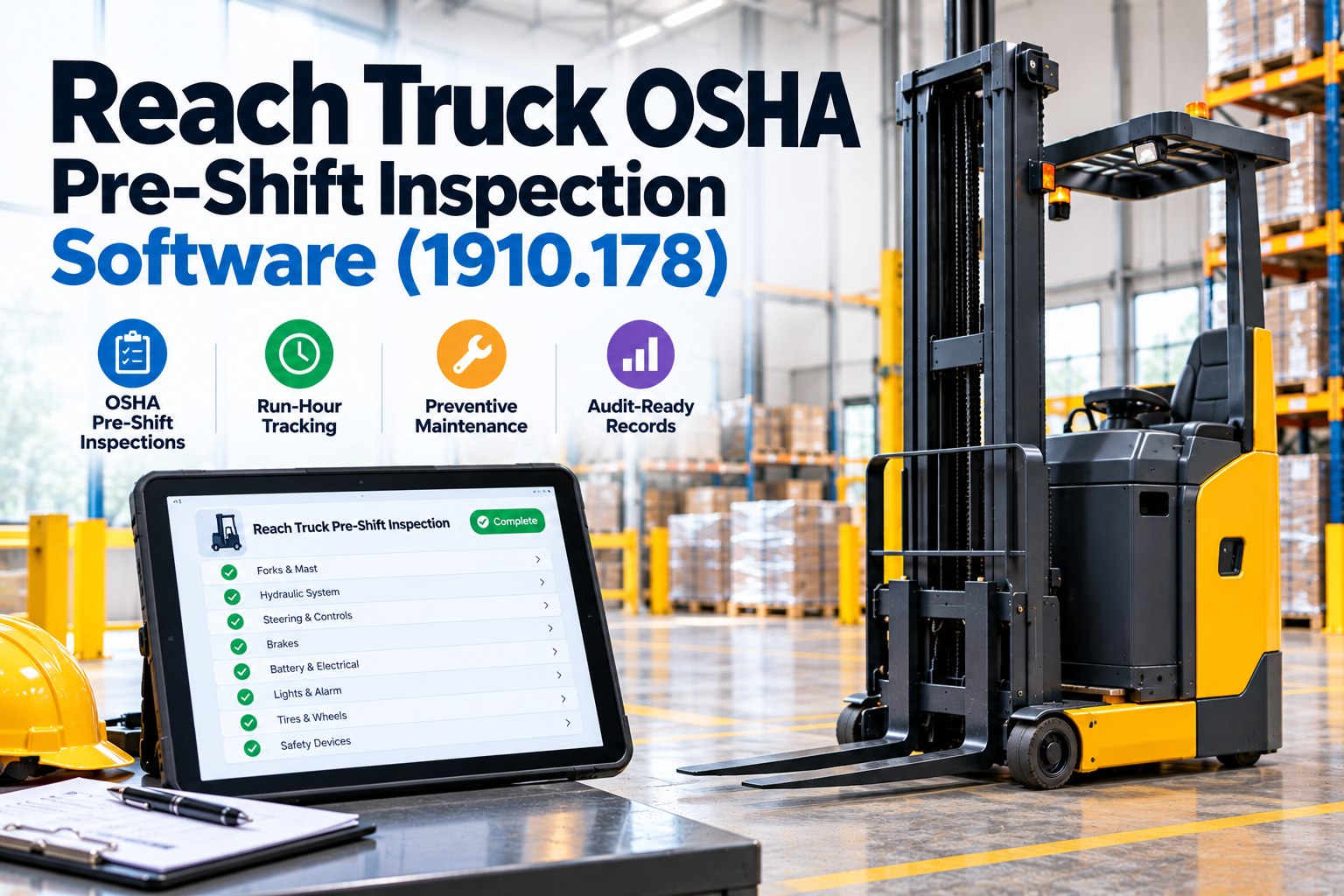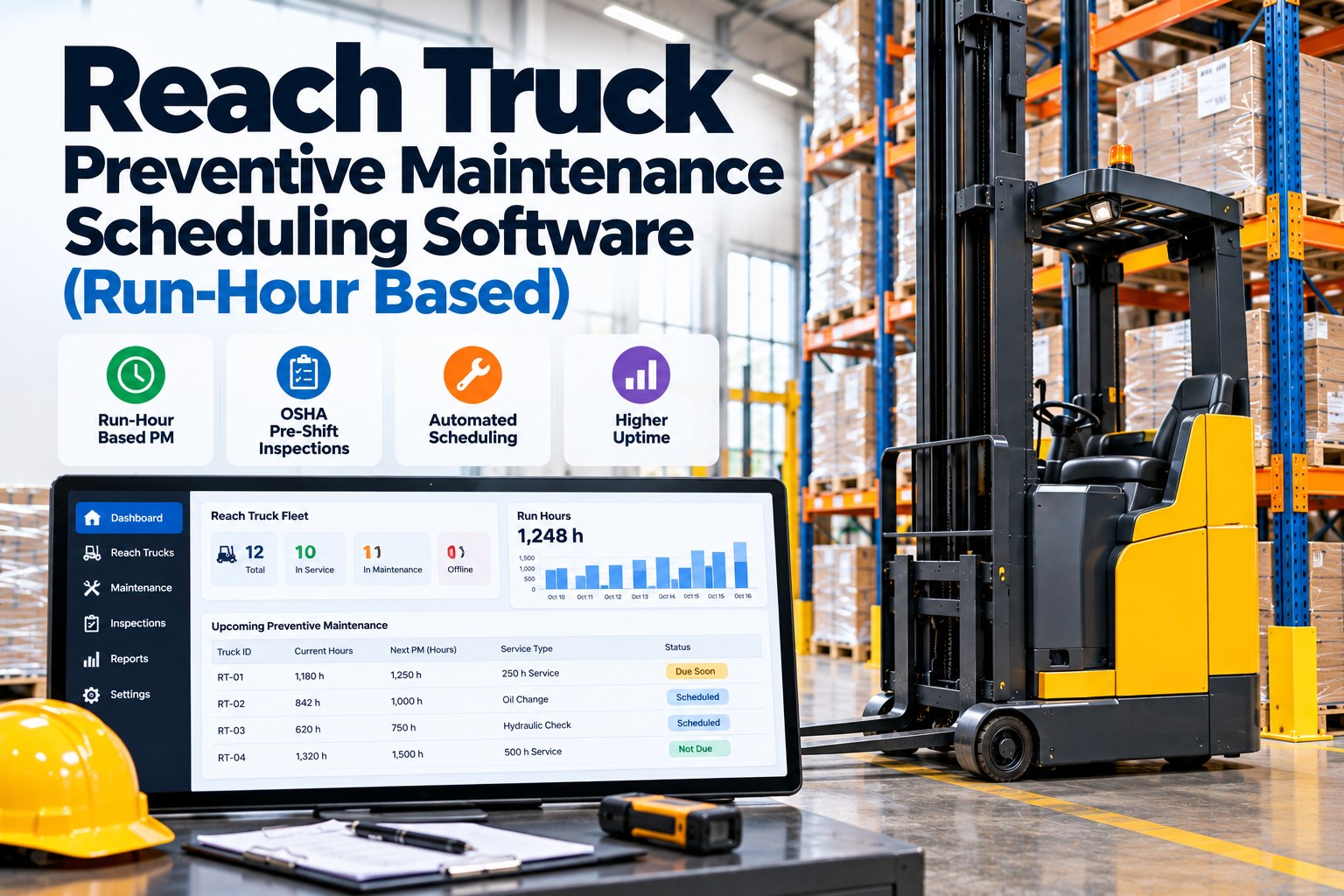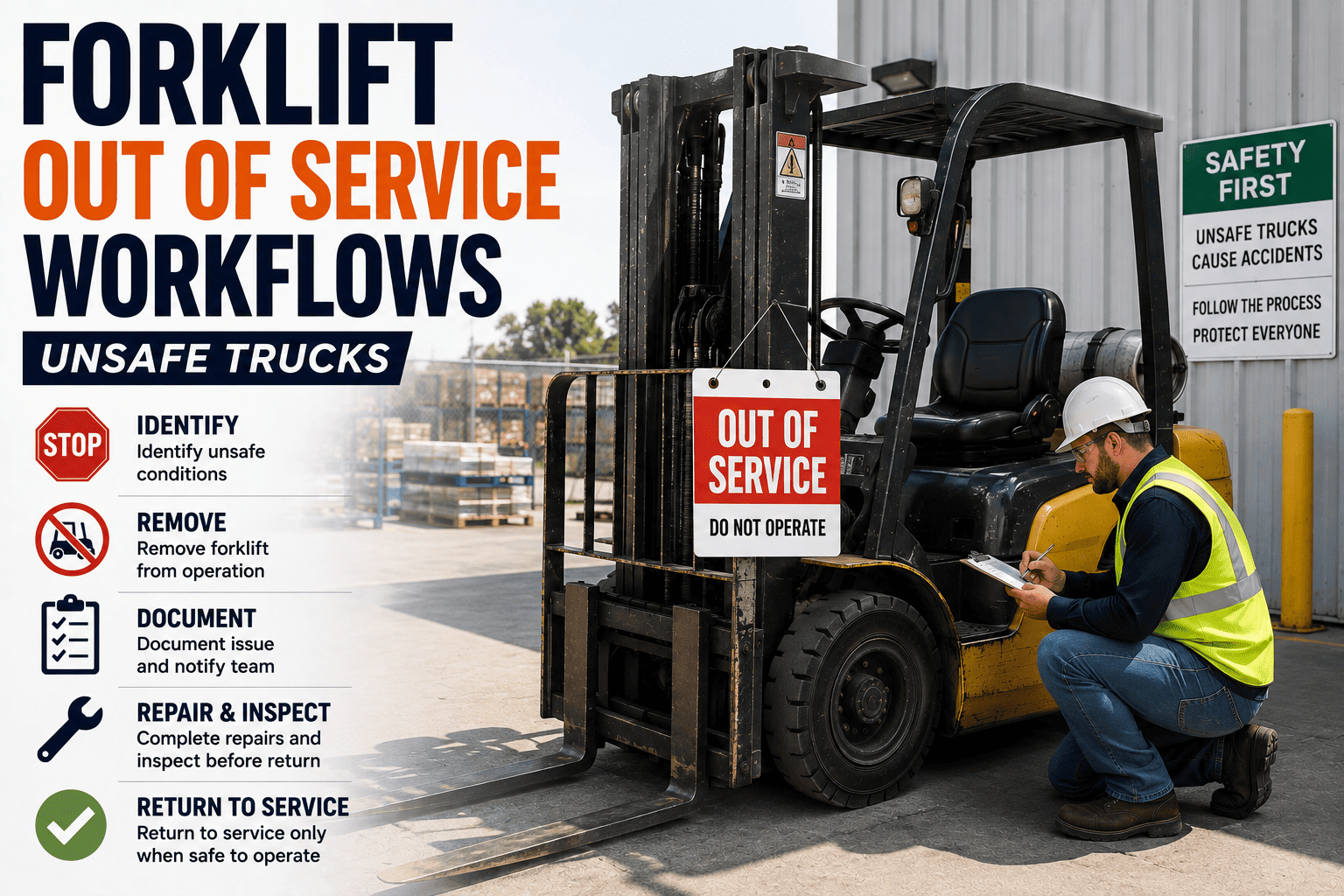
A forklift with a cracked fork or a dead horn is not a "note it and move on" problem. Under OSHA 29 CFR 1910.178(q)(7), the moment a safety-related defect is found, the truck has to come out of service and stay out until it's fixed. In most plants that rule lives on paper, and the truck keeps rolling until someone remembers to write a work order at the end of the shift. That gap between "defect logged" and "truck actually stopped" is where injuries and citations happen. This piece breaks down what a real out-of-service workflow looks like, why the manual version keeps failing, and how a digital trigger closes the gap the moment a critical defect is flagged.
An out-of-service (OOS) workflow is the set of steps that pull a forklift from the floor the instant a critical defect is logged, lock it out with a visible tag, route the issue to maintenance, and require a documented inspection before it returns to work. OSHA 1910.178(q)(7) requires trucks to be examined before every shift and removed from service if the exam shows any unsafe condition. Plants relying on paper checklists average a 6 to 10 hour gap between defect discovery and the truck actually being parked, which is the exact window in which most operator-caused incidents involving known defects occur.
What "Out of Service" Actually Requires
OSHA's language is direct: powered industrial trucks must be examined before being placed in service, and a vehicle that is defective or in any way unsafe should be removed from service, with the problem logged and reported to a supervisor right away. That inspection is required at least daily, and after every shift for trucks running around the clock. The standard doesn't leave room for "we'll fix it after lunch." A condition that adversely affects safety means the truck stops now.
In practice, that removal step is where paper-based programs break down. An operator circles a defect on a laminated checklist, hands it to a supervisor, and the supervisor is on a call, or the sheet sits in a bin until the shift change. Meanwhile the forklift keeps moving product because nobody physically stopped it. The written rule and the operational reality drift apart, and that drift is exactly what OSHA citations for operating defective equipment and inadequate documentation are built on.
The Three Defect Tiers That Should Drive Different Actions
Not every finding needs the same response, and treating a loose mirror the same way as a cracked hydraulic line is how real hazards get lost in noise. A workable OOS workflow sorts defects into tiers the moment they're logged, before human judgment.
Brake failure, hydraulic leak, cracked fork, disabled seatbelt switch, or a failed deadman sensor. The truck is locked out and tagged the instant the entry is submitted, no supervisor sign-off required to trigger the hold.
Worn tires, a flickering warning light, or a slow steering response. The truck can finish the current task but is scheduled for repair within 24 hours and flagged before the next shift assignment.
Cosmetic wear, a loose data plate, or a low-priority fluid top-up. Logged and scheduled into routine maintenance without interrupting operation.
FleetRabbit auto-changes a forklift's status to out-of-service the second a critical defect is logged, locks it from being checked out again, and pushes the work order straight to maintenance. No supervisor bottleneck, no truck running unsafe between shifts.
Anatomy of a Real Out-of-Service Workflow
A functioning OOS process is a chain, and it only works if every link happens automatically instead of depending on someone's memory. Here is what the chain looks like end to end.
Defect Logged at the Point of Inspection
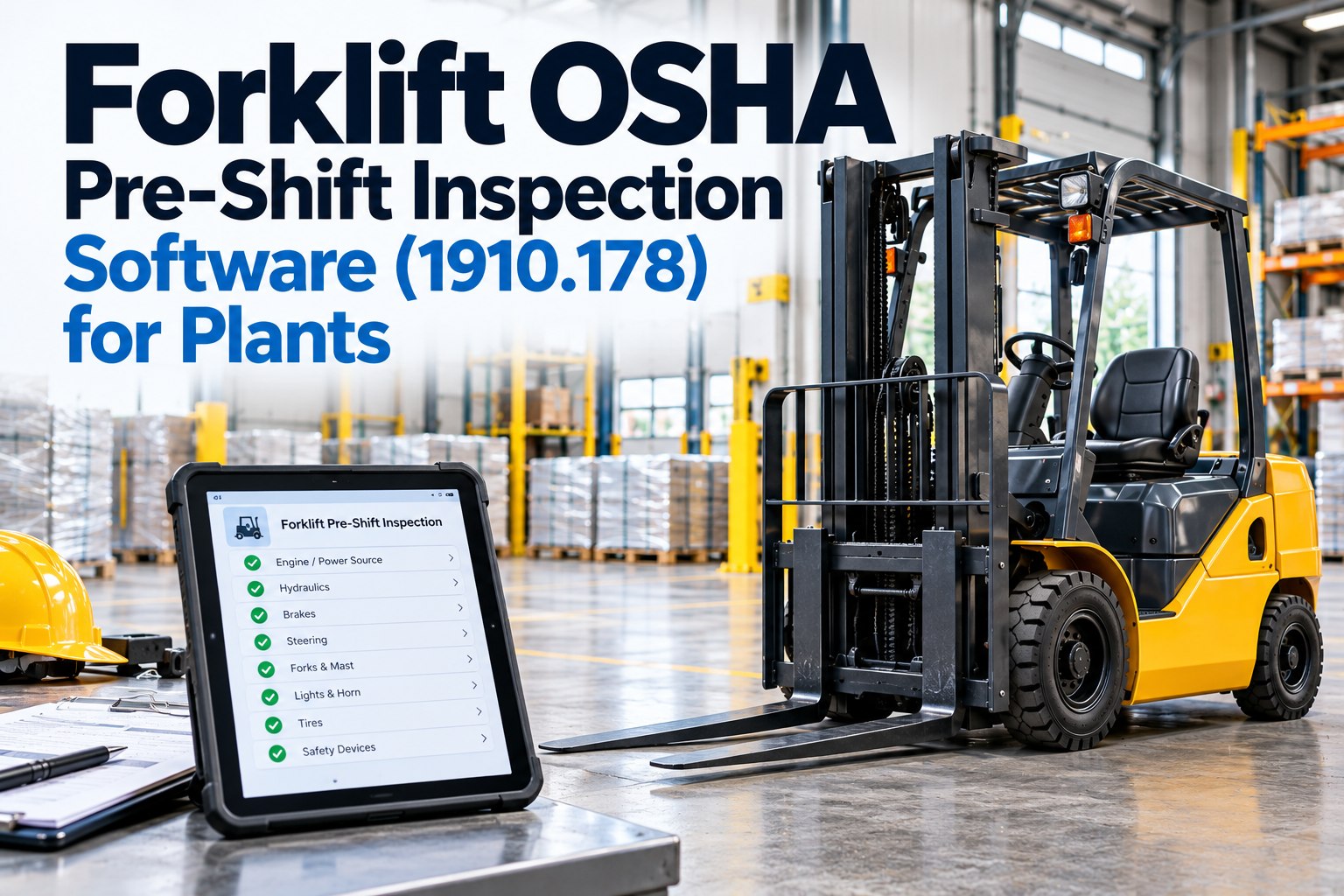
The operator completes the pre-shift check on a phone or tablet, not a paper form that sits in a drawer. Every failed item is timestamped and tied to that specific truck's ID.
Severity Is Classified Automatically
The system, not the operator's judgment alone, applies the tier logic above. A critical item triggers an immediate hold regardless of how the operator phrased the note.
Truck Status Flips to Out-of-Service
The forklift's digital record changes state instantly. Anyone trying to assign that unit to a shift gets blocked, and a physical tag-out is triggered for the floor.
Work Order Routes to Maintenance
The defect details, photos, and severity go straight to the technician queue with no manual re-entry, cutting the time between discovery and a scheduled repair.
Return-to-Service Sign-Off
A qualified technician closes the work order with documentation of the repair. Only then does the truck's status flip back to available, creating the audit trail OSHA inspectors ask for.
Manual Tag-Out vs. Digital OOS Triggers
The difference between a paper tag hanging on a steering wheel and a system-enforced status change comes down to whether the truck can actually be dispatched while it's supposed to be down. Paper tags can be ignored under shift pressure. A digital lock can't be checked out.
| Workflow Element | Manual Tag-Out | Digital OOS Trigger |
|---|---|---|
| Time to Removal | Hours, dependent on a supervisor seeing the sheet | Immediate, tied to the inspection entry itself |
| Risk of Truck Being Reused | High, a tag can be removed or ignored | Low, the unit is blocked from dispatch in the system |
| Documentation Trail | Paper forms, easy to lose or backdate | Timestamped digital record tied to the vehicle ID |
| Maintenance Notification | Depends on someone walking the form over | Automatic work order with defect detail attached |
| Audit Readiness | Slow to reconstruct during an OSHA review | Searchable history available on demand |
Why This Keeps Failing in Manufacturing Plants
Most plants already have a checklist. What they don't have is enforcement between the checklist and the floor. A few patterns show up again and again in operations that get burned by this gap.
The Supervisor Bottleneck
When removal from service depends on a person reading a form, that person becomes a single point of failure. If they're on the floor, in a meeting, or covering another shift, the defective truck keeps working.
The End-of-Shift Pile-Up
Paper checklists tend to get reviewed in a batch at shift change rather than the moment they're filled out, which means a critical defect found at 7am might not reach a decision-maker until 3pm.
Untrained Reviewers Miss Severity
Not every supervisor knows that a flickering hydraulic warning light is more urgent than a scratched paint job. Severity classification needs to happen consistently, not based on who happens to read the form.
No Link Between the Tag and the Dispatch System
A truck can be physically tagged and still get assigned to a shift if the person handing out keys never saw the tag. Without a system-level block, the paperwork and the operation are two separate worlds.
FleetRabbit removes the guesswork from severity classification and makes an out-of-service status impossible to override at dispatch. Every critical defect gets the same fast, documented response, every time.
Building the Workflow Into Your Plant
Getting from a paper checklist to an enforced OOS workflow doesn't require ripping out your current inspection process, just tightening the links between the steps you already run.
Start by defining your own tier list. Sit down with maintenance and safety leads and agree, in writing, on which defects are automatic holds versus which can wait for scheduled repair. Vague language like "unsafe condition" needs to become a specific list your operators can check against in seconds.
Next, move the inspection off paper. A digital form takes the same five minutes an operator already spends, but it timestamps the entry, ties it to the specific truck, and can trigger a status change the moment it's submitted rather than after someone reviews it later.
Finally, connect that status change to whatever assigns trucks to shifts, whether that's a supervisor's clipboard or a dispatch board. If a locked-out truck can still be handed to an operator, the workflow hasn't actually closed the gap, it's just added another form. Sign up for FleetRabbit to see how the status change, the work order, and the dispatch block all happen from one inspection entry, or book a demo to walk through it with your own fleet data.
Frequently Asked Questions
Every hour between a flagged defect and an enforced hold is an hour of exposure your plant doesn't need. FleetRabbit turns a five-minute inspection into an instant, documented out-of-service action, with no truck slipping through because a form went unread.