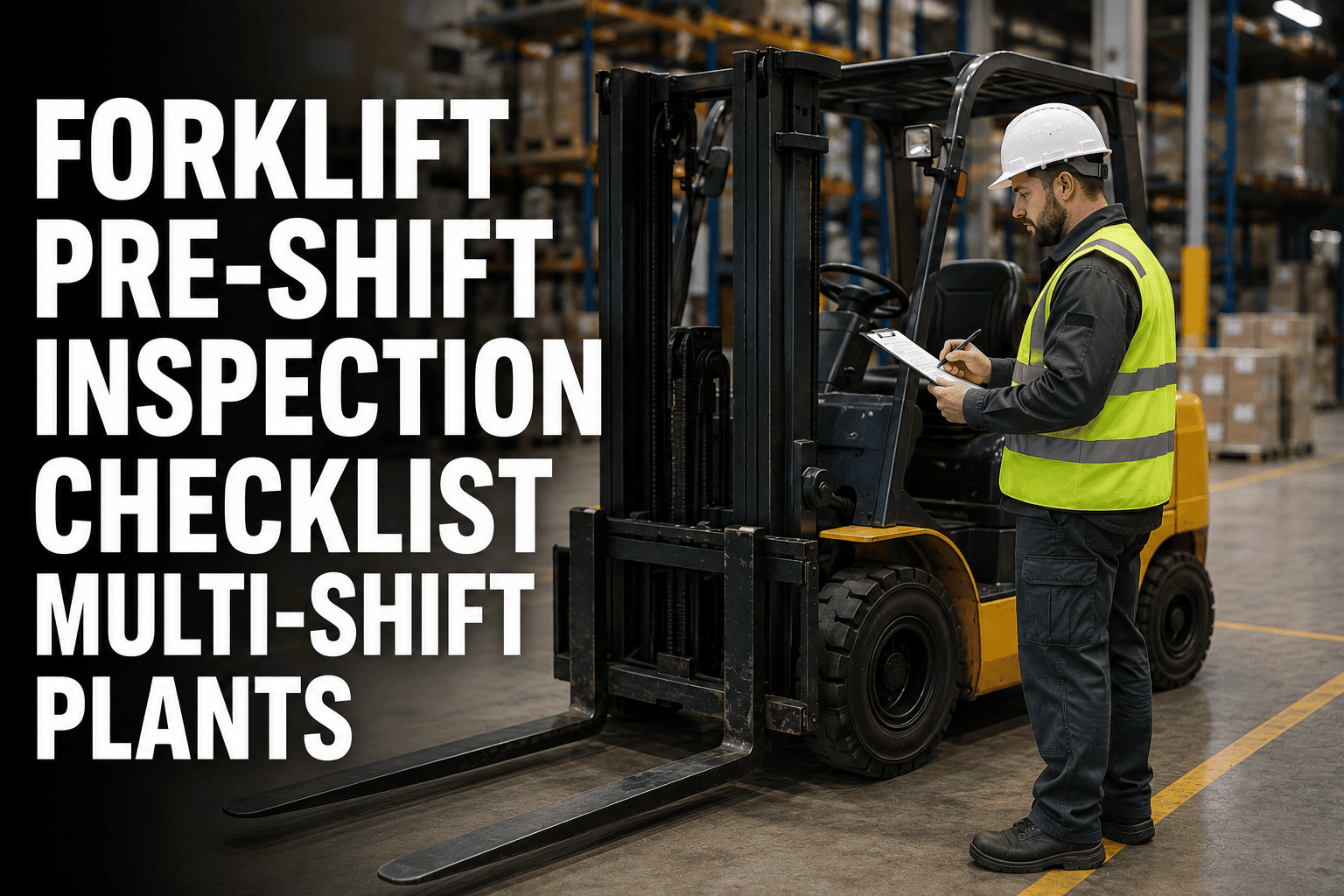
A forklift that completed its shift on first shift with a slowly leaking hydraulic fitting becomes a forklift with a blown hose and no brakes on second shift if nobody inspects it during the handover. In single-shift operations, a missed pre-shift inspection means one shift operates with an unknown condition. In multi-shift plants running two or three shifts, a missed inspection means the unknown condition cascades through every subsequent shift until someone finally catches it. The pre-shift inspection is the only point in the operational cycle where a fresh pair of eyes evaluates the forklift's condition before it goes back to work. When that inspection is skipped, rushed, or falsified in a multi-shift environment, the risk multiplies with each shift that inherits the unchecked equipment. Building a pre-shift inspection process that works reliably across shift changes, different supervisors, and operators with varying levels of diligence is one of the most impactful safety investments a multi-shift plant can make.
Multi-shift manufacturing plants average 35 to 50 percent pre-shift inspection completion rates when using paper checklists, compared to 92 to 98 percent with guided digital checklists. Each missed inspection in a multi-shift plant exposes 8 to 16 additional hours of operation beyond what a single-shift miss would create. OSHA cites incomplete pre-shift inspections as a contributing factor in 22 percent of forklift-related injury investigations.
Why Paper Checklists Fail in Multi-Shift Operations
Paper checklists are the most common inspection method in manufacturing and the least effective in multi-shift environments. The failure mechanisms are predictable and consistent across facilities. The primary failure is pencil-whipping, where operators check every box without actually performing the inspection because the paper form provides no mechanism to verify that each item was genuinely examined. A clipboard with 25 checkboxes and a signature line takes 30 seconds to fill out without looking at the forklift. A thorough inspection takes 5 to 8 minutes. When an operator is running late, when the shift is short-staffed, or when the forklift has passed inspection every day for months, the 30-second pencil-whip becomes the path of least resistance.
The secondary failure is loss of records. Paper checklists from second and third shifts often disappear before they reach the safety coordinator's filing system. They get left on dashboards, shoved into shift supervisor desks, or accidentally discarded during cleaning. When an incident occurs and OSHA requests pre-shift inspection records for the past 90 days, multi-shift plants using paper frequently discover gaps in their documentation that become citation opportunities. The third failure is inconsistency between shifts. First shift may use a detailed 30-item checklist. Second shift uses a simplified 15-item version. Third shift uses whatever form they can find. This inconsistency means the inspection standard varies depending on which shift you examine, undermining the entire purpose of having a standardized inspection process. You can sign up for FleetRabbit to replace paper checklists with a guided digital system that eliminates all three failure modes simultaneously.
The Multi-Shift Checklist Challenges That Paper Cannot Solve
Building a Multi-Shift Pre-Shift Inspection Checklist
The checklist itself must be designed for the specific operational context of a multi-shift plant. Standard manufacturer-provided checklists are starting points, but they must be customized for the equipment types, operating conditions, and shift-specific risk factors in your facility. The checklist should be organized into logical inspection zones that follow the operator's natural walk-around path, eliminating backtracking that wastes time and creates opportunities to skip items. Each item must be specific enough that the operator knows exactly what to look for and where to look for it, rather than vague descriptions that allow subjective interpretation.
The Complete Multi-Shift Pre-Shift Inspection Checklist
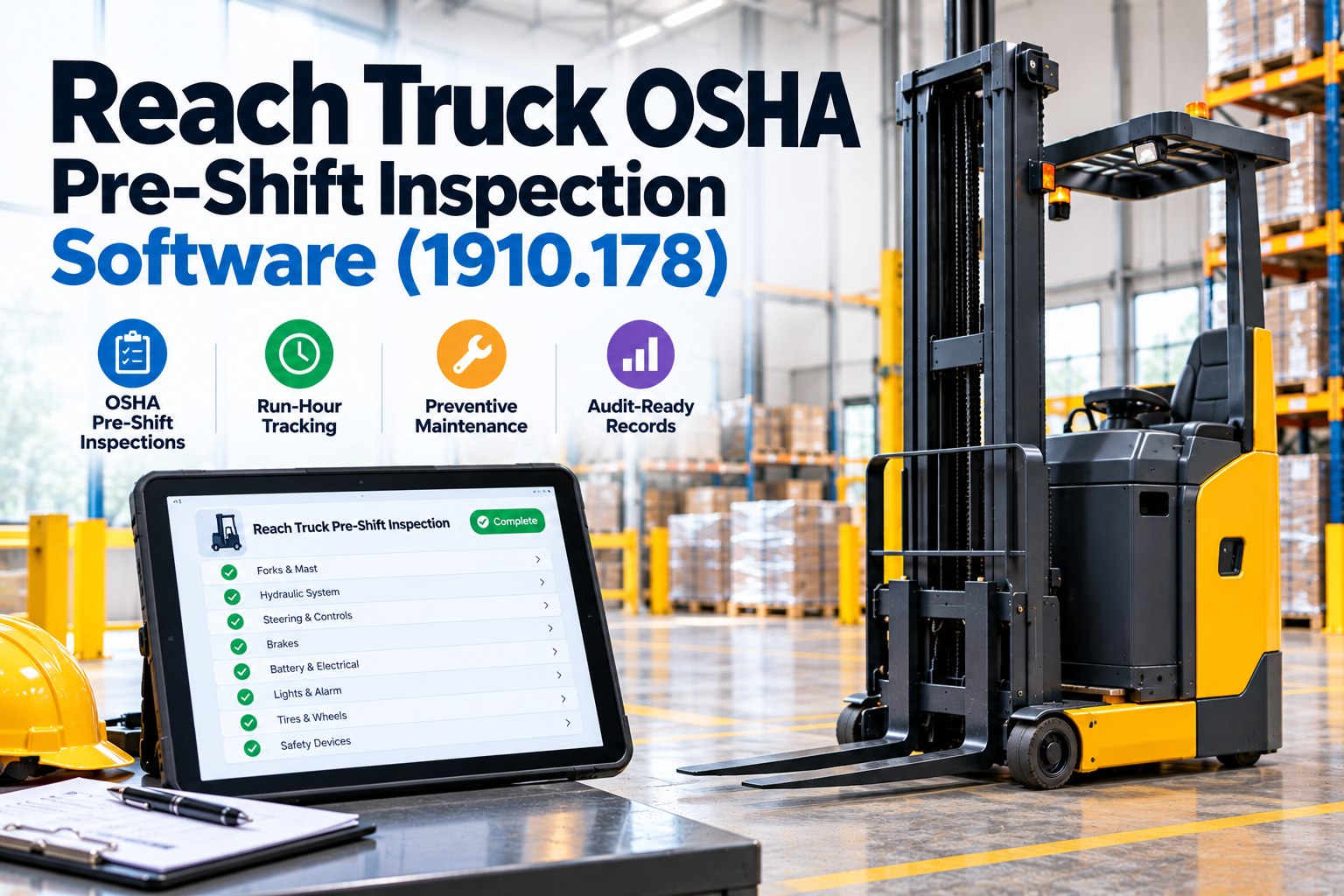
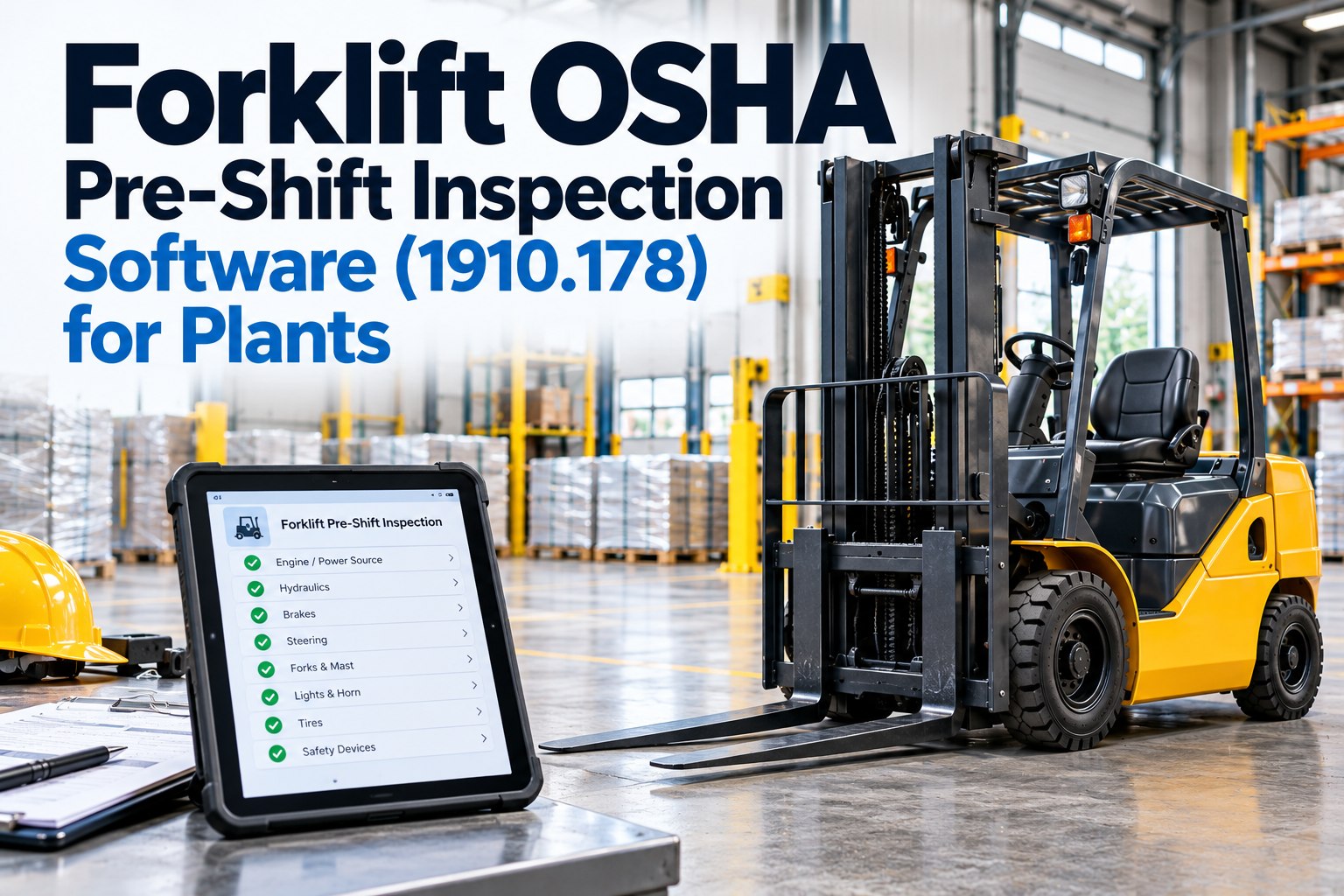
FleetRabbit guides operators through each inspection zone with specific checkpoints, requires photos for any flagged defects, enforces minimum inspection time, and timestamps every completion. Defects automatically notify supervisors across all shifts. All records are audit-ready and searchable instantly.
Multi-Shift Specific Inspection Requirements
Multi-shift plants face inspection challenges that single-shift operations never encounter. The shift overlap period, typically 15 to 30 minutes where incoming and outgoing operators are both present, creates the highest-risk window for inspection gaps. During overlap, both operators may assume the other is doing the inspection, or the outgoing operator may rush to leave while the incoming operator rushes to start production. Establishing clear ownership of the pre-shift inspection during overlap periods eliminates this ambiguity. The standard approach is to assign inspection responsibility to the incoming operator, with the outgoing operator responsible for documenting any conditions they observed during their shift that the incoming operator should pay particular attention to.
Shift Overlap Inspection Protocol
Handling Deferred Maintenance Items Across Shifts
Multi-shift plants frequently encounter situations where an operator identifies a defect that does not require immediate out-of-service status but does require maintenance attention within a defined timeframe. A leaking hydraulic fitting that is seeping but not dripping, a tire with a shallow cut that is not yet at replacement threshold, or a backup alarm that intermittently cuts out are all examples of defects that should be documented and scheduled for repair without immediately removing the forklift from service. In single-shift operations, the same supervisor who receives the defect report typically follows up on the repair. In multi-shift operations, the defect is reported on second shift, the maintenance team schedules the repair for first shift when the maintenance shop is fully staffed, but third shift operates the forklift in the interim without knowing the defect exists. The digital inspection system must carry deferred maintenance flags across shift boundaries so every operator who inspects the forklift sees the open deferred item and can monitor whether it is worsening. If you want to see how cross-shift defect tracking works in practice, book a demo with FleetRabbit and we will demonstrate the shift-aware defect management workflow.
Enforcing Inspection Completion Without Creating Resentment
The most effective inspection compliance approach in multi-shift plants combines three elements: technology that makes completion easy, accountability that makes non-completion visible, and consequences that are proportional and consistently applied. The technology element means providing a digital inspection tool that is faster to complete than a paper form, not slower. If the digital tool takes 10 minutes and the paper form took 3 minutes, operators will resist the technology regardless of its other benefits. A well-designed digital checklist with tap-to-pass functionality, pre-populated fields for operator and forklift identification, and clear item descriptions should take 4 to 6 minutes for an experienced operator, which is comparable to a thorough paper inspection but with the added benefits of photos, timestamps, and automatic routing.
Accountability Metrics That Drive Compliance
Proportional Consequences for Non-Completion
The consequence structure for missed inspections in multi-shift plants must be tiered to match the severity of the violation while maintaining consistency across shifts. A first missed inspection in a 30-day period should trigger a coaching conversation where the supervisor reviews the importance of the inspection process and addresses any barriers the operator faces in completing it. A second missed inspection within 30 days should trigger a formal written reminder that becomes part of the operator's record. A third missed inspection within 30 days should trigger a more significant disciplinary response consistent with your facility's progressive discipline policy. The critical requirement is that these consequences apply equally to all shifts. If first shift operators face consequences for missed inspections but third shift operators do not because the night supervisor is less diligent about enforcement, the entire system loses credibility and compliance drops across all shifts, not just the unchecked one.
Adapting the Checklist for Different Forklift Types
Multi-shift plants typically operate multiple forklift types, each requiring inspection items that do not apply to other types. A reach truck needs mast extension and reach mechanism inspection items that do not exist on a standard counterbalance forklift. An order picker needs platform and fall protection inspection items. A turret truck needs rotating mast and rail alignment items. Rather than creating separate checklists for each forklift type and training operators on multiple forms, the digital inspection system should use conditional logic that presents only the relevant items based on the forklift type selected at the start of the inspection. The operator selects their assigned forklift from a list, and the system automatically loads the correct checklist variant with all common items plus the type-specific items for that forklift. This approach ensures no type-specific items are missed while keeping the inspection process simple for operators who may operate different forklift types across different shifts.
The Inspection That Takes Five Minutes Prevents the Incident That Takes Five Months to Resolve
Every forklift-related injury investigation that examines pre-shift inspection records finds one of two things. Either the inspection was completed and the defect that caused the injury was present but not identified, which points to a training or checklist design issue. Or the inspection was not completed, which points to a compliance and accountability issue. In multi-shift plants, the second finding is dramatically more common because the handover between shifts creates natural gaps that paper-based processes cannot close. A five-minute inspection at the start of each shift is the cheapest, fastest, and most effective safety action your facility can take. It catches defects before they become failures. It creates documentation that protects your facility during investigations. It builds operator awareness of equipment condition that carries through the entire shift. And it creates the accountability boundary between shifts that prevents the cascade of unknown conditions that multi-shift operations are uniquely vulnerable to. The checklist provided in this guide gives you the content. The digital tool gives you the enforcement. The only remaining variable is whether your facility will implement it before or after the incident that makes the need obvious.
Your multi-shift plant needs inspections that every shift completes consistently, with photo evidence for defects, automatic supervisor notifications, and audit-ready records that OSHA cannot find gaps in. FleetRabbit delivers all of this with a guided checklist that takes operators 4 to 6 minutes and cannot be pencil-whipped. Start your free trial and see completion rates climb within the first week.