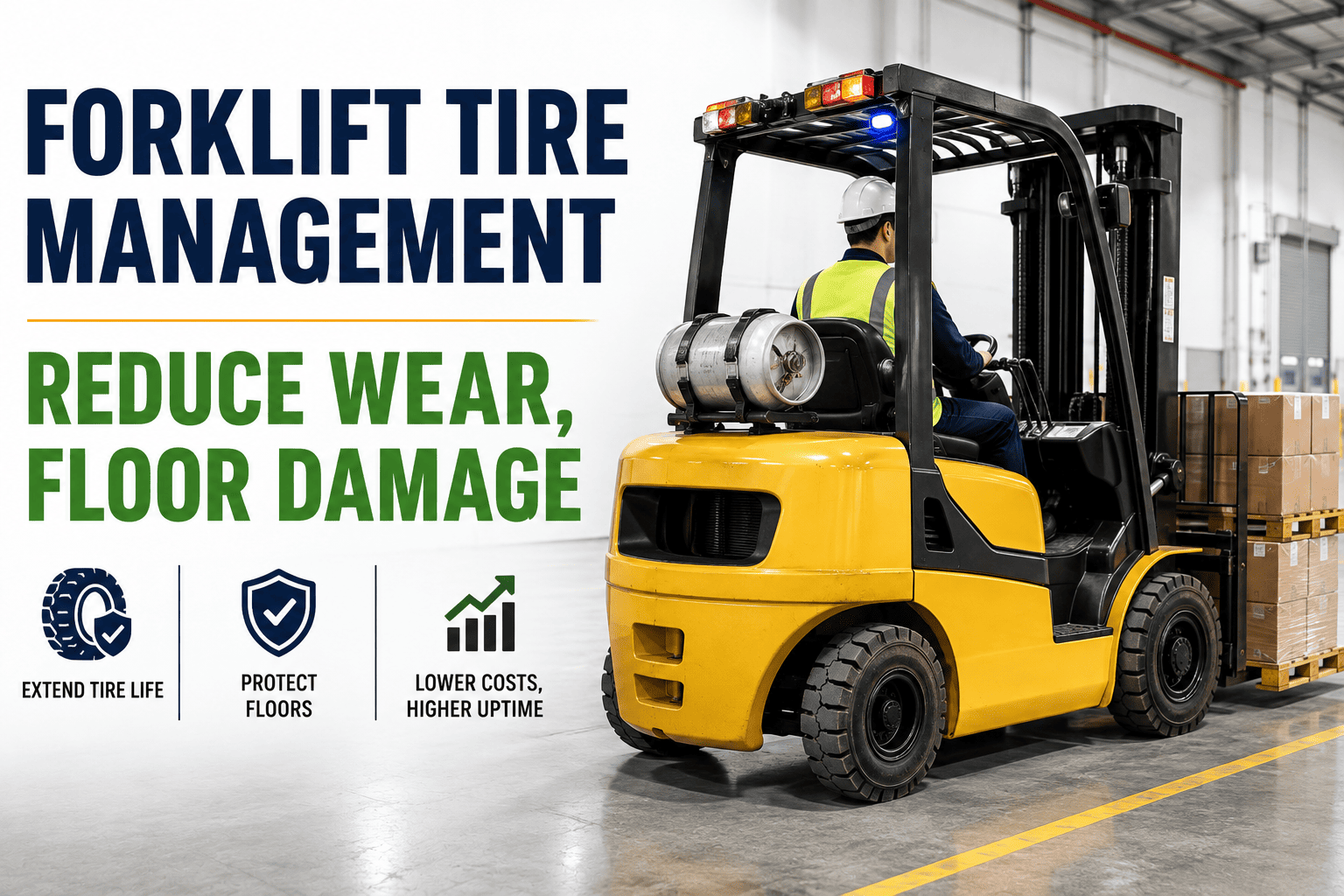
A forklift has no suspension system in the way a car does. Every ounce of the truck's weight, plus whatever it's lifting, rests entirely on four tires, and on a 5,000-pound-capacity forklift, the front tires alone can carry more than 11,000 pounds. That single fact explains why forklift tires wear faster than almost anyone expects, and why the wrong tire choice or a missed inspection doesn't just cost you a set of tires. It shows up as vibration, instability, and, on a polished warehouse floor, scuff marks and surface damage that are expensive to fix.
Forklift tire management means matching the right tire type to the operating surface, inspecting tread and pressure routinely, and replacing tires at defined wear thresholds rather than waiting for failure. Cushion tires are typically replaced once about 30 percent of their rubber has worn away, while solid pneumatic tires are changed around 60 percent section height. Using the wrong tire type indoors, especially pneumatic tires on smooth concrete, is one of the most common causes of both premature tire wear and avoidable floor damage.
Cushion Or Pneumatic: Getting The Match Right
The single biggest tire decision a plant makes isn't about brand or tread pattern, it's about matching tire type to the floor the forklift actually runs on. Get this wrong and every other maintenance effort is working against physics.
- Best on smooth, flat indoor concrete
- Smaller turning radius for tight aisles
- Lower upfront cost, no inflation needed
- Breaks down quickly if used outdoors on rough terrain
- Built for gravel, asphalt, and uneven yards
- Better shock absorption and ride comfort
- Solid versions resist punctures entirely
- Scuffs and wears down smooth indoor floors quickly
Why The Wrong Tire Damages Your Floor, Not Just The Tire
Pneumatic tires running on a smooth indoor floor tend to scuff and grind the surface with every turn, while cushion tires pushed onto outdoor rough terrain wear down far faster than their rated life. Either mismatch means paying twice: once in accelerated tire replacement, and again in floor resurfacing or repair costs that were entirely avoidable with the right tire on the right surface.
Five Warning Signs Every Operator Should Know
Tire failure on a forklift rarely happens without warning. These five signs show up well before a tire becomes a safety hazard, and catching them early is the difference between a scheduled swap and an unscheduled shutdown.
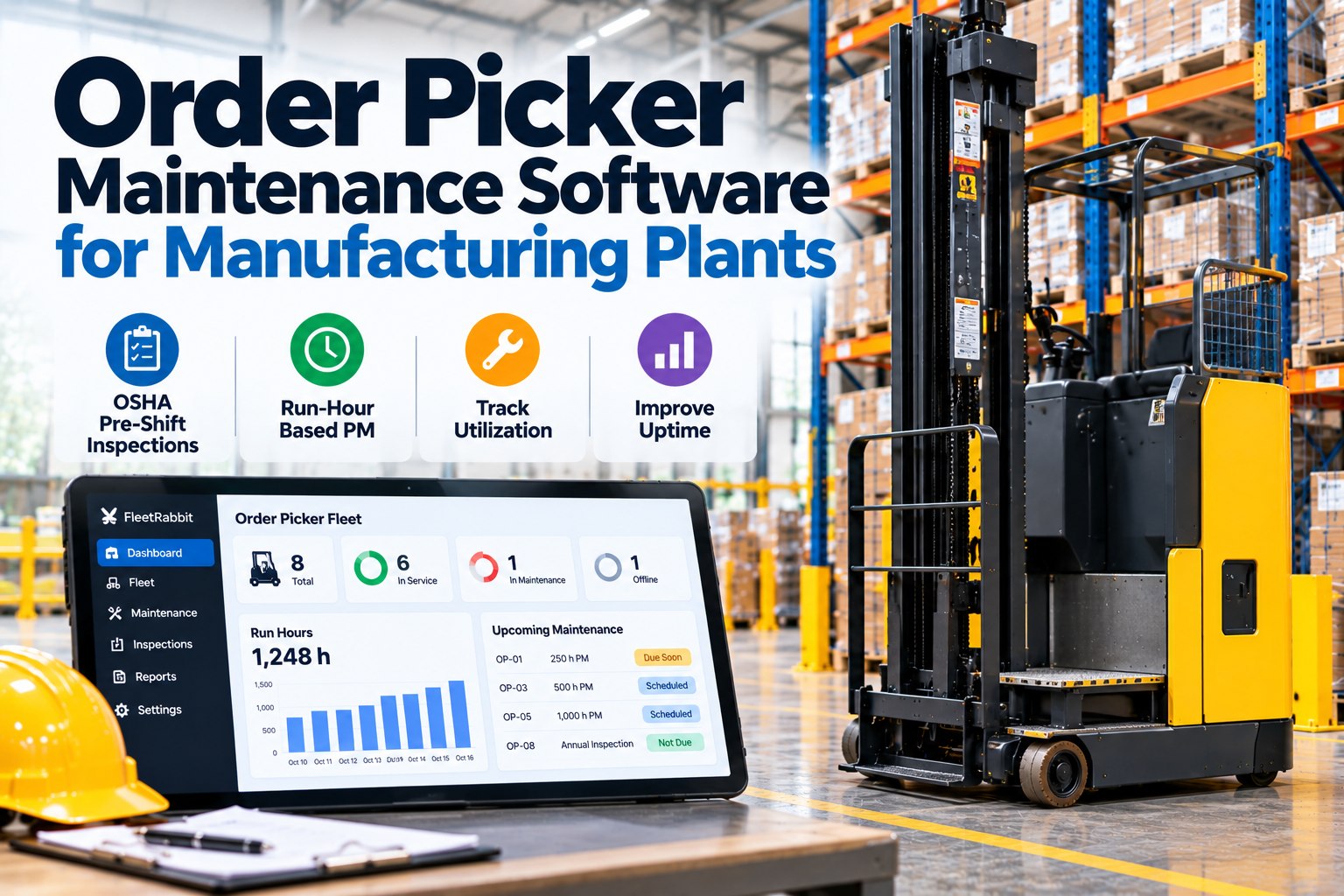
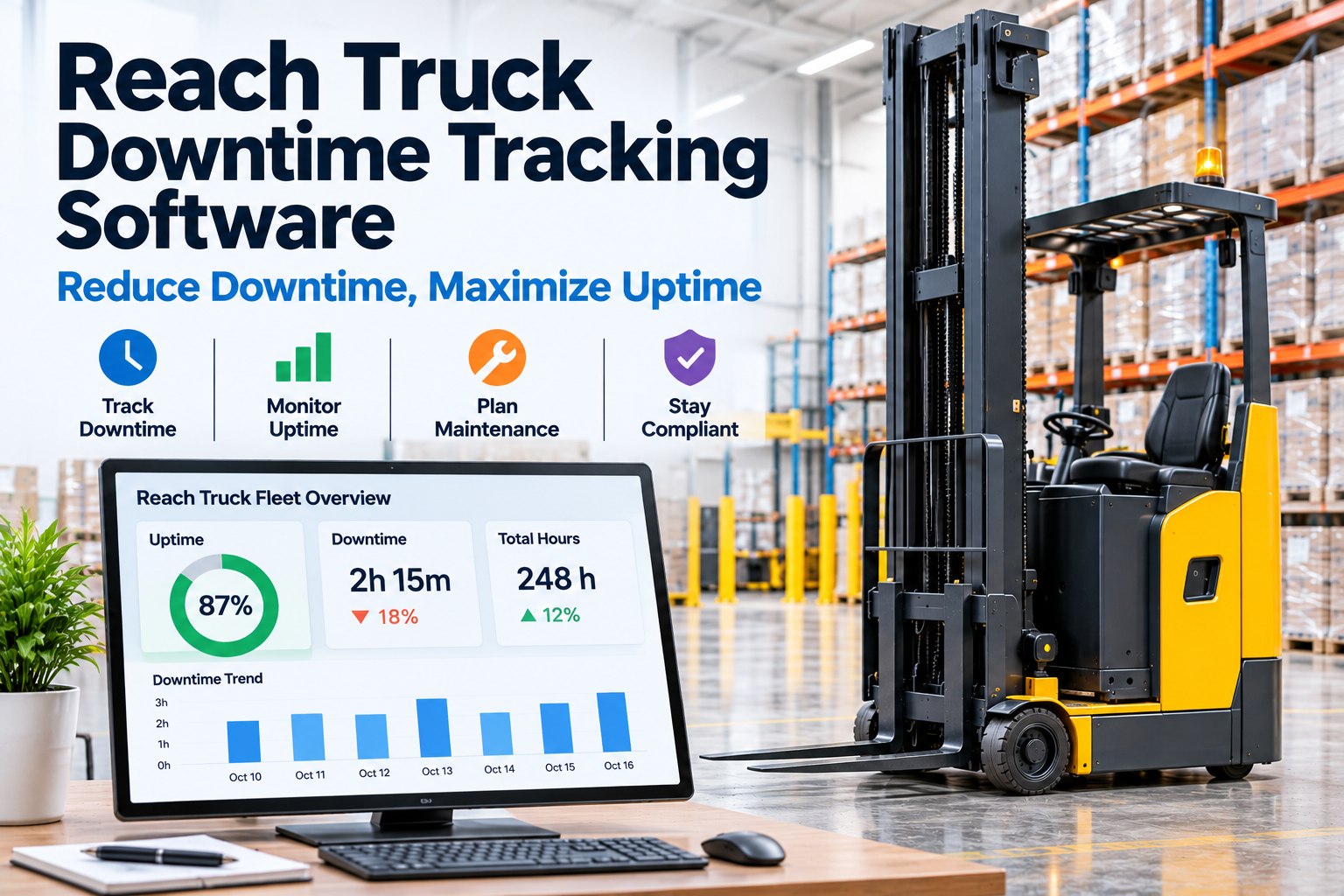
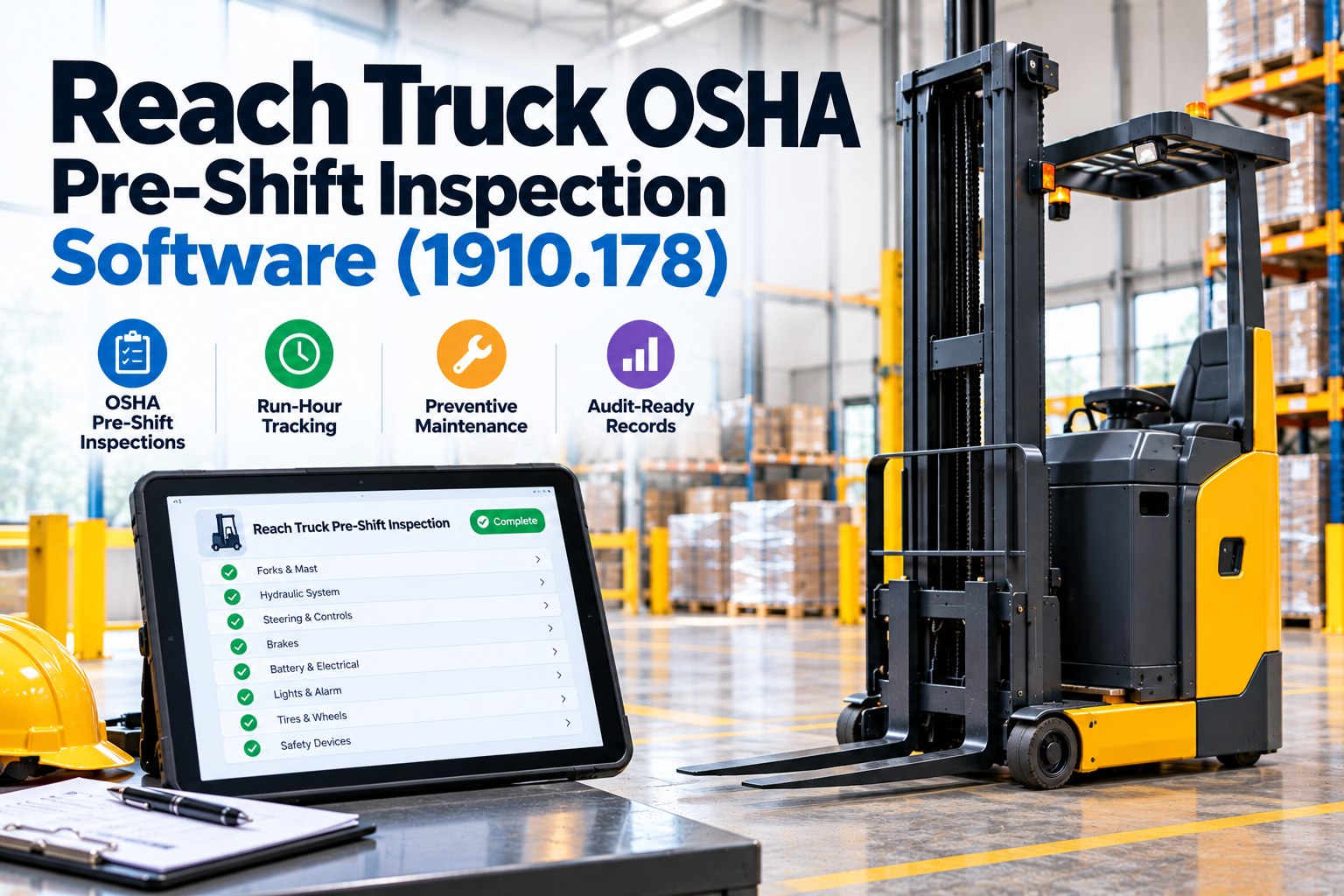
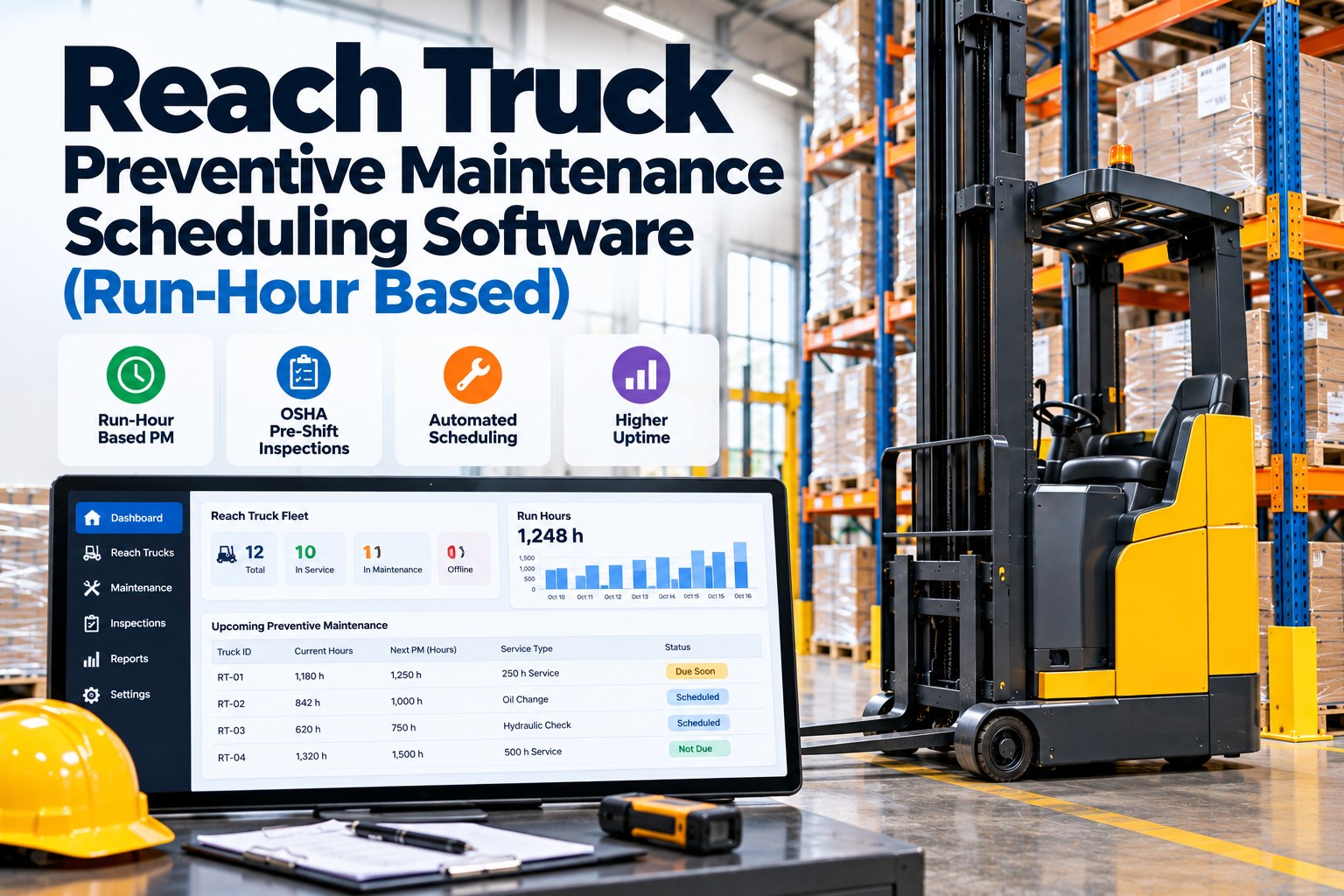
FleetRabbit logs tire inspection results and flags trucks approaching their wear threshold, so replacement happens on your schedule, not the tire's. Sign up free and connect your first three trucks today.
Knowing Exactly When To Pull The Tire
"It still looks okay" is one of the most expensive sentences in tire management. Each tire type has a defined, measurable replacement threshold, and running past it trades a scheduled swap for a much higher chance of an unscheduled one.
Replace In Sets, Not One At A Time
Mismatched tire wear on the same axle creates a stability risk that can contribute to a tip-over. Cushion tire trucks should have all four tires replaced together, and pneumatic tire trucks should always have both tires on the same axle replaced as a pair, even if timing between axles varies.
What Poor Tire Management Actually Costs
Tire issues rarely stay contained to the tire itself. The table below breaks down where the cost actually lands when tire condition is ignored.
| Neglected Issue | Where The Cost Shows Up | Prevention |
|---|---|---|
| Wrong Tire For Surface | Accelerated tire wear plus floor scuffing or surface damage | Match cushion tires to indoor floors and pneumatic tires to outdoor terrain |
| Overdue Replacement | Reduced stability, operator vibration, uneven load handling | Track wear against defined thresholds instead of visual guesswork |
| Mismatched Axle Tires | Stability risk and potential tip-over hazard | Always replace both tires on the same axle together |
| Ignored Pressure Drops | Blowout risk, increased fuel or energy use, faster tread wear | Check pneumatic tire pressure before every shift |
Most of these costs are preventable with a routine that takes minutes per shift. If your plant is dealing with recurring floor damage or a fleet where tire replacement always seems to catch maintenance by surprise, a quick demo call is a fast way to see how tracked inspections change that pattern.
Frequently Asked Questions
FleetRabbit turns routine tire checks into tracked, trackable data across your whole fleet, catching wear before it becomes instability, downtime, or floor damage. Book a demo to see it in action, or sign up and start tracking today.