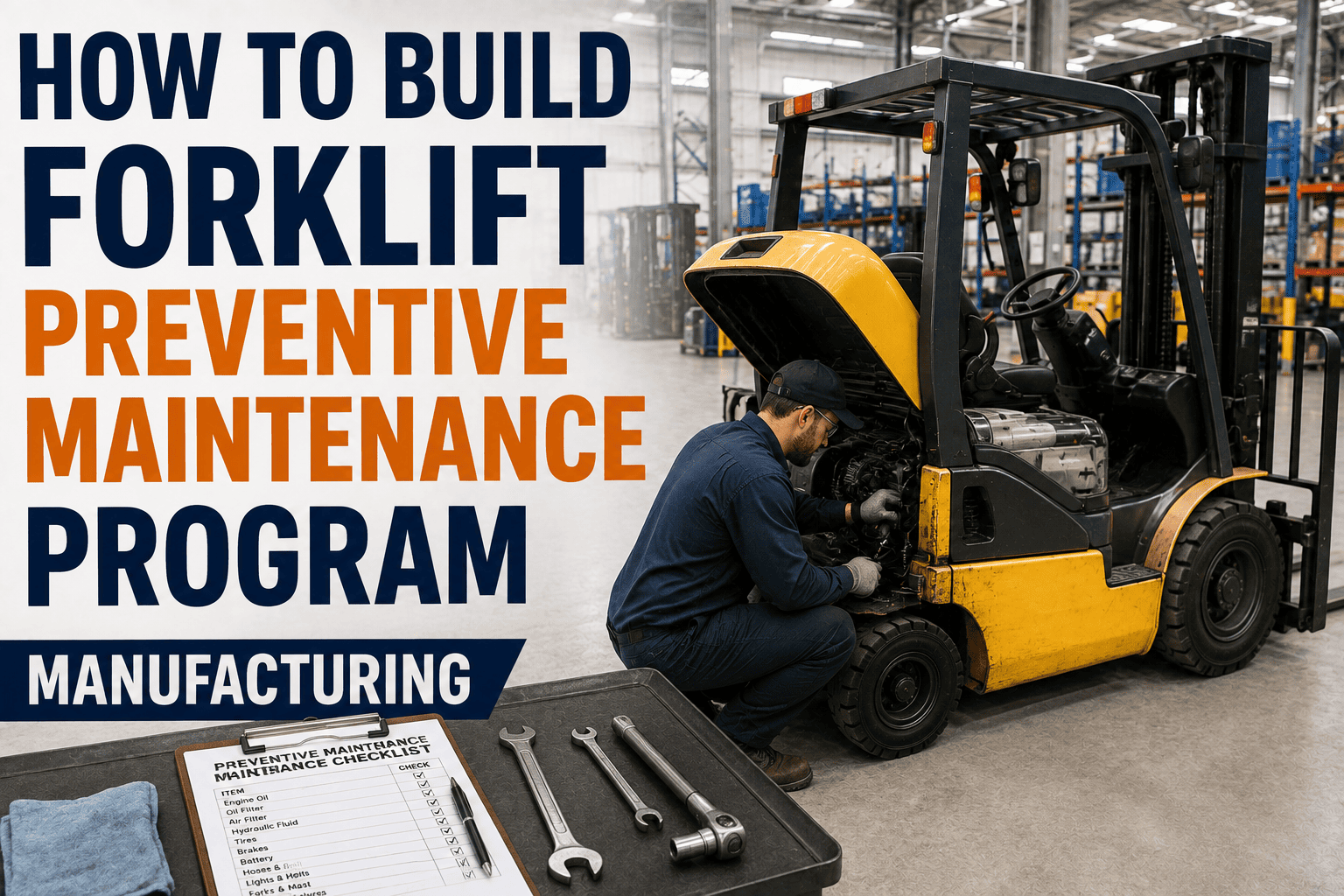
Most plants do not lack a preventive maintenance program because nobody cares about uptime. They lack one because the program that exists lives in a mechanic's head, a stack of manufacturer manuals nobody reads cover to cover, and a spreadsheet that falls out of date the week it is created. Building a real forklift preventive maintenance program means turning manufacturer service intervals into a schedule your team actually follows, tied to real run hours instead of a rough guess of how often a truck gets used. Sign up free and FleetRabbit will build that schedule around your fleet's actual hours from day one.
A forklift preventive maintenance program is built around four layers: daily operator inspections required by OSHA 29 CFR 1910.178(q)(7), hour-based service intervals from the manufacturer (commonly 250, 500, 1,000, and 2,000 hours), adjustments for duty cycle and environment such as dust, cold storage, or multi-shift use, and a tracking system that flags service before it becomes overdue. Fleets that follow this structure typically move from reactive to planned maintenance within 90 days of implementation.
Start With Manufacturer Intervals, Then Adjust for Reality
Every forklift comes with a manufacturer service schedule built around hour-meter readings rather than the calendar, for the same reason an aircraft is maintained by flight hours instead of the date. Wear on a hydraulic pump, brake actuator, or tilt cylinder is a function of use, not time on the lot. That schedule is your starting point, not your finished program.
Building the Program in Four Steps
A working PM program is less about the checklist itself and more about who owns each step and how service gets triggered before a truck fails on the floor.
Classify Every Truck by Duty Cycle
Two forklifts of the same model can wear at very different rates. A single-shift truck in a clean, climate-controlled warehouse can often run closer to the manufacturer's baseline interval. A multi-shift truck in a dusty, corrosive, or cold-storage environment needs shorter intervals, sometimes tightening a 250-hour schedule down considerably. Group your fleet by environment and shift count before you finalize a single interval for everyone.
Separate Operator Checks From Technician Service
Daily pre-shift inspections and scheduled PM service are not the same layer of the program, and treating them as interchangeable is where most gaps start. Operators catch immediate safety issues before each shift. Qualified technicians handle the deeper, hour-based service that daily checks are not designed to find, like chain elongation or hydraulic system wear.
Assign a Single Owner Per Truck
Every forklift in the program needs one person accountable for confirming its service happened on schedule, not a general assumption that "maintenance will handle it." A named owner per unit closes the gap where trucks quietly slip past due dates in larger fleets.
Track Hours, Not Just the Calendar
A calendar-only schedule misses the trucks running double shifts and over-services the ones sitting idle half the week. Recording the hour meter daily, and triggering service the moment a truck crosses its threshold, is what keeps the program accurate as usage patterns shift month to month.
| Program Layer | Who Owns It | Trigger |
|---|---|---|
| Pre-Shift Inspection | Operator | Every shift, before the truck is placed in service |
| Core Service | Technician | Every 250 operating hours or manufacturer baseline |
| Wear Item Service | Technician | Every 500 operating hours or six months |
| System Inspection | Technician or supervisor sign-off | Every 1,000 operating hours, with a written report on file |
| Full Overhaul | Technician, planned downtime window | Every 2,000 operating hours |
FleetRabbit tracks real hour-meter data for every truck in your fleet, flags service before it goes overdue, and assigns each job to the right technician automatically. Sign up free and load your fleet's manufacturer intervals in minutes.
Where Most New Programs Break Down
A PM program rarely fails because the schedule was wrong on paper. It fails because nobody catches when a truck quietly falls behind, and by the time someone notices, the interval has already been missed for weeks.
The Spreadsheet Ceiling
A spreadsheet works for a handful of trucks. Once a fleet grows past that, tracking multiple hour intervals across dozens of units by hand becomes unmanageable, hour meter readings stop getting logged daily, and overdue services stop triggering any alert at all.
Building In Planned Downtime
The whole point of a PM program is scheduling service during low-demand periods instead of an emergency repair during peak shipping. Block time on the production calendar for each interval in advance, the same way you would schedule a line changeover, so maintenance never competes with an active shift for the same truck.
Turning the Plan Into a Running Program
The building blocks above only work if the schedule updates itself as hours accumulate, instead of relying on someone remembering to check a whiteboard. Book a demo and FleetRabbit's team will walk through how the platform maps your manufacturer intervals to your actual fleet and keeps every truck on schedule automatically.
FleetRabbit tracks run hours, duty cycle, and manufacturer intervals for every truck in your fleet, then schedules and reminds your team automatically, so nothing slips through during a busy shift.