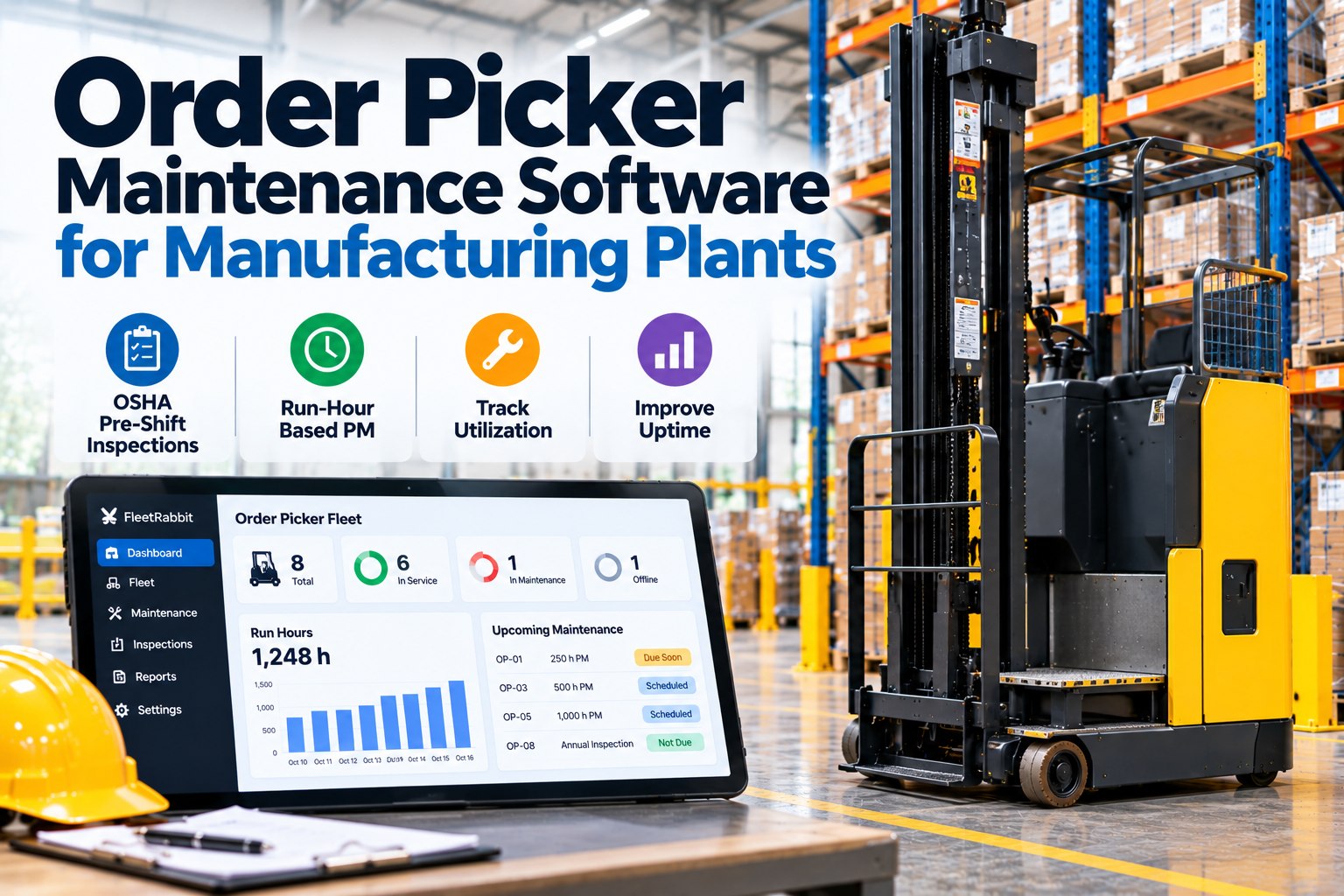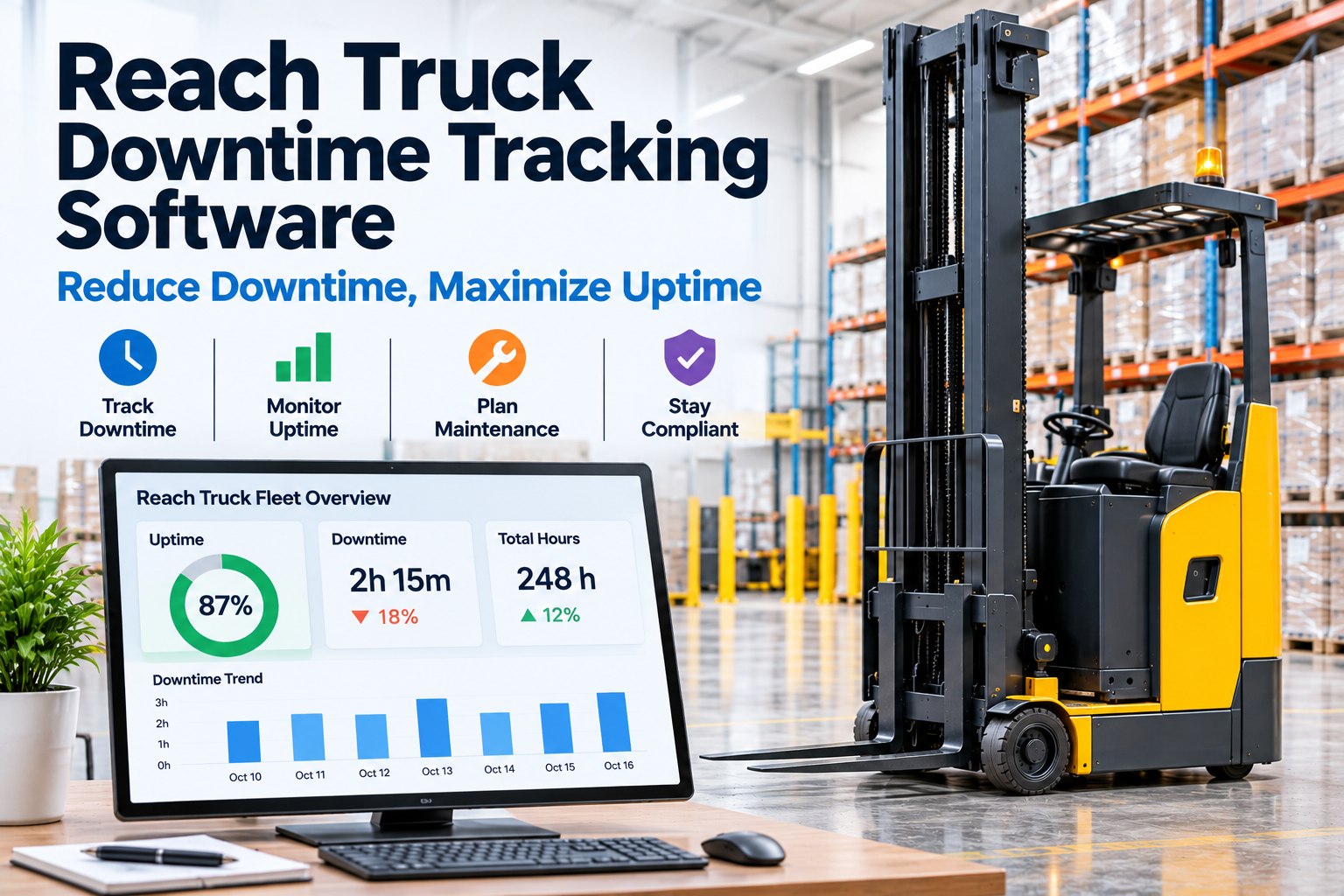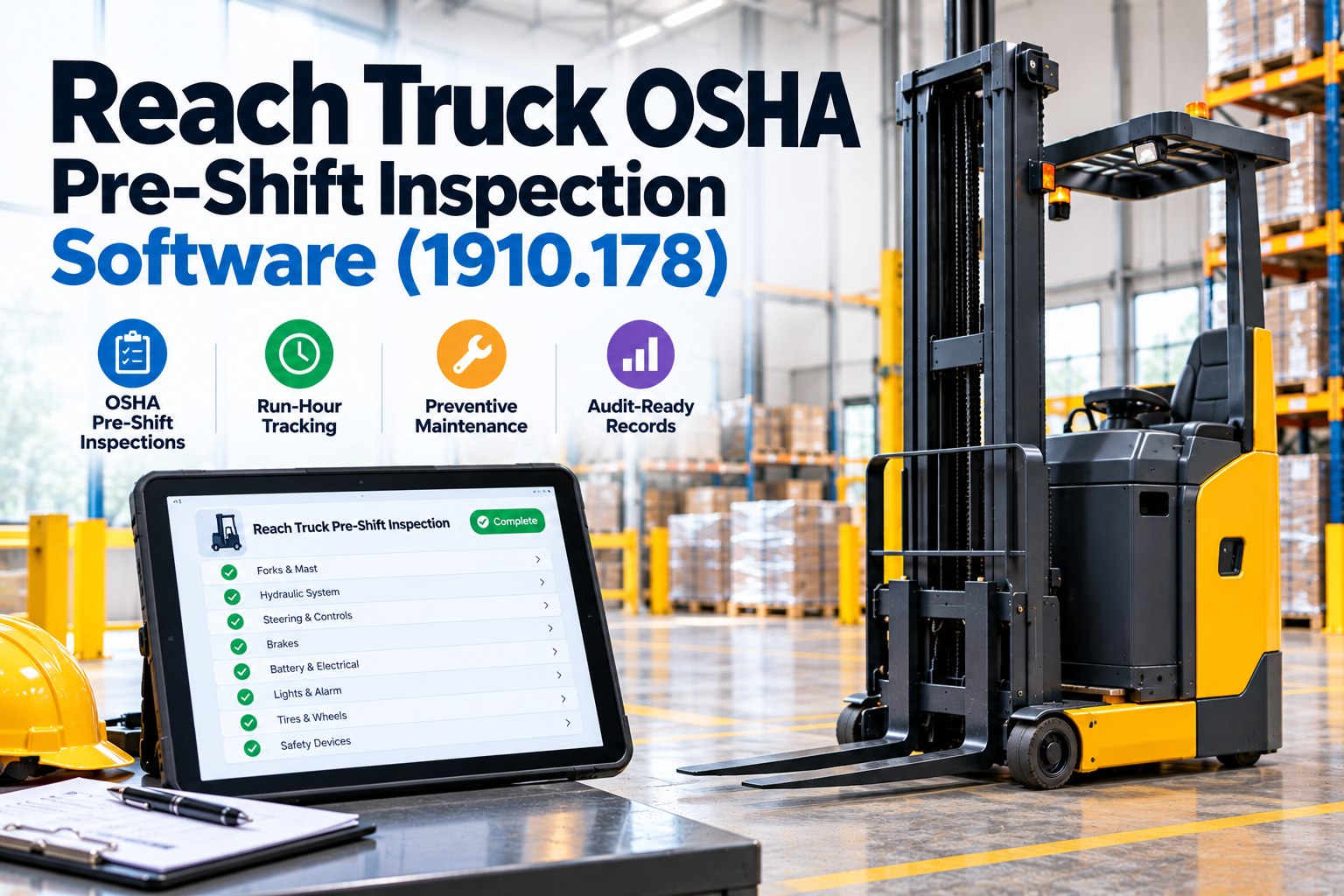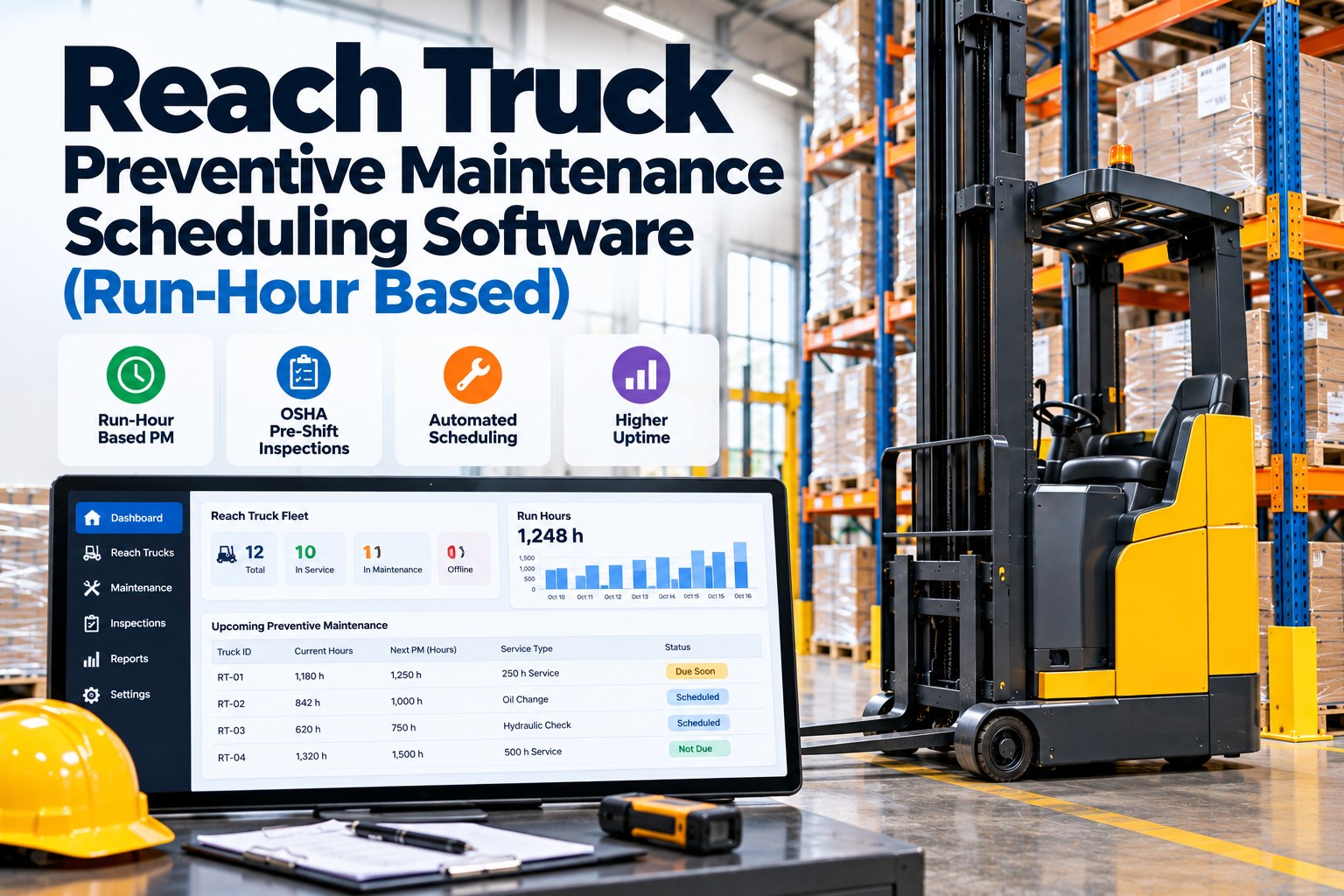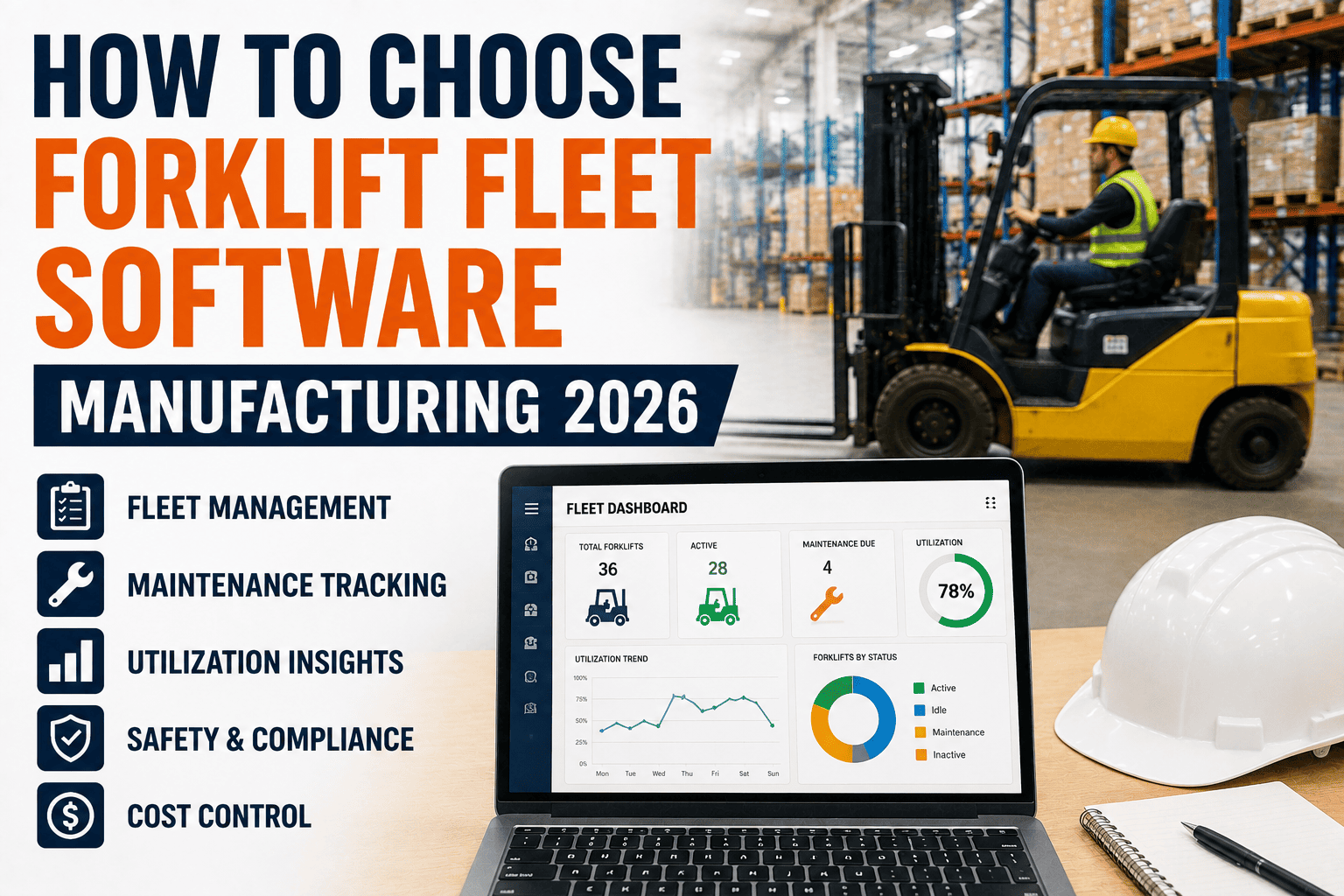
Choosing forklift fleet software feels simple until you actually start comparing vendors. Every website promises real-time tracking and lower downtime, but manufacturing plants have needs that generic fleet tools were never built to handle. Run-hour based maintenance instead of mileage, daily OSHA pre-shift inspections tied to individual operators, impact detection that flags a rough handling event before it becomes a cracked mast, and a fleet that was bought from three different dealers over ten years and needs to sit on one screen. Get the selection wrong and you are stuck re-implementing a new system in eighteen months while your maintenance team goes back to clipboards.
The right forklift fleet software for a manufacturing plant is brand-agnostic, tracks maintenance by run-hours rather than mileage, enforces digital OSHA 29 CFR 1910.178(q)(7) pre-shift inspections tied to certified operators, detects impacts automatically, and connects to your ERP so utilization and cost data do not live in a separate silo. Sign up for a free trial or book a demo to see how FleetRabbit was built around exactly this checklist.
Why Truck Fleet Software Does Not Work for Forklifts
Most fleet software on the market was designed for over-the-road trucks, and it shows the moment you try to bend it around a warehouse floor. Truck platforms schedule maintenance against mileage and GPS routes. A forklift rarely leaves the building, so mileage means nothing. What matters is run-hours, load cycles, and how many shifts a truck has carried since its last hydraulic service.
FleetRabbit tracks run-hours, enforces digital OSHA inspections automatically, and works across every forklift brand on your floor. Start your free trial with no credit card required, or book a 30-minute demo to walk through your fleet with a specialist.
The Three Categories of Vendors You Will Run Into
Nearly every forklift software vendor on the market falls into one of three buckets, and knowing which bucket a vendor sits in tells you more about long-term fit than any feature list on their homepage.
OEM Telematics Platforms
Toyota T-Matics, Hyster Tracker, and similar manufacturer platforms work well if your entire fleet is one brand. The problem is that an OEM platform simply cannot see or manage trucks it did not build, which breaks down the moment your plant runs a mixed fleet acquired through different leases and dealers.
Automation and Robotics Platforms
Platforms built around autonomous mobile robots are powerful for facilities investing heavily in automation, but they treat traditional operator-driven forklifts as a secondary workflow. Inspection compliance and certification tracking in these systems tend to be thin or missing entirely.
Brand-Agnostic Manufacturing Platforms
This is the category built specifically for plants running mixed fleets, and where a platform like FleetRabbit sits. It combines predictive maintenance, digital OSHA-compliant inspections, operator certification tracking, and ERP integration in one system regardless of forklift brand.
| Evaluation Criteria | What Good Looks Like | What To Avoid |
|---|---|---|
| Maintenance Scheduling | Triggered by run-hours and load cycles, with predictive alerts before a component fails | Calendar-only scheduling with no usage-based logic |
| Inspection Compliance | Mandatory digital pre-shift checklist tied to OSHA 1910.178(q)(7), blocks ignition on failed items | Optional paper forms or checklists with no enforcement |
| Impact Detection | Automatic alert on over-limit impact, logged by operator and truck with timestamp | No impact monitoring, damage discovered days later |
| Operator Certification | System locks out uncertified operators and tracks renewal dates automatically | Certification tracked manually in spreadsheets, expired badges go unnoticed |
| Fleet Compatibility | Brand-agnostic, works across Toyota, Hyster, Crown, Linde, and any other make | Locked to a single OEM's own trucks |
| ERP Integration | Utilization, cost, and maintenance data flow directly into your ERP | Data trapped in a standalone dashboard requiring manual reconciliation |
The Cost of Getting This Wrong
OSHA estimates forklift-related incidents cause roughly 85 fatalities and 34,900 serious injuries every year in the United States, and powered industrial trucks consistently land among the most-cited safety standards, with average penalties running well into five figures per violation. A single missed inspection is not just a compliance gap on paper, it is a truck operating with an undetected hydraulic leak, a cracked fork, or a bald tire. Beyond safety, plants running spreadsheets or paper logs routinely underestimate their real downtime cost by 50 to 100 percent once secondary disruptions to production lines are factored in.
What Manufacturing Plants Typically Miss During Evaluation
Buyers often shortlist vendors based on the tracking dashboard alone and skip three things that matter far more day to day: whether the inspection workflow actually blocks a truck from starting when a defect is flagged, whether maintenance history follows the forklift if it moves between buildings, and whether the platform can prove compliance instantly if an OSHA inspector walks onto the floor.
A Step-by-Step Selection Process
FleetRabbit was built around every item on this evaluation checklist for manufacturing plants running mixed forklift fleets. Sign up free and load your own fleet in minutes, or book a demo and bring your current pain points to the call.
Frequently Asked Questions
Manufacturing plants lose money and safety margin every month they run on spreadsheets or software designed for trucks. FleetRabbit was built from the ground up for mixed forklift fleets, with run-hour maintenance, enforced OSHA inspections, and ERP integration in one platform.