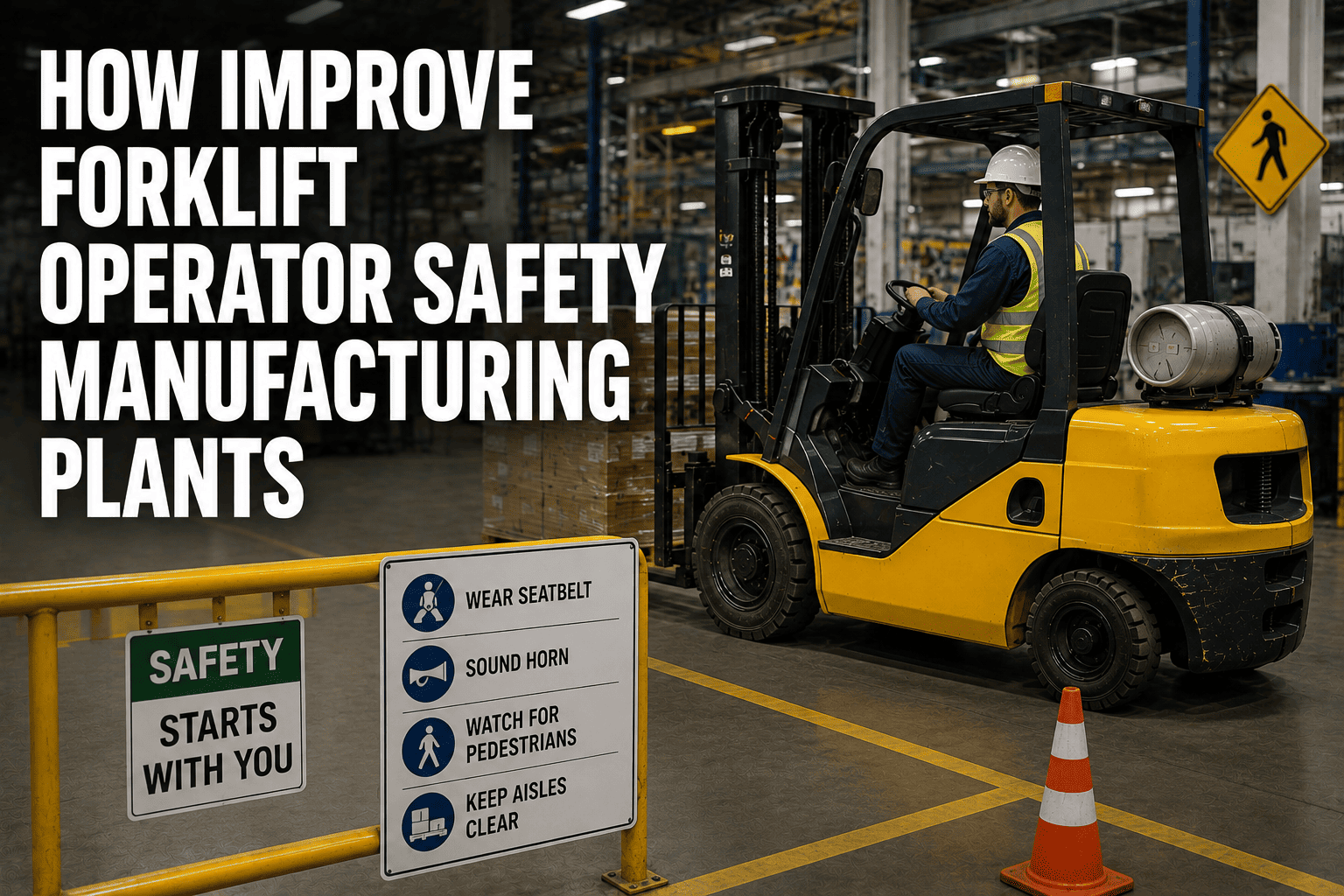
A forklift moves through a manufacturing plant every few minutes of every shift, and most of those passes end without incident. But the exceptions are severe. A single tip-over, a blind-corner collision, or a rushed lift with an unbalanced load can end an operator's career or life in seconds. Manufacturing plants report the highest share of forklift-related severe injuries of any industry, which means operator safety cannot be treated as a once-a-year training checkbox. It has to be a daily operational habit, backed by real data on how operators actually behave on the floor.
Manufacturing accounts for the largest share of severe forklift injuries of any sector, and tip-overs alone cause roughly 42 percent of all forklift fatalities nationwide. Around 70 percent of these incidents are considered preventable through consistent training, pre-shift inspection, and better visibility around pedestrian traffic. Plants that combine certification tracking with real-time operator monitoring cut repeat violations dramatically within the first quarter.
Why Operator Safety Deserves Priority on the Plant Floor
Forklift risk in a manufacturing environment is different from a warehouse or a construction yard. Aisles are narrower, production lines run close to travel paths, and operators frequently share space with technicians, line workers, and visitors who are focused on their own tasks rather than watching for a truck backing out of a rack. That density of people and machinery is exactly why manufacturing carries the heaviest injury burden of any industry segment. A single serious incident does not just harm the operator. It halts the line, triggers an investigation, invites regulatory scrutiny, and often reshapes how insurers price the entire facility's coverage going forward.
The financial exposure runs quietly in the background until an incident forces it into the open. Citations for unsafe operation, missed refresher training, and incomplete certification records add up fast, and the penalties tied to forklift-specific violations regularly reach into six figures across an industry in a single enforcement cycle. Recovery time compounds the cost. Forklift-related injuries keep workers off the floor for noticeably longer than the average workplace injury, which means lost expertise, temporary staffing, and slower production long after the incident itself is resolved. None of this is inevitable. It is the direct result of gaps that a structured safety program is built to close.
FleetRabbit gives safety managers a live view of certification status, pre-shift inspection completion, and risky driving behavior across the plant. Catch the pattern before it becomes an incident report. Sign up free and connect your first forklift in minutes.
Where Forklift Risk Actually Comes From
Most incident reports trace back to a small set of recurring root causes. Mapping them out makes it obvious where a safety budget delivers the biggest return.
| Hazard | How It Develops | Prevention Focus |
|---|---|---|
| Tip-Overs | Sharp turns, overloaded forks, uneven flooring, and excess speed on ramps shift the load's center of gravity past the truck's stability triangle. | Load charts, speed governing, and ramp-specific operating rules enforced through daily checks. |
| Pedestrian Strikes | Shared aisles, blind intersections, and reversing without a spotter put foot traffic directly in a forklift's path. | Physical aisle separation, mirrors at intersections, and geofenced speed zones near walkways. |
| Falling Loads | Unstable stacking, damaged pallets, and lifting beyond rated capacity let materials shift or drop mid-transport. | Load securing checklists and capacity limits built into the pre-shift inspection routine. |
| Lapsed Certification | Operators continue working after a certification expires or before refresher training following a near-miss. | Automated certification tracking that flags expirations before a shift starts, not after an audit. |
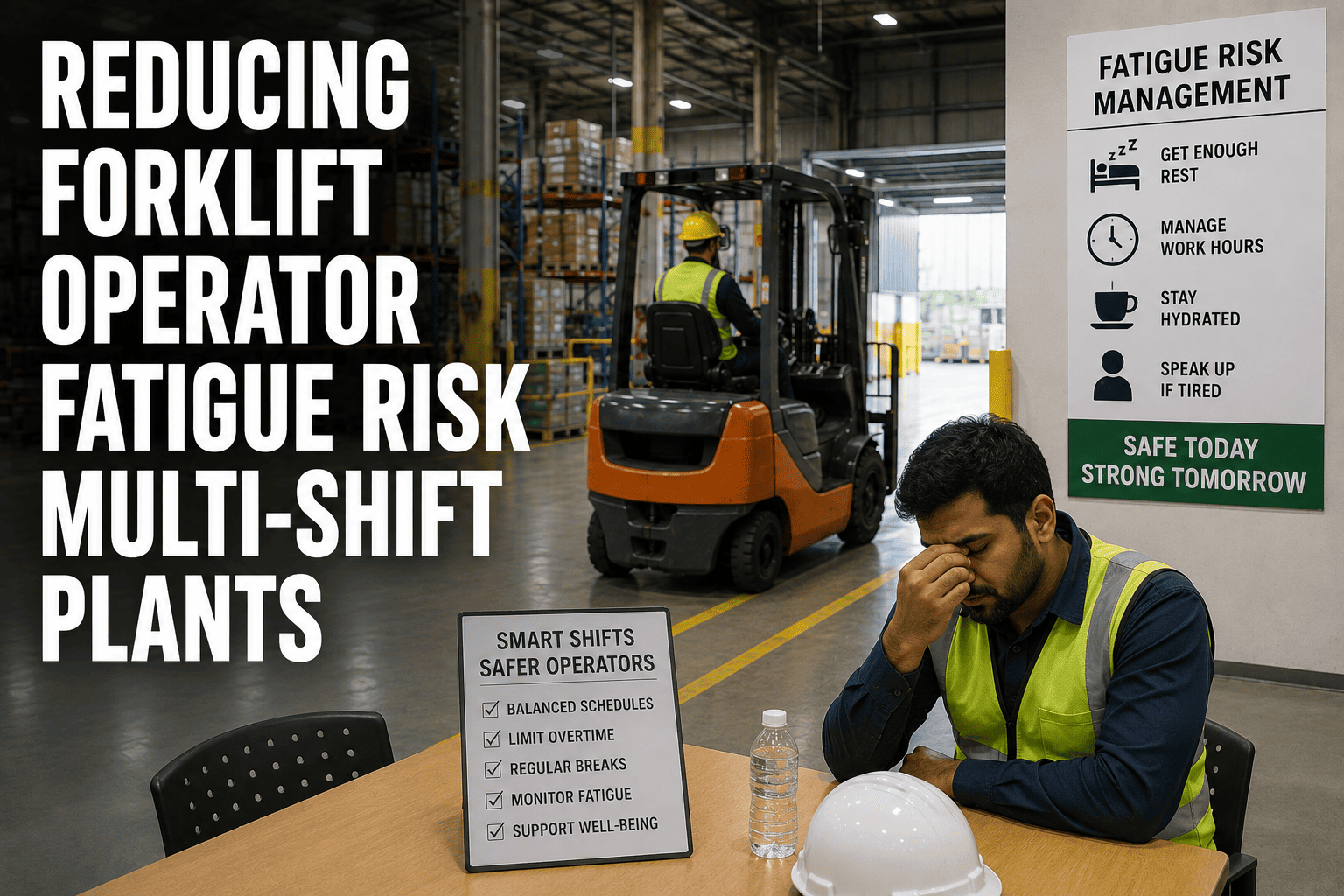
| Fatigue and Long Shifts | Extended shifts during peak production periods measurably raise the odds of an operating error. | Shift rotation limits and behavior monitoring that flags declining attentiveness over a long run. |
Tip-Overs Deserve the Most Attention
Because tip-overs cause the largest share of fatal forklift incidents, they should sit at the top of any prevention plan. The physics are unforgiving: once a loaded truck passes its stability threshold, an operator has almost no ability to correct course mid-fall. The only reliable defense is preventing the conditions that lead to it, which means enforcing load limits, requiring reduced speed on turns and ramps, and keeping floor surfaces free of the debris and potholes that destabilize a moving truck.
What a Strong Tip-Over Prevention Routine Looks Like
Operators check the rated capacity against the actual load before every lift, confirm the mast is tilted back for travel, and keep forks low to the ground except when placing a load. Supervisors reinforce speed limits through physical signage and, increasingly, through telematics that record and flag hard cornering automatically.
Struck-By Incidents Need Layout, Not Just Training
Training alone rarely solves a struck-by problem because the root cause is often the floor plan itself. Blind corners near high-traffic doorways, forklift paths that cross walking routes without a barrier, and poor lighting in staging areas all put pedestrians at risk regardless of how careful an individual operator is. Redesigning traffic flow, even in small ways, tends to outperform additional signage alone.
Practical Layout Fixes That Reduce Risk
Convex mirrors at blind intersections, painted and physically raised pedestrian lanes, and horn-and-light alerts triggered automatically at doorways all reduce reaction time gaps between operators and workers on foot.
Building an Operator Safety Program That Actually Holds Up
A written policy only works if it is enforced every shift, not just during an audit. The strongest programs share three habits: certification is tracked automatically instead of on a spreadsheet, pre-shift inspections are completed digitally so nothing gets skipped under time pressure, and operator behavior is monitored continuously rather than reviewed only after something goes wrong.
Certification and Refresher Training
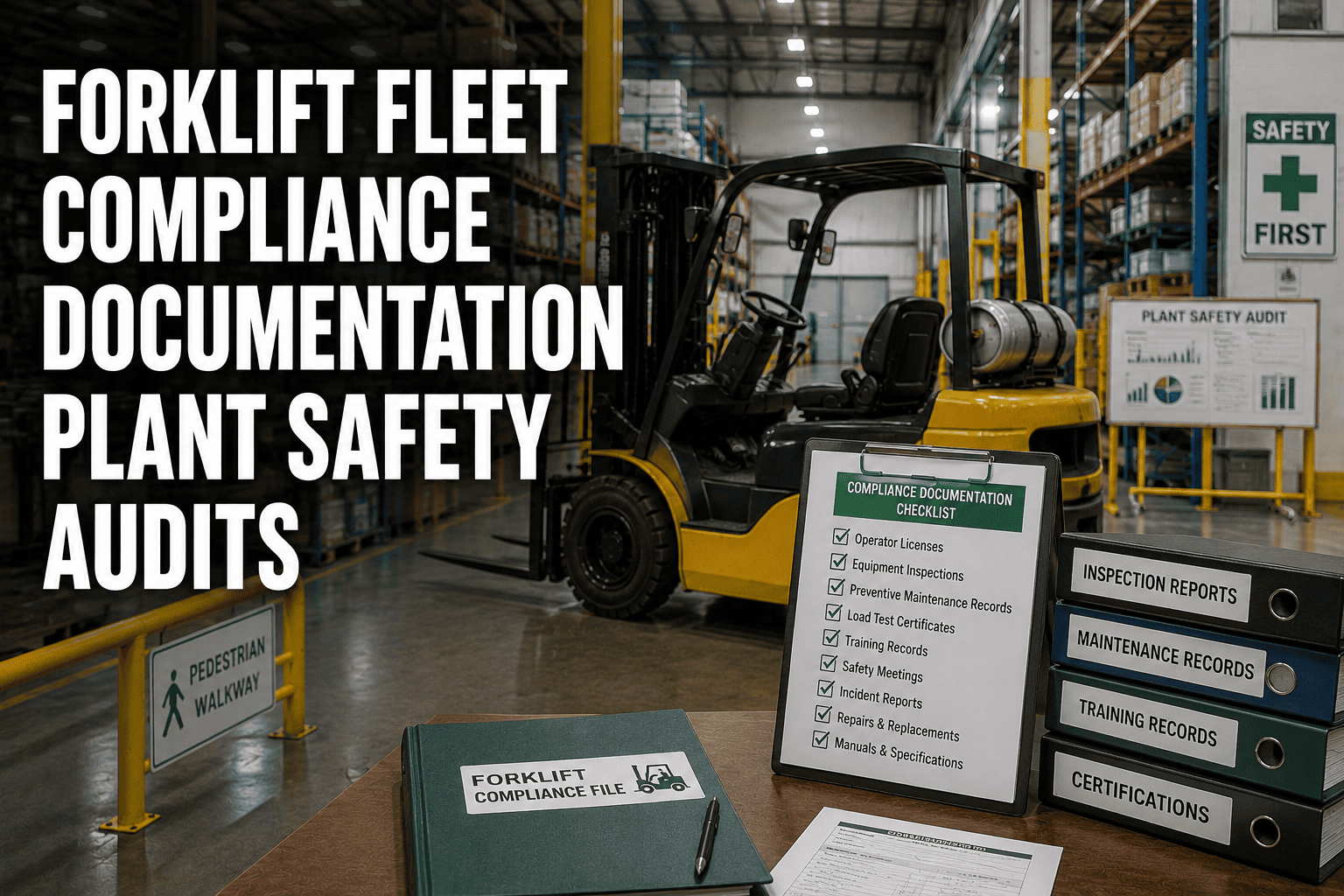
OSHA requires refresher training after an accident, a near-miss, or observed unsafe operation, yet many plants only discover a lapsed certification during a routine audit. Automated tracking closes that gap by flagging an expiring certification before the operator clocks in for a shift that they should not legally be running a truck during.
Pre-Shift Inspections That Operators Actually Complete
Paper inspection sheets get rushed or skipped entirely when a shift starts late. A digital checklist tied to the vehicle's ignition removes that shortcut, requiring brake, horn, tire, and fork checks to be logged before the truck can be used for the day.
Pedestrian and Traffic Management
Clear separation between forklift lanes and walking paths, enforced through both physical barriers and geofenced speed restrictions, addresses the hazard that training alone cannot fully solve.
FleetRabbit digitizes pre-shift inspections, tracks certification expirations automatically, and alerts supervisors the moment risky driving behavior is detected. Book a demo to see it running on your fleet.
How Technology Closes the Gap Manual Programs Miss
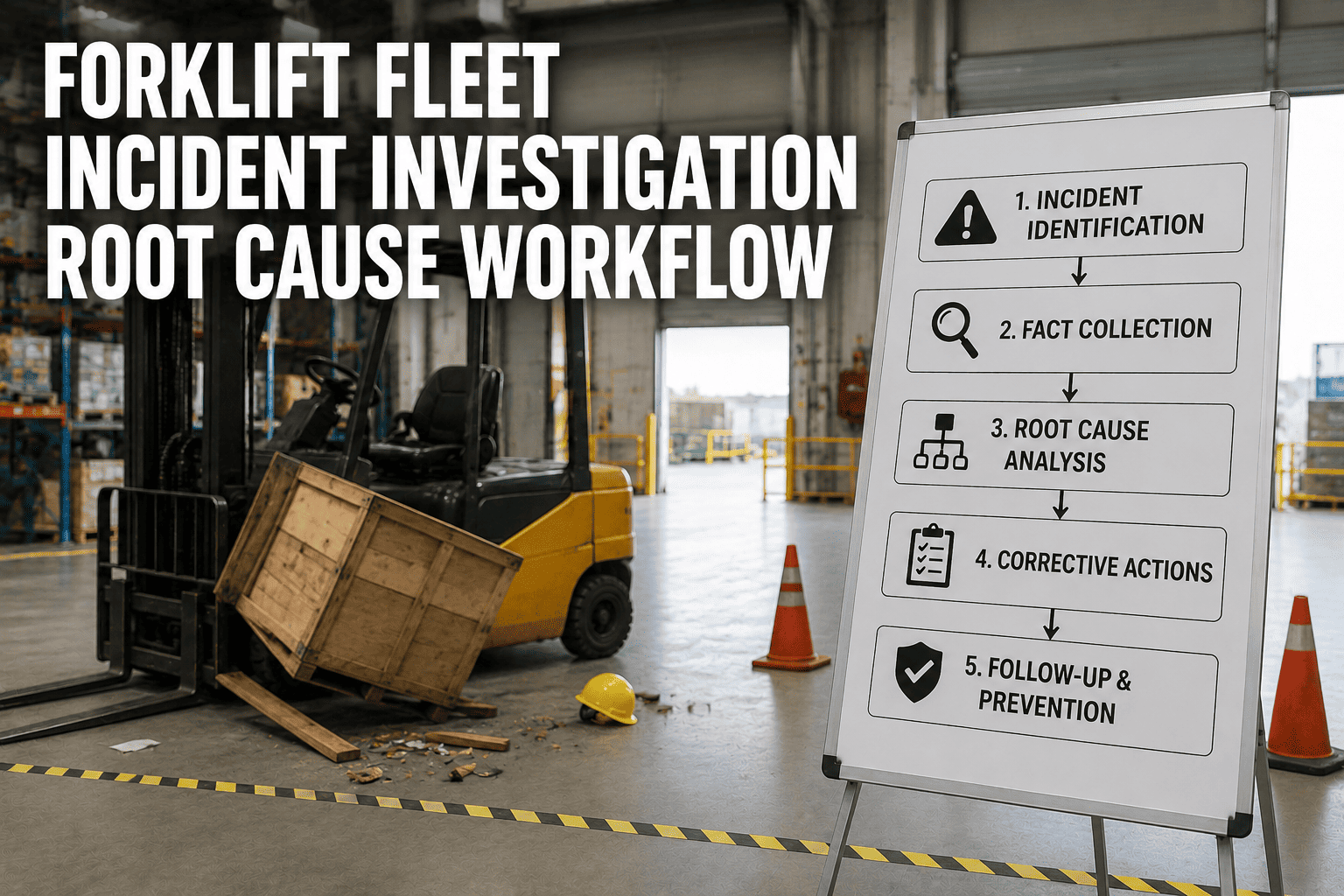
Even a well-designed paper program struggles with one thing: visibility between audits. Telematics and connected inspection tools change that by surfacing operator behavior as it happens instead of weeks later in a compliance review. Impact sensors detect hard braking, sharp turns, and collisions with racking, logging each event against the specific operator and vehicle. Supervisors can spot a pattern, such as one operator repeatedly cornering too fast in the same aisle, and step in with coaching before it becomes an incident report.
Digital certification and inspection records also remove the guesswork from an OSHA audit. Instead of pulling paper files from a cabinet, a safety manager can generate a complete history of every inspection, every training session, and every flagged behavior event in seconds. That same data builds a defensible record if an incident does occur, showing exactly what was known, monitored, and acted on before it happened.
Signs Your Plant Is Ready for Connected Safety Monitoring
Repeat citations for the same violation, inspection sheets with obvious gaps, or a rising number of near-miss reports are all signals that a manual program has hit its ceiling. Facilities juggling more than a handful of forklifts across multiple shifts typically see the fastest return from automating certification tracking and behavior monitoring first.
Metrics Worth Tracking Every Month
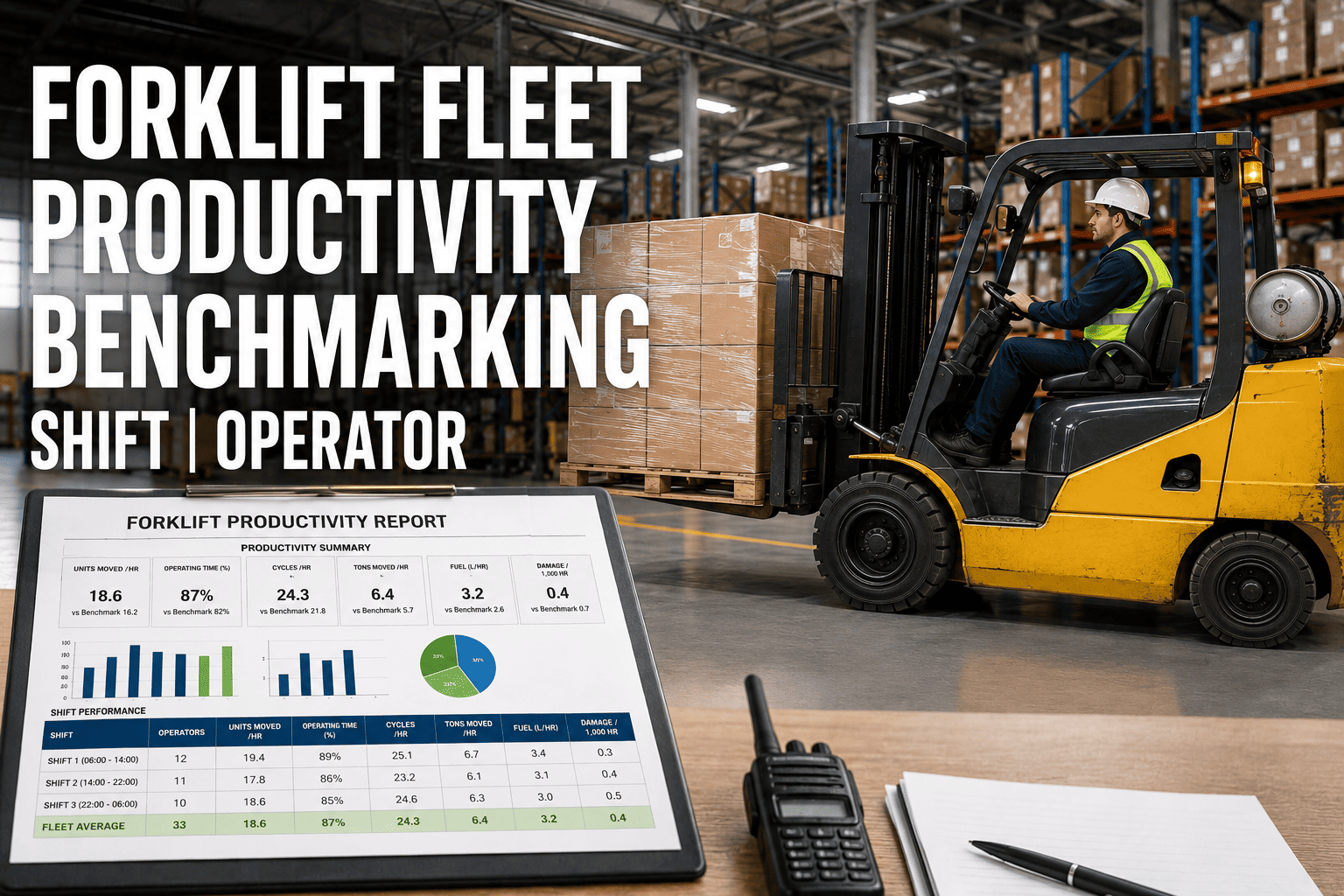
A handful of numbers reveal whether a safety program is actually working or just looks good on paper. Incident rate per operating hour shows whether risk is trending up or down over time. Certification compliance rate shows what percentage of active operators are current on training, and it should sit at 100 percent, not close to it. Near-miss reporting volume matters too, because a rising count usually means workers trust the reporting process, while a suspiciously low count often means incidents are going unreported rather than not happening. Average pre-shift inspection completion time and hard-event frequency, such as harsh braking or cornering per shift, round out a scorecard that gives supervisors an early warning system instead of a postmortem.
Key Takeaways for Manufacturing Safety Managers
Forklift operator safety in manufacturing is not a compliance formality. It is one of the highest-leverage areas a plant can invest in, given how concentrated severe injuries are in this sector and how preventable most of them turn out to be. Tip-overs and struck-by incidents drive the majority of serious outcomes, and both respond well to a combination of enforced training, smarter floor layout, and continuous monitoring rather than any single fix on its own.
The plants that make the most progress treat certification, inspection, and behavior data as one connected system instead of three separate paperwork trails. That shift turns safety from a reactive audit exercise into a daily operational habit, and it is the single biggest driver behind measurable drops in incidents, citations, and lost workdays.
FleetRabbit connects certification tracking, digital inspections, and real-time behavior monitoring into one dashboard built for manufacturing safety teams. Catch risk before it becomes an incident report.