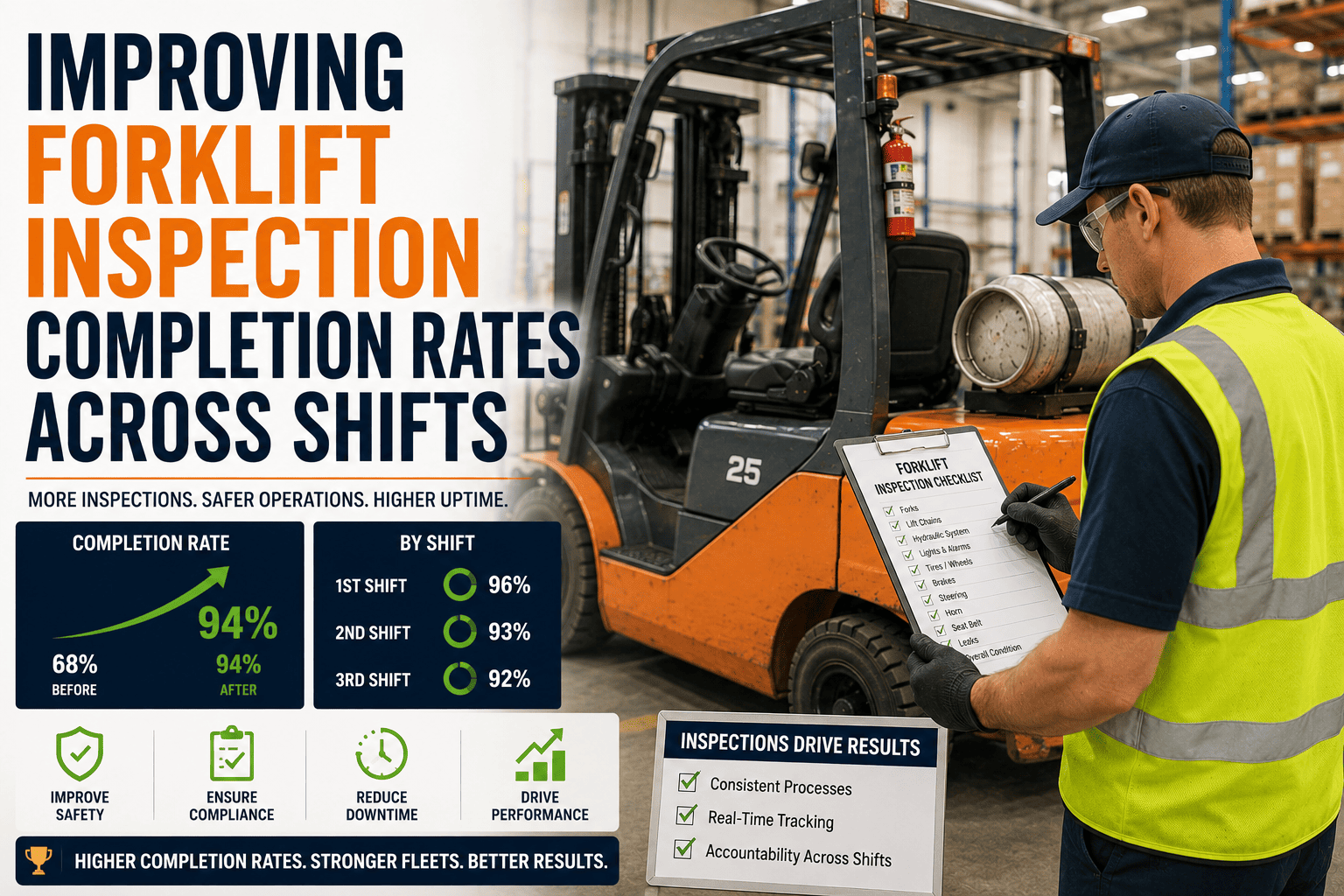
Every plant has an inspection policy. Far fewer plants have inspection completion. Somewhere between the written policy and the forklift actually rolling out of the aisle, the pre-shift check gets skipped, rushed, or filled out from memory after the shift already ended. It is one of the most common gaps in warehouse safety programs, and it is also one of the easiest to fix once you understand why operators skip it in the first place.
Roughly 70 percent of warehouses fail to perform pre-shift forklift inspections consistently, even though OSHA 29 CFR 1910.178(q)(7) requires one before every shift. The core fixes are speed, timing, and feedback: a checklist trained operators can finish in under 3 to 5 minutes, triggered at the exact moment they clock in or turn the key, with reported defects acknowledged quickly so operators trust the process is worth their time.
Why Completion Rates Drop Even When the Rule Is Clear
Operators are not skipping inspections because they do not understand the requirement. They are skipping them because the process, as it currently exists in most plants, is slow, easy to forget, and often feels disconnected from any real consequence or benefit.
Paper Forms Get Lost or Backfilled
Clipboards go missing, get left in the cab overnight, or arrive at the safety office three shifts late. When a form is filled out after the shift has already ended, it stops being an inspection and becomes a compliance formality, completed from memory rather than from what the operator actually saw that morning.
The Checklist Takes Too Long
When a checklist stretches past ten minutes, operators start treating it as an obstacle between them and their first pallet, not a safety step. A pre-shift check built around the actual OSHA-required items can typically be completed by a trained operator in three to five minutes, but many forms are padded with fields that do not match that reality.
Reported Issues Go Nowhere
Nothing erodes inspection discipline faster than an operator flagging a worn brake pad or a slow leak and hearing nothing back. Once operators learn that their reports do not lead to action, the inspection becomes a box to check rather than a genuine safety step, and completion quality drops right along with completion rate.
FleetRabbit turns the pre-shift checklist into a short digital form operators complete in minutes, triggered right at clock-in, with every submission tracked automatically across every shift.
Five Levers That Actually Raise Completion Rates
Reminders and policy memos rarely move the needle on their own. The plants that see consistent completion tend to pull the same five levers, in roughly this order of impact.
What Consistent Completion Looks Like in Practice
One distribution center running 45 forklifts across three shifts was logging three to four unscheduled breakdowns a week under an informal paper-based process. After switching to a structured digital checklist with photo evidence for flagged issues and a fast feedback loop back to operators, unscheduled breakdowns dropped to under one per week within 90 days. The biggest shift, according to the site's warehouse manager, was not the checklist itself, but operators finally seeing their reports translate into action.
Why This Matters Beyond Compliance
Facilities running a documented daily inspection process consistently see 40 to 60 percent fewer unscheduled breakdowns compared to sites relying on informal checks. That gap alone is often enough to justify moving off paper forms, before even factoring in the safety and compliance benefits.
What Rising Completion Rates Actually Prevent
Inspection completion is not just a paperwork metric. It sits directly upstream of injury, downtime, and OSHA exposure, which is why it deserves the same attention as any other safety KPI.
| Risk Area | What Happens When Inspections Are Skipped | What Consistent Completion Prevents |
|---|---|---|
| Worker Safety | Forklift incidents contribute to roughly 85 fatalities and 34,900 serious injuries annually | Defects like brake wear or hydraulic leaks caught before the shift starts |
| OSHA Exposure | Powered industrial truck violations rank among OSHA's most-cited standards, averaging over 16,000 dollars per serious citation | A documented, timestamped inspection trail ready for any audit |
| Unplanned Downtime | Small issues go unreported until they become full breakdowns mid-shift | 40 to 60 percent fewer unscheduled breakdowns with consistent daily checks |
Making Completion Something You Can Actually Measure
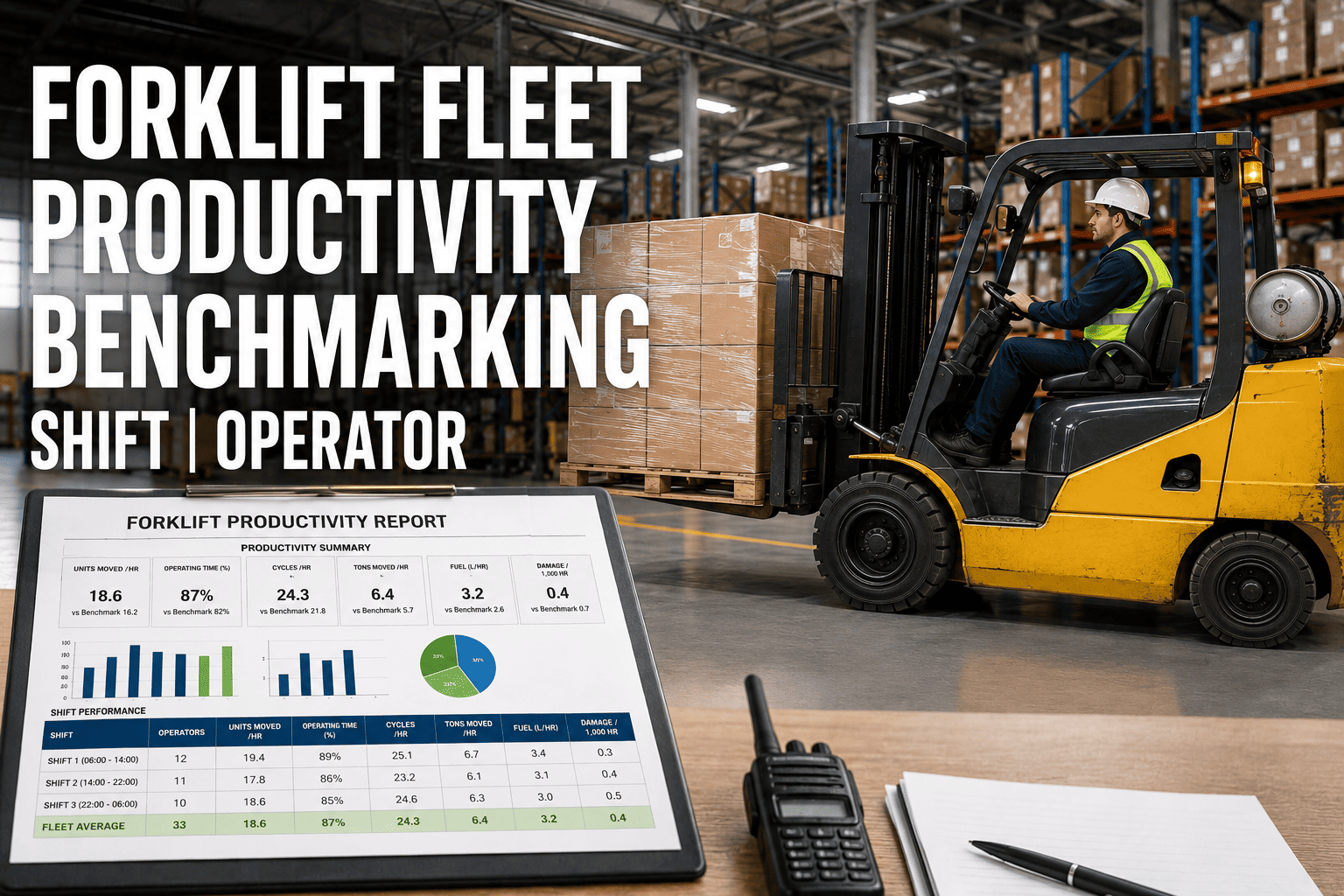
You cannot improve what is not tracked shift by shift and site by site. You can sign up for FleetRabbit to see completion rates roll up automatically across every plant and shift, instead of chasing paper logs after the fact.
Turning Completion Into a Habit, Not a Reminder
The plants that sustain high completion rates stop treating the inspection as a favor operators do for the safety team, and start treating it as a normal part of starting the truck, the same way a driver buckles a seatbelt without being asked. If you want to see how a fast, triggered digital form fits into your own shift structure, you can book a demo and walk through it with the team.
FleetRabbit makes the inspection fast enough for operators to actually finish, and tracks completion automatically across every shift and every plant, so the gap between policy and practice finally closes.