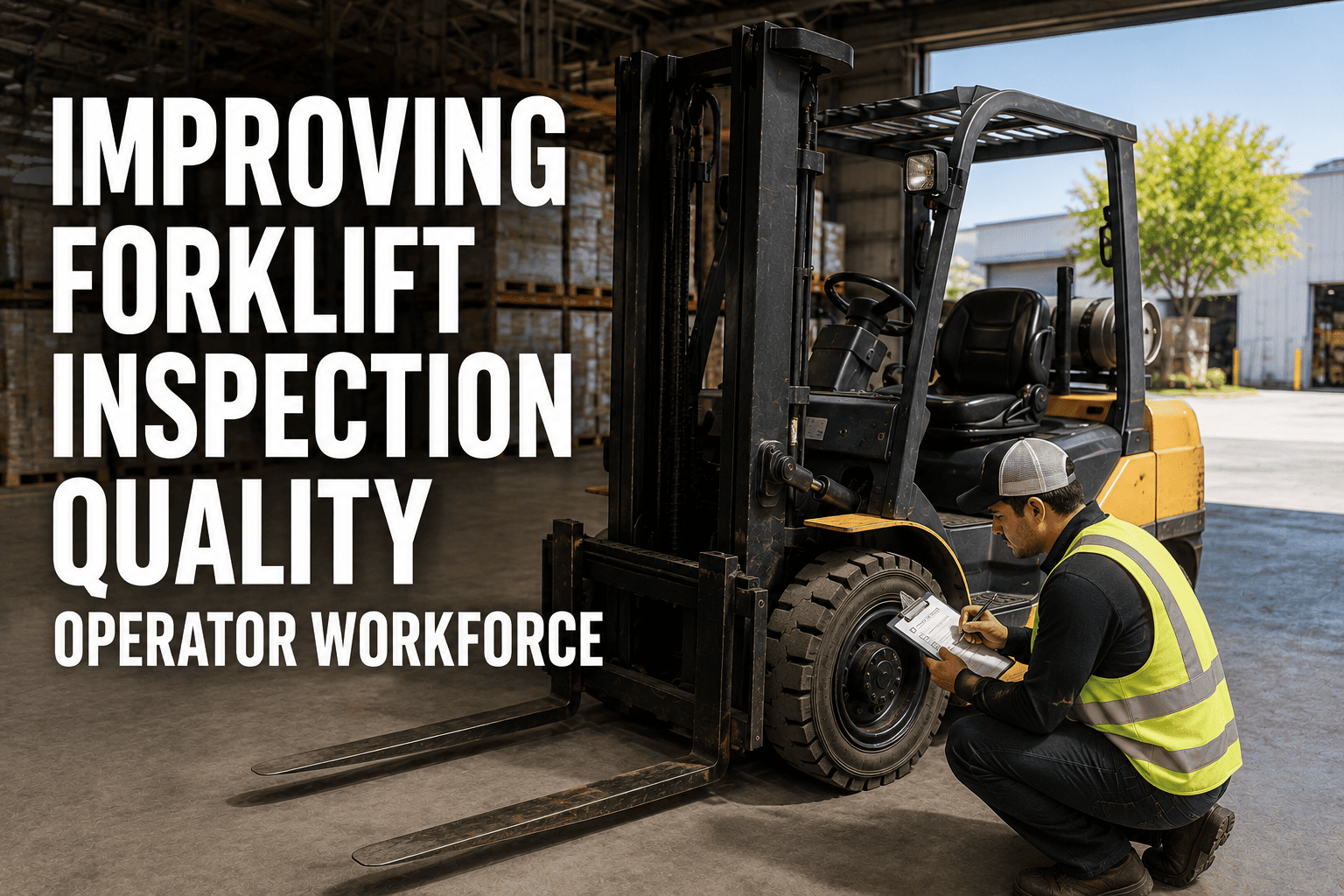
Ask five forklift operators in the same plant how they do their pre-shift inspection, and you will likely get five different answers. One walks the full checklist every time. Another eyeballs the tires and calls it done. A third skips it entirely when the shift is running late. None of them are trying to cause a problem. But when inspection quality depends on who happens to be driving that day, your plant is only as safe as its least careful operator, and nobody finds out which operator that is until something breaks.
Inspection quality typically falls apart not because operators do not care, but because every shift does it differently — paper here, memory there, nothing on the third shift. Standardizing the process with a guided digital checklist closes that gap fast. FleetRabbit turns every pre-shift inspection into the same structured, documented process, on every truck, every shift, every plant.
Why Inspection Quality Falls Apart Across Shifts
Inconsistency rarely comes from one bad habit. It comes from three different versions of the same task running side by side, day after day, without anyone comparing notes.
Paper Checklist
Filled out, but often stored in a drawer where nobody reviews it until an audit — or an accident — forces someone to go looking.
Mental Checklist
Faster, but entirely dependent on memory and mood. A rushed operator on a busy day quietly skips the steps that take the most time.
No Checklist
With fewer supervisors on the floor overnight, inspections quietly disappear altogether — and nobody notices until the truck is already down.
The real damage is what falls through the gap between shifts. If the night operator hears a hydraulic whine but never logs it, the morning operator starts their shift with zero warning — on the same truck, with the same developing problem.
What Inconsistent Inspections Actually Cost You
A skipped or rushed inspection rarely causes a problem on the day it happens. It causes a problem two weeks later, when the small issue nobody logged has turned into a breakdown, a near-miss, or a citation.
Undetected Faults Become Breakdowns
A hairline crack, a soft tire, or a slow leak noticed early is a five-minute fix. Missed for a week, it is a shift-stopping repair.
No Record Means No Defense
OSHA regulation 29 CFR 1910.178 expects inspections to be repeatable and documented. Without records, an incident review has nothing to point to but guesswork.
Good Operators Get Blamed for Bad Systems
When there is no consistent process, whoever was driving when something failed gets the blame — even if three other operators skipped the same step all week.
Warranty and Insurance Exposure Grows
Manufacturers and insurers increasingly expect documented pre-shift checks. A missing inspection history can complicate a warranty claim or a post-incident review.
FleetRabbit replaces paper and memory with a guided digital inspection that walks every operator through the same steps, captures photos of any defect, and locks the truck out until it is completed. Start your free trial and see what your plant's actual inspection completion rate looks like.
What a Consistent Inspection Program Actually Includes
Getting every operator to the same standard is not about writing a stricter policy. It is about removing the room for the checklist to vary from person to person and shift to shift.
Same Steps, Same Order, Every Time
A guided digital checklist presents the exact same sequence to every operator, so nothing depends on memory or habit.
Photo Evidence for Defects
Requiring a photo when an issue is flagged removes ambiguity and gives maintenance teams a head start before the truck even reaches the shop.
Lock-Out Until Complete
If the inspection is not finished, the truck does not start. There is no version of "I'll do it after lunch" left available.
Instant Escalation on Critical Faults
A flagged brake or hydraulic issue alerts a supervisor immediately, instead of sitting in a paper log until someone happens to read it.
Building an Inspection Culture, Not Just a Checklist
Explain the Why, Not Just the What
Operators who understand that a fork heel-wear check prevents a loaded pallet from dropping tend to inspect it properly. A short explanation during onboarding does more than a stricter policy ever will.
Review Completion Data Across Shifts, Not Just Incidents
Waiting for a breakdown to check inspection compliance means you only ever see the failures, never the pattern. Reviewing completion rates weekly shows you which shift, plant, or operator needs support before something goes wrong.
Close the Handoff Gap Between Shifts
A digital log that carries forward from the previous shift means the morning operator can actually see what the night operator flagged, instead of starting cold on the same truck.
Make the Data Visible to Operators Too
Teams that can see their own inspection consistency, not just management, tend to take more ownership of it. Plants that book a demo often start by looking at how wide the completion gap actually is between their best and worst shift, which is usually the moment the case for standardizing becomes obvious.
Every inconsistent inspection is a gap between shifts, a missed defect, or a record you will wish you had after something goes wrong. FleetRabbit makes the process identical for every operator, on every truck, every single shift.