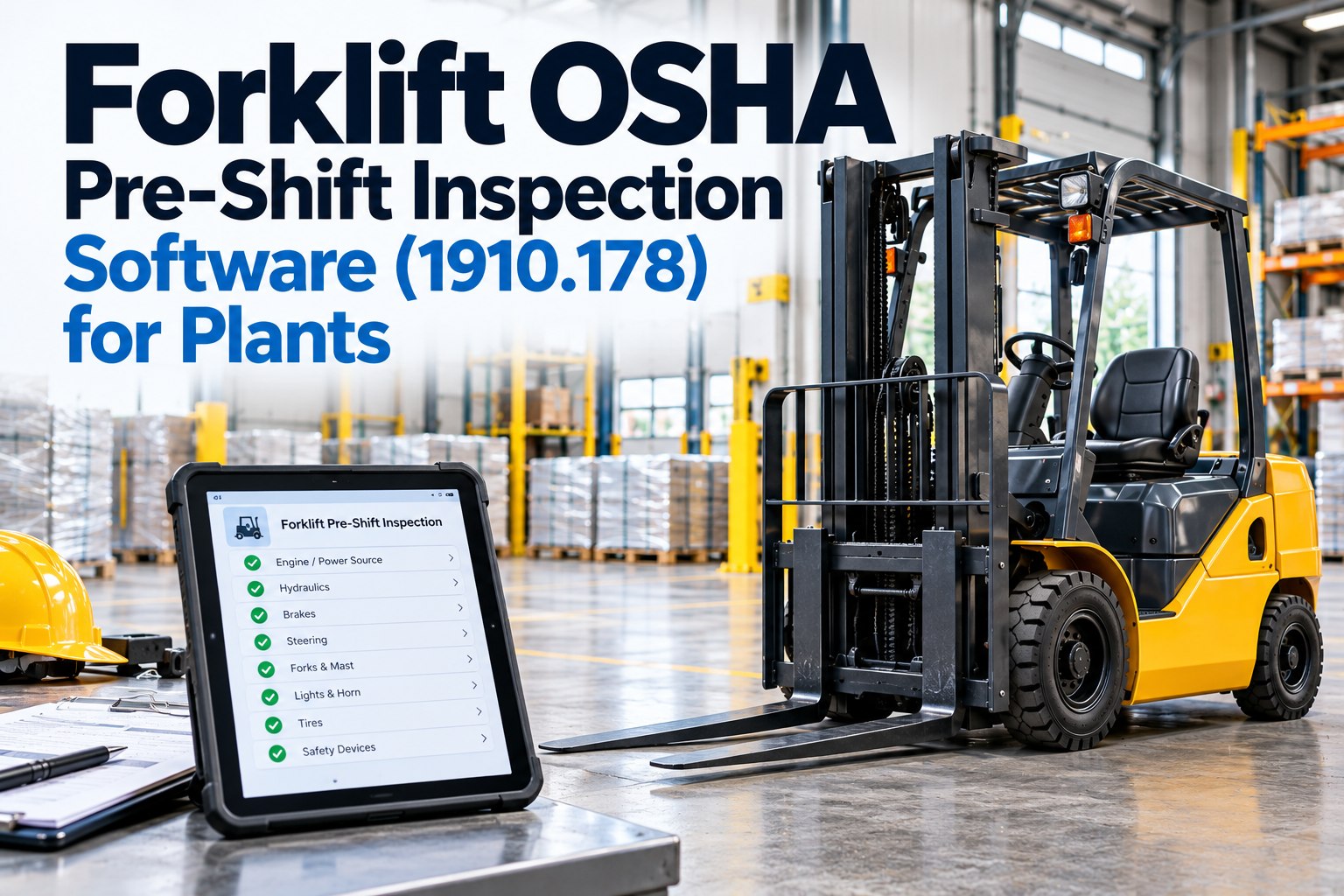
An internal combustion forklift has a problem an electric truck never has to deal with: it burns fuel, and burning fuel produces exhaust. That single difference adds a whole extra layer to the daily inspection, on top of everything every forklift needs checked. Skip the fuel system check and you're risking a leak next to an ignition source. Skip the exhaust check and you're risking carbon monoxide building up in a space that isn't ventilated for it. This checklist walks through the three phases OSHA-aligned inspections use for gas, diesel, and LPG forklifts, so nothing about the fuel or exhaust system gets treated as an afterthought.
A daily internal combustion forklift checklist covers three phases: KEY OFF visual checks of the tank or fuel lines, fluids, tires, and structure; KEY ON checks of gauges, steering, brakes, and safety devices; and ENGINE RUNNING checks of exhaust color, unusual noise, and fluid leaks once the engine is actually operating. OSHA 29 CFR 1910.178(q)(7) requires this inspection before every shift, and a fuel leak, hissing hose, or abnormal exhaust color takes the truck out of service immediately rather than waiting for the next scheduled check.
Three Phases, Not Two
Electric forklifts split their inspection into KEY OFF and KEY ON. Internal combustion trucks need a third phase, because a fuel-burning engine only reveals certain problems once it's actually running.
KEY OFF: Fuel System, Fluids, And Structure
KEY ON: Gauges And Controls Before Startup
Only Once Both Phases Pass, Start The Engine
Skipping straight to starting the truck to save time skips the checks most likely to catch a fuel leak or fluid problem before it becomes a fire risk or a mid-shift breakdown.
FleetRabbit walks operators through KEY OFF, KEY ON, and engine-running checks in order, flags failed items instantly, and keeps every record ready for an OSHA audit. Sign up free to run your first digital inspection, or book a demo to see it built around your fleet.
Engine Running: What Only Shows Up Once It's Started
Some problems on an internal combustion forklift are invisible until the engine is actually burning fuel. This phase is short, but it's where operators catch the issues most likely to cause a breakdown or a health hazard mid-shift.
LPG Adds Its Own Set Of Risks
Propane-powered forklifts carry hazards that diesel and gasoline trucks don't. LPG is heavier than air, so a leak collects low to the ground instead of dispersing, and it's extremely cold on contact, which means direct skin exposure can cause frostbite. A hissing sound or frost forming on the tank or hose is a sign to shut the valve and report it immediately, not to keep the truck in service and mention it later.
FleetRabbit timestamps every phase of the inspection, including engine-running checks, and ties them to the operator and truck so the record is ready the moment an inspector asks. Get started with a free sign-up, or book a 30-minute demo to see it working on your own fleet.
Diesel, Gasoline, Or LPG: What Changes
| Fuel Type | Extra Check Beyond The Core List | Why It Matters |
|---|---|---|
| LPG | Tank mounting, pressure relief valve position, hose for hissing or frost | LPG is heavier than air and collects in low areas if it leaks, with a real fire and CO risk indoors |
| Diesel | Fuel level, fuel line integrity, exhaust color under load | Incomplete combustion shows up as dark exhaust, an early sign of engine trouble |
| Gasoline | Fuel line and tank leaks, carburetor or injector performance | Gasoline vapors are highly flammable, making leak checks a daily non-negotiable |
| All Three | Ventilation of the work area before indoor operation | Every internal combustion engine produces exhaust that needs somewhere to go |
Frequently Asked Questions
The Bottom Line
An internal combustion forklift asks a little more of a daily inspection than an electric one, and that extra effort is there for good reason. Fuel systems and exhaust carry risks electric trucks simply don't have, which is why the KEY OFF, KEY ON, and engine-running phases each catch something the others can't. Working through all three, every shift, without skipping the fuel and exhaust checks, is what keeps a plant's IC fleet both compliant and genuinely safe to operate.
FleetRabbit turns this checklist into a guided digital inspection your operators can't rush through or skip, with every result stored and ready for an OSHA audit. See it running on your own fleet with a free trial or a live walkthrough.