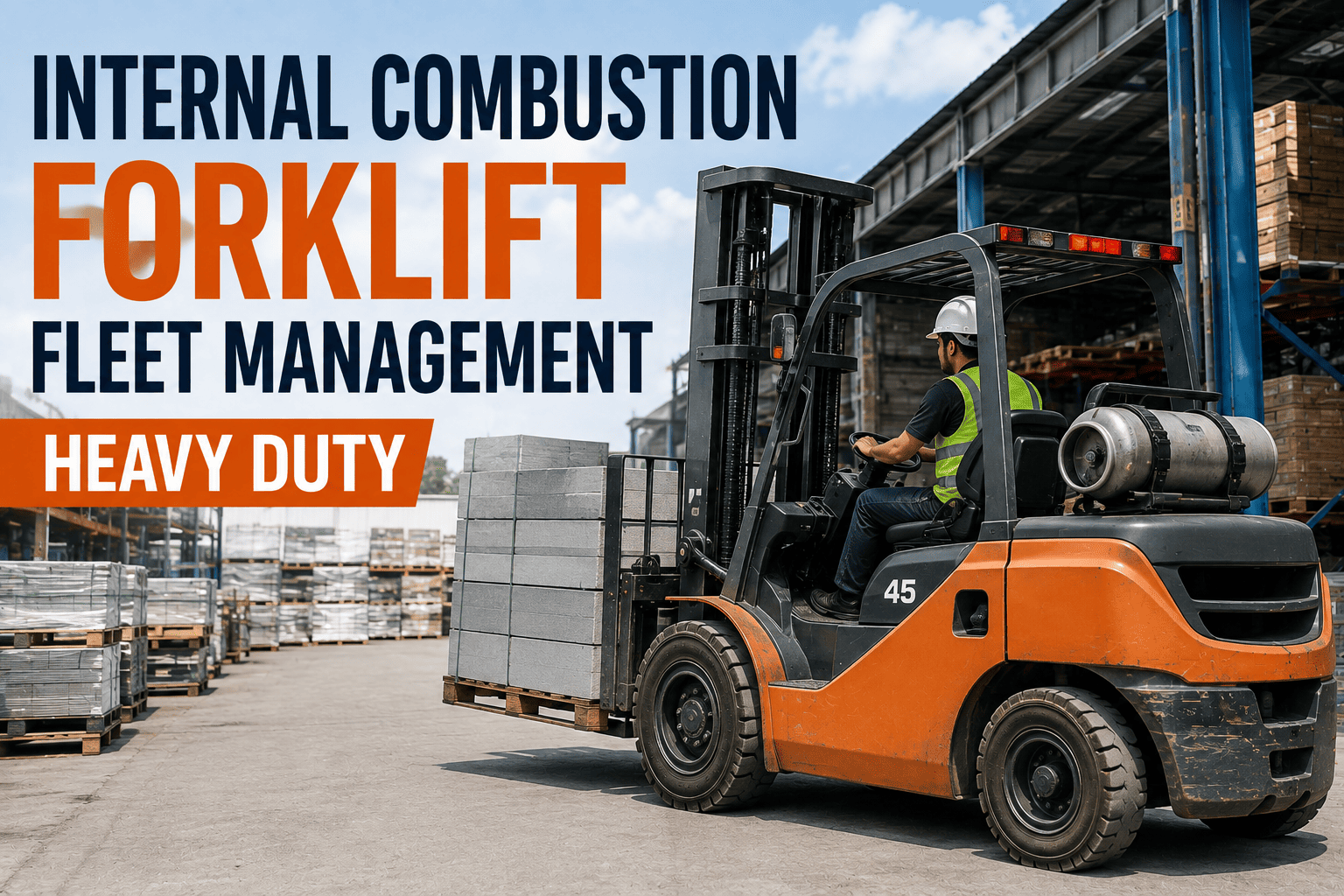
Electric forklifts get most of the attention these days, but walk through any port, foundry, lumber yard, or heavy manufacturing plant and internal combustion forklifts are still doing the bulk of the lifting. LPG, diesel, and CNG units refuel in minutes, run multiple back-to-back shifts without a charging break, and handle the outdoor, high-capacity work that battery-powered equipment often can't match.
The tradeoff is that IC forklifts carry maintenance demands electric units simply don't have. Fuel systems, ignition components, exhaust after-treatment, and emissions compliance all need active management, and each fuel type wears differently. This guide breaks down what actually keeps an internal combustion fleet running, and how FleetRabbit helps heavy-duty plants track fuel, service intervals, and compliance without guesswork.
LPG, diesel, and CNG forklifts each demand a different maintenance rhythm. Diesel needs shorter oil intervals and strict air filtration due to soot and turbo sensitivity, LPG needs closer attention to ignition components and the vaporizer-regulator, and CNG needs regular tank and pressure system checks. Emissions regulations, including EPA Tier standards and regional zero-emission mandates, are tightening for spark-ignition and diesel forklifts, making documented compliance tracking essential for heavy-duty plants running mixed fuel fleets.
Three Fuel Types, Three Different Maintenance Profiles
Not every internal combustion forklift wears out the same way. The fuel source drives which components fail first and how often service should happen.
Burns cleaner than diesel, so oil and combustion chambers stay free of soot buildup longer. The tradeoff falls on the ignition system, where spark plugs, wires, and the vaporizer-regulator need more frequent inspection to prevent misfires and pressure leaks.
Delivers strong torque for the heaviest loads but produces soot that contaminates engine oil quickly, often requiring oil changes 25 to 50 percent more often than LPG. Turbocharged models are especially sensitive to dust, making air filtration a top priority.
Runs cleaner than both diesel and LPG in most cases, with lower particulate output. Maintenance centers on the compressed gas storage tank, pressure regulators, and fuel line connections, which need routine leak checks given the higher storage pressure involved.
Track Every Fuel Type From One Dashboard
Managing LPG, diesel, and CNG forklifts on separate spreadsheets makes it easy to miss a service interval. FleetRabbit tracks fuel usage, maintenance schedules, and compliance records for your entire mixed fleet in one place.
Core Maintenance Tasks By System
Regardless of fuel type, every internal combustion forklift shares a handful of systems that drive most breakdowns when neglected. The table below covers the core maintenance points and how often heavy-duty plants should be checking them.
| System | What Wears Down | Recommended Interval | Consequence If Ignored |
|---|---|---|---|
| Engine Oil | Soot contamination (diesel), viscosity breakdown | Every 200-250 hours, more often for diesel | Accelerated engine wear, higher repair cost |
| Air Filters | Dust and debris restricting airflow | Weekly inspection, replace as needed | Power loss, turbo damage on diesel units |
| Ignition System | Worn spark plugs, wires, distributor issues (LPG/gas) | Every 500 hours or per manufacturer spec | Misfiring, poor fuel efficiency, hard starts |
| Fuel System | Leaks, clogged filters, regulator wear | Weekly visual check, filter change per schedule | Fuel leaks, inconsistent power delivery |
| Cooling System | Low coolant, radiator blockage | Weekly level check | Overheating, one of the top causes of engine failure |
| Exhaust And Emissions | Catalytic converter wear, sensor drift | Per manufacturer schedule and local regulation | Compliance violations, excess indoor air pollutants |
Keeping Your Fleet Emissions Compliant
Emissions rules for internal combustion forklifts have gotten stricter, and that trend is not slowing down. Standards like EPA Tier requirements in the United States and regional zero-emission mandates targeting older spark-ignition units mean plants running IC fleets need documentation, not just good intentions.
Know Which Units Are Aging Out
Older, poorly tuned diesel and propane engines emit far more particulate matter and NOx than newer, well-serviced units. Identifying your oldest, highest-emission forklifts is the first step toward deciding what to prioritize for replacement or heavier servicing.
Keep Service Records Digital And Accessible
When a compliance audit or inspection happens, paper logs scattered across a maintenance shed slow everything down. Digital records tied to each unit's engine hours make it simple to show exactly when a filter, catalytic converter, or emissions sensor was last serviced.
Match Fuel Type To The Right Zone
Many plants run electric units for enclosed indoor work and reserve LPG, diesel, or CNG forklifts for outdoor yards and loading docks where ventilation is less of a concern. Reviewing which fuel type operates in which zone helps balance productivity with air quality.
Budget For Tightening Regulations
Regulations targeting large spark-ignition forklifts are pushing many fleets toward earlier replacement cycles. Planning fuel-type transitions ahead of mandates avoids scrambling to replace units on short notice.
Warning Signs An IC Forklift Needs Service
Catching these signs early, and logging them consistently, is far easier with a connected system than with a paper checklist. Teams using FleetRabbit can assign inspections by fuel type, track engine hours against service intervals, and get alerted the moment a unit falls behind schedule. If your plant runs a mixed fleet of LPG, diesel, and CNG forklifts, it's worth seeing how the platform organizes all of it, and you can book a quick demo to walk through your specific setup.
Give Your Heavy-Duty Fleet A Maintenance System Built For It
FleetRabbit tracks fuel-specific service intervals, engine hours, and compliance records for LPG, diesel, and CNG forklifts, so nothing slips through the cracks across your plant.
Frequently Asked Questions
Keep Your LPG, Diesel, And CNG Fleet Running Without The Guesswork
Heavy-duty plants can't afford unplanned downtime on the forklifts doing the heaviest lifting. FleetRabbit gives you fuel-specific maintenance tracking, compliance records, and real-time visibility across your entire internal combustion fleet.