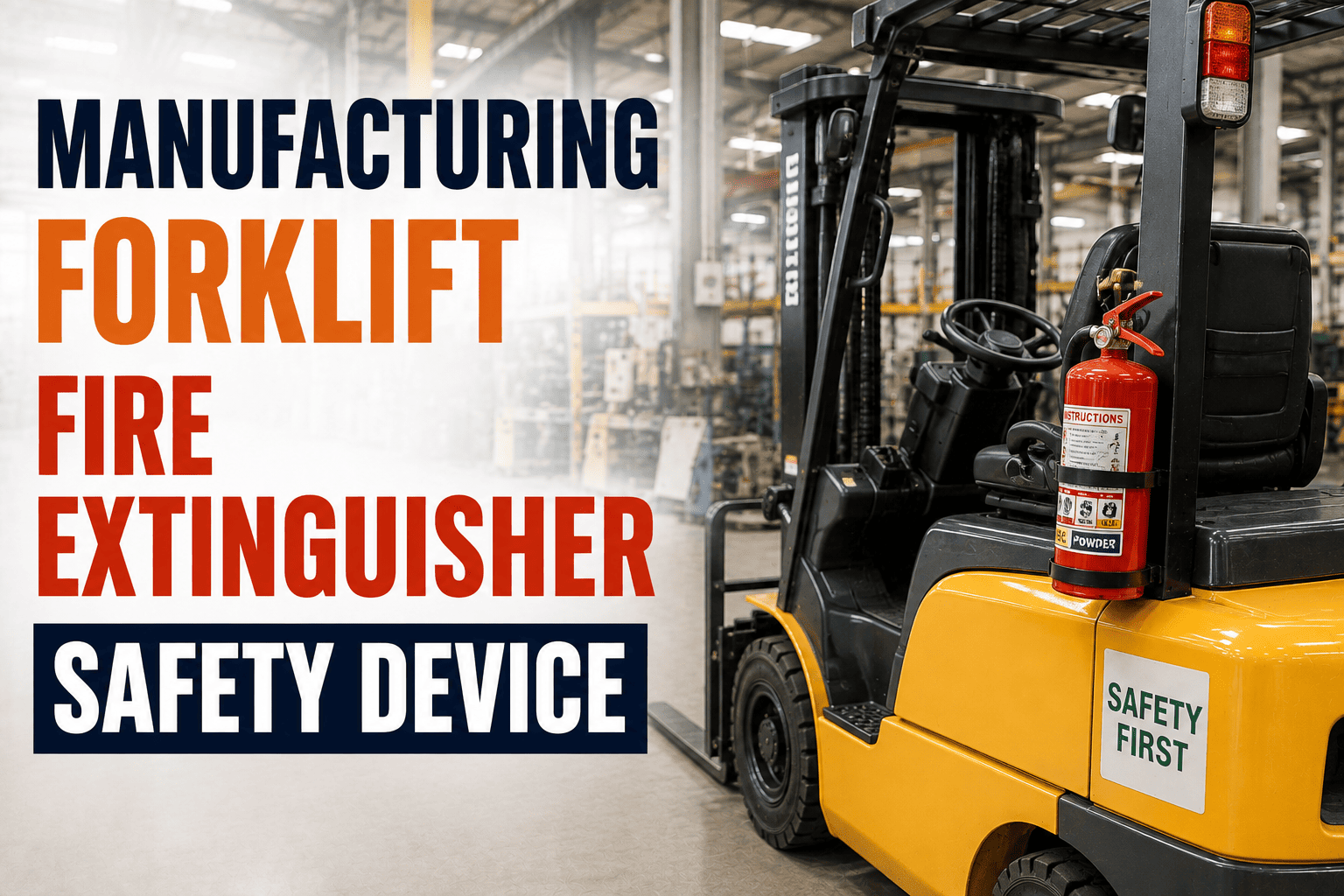
A forklift that's missing its fire extinguisher is a visible gap, the kind a walkaround inspection catches in seconds. A forklift with a disabled seat sensor or a bypassed seatbelt buzzer is a hidden one, and it's the hidden gaps that tend to end in a fatality report. Cal/OSHA's investigation into a fatal forklift accident at the Port of San Diego found the operator wasn't wearing a seatbelt, and that the truck itself had multiple safety devices disabled, including the seatbelt warning buzzer and the mast interlock that's supposed to cut hydraulic power the moment the seat goes unoccupied. Both failures were preventable, and both were the kind a proper checklist is built to catch.
OSHA doesn't require every forklift to carry a fire extinguisher, but any extinguisher the manufacturer installed must be inspected monthly and maintained annually under 29 CFR 1910.157. Seat belts and restraint systems aren't governed by a dedicated OSHA standard either, but once a truck is equipped with one, operators must use it, and disabling a seatbelt buzzer or mast interlock is treated as a serious safety violation. A daily checklist should confirm the extinguisher is charged and accessible, the seat belt and buzzer function, and no interlock has been bypassed.
The Devices Most Facilities Assume Are Working
Fire extinguishers, seat belts, and interlocks share a common problem: they're only tested in the moment something goes wrong. An operator who's never had a near-tipover has no idea whether their mast interlock actually cuts power when they lift off the seat, and a supervisor who's never faced a fire has no idea whether the extinguisher mounted on that truck still holds pressure. That untested status is exactly why these items need a scheduled check rather than an assumption.
Why These Get Bypassed In The First Place
Nobody sets out to disable a safety device. It usually starts small: a buzzer that goes off during normal short stops gets annoying, so someone finds a way to quiet it. A seat sensor that's overly sensitive and cuts power during routine bumps gets jumpered so it stops interrupting work. Each of these workarounds solves an immediate annoyance while quietly removing the exact protection the device exists for, and none of it shows up on a walkaround inspection unless someone is specifically testing function, not just presence.
FleetRabbit's digital checklist requires operators to confirm the seat buzzer sounds, the interlock cuts power, and the extinguisher gauge reads charged, not just that each item is physically present on the truck.
The Daily And Monthly Checklist
Most safety device checks belong in the daily pre-shift routine, but the fire extinguisher follows its own schedule under 29 CFR 1910.157, with a monthly visual check and an annual professional maintenance inspection layered on top.
| Device | Check | Frequency |
|---|---|---|
| Fire Extinguisher | Gauge in charged zone, pin and seal intact, mounted securely in accessible location | Monthly visual, annual maintenance |
| Seat Belt | Webbing free of cuts or fraying, buckle latches and releases cleanly | Daily pre-shift |
| Seatbelt Buzzer | Sounds when truck moves with belt unfastened, silences once fastened | Daily pre-shift |
| Seat Interlock | Drive and hydraulic function stop immediately when operator lifts off seat | Daily pre-shift |
| Horn and Alarm | Horn sounds on demand, backup alarm activates in reverse | Daily pre-shift |
Fire Extinguisher Placement And Maintenance
If a truck carries an extinguisher, OSHA requires the manufacturer's unit to stay in place; it can't be removed without written manufacturer permission, and it can't be swapped for a different type without proper review. Mounting height matters too, generally between three and five feet off the ground for standard units, positioned so it's visible and reachable without digging through tools or cargo to find it. Operators trained on the extinguisher should also know its rating, since a unit meant for electrical fires won't help against a fuel fire and vice versa.
What A Monthly Visual Check Actually Covers
A monthly check takes under a minute per truck: confirm the pressure gauge sits in the charged range, the pin and tamper seal are both intact, the nozzle is clear of obstruction, and the mounting bracket hasn't loosened from vibration. Any extinguisher showing a gauge in the red, a broken seal, or physical damage gets pulled from service immediately rather than left in place until the annual inspection catches it.
Seat Belts, Buzzers, And Interlocks: The Restraint System As A Whole
OSHA doesn't have one standalone rule mandating seat belts on every forklift, but the agency's enforcement position is direct: if a truck has a seat belt or restraint device installed, operators must use it every time, and employers who fail to enforce that use have been cited under the general duty clause. ASME B56.1 goes further, requiring that trucks manufactured after 1992 include some form of restraint system designed to reduce the risk of an operator being pinned between the truck and the ground during a tipover.
The buzzer and the interlock exist to enforce that requirement automatically rather than relying on operator habit alone. A buzzer that's been silenced removes the reminder; an interlock that's been bypassed removes the actual safety function. Facilities that want a system flagging exactly this kind of tampering before it shows up in an audit can book a demo with FleetRabbit to see how function-based checks are built into the daily inspection flow.
FleetRabbit logs every pre-shift confirmation that the seat belt, buzzer, and interlock are functioning, giving you a documented trail instead of a guess if an incident or audit ever asks the question.
Building A Checklist That Catches Tampering, Not Just Absence
A checklist item that just asks "is the extinguisher present" or "is the seat belt installed" misses the exact failures that lead to injuries, because in nearly every disabled-device case, the equipment is still physically there. What actually matters is whether it functions: does the gauge read charged, does the buzzer sound, does the interlock cut power. Writing the checklist around function rather than presence is a small wording change that closes a real gap.
Digital checklists make this easier to enforce consistently, since they can require a photo of the gauge reading or a confirmation step that the interlock was actually tested that shift, not just glanced at. Manufacturing plants running larger forklift fleets across multiple shifts can sign up for FleetRabbit to standardize these function-based checks across every truck and every operator.
Extinguishers, seat belts, buzzers, and interlocks all fail quietly if nobody tests them. FleetRabbit builds function-based checks into your daily forklift inspection, so nothing gets marked safe just because it's still bolted on.