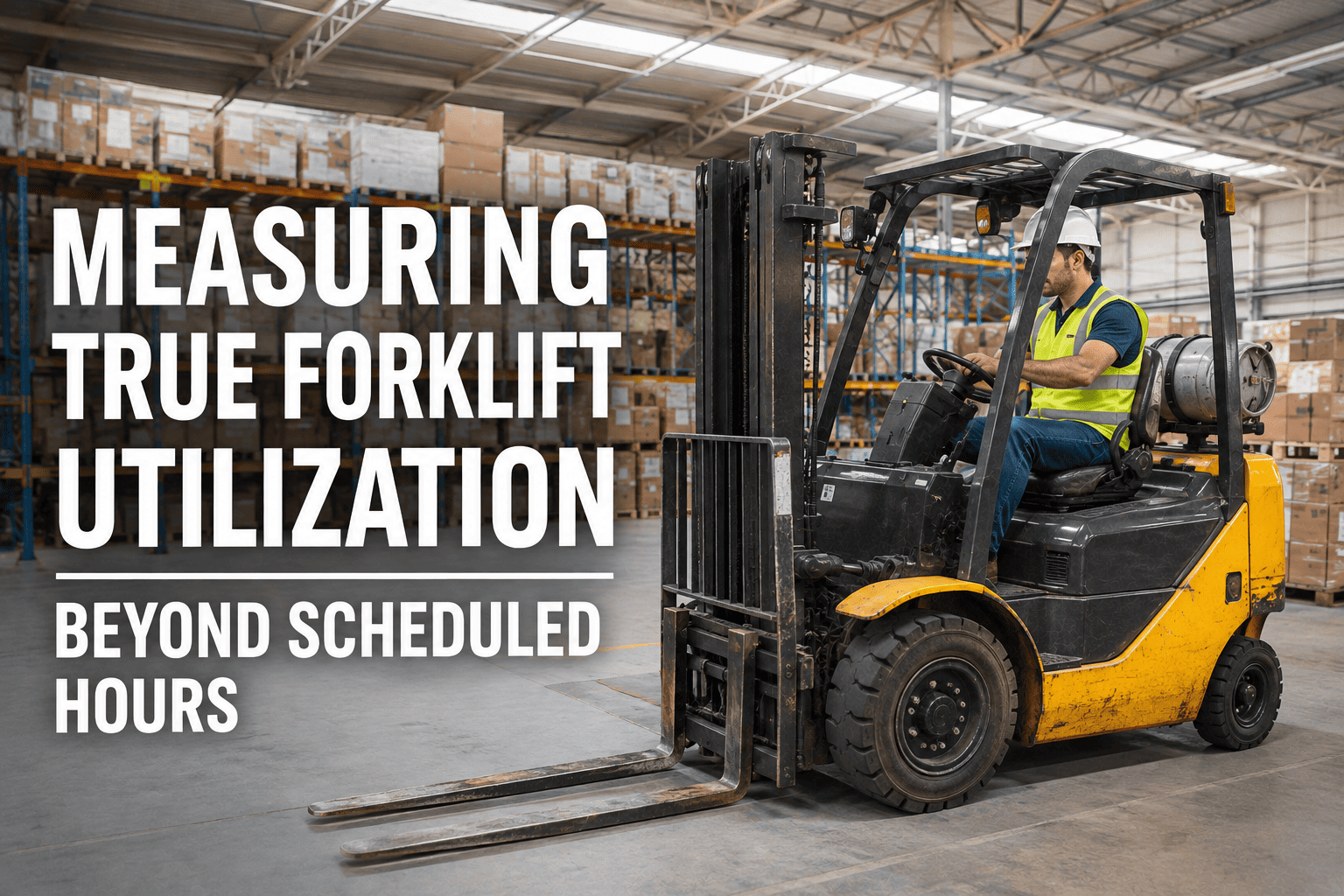
Ask most plant managers how utilized their forklifts are and you will get an answer built on the shift schedule: eight hours a shift, two shifts a day, so the truck must be running most of that time. It rarely is. Operators step off to handle other tasks, trucks sit staged between moves, and one forklift often gets shared across two or three operators who never touch it back to back. The schedule says one thing. The hour meter says another, and the hour meter is the one that is telling the truth.
Scheduled hours measure when a forklift was available to run, not when it actually moved. True utilization is measured through run hours and active motion time pulled from the truck itself. The North American manufacturing average sits at roughly 46.9 percent, meaning the typical plant floor forklift is idle for more than half of its available time, even though the shift schedule says otherwise.
The Illusion of Scheduled Hours
An 8-hour shift looks like 8 hours of utilization on paper. In practice, most operators are on and off a forklift constantly throughout the day, and a truck logged against a full shift schedule can be sitting idle for a large share of it. The gap between what the schedule promises and what the hour meter records is where real utilization data lives.
For a plant running 30 forklifts at a fully-loaded cost of roughly 200,000 dollars per unit per year, that gap represents millions in productive capacity sitting idle on paper every single year, capacity that never shows up in output because nobody measured it correctly in the first place.
FleetRabbit measures actual run hours and idle time per truck, not scheduled hours. Sign up free and see which forklifts are earning their keep.
Why Scheduled Hours Give You the Wrong Picture
The gap between scheduled and actual utilization is not a data problem, it is a structural one. Forklifts move across large floor plans between production cells, staging areas, and storage, which makes their real activity pattern invisible to anyone just watching the shift clock.
Benchmarks: What Good Utilization Actually Looks Like
Once utilization is measured by run hours instead of scheduled hours, the numbers become a useful comparison point rather than a guess.
How to Calculate True Forklift Utilization
The formula itself is simple, the difficulty is only in where the numbers come from.
Pull Run Hours From the Truck
Use the hour meter or telematics data to capture actual motion time, not the shift schedule assigned to the vehicle.
Define Your Available Hours
Decide whether you are measuring against scheduled shift hours or full calendar hours, and stay consistent across every truck.
Separate Idle Time From Run Time
A truck powered on but stationary is idle, not utilized, and the two should never be combined in the same number.
Compare Truck by Truck
Fleetwide averages hide outliers. Individual vehicle data shows which trucks are overworked and which are barely used at all.
What to Do With Underutilized Trucks
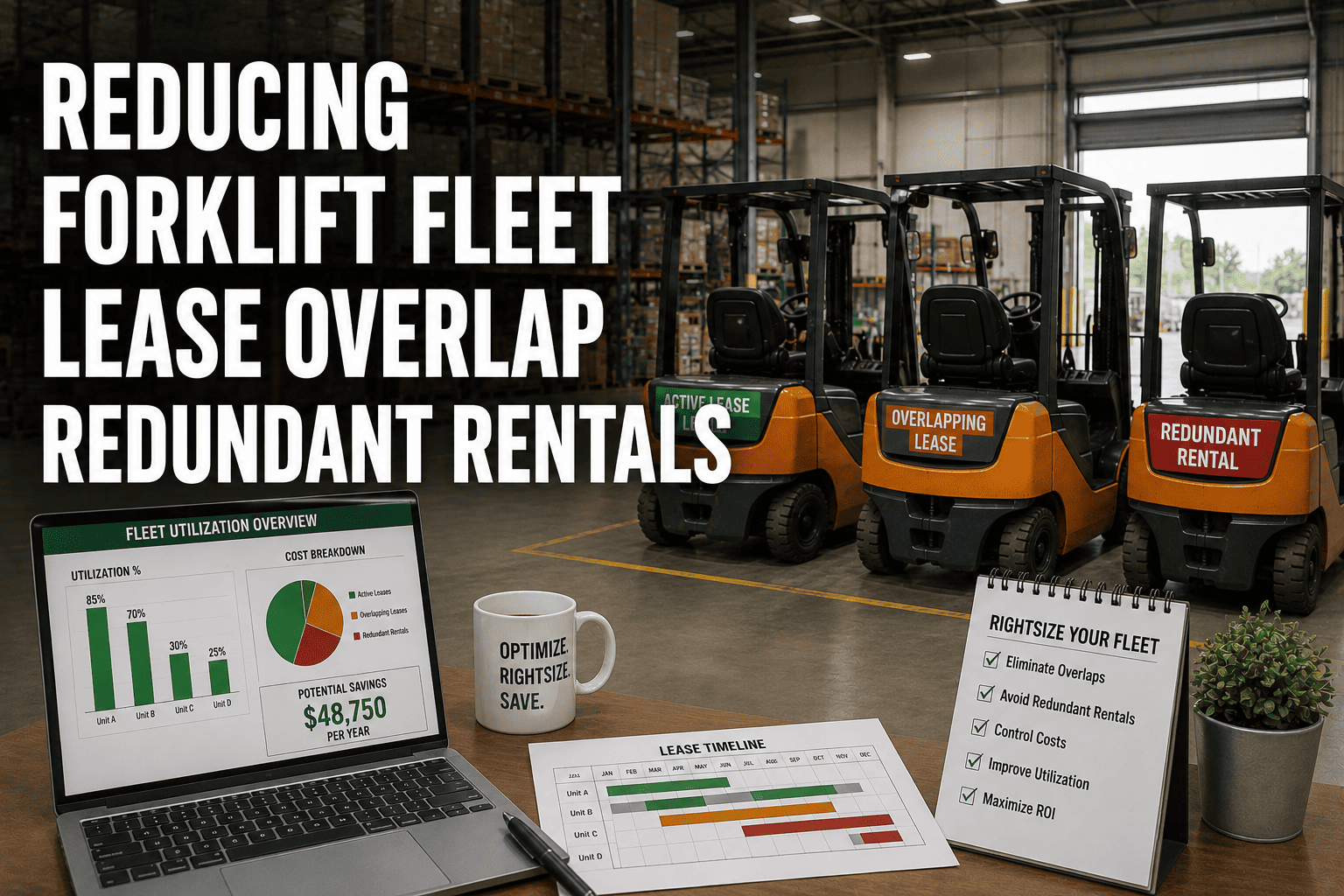
When utilization data shows a handful of trucks consistently running below 30 percent while others nearby sit above 85 percent, the right-sizing opportunity becomes obvious instead of a guess. Reassigning routes, consolidating shared trucks, or removing a chronically idle unit from the fleet eliminates lease payments, maintenance overhead, and charging infrastructure load without touching output. If you want to see where your own fleet falls on this spectrum, you can sign up for a free trial and pull true run-hour utilization for every truck this week, or book a demo to walk through your fleet's numbers with our team.
Scheduled hours tell you what was planned. Run hours tell you what actually happened. FleetRabbit tracks true utilization for every forklift in your fleet so you know exactly which trucks are earning their keep and which ones are not.