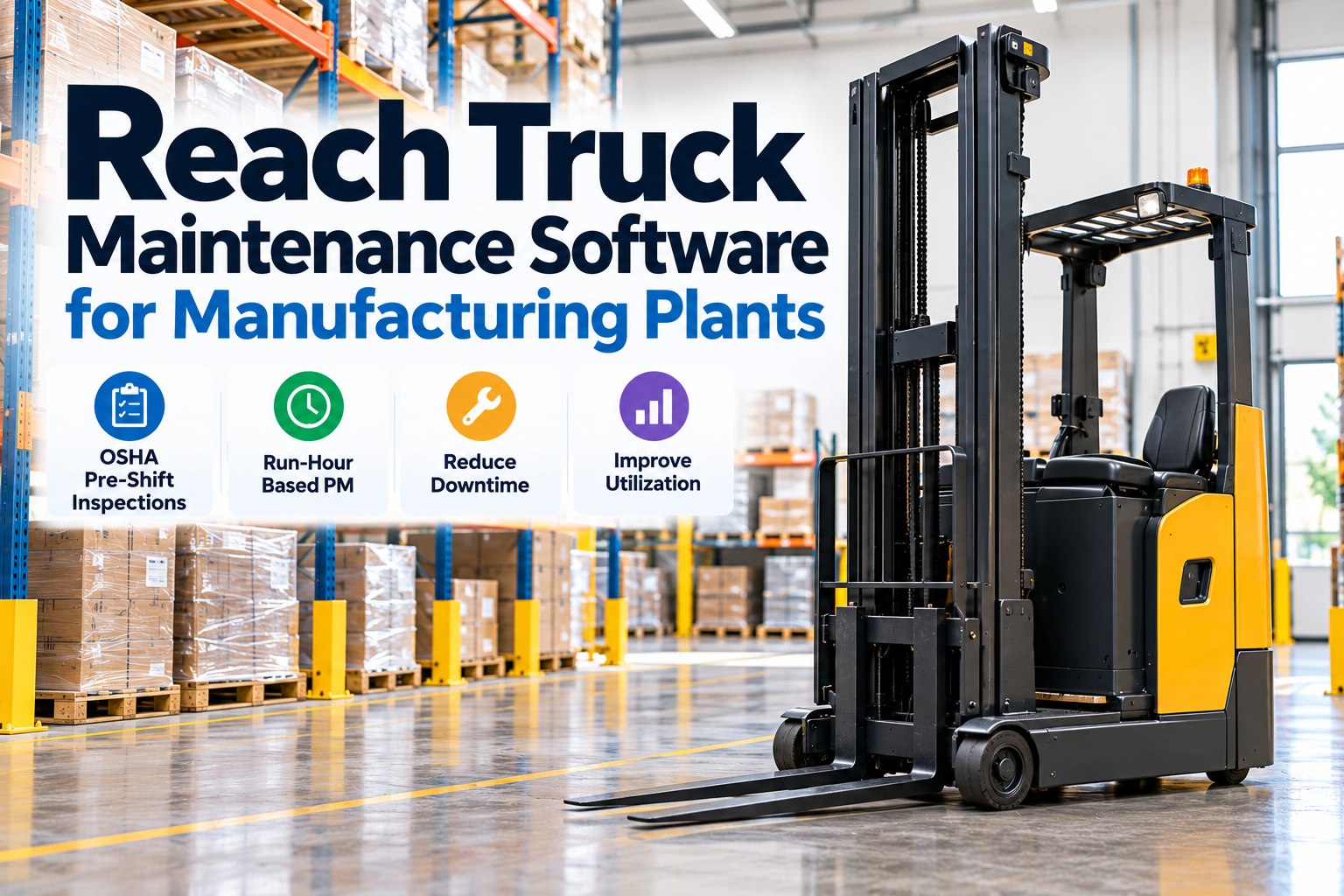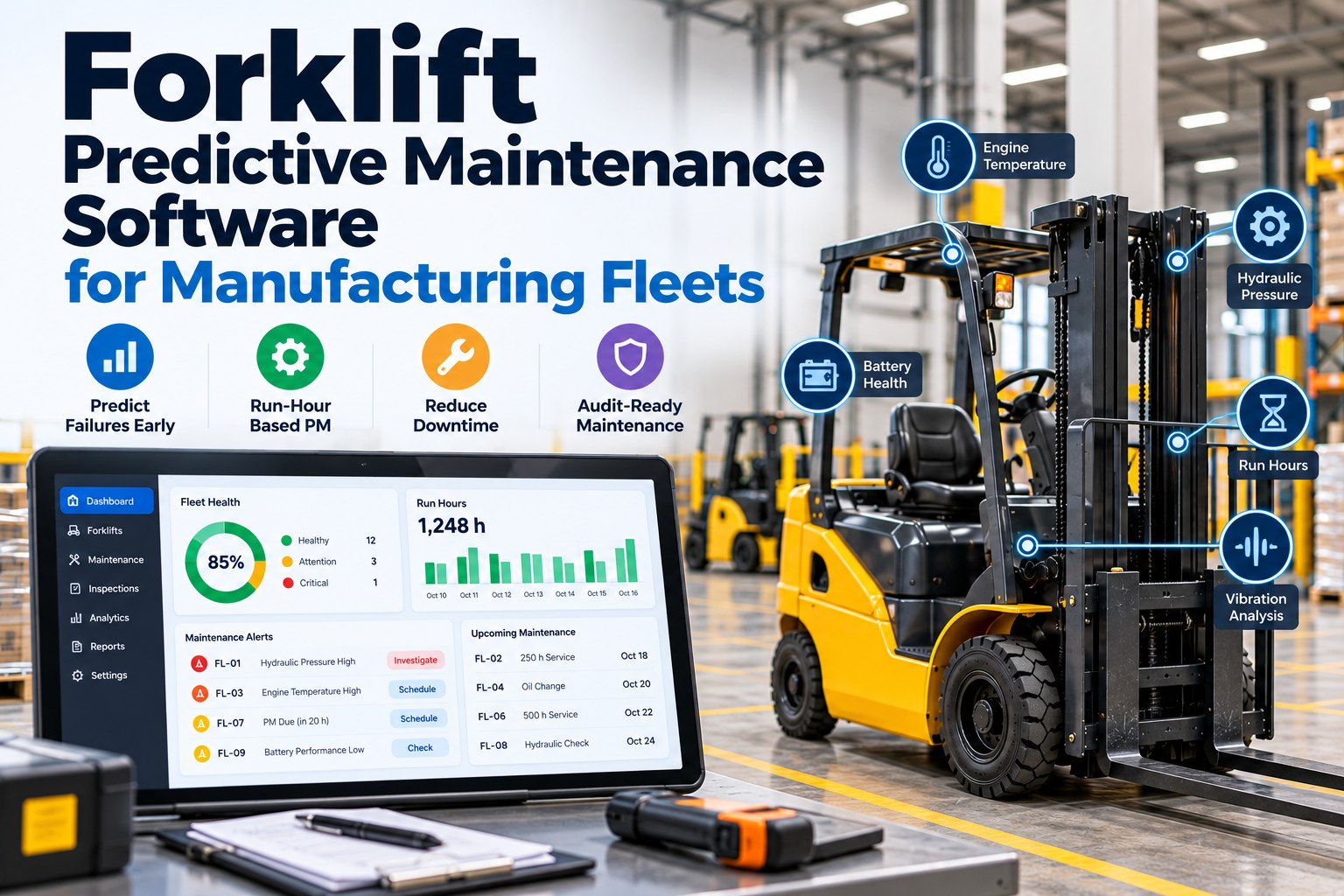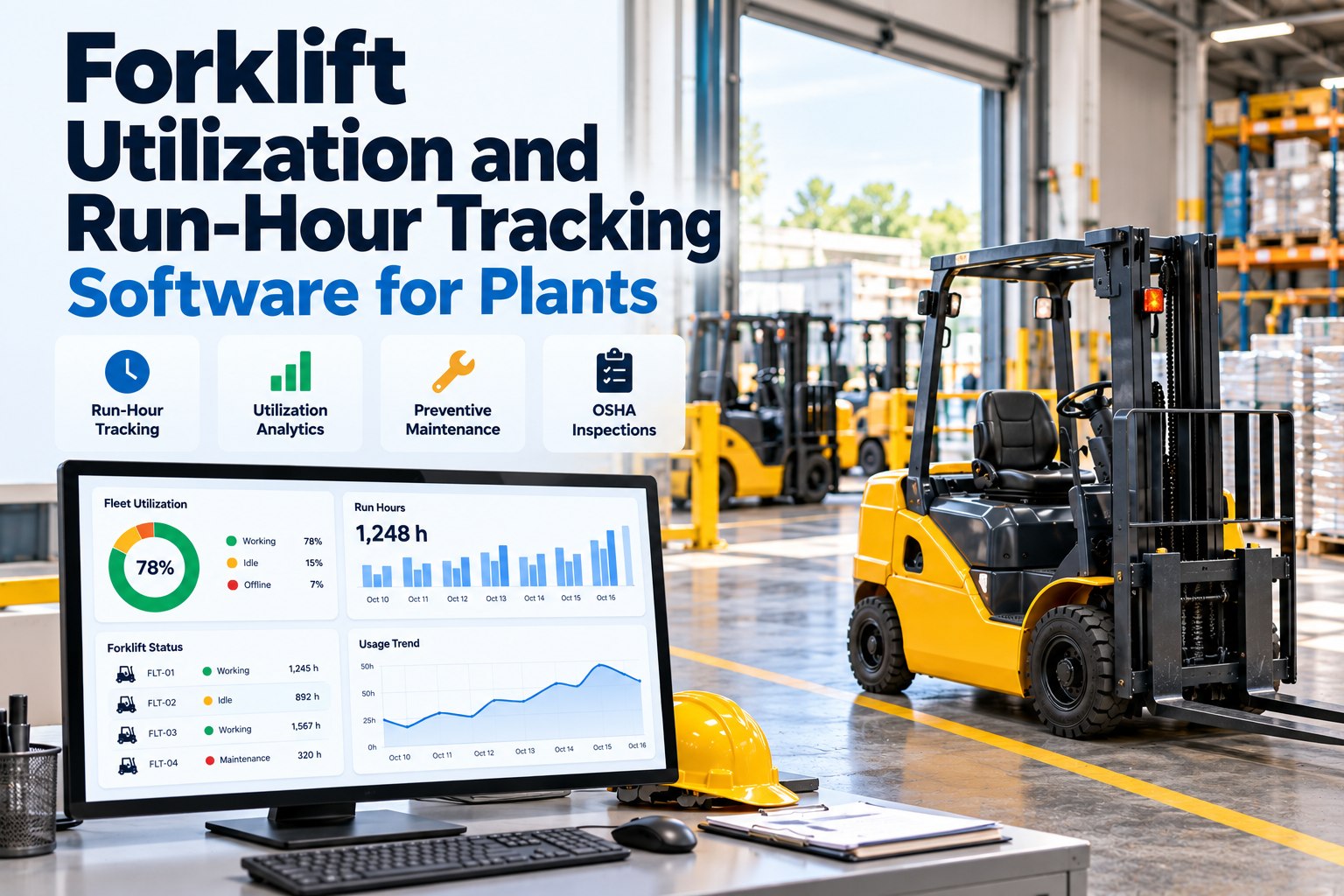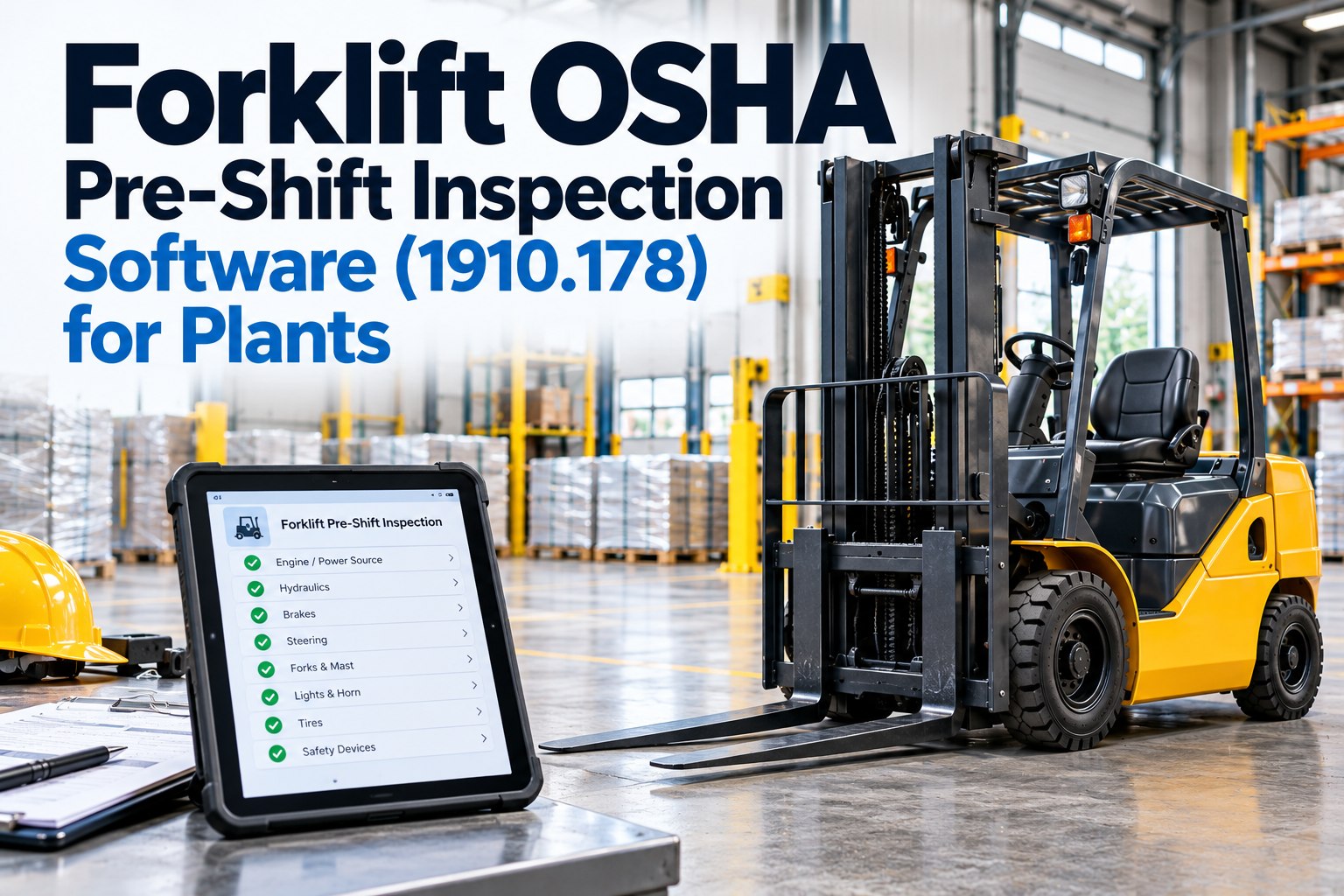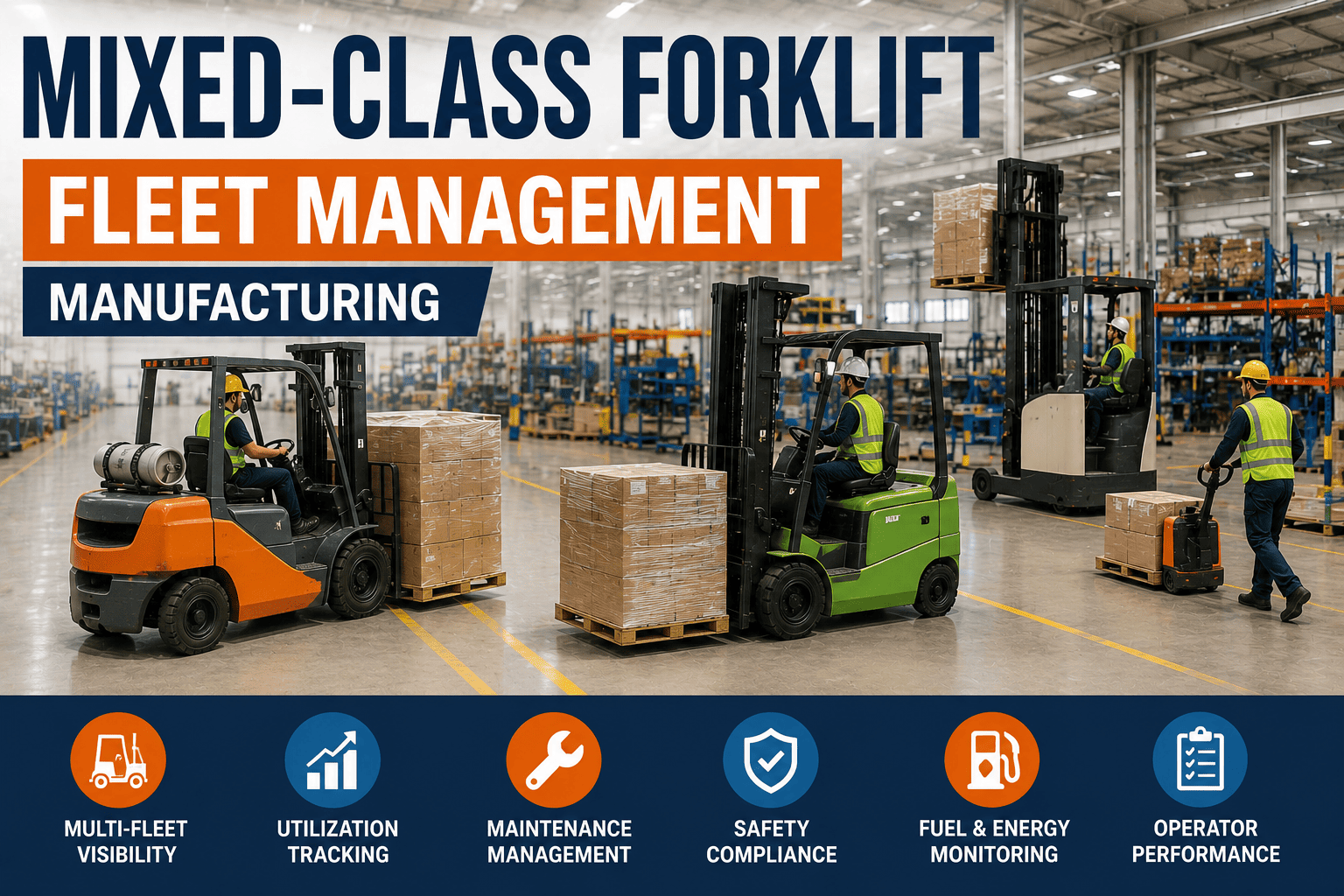
Almost no manufacturing plant runs a single type of forklift. A typical floor mixes sit-down counterbalance trucks for heavy pallets, narrow-aisle reach trucks for high racking, order pickers for case-level work, and tuggers pulling carts between production lines, often sourced from three or four different manufacturers bought across different budget cycles. That mix rarely happens on purpose. It accumulates.
The problem isn't owning a mixed fleet, it's managing one like it's still a single-brand operation. Different classes wear differently, need different service intervals, and often report data through different systems, which leaves plant managers with a fragmented picture instead of one clear view. This guide covers where mixed-class fleets break down and how FleetRabbit brings every class, every brand, and every location into a single system.
Mixed-class forklift fleets, combining counterbalance, reach, order picker, and tugger equipment across multiple brands, are the norm in manufacturing, not the exception. The challenge is that each class and each manufacturer tends to bring its own maintenance schedule, parts inventory, and reporting system, creating a fragmented view of the fleet as a whole. Centralizing inspections, maintenance records, and utilization data across every class and brand into one platform closes that gap and gives plant managers a single source of truth.
Why Mixed Fleets Get Harder To Manage As They Grow
A mixed fleet forms for reasonable reasons. One class of equipment is bought for a specific job, a merger or acquisition brings in another site's equipment mix, and a better deal on a different brand shows up during the next procurement cycle. None of this is a mistake, but without a unifying system behind it, the operational math gets harder with every addition.
Every Class Wears Differently
A reach truck working narrow aisles all day puts stress on different components than a counterbalance truck hauling heavy pallets across an open floor. Order pickers spend most of their life at height, and tuggers rack up drive-train hours pulling carts on repeat routes. Applying one blanket maintenance schedule across all of them misses what each class actually needs.
Every Brand Reports Differently
One manufacturer's telematics tracks engine hours, another tracks mileage, and a third barely reports anything without add-on hardware. When that data stays trapped in separate OEM platforms, plant managers end up piecing together spreadsheets from multiple sources instead of seeing one clear picture of fleet health.
Every Site Handles Service On Its Own
In multi-location operations, it's common for each site to manage its own service schedule, vendors, and paperwork. One site logs a filter change, another forgets, and there's no way to compare fleet cost or reliability across locations without pulling records manually.
See Every Class And Brand In One Dashboard
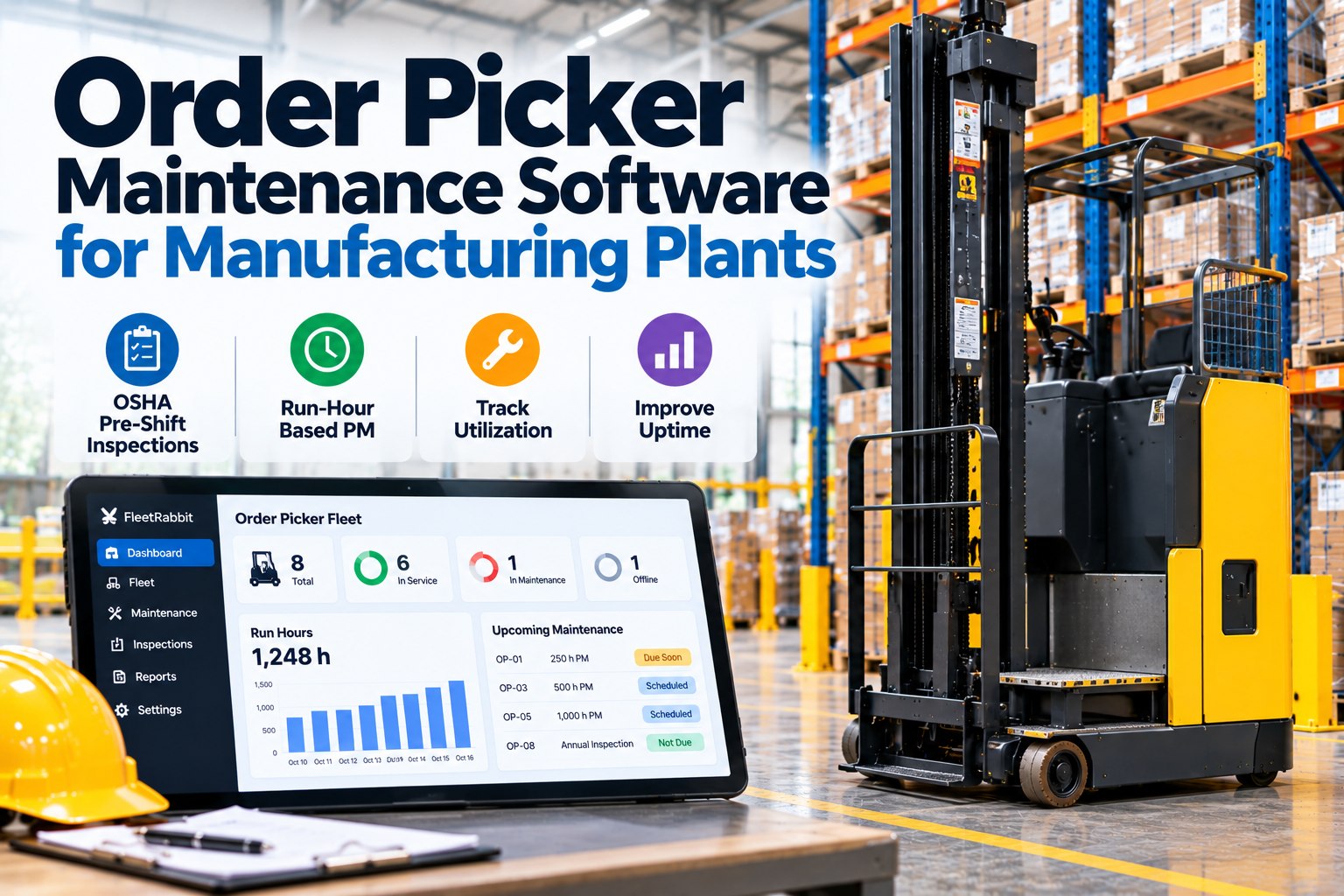
FleetRabbit unifies counterbalance, reach, order picker, and tugger equipment from any manufacturer into a single inspection and maintenance system, so nothing gets managed in a silo.
Common Mixed-Fleet Problems And How To Fix Them
Most of the pain points in a mixed fleet come down to fragmentation. The table below lines up the recurring problems against the practical fix for each.
| Problem | Why It Happens | The Fix |
|---|---|---|
| No single view of fleet health | Each brand's telematics reports differently, if at all | Centralize inspections and maintenance logs in one platform regardless of brand |
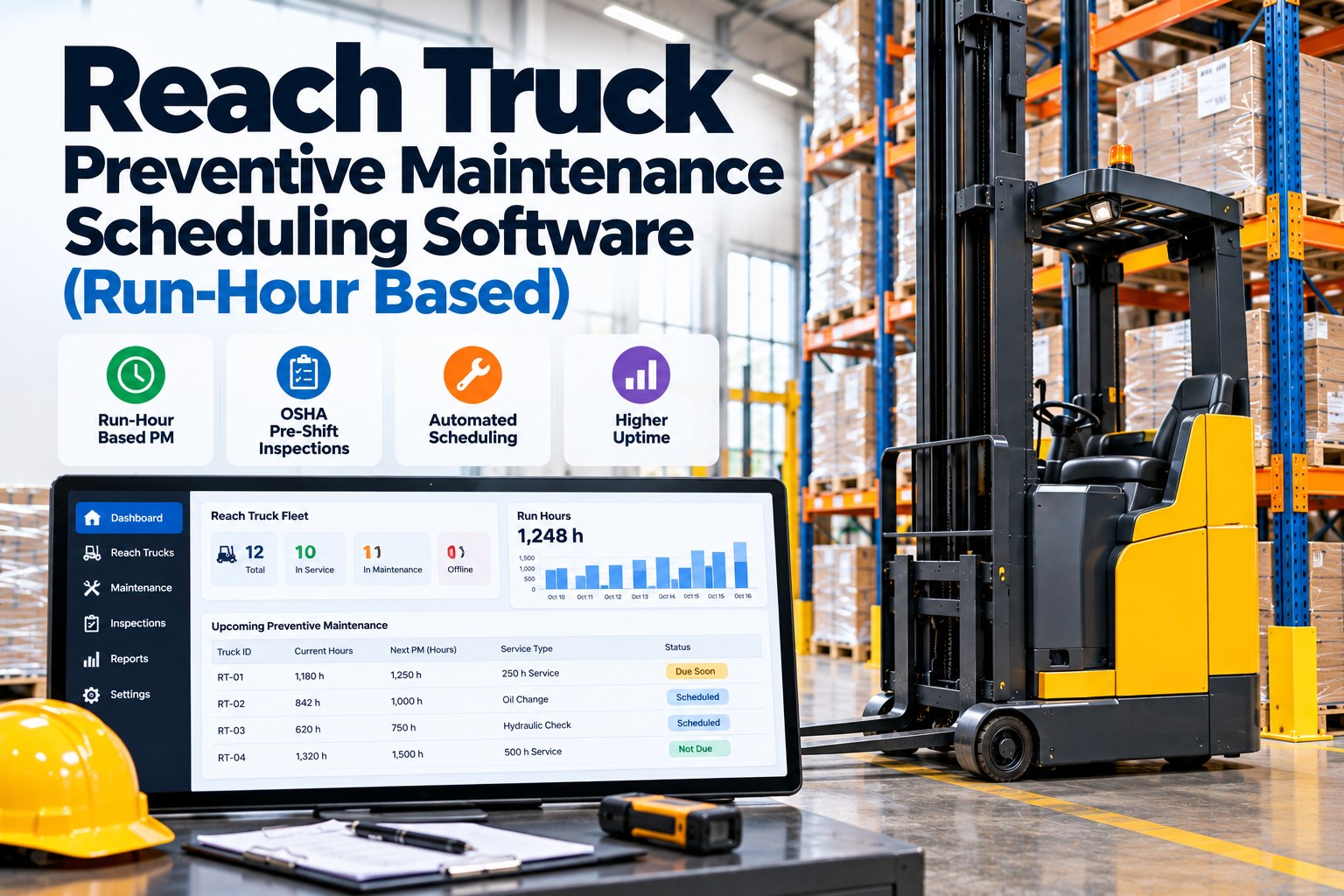
| Inconsistent maintenance intervals | Each class and manufacturer has its own recommended schedule | Set class-specific schedules inside one system instead of tracking them separately |
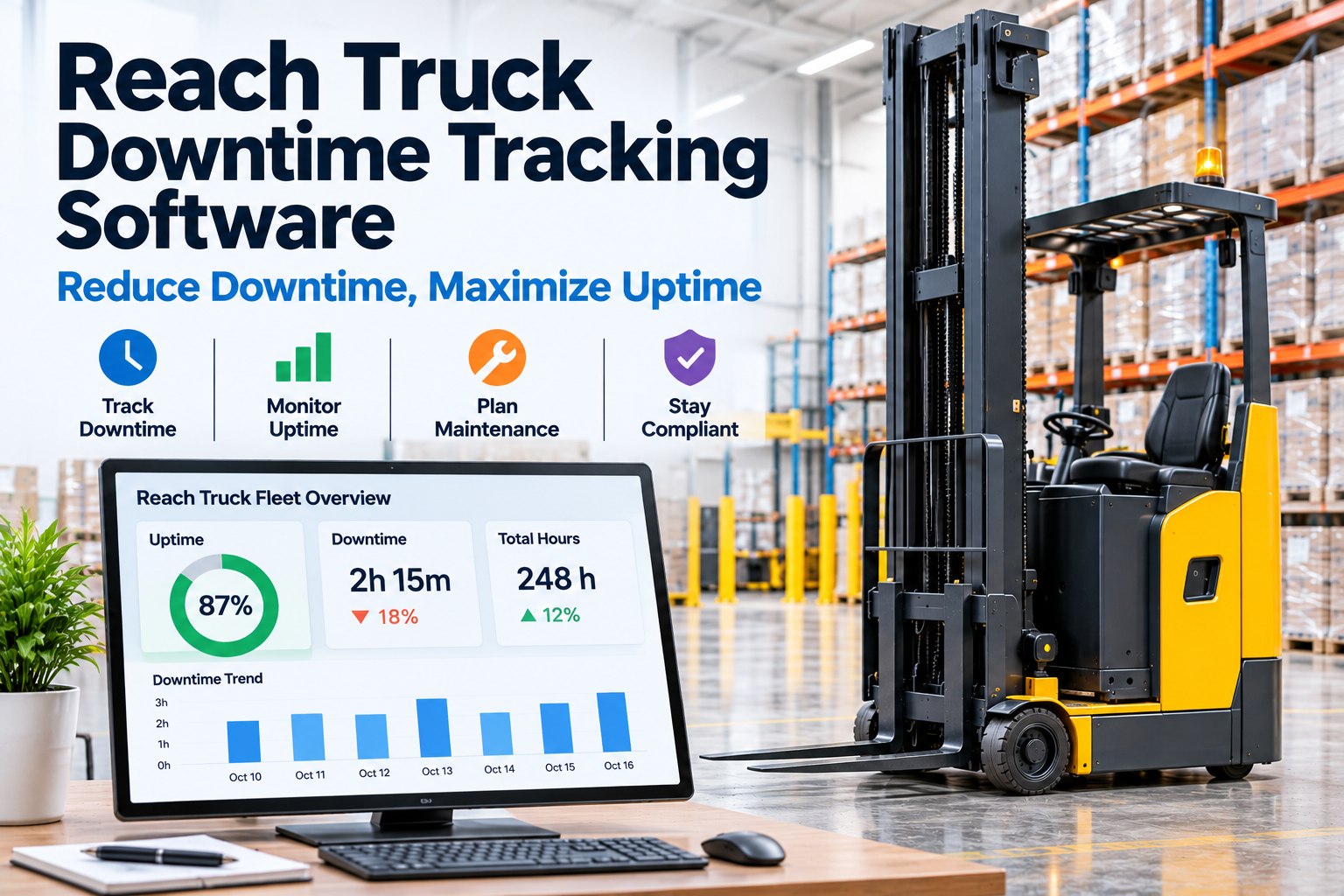
| Uneven equipment utilization | No visibility into which units and sites are over or underused | Track usage hours by unit to rebalance load across the fleet |
| Parts and vendor sprawl | More brands means more service contracts and part numbers to track | Log service history per unit to spot patterns and standardize where possible |
| Site-to-site inconsistency | Each location manages inspections and service on its own paperwork | Put every site on the same digital checklist and reporting standard |
Bringing A Mixed Fleet Into One System
Unifying a mixed fleet doesn't mean replacing equipment or forcing every site onto one brand. It means putting one layer of visibility over everything you already own.
Inventory Every Class And Unit
Start with a full count of what's actually on the floor, by class, brand, age, and location. Most plants find gaps between what they assumed they owned and what's actually running.
Standardize Digital Inspections Across Classes
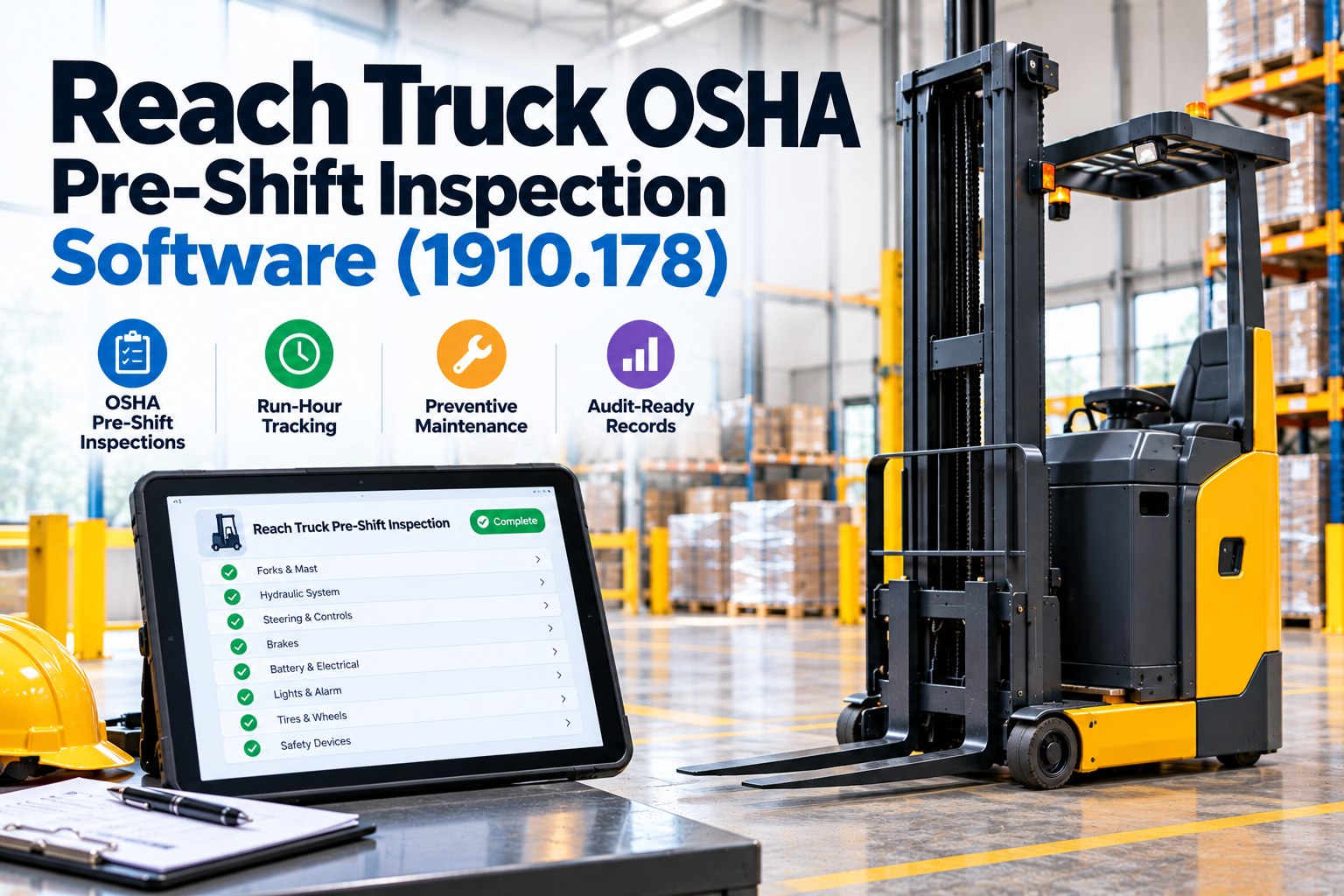
Build class-specific checklists, since a reach truck's mast inspection has little in common with a tugger's coupling check, but run them through the same digital system so every result lands in one place.
Consolidate Maintenance History
Every repair, filter change, and part replacement should attach to the unit's record, not sit with whichever vendor performed the work. This is what makes patterns visible across brands and classes.
Compare Utilization Across Sites
Once usage data flows into one system, it becomes easy to see that one location is running units into the ground while another sits underused, and shift equipment accordingly instead of buying or renting more.
This is exactly the gap FleetRabbit was built to close. Instead of juggling separate OEM portals, spreadsheets, and site-specific habits, plant and fleet managers get one dashboard covering every class and every brand, with class-specific maintenance schedules, digital inspections, and utilization tracking built in. If your plant is running a mixed fleet across multiple manufacturers or locations, it's worth seeing what a unified view actually looks like, and you can book a demo to walk through your specific equipment mix.
Stop Managing Your Fleet In Silos
Whatever mix of counterbalance, reach, order picker, or tugger equipment your plant runs, FleetRabbit brings it all under one system with class-specific maintenance and full fleet visibility.
Frequently Asked Questions
One Fleet, Every Class, One System
Your plant doesn't need to run a single brand to run a unified fleet. FleetRabbit brings every class and every manufacturer into one platform with class-specific maintenance and complete visibility across sites.