Operator Certification & Performance Management for Manufacturing Forklift Fleets
When a forklift operator's OSHA certification expired three months ago and nobody noticed—because it was tracked on a shared spreadsheet that nobody updated—the liability isn't theoretical. It's a six-figure OSHA citation, a workers' compensation claim, and a production halt that could have been prevented with a fifteen-minute system alert. Expired certifications and untracked operator performance aren't administrative oversights. They are the predictable consequence of managing human compliance the same way facilities managed it in 1995: paper files, wall charts, and memory.
This guide gives fleet managers, plant safety officers, and operations directors a comprehensive framework for implementing digital forklift operator certification and performance management in manufacturing environments. We cover automated certification tracking, safety score monitoring, data-driven coaching workflows, and the connected platform capabilities that reduce incidents, protect compliance, and build a measurable culture of operational excellence. Manufacturing facilities ready to eliminate certification gaps and improve fleet safety can start their free trial today.
Manufacturing Safety Reality 2026
The Hidden Cost of Unmanaged Forklift Operator Compliance
80%
of forklift incidents involve operator error attributable to inadequate training, supervision, or coaching
60%
of manufacturing plants have at least one operator running equipment with an expired or unverified OSHA certification
70%
reduction in recordable forklift incidents reported by facilities using digital operator performance management platforms
The financial and human stakes of poor operator compliance management extend far beyond the obvious citation risk. An OSHA violation for operating uncertified equipment carries penalties up to $16,131 per incident and $161,323 for willful violations. Beyond regulatory exposure, facilities that lack operator performance visibility are operating blind—unable to identify which operators are generating near-misses, which are consistently efficient, and which require immediate coaching intervention before an incident occurs. Digital operator performance management converts reactive, paper-based compliance into a proactive safety intelligence system that protects people, assets, and operations.
The Operator Compliance Gap: From Paper File to Production Risk
Most manufacturing plants underestimate their operator compliance exposure because the risk is invisible until it becomes a claim. Certification expiry dates buried in HR folders, operator vehicle authorisations tracked on whiteboard columns, and safety score data that exists nowhere at all—these gaps are standard operating procedure in facilities that haven't modernised their approach to forklift operator certification management.
Operator Compliance Failure Pathway
From undetected certification gap to regulatory and operational consequence
01
Certification Expires
Operator's 3-year OSHA certification lapses with no automated alert; supervisor unaware; operator continues normal shifts
02
Performance Drift
Speed violations, near-miss events, and unsafe load handling accumulate with no data capture or coaching intervention
03
Incident Occurs
A preventable collision, tip-over, or pedestrian near-miss triggers injury, property damage, or production shutdown
04
Regulatory Exposure
OSHA investigation discovers expired certifications and absence of performance records—fines, litigation, and reputational damage compound
Digital operator performance management breaks this chain at step one. When every certification has an automated expiry alert, every operator performance event is captured in real time, and coaching workflows trigger automatically on defined thresholds—compliance gaps become detectable exceptions rather than invisible liabilities accumulating toward your next incident. Book a Demo.
Paper-Based Compliance vs. Digital Performance Platform: The Operational Gap
The gap between manual certification tracking and an intelligent operator performance platform isn't a difference of degree—it's a difference in what the organisation can actually see and act on. Facilities operating on spreadsheets and wall charts are managing forklift operator certification manufacturing compliance entirely in arrears, responding to violations they discover rather than preventing the conditions that produce them.
Operator Management Approach Comparison
✗
Reactive / Paper-Based Certification Tracking
Certification expiry dates on spreadsheets with no alerts
No link between operator identity and vehicle access
Safety performance invisible until an incident report is filed
Coaching decisions based on supervisor memory and gut feel
Speed and impact violations undetected without witness
Retraining triggered by incidents, not leading indicators
OSHA audit requires manual paper file retrieval per operator
Reactive, Exposed & Incident-Prone
✓
FleetRabbit Digital Operator Performance Platform
Automated alerts 30/60/90 days before certification expiry
RFID/PIN access blocks uncertified operators from vehicle start
Real-time safety scores updated on every shift event
Data-driven coaching workflows triggered on score thresholds
Telematics captures every speed violation and impact event
Retraining assigned proactively based on performance trend
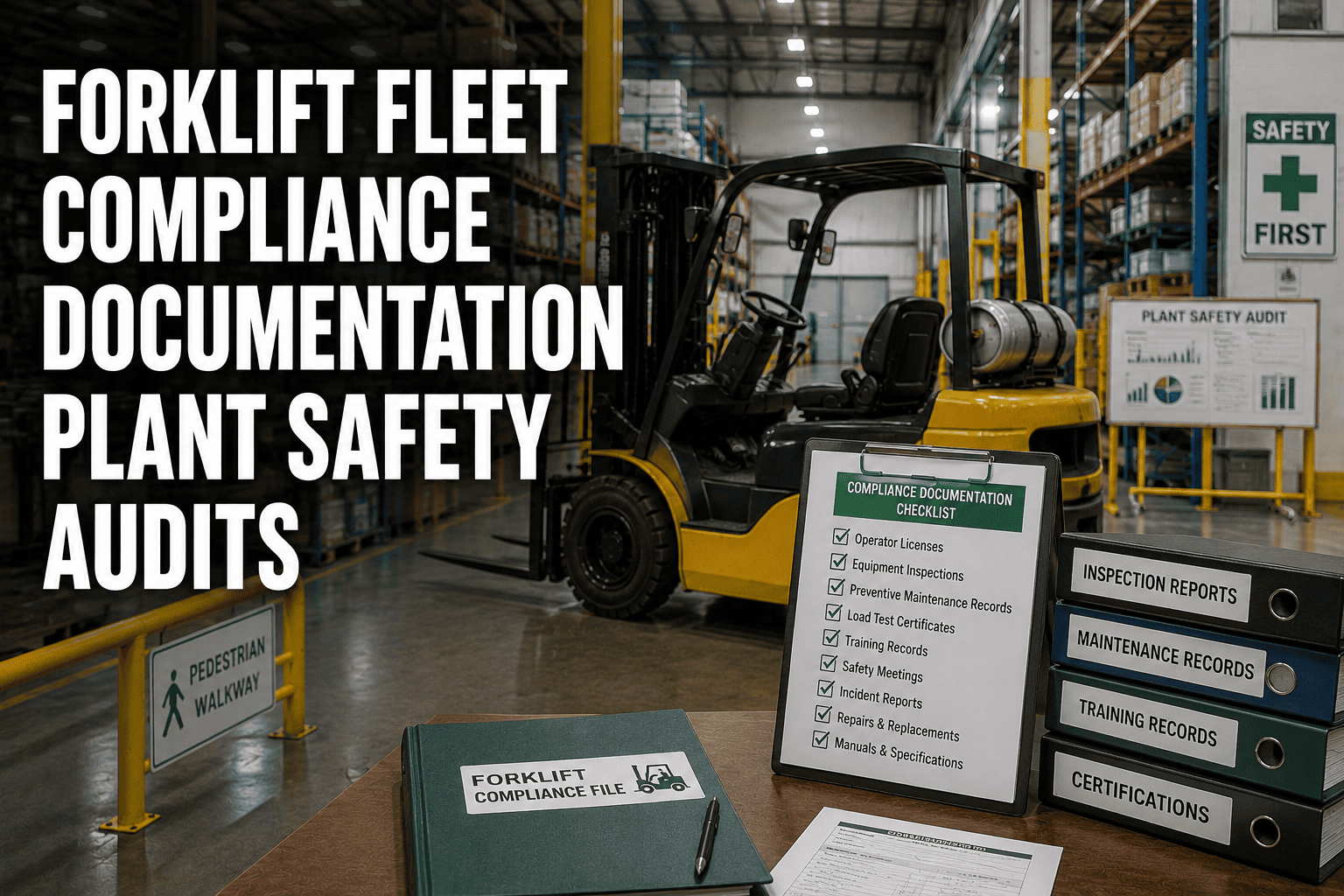
One-click audit pack with every operator record and certificate
Proactive, Protected & Performance-Driven
Digital operator management doesn't just close compliance gaps—it creates entirely new operational capabilities that paper systems cannot deliver. Performance trend data by operator reveals which individuals require targeted coaching before an incident occurs. Shift-level comparison identifies whether safety scores deteriorate on specific shifts or in specific zones—pointing to environmental or scheduling factors rather than individual operator fault. And historical performance records become an organisation's strongest defence in any regulatory investigation or litigation proceeding.
Digital Operator Management Platform Performance Impact
Measured improvements from FleetRabbit operator performance management across manufacturing fleets
70%
Incident Reduction
Recordable Events Year-on-Year
100%
Certification Coverage
Zero Expired Operators on Fleet
45%
Coaching Efficiency Gain
Data-Targeted vs. Generalised Training
3.8x
Platform ROI
Incident Cost Avoidance Within 12 Months
Core Platform Capabilities: What Operator Performance Management Must Deliver
Not all fleet management platforms include genuine operator intelligence. Many offer basic operator logs without certification automation, safety scoring, or coaching workflow integration. Manufacturing plants evaluating forklift operator certification manufacturing software must assess five core capabilities that separate proactive safety platforms from digitised paper files.
Five Core Operator Management Capabilities
Automated Certification Tracking
Every operator certificate stored digitally with expiry dates that trigger multi-stage alerts to supervisors and HR—30, 60, and 90 days before expiry, with zero manual calendar management required.
Vehicle Access Control
RFID badge or PIN authentication prevents uncertified or suspended operators from powering on any vehicle in the fleet—turning compliance into a physical enforcement mechanism rather than an honour system.
Real-Time Safety Scoring
Per-operator safety scores calculated continuously from telematics data: speed violations, hard braking, impact events, and pre-shift inspection completion rates—updated after every shift for supervisor review.
Coaching Workflow Automation
Configurable safety score thresholds automatically assign coaching sessions, schedule refresher training, or escalate to suspension workflows—replacing reactive discipline with structured, documented performance management.
The ROI Equation: Manual Compliance vs. Digital Operator Management
Investing in operator performance management software is frequently categorised as a safety department overhead, but the financial reality of unmanaged operator compliance tells a different story. OSHA citation costs, workers' compensation premiums, incident-driven downtime, and the legal exposure from operating uncertified personnel far exceed the platform investment within the first incident avoided.
ROI Calculator: Digital vs. Manual Operator Management
Based on a mid-sized manufacturing plant (30–100 forklift operators, multi-shift operations)
Reactive / Manual Operator Compliance
Average OSHA citation (expired certification)$16K – $161K
Workers' comp per recordable forklift incident$38K – $150K+
Incident-driven production downtime annually$50K – $200K
Manual HR compliance admin labor hours200+ hrs / $18K+ yr
Annual Risk Exposure: $122K – $529K+
VS
FleetRabbit Digital Operator Management
Platform subscription (annual)$12K – $40K / yr
Implementation & onboarding (one-time)$4K – $12K
OSHA citation exposure (100% cert coverage)Near Zero
Incident-driven downtime (70% reduction)Minimised
Annual Investment: $16K – $52K
Manufacturing plants that implement digital operator performance management also benefit from improved workers' compensation insurance premiums as incident frequency declines; stronger legal position in any injury litigation through documented coaching and compliance records; and reduced supervisor burden as automated alerts and workflows replace manual tracking. The financial argument is decisive: reactive operator compliance costs multiples more than the platform that prevents it.
Stop Expired Certifications from Becoming Your Next OSHA Citation
FleetRabbit delivers automated certification tracking, real-time safety scoring, vehicle access control, and data-driven coaching workflows—all connected to your forklift fleet operations. Schedule a consultation to see how digital operator management eliminates compliance exposure at your facility.
Implementation: Building Operator Management Maturity
Transitioning from paper-based certification files to a fully digital operator performance management system is a phased process that delivers measurable safety improvements at each stage. Facilities that attempt to deploy every capability simultaneously often struggle with change management and data migration. A structured three-level approach consistently delivers 80–90% of projected incident reduction within the first 120 days.
Start with the compliance foundation: migrate every operator's certification records into the platform, configure expiry alert timelines, and activate vehicle access control so no uncertified operator can start a shift. Then enable telematics-driven safety scoring to surface real-time performance data your supervisors have never had visibility into. Finally, use accumulated performance data to build automated coaching and retraining workflows that intervene before patterns become incidents—turning your operator management from a liability into a competitive safety differentiator.
Plant Fleet Operator Performance Management Across Vehicle Classes
Modern forklift operator certification manufacturing management doesn't stop at counterbalance forklifts. The same platform that tracks OSHA forklift certifications should manage operator authorisations and performance data for every powered industrial vehicle in the facility—reach trucks, order pickers, tow tractors, pallet jacks, and aerial work platforms. A unified operator platform gives safety managers a single compliance record for every person and every vehicle in the operation.
Operator Performance Management Across Manufacturing Vehicle Classes
One platform for every certified operator and every powered industrial vehicle in your facility
Counterbalance Forklifts
Reach Trucks
Order Pickers
Pallet Jacks
Tow Tractors
Aerial Work Platforms
Dock Leveler Operators
Plant Vehicle Drivers
Cross-Vehicle Authorisation Matrix
Each operator's certification status and authorised vehicle classes are stored in a single profile—ensuring a counterbalance-certified operator cannot inadvertently access a reach truck class they are not certified to operate, without any supervisor intervention required.
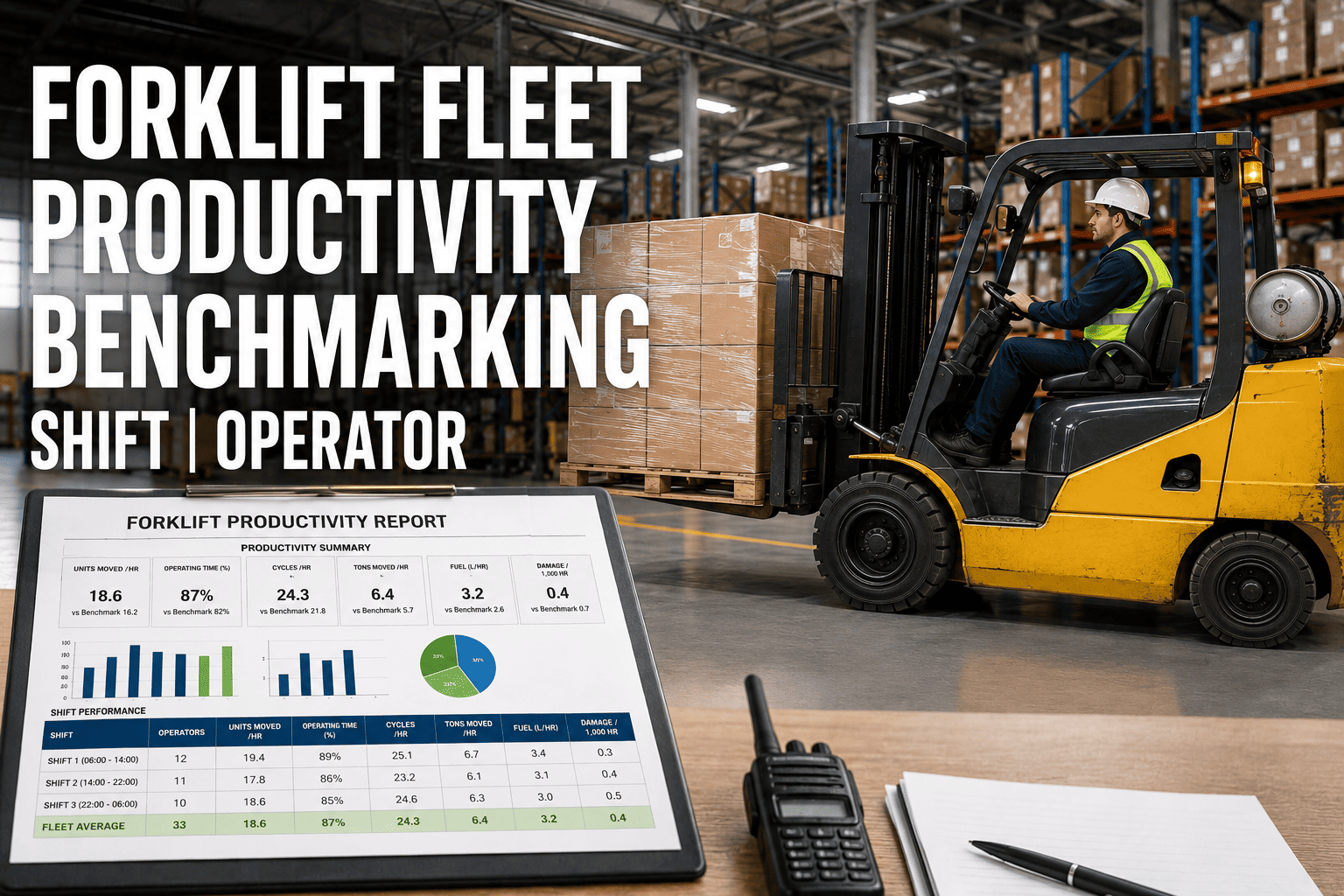
Shift-Level Safety Score Dashboards
Supervisors see every operator's real-time safety score, shift history, and trend direction on a single plant fleet operator performance management dashboard—without pulling individual reports or waiting for post-incident analysis to surface behaviour patterns.
Certification Renewal Pipeline
Finance and safety managers see the upcoming 90-day certification renewal calendar across all operators and vehicle classes—enabling proactive scheduling of refresher training during planned maintenance windows rather than scrambling when expiry notices arrive.
Connect every operator certification to your fleet compliance workflowGet Started →
Effective plant fleet operator performance management builds a safety culture that pays operational dividends far beyond OSHA compliance. When operators know their safety scores are visible and coaching is data-driven rather than arbitrary, they develop more consistent safe operating habits. When supervisors have performance trend data, they conduct more effective pre-shift briefings. And when plant managers can see incident frequency by operator cohort, they make training investment decisions with evidence rather than intuition. Book a Demo.
Give Your Fleet the Operator Intelligence It Needs to Stay Safe
Join manufacturing plants using FleetRabbit to eliminate certification exposure, reduce recordable incidents, and build the operator performance intelligence that keeps forklift fleets safe, compliant, and productive every shift. Take the first step toward digital operator management today.
How does the platform handle OSHA's 3-year forklift certification renewal requirement?
OSHA 29 CFR 1910.178(l) requires that forklift operators be evaluated at least once every three years. The platform stores each operator's most recent evaluation date and certification document, then automatically calculates the 3-year renewal deadline and triggers configurable alerts to the safety manager and HR team at 90, 60, and 30 days prior to expiry. When the certification lapses, the system flags the operator's profile as non-compliant and—if vehicle access control is enabled—blocks the operator's RFID or PIN from starting any forklift until a renewed certificate is uploaded by an authorised administrator. This creates an automated enforcement mechanism that removes human memory and calendar management from the compliance chain entirely.
What operator behaviours contribute to the real-time safety score?
The safety score is calculated from a weighted combination of telematics-captured events and inspection compliance data. Contributing factors include: speed violations above zone-specific thresholds (configurable by plant area), impact events above defined G-force levels, hard braking or aggressive directional changes, pre-shift inspection completion rate and pass rate, backup alarm compliance in pedestrian zones, and seatbelt engagement data where sensors are available. Each event category carries a configurable weighting so safety managers can emphasise the behaviours most critical to their specific operation—for example, weighting pedestrian zone speed violations more heavily in a plant with high foot traffic through forklift aisles. Scores are updated in real time and visible to supervisors on the dashboard immediately after each shift event is recorded.
How does the coaching workflow system work when a safety score drops below threshold?
When an operator's rolling safety score falls below a configurable threshold—say, a score of 75 out of 100—the platform automatically generates a coaching action in the supervisor's workflow queue. The action includes the operator's name, their score trend over the preceding 14 days, a breakdown of the specific event types driving the decline, and a suggested coaching agenda based on the predominant violation category. The supervisor completes the coaching session and records the outcome directly in the platform, creating a documented coaching record with timestamp and supervisor signature. If the operator's score doesn't improve within a defined window after coaching, a second-stage workflow triggers—typically a mandatory refresher training assignment. This entire chain is documented and defensible in any regulatory or legal proceeding, demonstrating a good-faith systematic approach to operator performance improvement rather than arbitrary disciplinary action.
Can operators see their own safety scores and performance data?
Yes—and this is one of the most effective behaviour-change mechanisms in the platform. When operators can see their own safety score on the mobile app before each shift, they gain immediate feedback on whether their operating behaviours are trending up or down. Research consistently shows that visible personal performance metrics drive behavioural change more effectively than periodic supervisor coaching alone. The operator view is configurable: you can choose to display only the operator's own data, or enable a peer-comparison view that shows where they rank within their shift cohort (anonymised or named, depending on your workplace culture and HR policy). Operators can also view a breakdown of the specific events that contributed to their score—turning abstract compliance requirements into tangible, self-directed performance improvement goals.
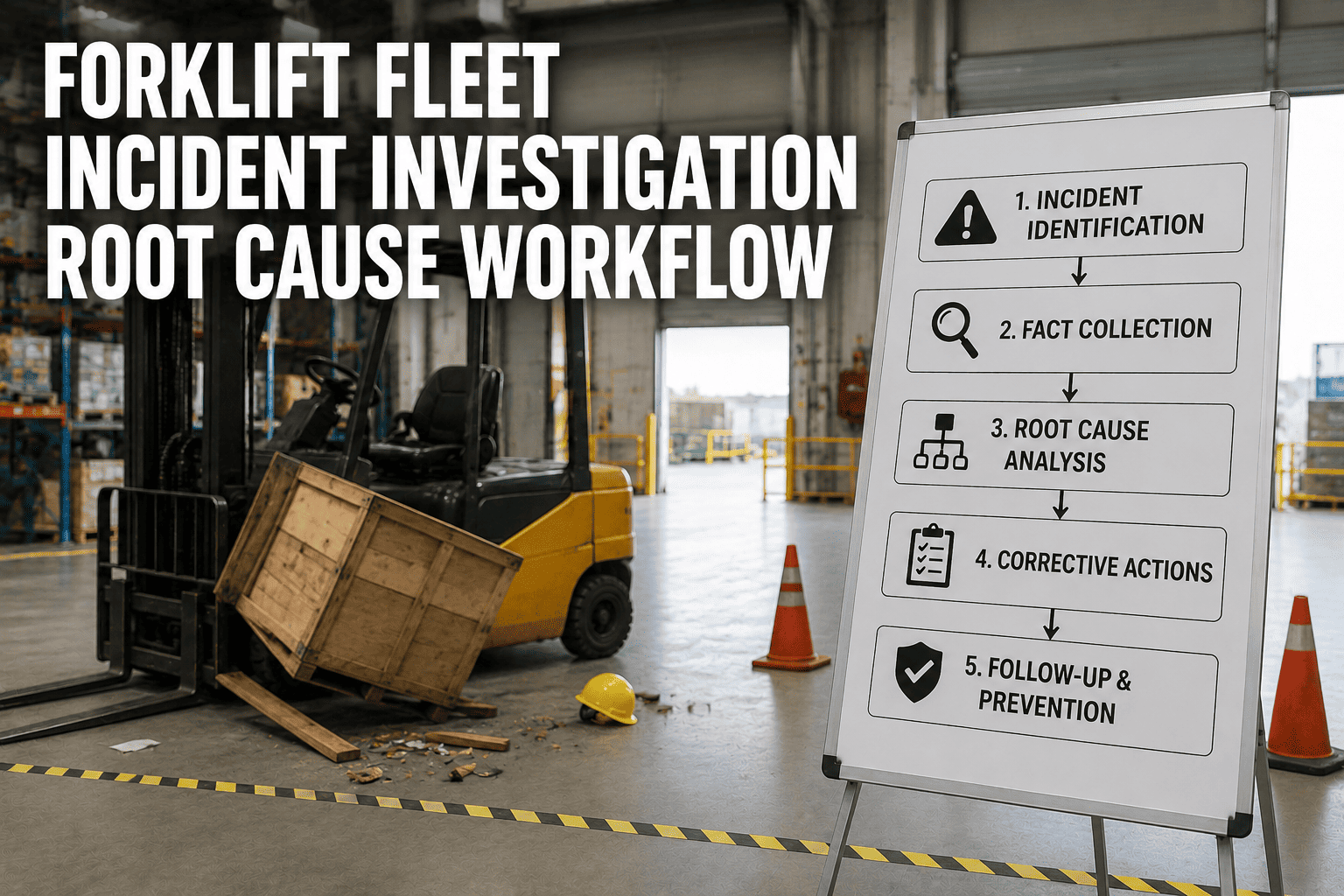
How does the platform support post-incident investigation for forklift accidents?
When an incident occurs, the platform provides investigators with a comprehensive pre-built data package for the involved operator and vehicle. This includes: the operator's full certification history confirming valid credentials at the time of the incident; their safety score trend and event log for the preceding 30 days; the specific shift record for the day of the incident including pre-shift inspection results; any prior coaching records and their outcomes; telematics data from the incident moment including speed, G-force at impact, and GPS position; and the vehicle's maintenance history and any open defect reports. This data package can be exported as a structured PDF for OSHA 300 log entry, insurance claim documentation, or legal defence purposes in under five minutes—replacing the multi-day manual record retrieval process that typically follows a serious incident at facilities still managing compliance on paper.