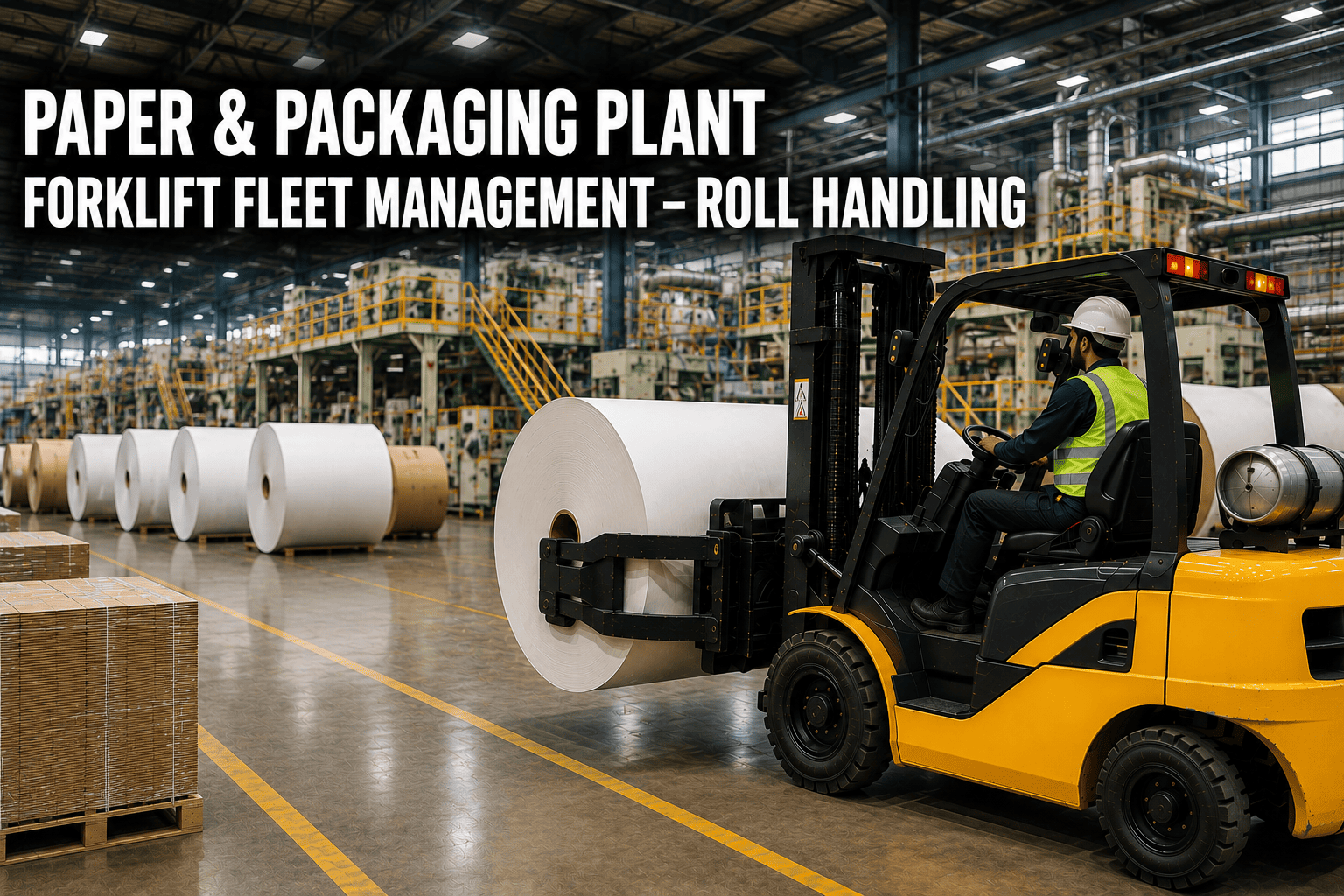
Walk onto the floor of any paper mill or corrugated packaging plant and you will notice something warehouses rarely deal with: forklifts that do not use forks. Instead, hydraulic arms wrap around massive paper rolls weighing anywhere from a few hundred pounds to over ten tons, lift them without crushing a single layer, and rotate them into position for stacking, converting, or shipping. Roll handling is one of the most specialized and unforgiving jobs in industrial material handling, and a single clamp failure or missed pad inspection can turn a routine shift into a costly cleanup. Managing this kind of fleet well is not optional. It is the difference between smooth production runs and expensive, avoidable downtime.
Paper and packaging plants rely on clamp-equipped forklifts to grip, rotate, and stack paper rolls without pallets. These attachments range from 720 lb capacity for light tissue rolls to over 26,000 lb for heavy kraft and linerboard stock. Because clamps use hydraulic pressure instead of rigid forks, their pads, hoses, and seals wear differently and need attachment-specific inspection schedules rather than standard forklift checklists.
Why Roll Handling Fleets Need a Different Playbook
Standard forklift maintenance programs are built around forks, masts, and tires. Attachment-equipped trucks in paper and packaging plants add a second machine on top of the first: a hydraulic clamp system with its own valves, hoses, pressure sensors, and pivot points. That second system fails differently than the base forklift, often showing up as product damage rather than a stalled engine. A slipping clamp does not always throw an error code. Sometimes the first sign is a crushed roll on the receiving dock or a jam at the converting line because a roll was set down slightly off-center.
Plants running dedicated roll clamps, carton clamps, or push-pull attachments also deal with tighter aisle clearances, higher stacking heights, and continuous multi-shift cycling. This combination raises the stakes for every inspection, which is why forward-looking operations track attachment health alongside engine and drivetrain data rather than treating the clamp as an afterthought. If you want a clear picture of where your fleet stands today, sign up for FleetRabbit and see attachment-level tracking applied to your own trucks.
FleetRabbit logs attachment cycles, pad condition, and hydraulic health separately from base forklift maintenance, so paper and packaging plants catch clamp wear before it becomes roll damage or a line stoppage.
Attachment Types Common Across Paper and Packaging Plants
Not every roll on a plant floor gets handled the same way. Tissue and light packaging stock often move on smaller non-rotating clamps, while kraft, linerboard, and heavily coated papers need high-capacity rotating clamps built for repeated, high-cycle use. Knowing which attachment class runs on which truck matters for both safety ratings and maintenance planning.
| Attachment Type | Typical Capacity | Best Fit | Maintenance Focus |
|---|---|---|---|
| Light Roll Clamp | 720 to 2,425 lb | Tissue, specialty paper, small printers and convertors | Pad wear, clamp release interlock function |
| Standard H-Series Clamp | 3,700 to 7,700 lb | Newsprint, form stock, mid-size packaging mills | Hydraulic hose integrity, arm alignment |
| Heavy Duty Clamp | 7,000 to 14,000 lb | Kraft, linerboard, heavily coated stock | Cylinder seals, pressure valve calibration |
| Tower / Multi-Roll Clamp | 9,900 to 26,400 lb | Mills and stevedores moving multiple rolls per cycle | Bearing lubrication, structural fatigue checks |
| Carton Clamp | Varies by pad width | Finished packaging cartons, box handling lines | Contact pad condition, pressure modulation |
Rotating vs. Non-Rotating Clamps
Rotating clamps let an operator turn a roll 180 or 360 degrees to lay it down, feed it into a machine, or restack it in a different orientation. This flexibility is valuable but adds moving parts, rotation motors, and additional seals that need attention. Non-rotating clamps are simpler, cheaper to maintain, and well suited to plants where rolls are always stored and moved in the same orientation.
Fixed Arm vs. Pivot Arm Configurations
Fixed arm clamps move both arms symmetrically, which works well for single-roll picks in open aisles. Pivot arm designs let one side swing independently, making it easier to reach rolls packed tightly together, such as in boxcar or trailer breakout work. Choosing the right configuration reduces unnecessary strain on the attachment and cuts down on avoidable wear.
Where Downtime Actually Comes From in Roll Handling Fleets
When a clamp-equipped forklift goes down in a paper or packaging plant, the cost is not limited to the repair bill. Rolls waiting to move can back up an entire converting line, and any roll damaged by an improperly gripped clamp becomes scrap or rework. The most common failure points worth watching closely are hydraulic hose wear from constant flexing during rotation cycles, pad degradation that reduces grip friction, pressure valve drift that leads to over-clamping or under-clamping, and pivot bearing wear on multi-roll and tower clamps handling high daily cycle counts.
Why Emergency Attachment Repairs Cost More
Just like engine or brake repairs, clamp system failures that happen mid-shift are more expensive than the same repair done on a planned maintenance day. Emergency hydraulic service means overtime labor, rush-ordered seals or hoses, and a truck sitting idle in the middle of a production cycle instead of during a scheduled window. Building attachment checks into your regular maintenance cadence, rather than reacting only when a clamp starts leaking or slipping, keeps these costs on the planned side of the ledger.
FleetRabbit gives maintenance teams a clear view of pad wear, hydraulic condition, and rotation cycle counts across every clamp truck, so roll damage and mid-shift failures become the exception instead of the norm.
Building an Inspection Program That Actually Fits Roll Handling
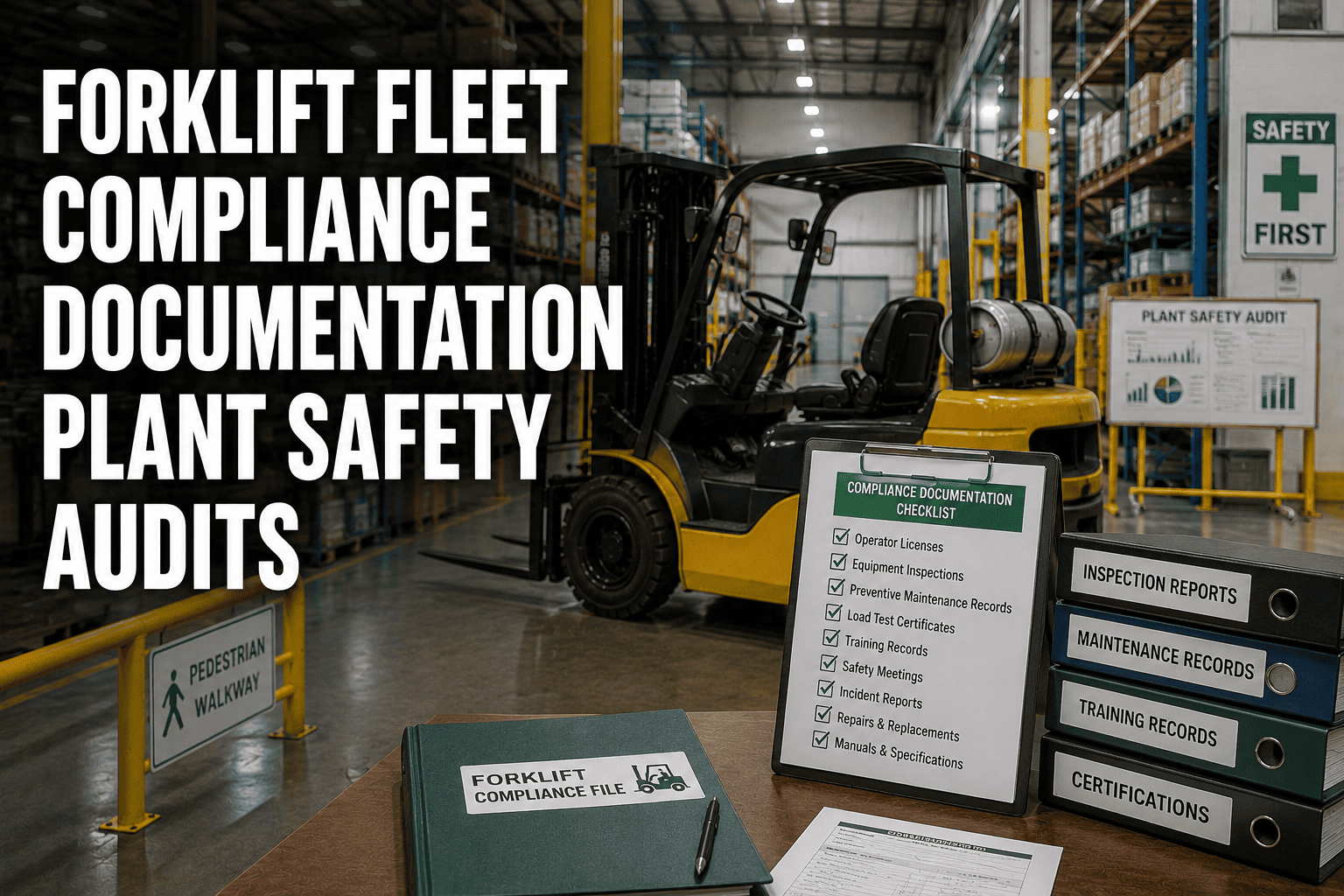
OSHA treats an attachment as part of the forklift's rated performance, which means the capacity plate, operating instructions, and maintenance program all need to reflect whatever clamp, carton grip, or push-pull unit is mounted on the truck. A generic forklift checklist that skips the attachment misses exactly the component most likely to cause product damage.
Daily Operator Checks
Before each shift, operators should confirm the clamp release interlock engages properly, check for visible hose wear or fluid leaks around the cylinders, and verify pad surfaces are free of debris or embedded material that could scuff the next roll.
Weekly Technician Reviews
Technicians should measure pad thickness against the manufacturer's wear block replacement threshold, test pressure valve response against known settings, and inspect pivot points and rotation bearings for play or unusual resistance.
Cycle-Based Overhauls
Rather than relying purely on calendar time, high-cycle clamps benefit from seal and hose replacement scheduled around actual clamp cycle counts. A truck running three shifts on a tower clamp accumulates wear far faster than one running a single shift on a light roll clamp, even if both trucks are the same age.
What Digital Fleet Management Adds for Paper and Packaging Operations
Spreadsheets and paper logs struggle to keep up with attachment-specific data across a mixed fleet of clamp trucks, carton handlers, and standard forklifts. A digital system built for this environment tracks each attachment's cycle count and pressure history separately from the base truck, flags pad wear before it reaches the point of roll damage, and gives maintenance planners a clear queue of which trucks need attention during the next scheduled downtime window instead of during a production run. Plants that move from reactive to planned attachment maintenance typically see fewer mid-shift clamp failures and less product damage tied to worn pads or miscalibrated pressure settings. If your team is still tracking clamp condition on paper, it is worth booking a walkthrough to see how this looks in practice. You can book a demo with FleetRabbit and bring your own attachment fleet into the conversation.
Frequently Asked Questions
Roll damage and mid-shift clamp failures are preventable when pad wear and hydraulic health are visible before they become a problem. See how FleetRabbit tracks attachments across your paper or packaging plant fleet, starting today.