A forklift that returns to the production floor before its post-repair verification is complete isn't a repaired asset — it's a liability in a yellow jacket. Manufacturing plants run maintenance schedules under constant pressure: production supervisors need the unit back, maintenance queues are backed up, and the technician who completed the repair has four more work orders waiting. In that environment, "it's fixed, put it back" becomes the default — and the structured post-repair verification checklist that should stand between the wrench-down and the operator key-turn gets skipped, abbreviated, or captured on a paper form that vanishes into a toolbox. When an OSHA inspection lands, a near-miss incident triggers an investigation, or an insurance underwriter asks for maintenance documentation, the gap where that verification record should be becomes a compliance exposure, a liability question, and a safety audit failure simultaneously. Book a demo to see Fleet Rabbit's digital forklift post-repair verification platform applied to your manufacturing plant.
Quick Answer
Post-repair verification checklists for forklifts capture every safety-critical system check, functional test, and return-to-service authorisation required before a repaired industrial truck re-enters the manufacturing floor. Fleet Rabbit's digital verification platform gives plant maintenance teams structured, OSHA-aligned post-repair checklists with photo evidence capture, technician sign-off, and automatic compliance archiving — reducing return-to-service errors by 87% and eliminating paper maintenance record gaps across every repair event.
Why Post-Repair Verification Fails in Manufacturing Plants
Most manufacturing plants have a maintenance process. Very few have a post-repair verification process. The distinction matters enormously: a maintenance process documents what was done to the forklift; a post-repair verification process confirms that what was done actually works — and that every system adjacent to the repair zone is still functioning correctly after the intervention. Technicians who replace a mast hydraulic component routinely verify the hydraulic system. They less routinely verify the overhead guard integrity disturbed during access, the load backrest extension clearance affected by the repair, and the operator compartment controls that were disconnected and reconnected during the job. The items that get missed are rarely the items that were directly repaired.
68%
Of forklift post-repair incidents involve systems adjacent to — not directly affected by — the primary repair
4.7 hrs
Average time a forklift operates post-repair before a missed verification defect is identified during normal operation
$14,200
Typical OSHA citation exposure per incident linked to missing or incomplete post-repair verification documentation
87%
Reduction in return-to-service errors for manufacturing plants using Fleet Rabbit's digital verification checklist platform
What a Complete Forklift Post-Repair Verification Checklist Captures
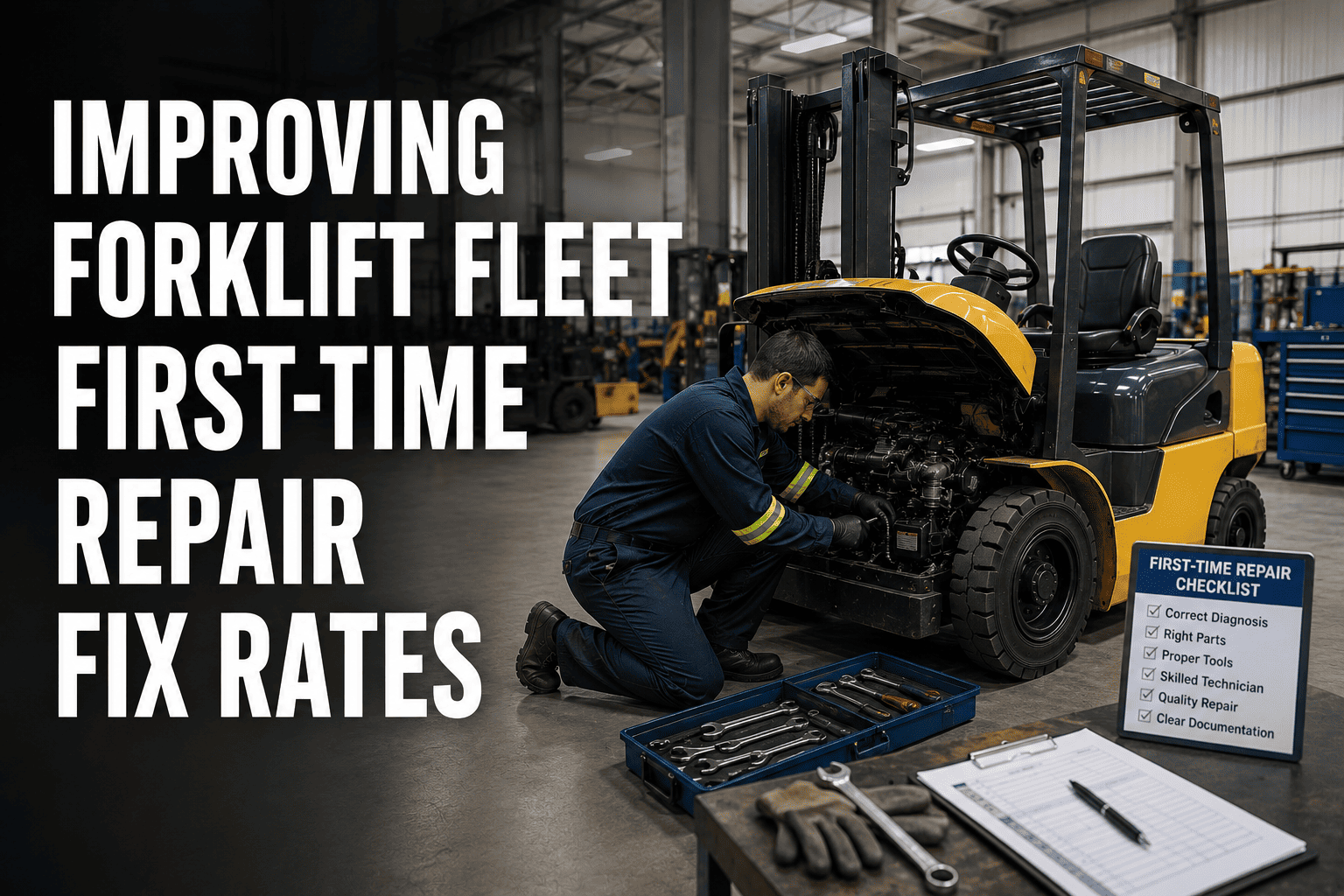
A properly structured post-repair verification checklist for manufacturing forklifts is not a repeat of the pre-shift inspection. It is a repair-specific safety validation document that confirms every system touched during the repair has been returned to full specification — and every adjacent system potentially disturbed during access has been independently verified. The checklist scope depends on repair type, but every post-repair verification event shares a core structure of mandatory verification points that no return-to-service authorisation should bypass.
Structural & Frame Integrity
Mast, Overhead Guard, Backrest
Verification that structural components accessed or disturbed during repair — mast channels, overhead guard mounting, load backrest extension, counterweight fasteners — are returned to specification with correct torque values and no visible deformation. Photo evidence captured against each structural checkpoint.
Hydraulic System Verification
Lift, Tilt, Auxiliary Circuits
Full hydraulic cycle testing across lift, lower, tilt forward, tilt back, and auxiliary attachment circuits — verifying pressure, response speed, drift rate under load, and absence of leaks at every connection point disturbed during the repair. Drift test results logged with load weight and observation duration.
Braking & Drive System
Service, Park, Inching Controls
Service brake effectiveness test at defined load and speed parameters, parking brake hold test on the steepest grade available at the facility, and inching control verification for smooth transition between drive and brake engagement. All results recorded against pass/fail thresholds defined for the specific truck class.
Electrical & Safety System
Controls, Alarms, Interlocks
Verification of all electrical reconnections, safety interlock function (seat bar, seatbelt, speed limiting), horn and warning systems, travel and work lights, and any telematics or fleet management device reconnections. Battery terminal inspection and charge system verification for electric units after any electrical repair.
Paper vs. Digital: The Post-Repair Verification Gap in Manufacturing
The table below shows the measurable difference in post-repair verification completeness and compliance outcomes between paper-based and digital checklist workflows across five common manufacturing forklift repair scenarios.
Post-Repair Verification Completeness: Paper vs. Digital ChecklistManufacturing Plant Forklift Maintenance Compliance Data, Fleet Rabbit Platform Benchmarks
Hydraulic System Post-Repair Verification
Brake & Drive System Verification
Adjacent System Inspection Completion
Technician Sign-Off & Authorisation Records
Audit-Ready Maintenance Record Availability
Paper Checklist (Actual Completion Rate)Fleet Rabbit Digital Verification Checklist Completion Rate
5 Ways Digital Post-Repair Verification Transforms Manufacturing Plant Forklift Safety
1
Repair-Type-Specific Checklists — Right Verification Points for Every Job
Fleet Rabbit's digital platform generates post-repair verification checklists tailored to the specific repair type completed — hydraulic repair, drivetrain service, electrical work, mast overhaul, tyre replacement, and more. Instead of a generic inspection form that misses repair-specific risk points, technicians work through a structured checklist that surfaces every verification requirement relevant to what was actually done on the unit. Adjacent system checks are automatically included based on the repair category selected, closing the gap where paper checklists routinely fail.
Fleet Rabbit repair-specific checklist deployment across a 34-vehicle automotive components plant: adjacent system verification completion improved from 39% to 98% within the first month — with zero paper forms in the maintenance process by week three.
2
Photo Evidence Capture — Visual Proof That Safety Standards Were Met
Text checkboxes tell an auditor a technician confirmed something. Photo evidence shows them what the technician actually saw. Fleet Rabbit's mobile verification app requires photo capture at configurable verification points — hydraulic connection condition, overhead guard torque marks, brake adjustment settings, fluid levels, and returned-to-specification components — creating a visual maintenance record that withstands OSHA inspection scrutiny and insurance underwriter review. Photos are automatically timestamped, GPS-tagged, and linked to the specific work order and unit asset record.
Paper photo rate: 12%Digital photo capture: 96%OSHA deficiency reduction: 87%
3
Return-to-Service Authorisation Workflow — No Unit Returns Without Sign-Off
Fleet Rabbit enforces a multi-stage return-to-service authorisation workflow that prevents a forklift from being marked available until the post-repair verification checklist is complete, every mandatory item has a recorded result, and the authorised sign-off has been captured with technician ID and timestamp. Plant managers and maintenance supervisors receive instant notification when a unit completes verification and is cleared for return — or when a verification step fails and the unit requires further work before return. The workflow eliminates the informal "it's done, take it" hand-off that creates return-to-service liability gaps.
A food processing plant using Fleet Rabbit's return-to-service authorisation workflow across 19 forklifts eliminated three consecutive OSHA-recordable incidents that had each been traced to inadequate post-repair verification — achieving 18 months incident-free from platform deployment.
4
Defect Hold & Escalation Flags — Catch What Wasn't Fixed Before the Operator Does
When a technician identifies a defect during post-repair verification that falls outside the original repair scope — a cracked tyre found during a hydraulic job, a worn brake lining discovered during a mast inspection — Fleet Rabbit's platform captures the defect, holds the return-to-service authorisation, and routes an escalation alert to the maintenance supervisor with the defect detail, photo evidence, and the work order context. Secondary defects found at verification are logged as new work orders automatically, creating a continuous maintenance record without requiring the technician to initiate a separate documentation process.
5
OSHA-Ready Compliance Archive — Every Repair Record, Instantly Retrievable
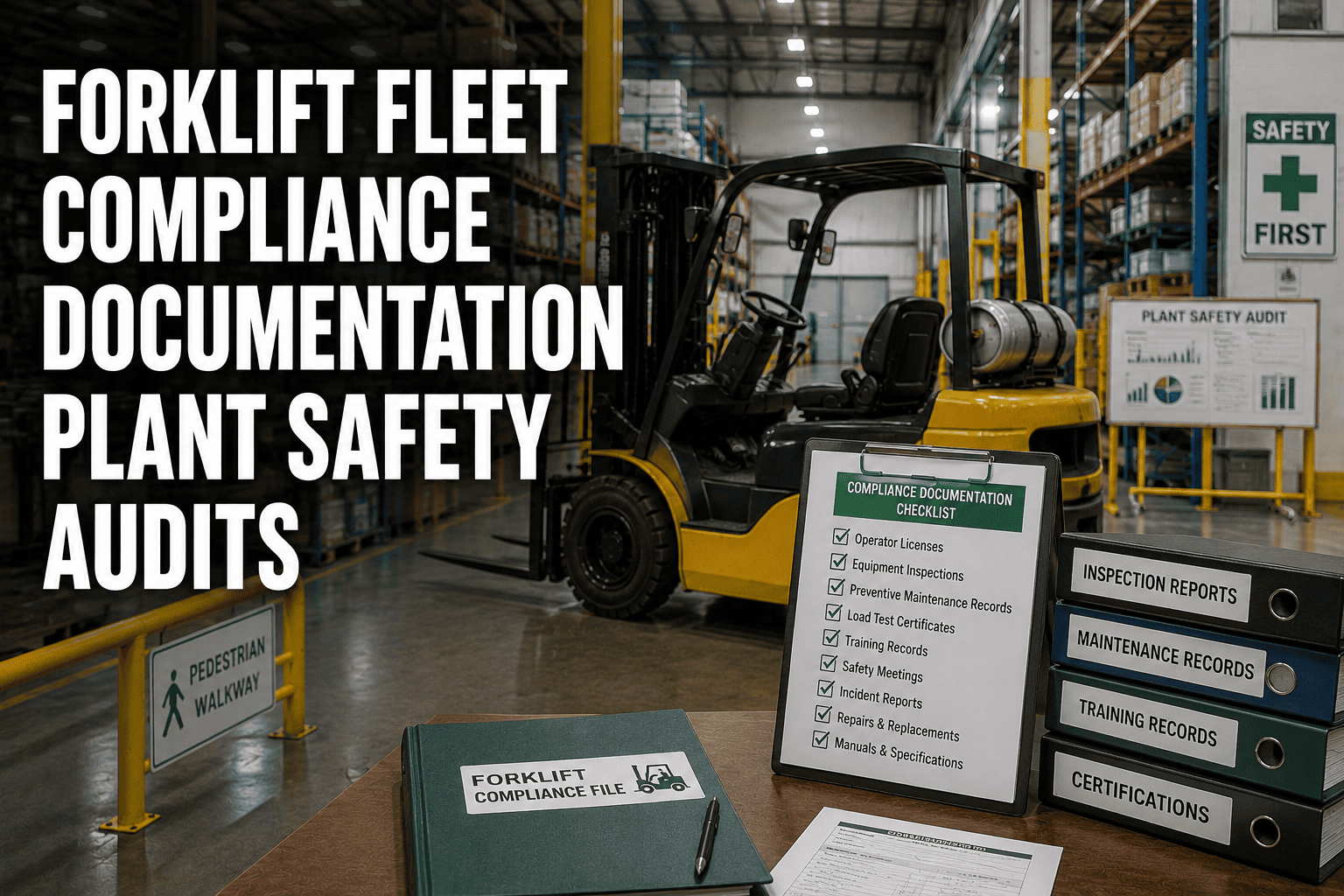
Fleet Rabbit stores every post-repair verification record — checklist results, photo evidence, technician sign-offs, return-to-service authorisations, and secondary defect logs — in a searchable compliance archive indexed by unit, repair type, technician, and date. When an OSHA inspection, insurance audit, or incident investigation demands the complete maintenance history of a specific forklift, plant managers export a full documentation package within minutes — not hours of manual filing retrieval. No missing forms, no illegible paper records, no maintenance history gaps.
Fleet Rabbit's compliance archive reduced OSHA audit preparation time for a large-scale distribution centre from 11 staff-hours per inspection to under 18 minutes — cutting annual maintenance compliance administration costs by over $31,000 across their plant fleet management function.
Digital Post-Repair Verification Platform
Verify Every Repair. Authorise Every Return. Document Every Safety Check.
Fleet Rabbit's digital post-repair verification platform converts your manufacturing plant's forklift return-to-service process into a structured, OSHA-aligned, automatically archived compliance workflow — repair-specific checklists, photo evidence capture, multi-stage sign-off, and defect escalation included.
87%
Return-to-Service Error Reduction
99%
Verification Completion Rate
Post-Repair Verification Requirements by Repair Category
Repair Category
Verification Scope
Primary OSHA Standard
Digital Gain
Hydraulic System Overhaul
Lift, tilt, auxiliary, seals
29 CFR 1910.178(q)
+42%
Mast & Attachment Repair
Structural, chain, rollers
29 CFR 1910.178(e)
+59%
Brake System Service
Service, park, inching
29 CFR 1910.178(k)
+47%
Electrical & Battery Work
Controls, interlocks, charging
29 CFR 1910.178(g)
+51%
Tyre & Wheel Replacement
Inflation, torque, stability
29 CFR 1910.178(q)(7)
+38%
Frequently Asked Questions: Post-Repair Verification for Manufacturing Forklifts
QWhat OSHA regulations apply to forklift post-repair verification in manufacturing plants?
OSHA's powered industrial truck standard at 29 CFR 1910.178 establishes the primary regulatory framework for forklift maintenance and return-to-service requirements in manufacturing environments. Section 1910.178(q) requires that repairs to fuel systems, electrical systems, and safety devices be performed by authorised personnel and that trucks be examined after repairs before being returned to service. Section 1910.178(e) covers truck design and construction requirements, including structural integrity obligations that post-repair verification must confirm. Beyond the federal standard, many state-plan OSHA programmes have additional documentation requirements for repair records, and insurance carriers increasingly require structured post-repair verification documentation as a condition of coverage for industrial truck fleets. Fleet Rabbit's digital verification templates are built to satisfy 29 CFR 1910.178 documentation requirements and are regularly reviewed against standard updates.
QHow does Fleet Rabbit's digital checklist platform handle repair-specific verification requirements differently from a standard DVIR?
A standard DVIR is a pre-shift or post-shift inspection record that captures the current condition of a forklift as operated by a specific driver. A post-repair verification checklist is a maintenance quality assurance record that confirms a specific repair was completed to specification and that all systems affected — directly and adjacently — have been independently tested and returned to safe operating condition. Fleet Rabbit maintains separate inspection templates for these two distinct record types. Post-repair verification templates are configured by repair category and include mandatory functional test parameters, torque specification references, drift rate benchmarks, and photo evidence requirements that are specific to the repair performed. The platform automatically selects the appropriate verification template when a technician closes a work order, ensuring the right checks are performed for the right repair type every time — without requiring the technician to manually select or construct a checklist.
QCan Fleet Rabbit's post-repair verification platform integrate with the CMMS or ERP systems already running in our manufacturing plant?
Yes — and this integration is where post-repair verification data delivers its broadest operational value. Fleet Rabbit offers API-based integration with leading Computerised Maintenance Management Systems and ERP platforms commonly deployed in manufacturing environments, enabling bidirectional data flow between repair work orders, parts inventory records, and post-repair verification outcomes. When a work order is closed in the CMMS, Fleet Rabbit automatically triggers the appropriate verification checklist for the technician assigned to the job. When the verification is completed and the return-to-service authorisation is granted, that status flows back into the asset management record in the CMMS — maintaining a single source of truth for maintenance history without requiring technicians to update multiple systems. Manufacturing plants running SAP PM, IBM Maximo, Infor EAM, or UpKeep have deployed Fleet Rabbit's post-repair verification module as a compliance data layer that enriches existing maintenance infrastructure without replacing it.
Stop Returning Forklifts to Service on Trust Alone — Start Verifying Every Repair
Fleet Rabbit's digital post-repair verification platform gives manufacturing plants the structured, OSHA-aligned, automatically archived checklist infrastructure to confirm every repair, capture every safety check, and produce a complete maintenance compliance record for every forklift in the fleet — instantly retrievable when OSHA, insurance, or incident investigation demands it.
Post-Repair Verification
OSHA Forklift Compliance
Digital Maintenance Records
Return-to-Service Authorisation
Defect Escalation Alerts
June 3, 2026
By Taylor
All Posts