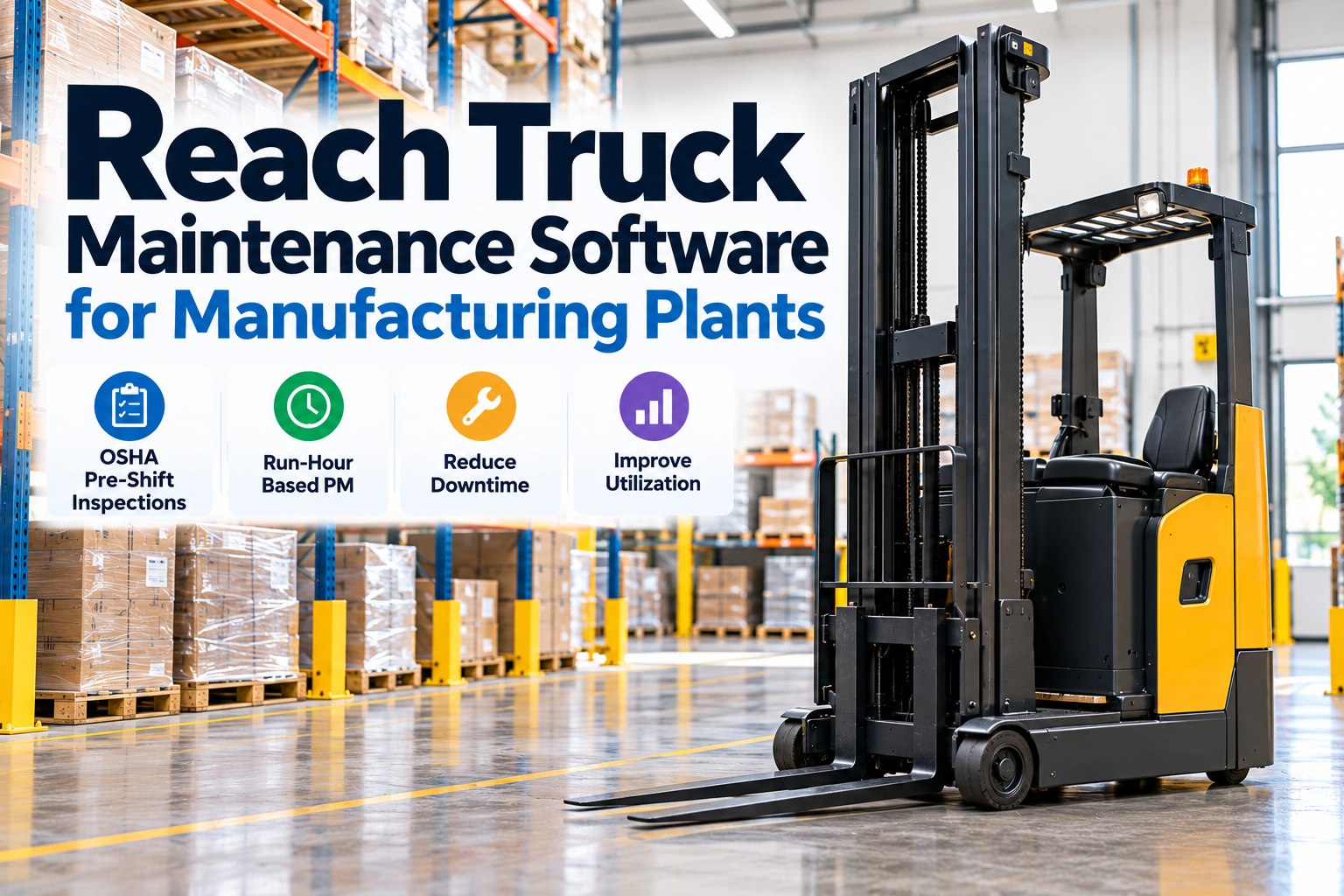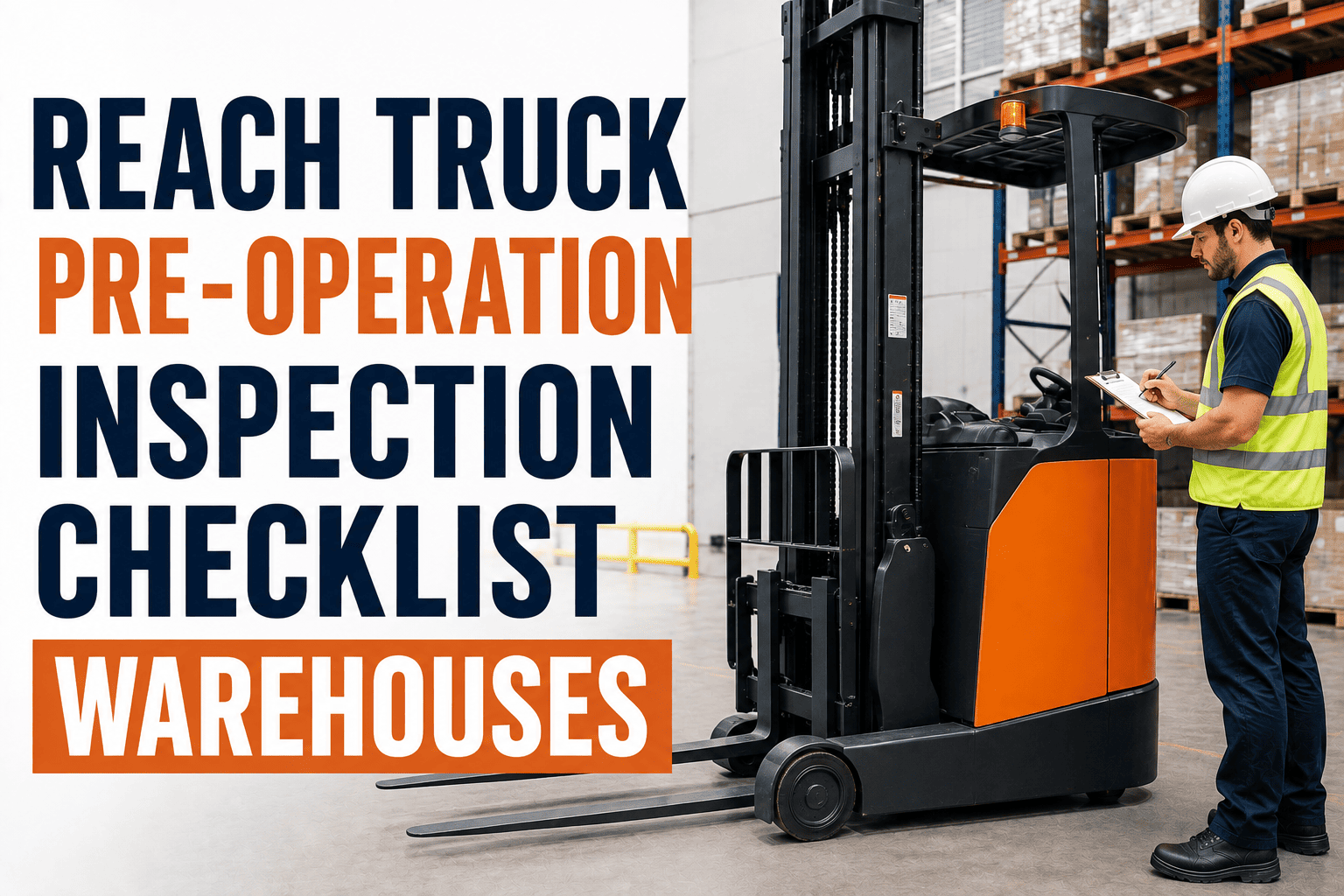
A reach truck doesn't look like a standard forklift, and it doesn't inspect like one either. There's no counterweight at the back, instead there are outrigger legs stretching out beneath the racking. There's no simple set of forks, there's a pantograph mechanism that extends and retracts like a scissor lift. And the operator isn't seated in a cab, they're standing in a compartment built for quick in-and-out movement across a shift. Every one of those differences adds an inspection point a standard counterbalance checklist simply doesn't cover. Get this checklist wrong and you're sending a truck rated to lift pallets 30 feet into narrow racking without confirming the one mechanism that makes that possible actually works.
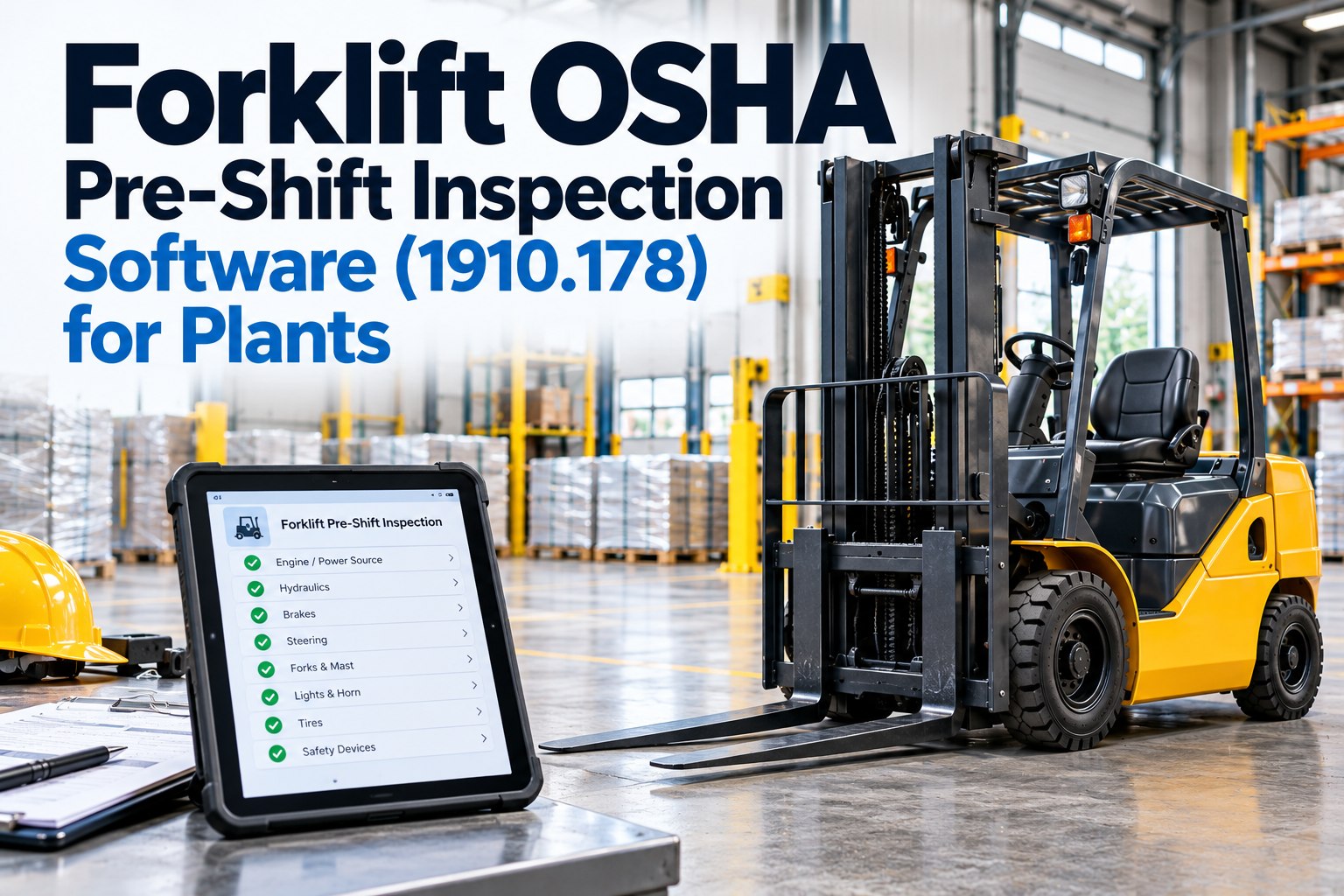
A reach truck pre-operation checklist covers everything a standard forklift check does, brakes, steering, hydraulics, tires, and safety devices, plus three items unique to reach trucks: the outrigger legs that stabilize the truck under high-level loads, the pantograph reach mechanism that extends and retracts the forks, and the mast's smooth travel through its full lift range, which can exceed 30 feet. Any defect in the reach mechanism or outriggers should take the truck out of service immediately, since both are load-bearing systems the truck depends on for stability.
What Makes A Reach Truck's Inspection Different
Reach trucks trade a counterweight for a narrower footprint, which is exactly what lets them work in aisles as tight as 8 to 10 feet. That trade-off means the components holding the truck stable and doing the actual reaching need their own dedicated checks.
Structural Checks Before The Truck Powers On
Functional Checks Once The Truck Is Powered
If The Reach Mechanism Or Outriggers Fail, The Truck Stays Parked
Both systems are load-bearing. A reach truck with a sticking pantograph or a cracked outrigger leg isn't a minor inconvenience, it's a stability risk the moment a load goes up to height.
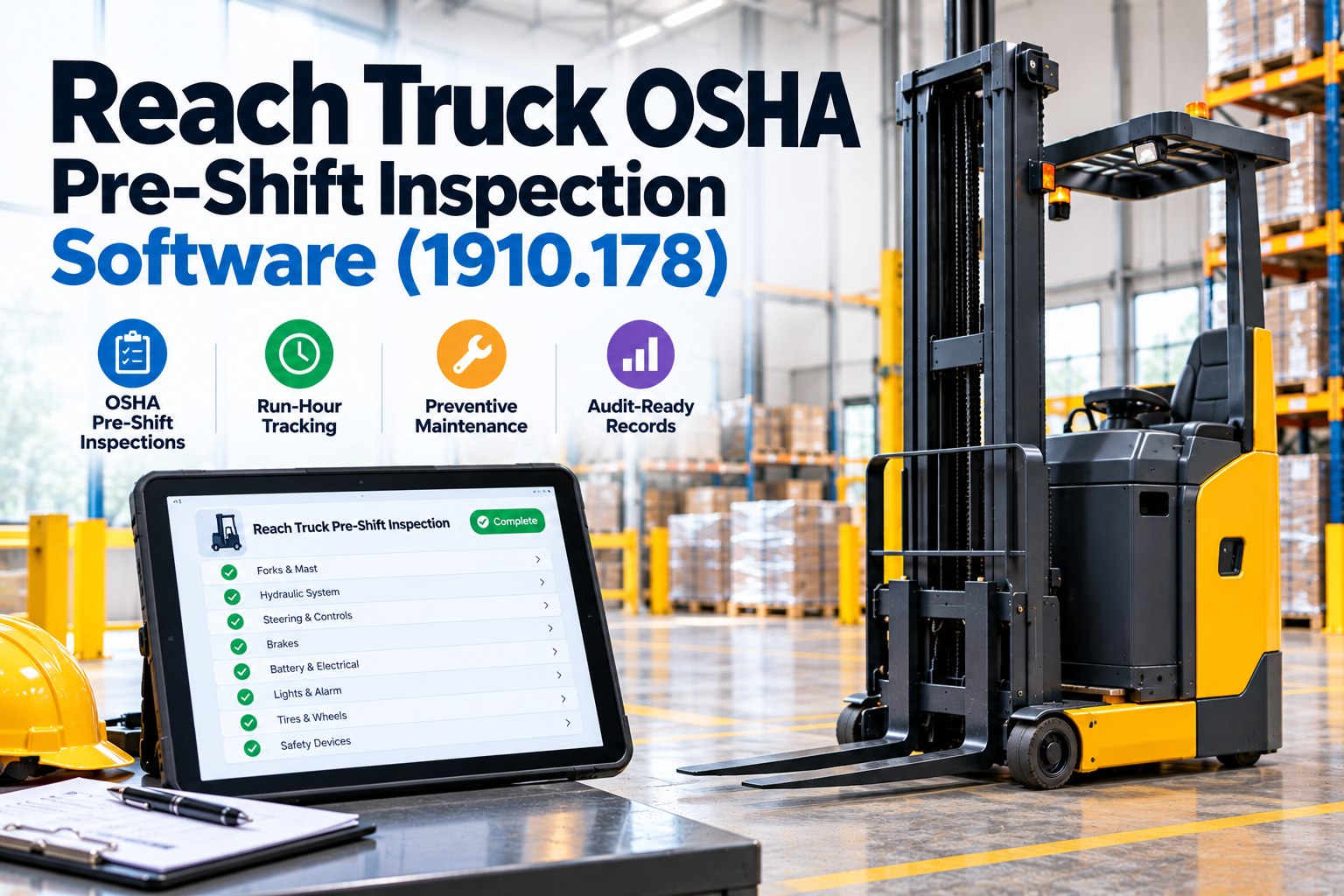
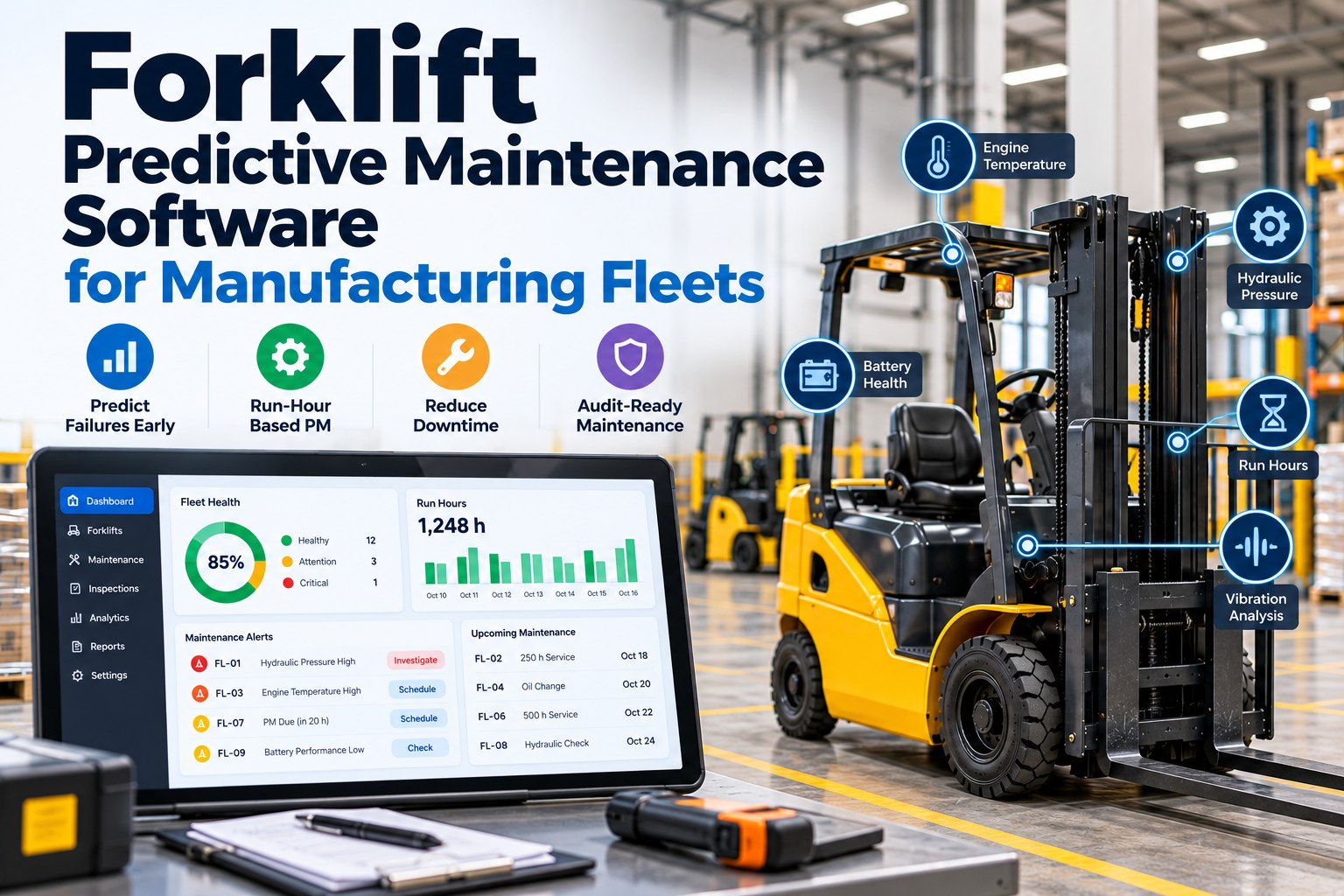
FleetRabbit guides operators through outrigger, reach mechanism, and mast checks alongside the standard items, flags failures instantly, and keeps every record ready for review. Sign up free to run your first digital inspection, or book a demo to see it set up for your fleet.
Height Changes The Stakes
A standard forklift rarely lifts far above eye level. A reach truck routinely works at 30 feet or more, placing pallets two or three deep in racking. That height is exactly why the pre-operation checklist matters more here than on almost any other warehouse vehicle.
Narrow Aisles Leave No Room For a Missed Defect
Reach trucks are built to work in aisles as tight as 8 to 10 feet, which means there's little clearance to correct for a truck that isn't handling the way it should. A steering issue or a slow-responding brake that might be manageable in a wide aisle becomes a real hazard in a space that narrow.
| Check Type | Standard Forklift | Reach Truck |
|---|---|---|
| Stability System | Counterweight, checked as part of overall structure | Outrigger legs, requiring a dedicated check for cracks and wheel condition |
| Fork Movement | Forks move with the mast only | Pantograph mechanism extends and retracts independently, needing its own functional test |
| Operator Position | Seated cab with a standard seat belt check | Stand-up compartment with a presence sensor that cuts power when vacated |
| Lift Height | Typically well under 20 feet | Often 30 feet or more, making load capacity charts a daily reference point |
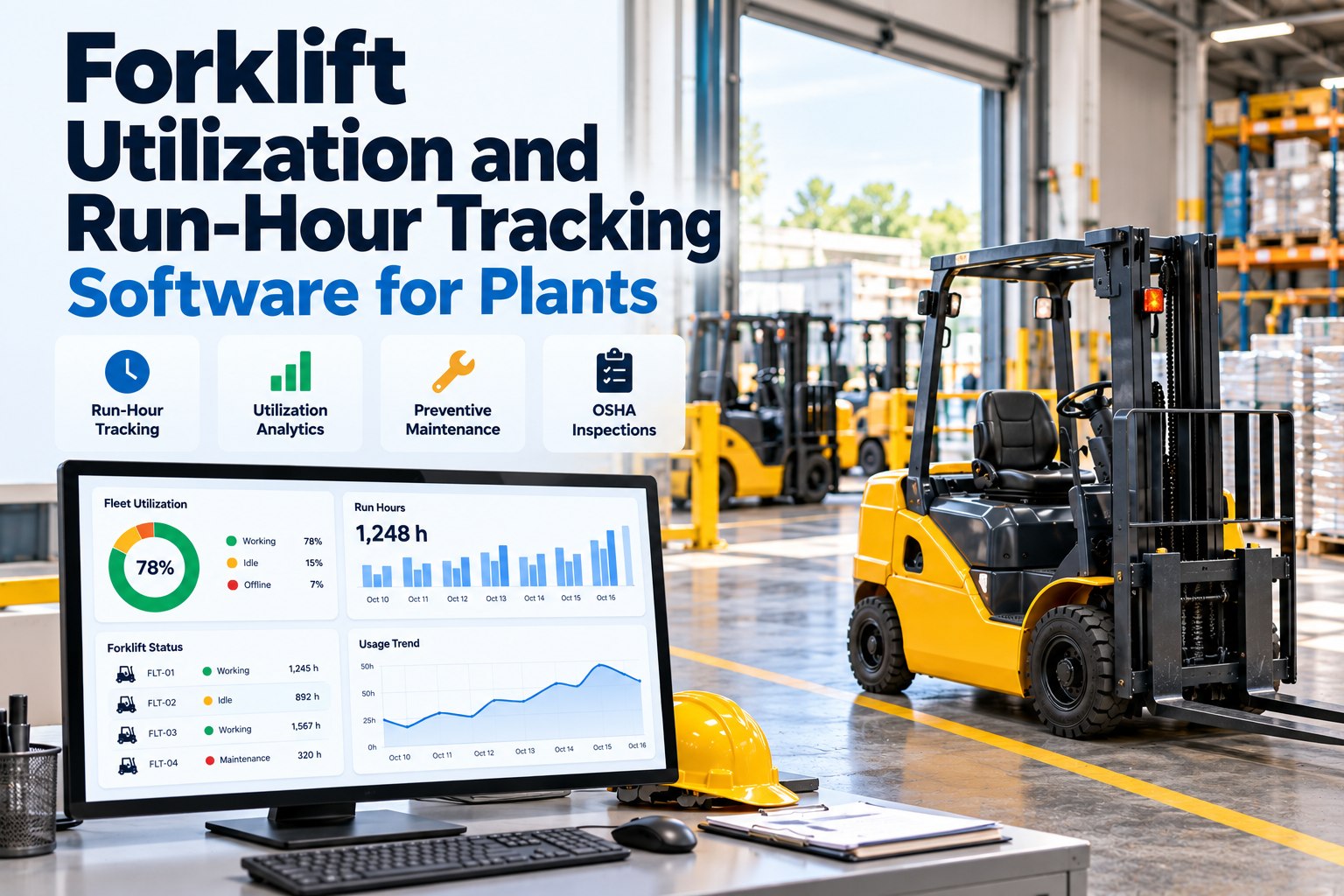
FleetRabbit ties every reach truck inspection to the operator and vehicle, timestamps the result, and keeps the record ready for review at any time. Get started with a free sign-up, or book a 30-minute demo to walk through it with your own fleet.
Frequently Asked Questions
The Bottom Line
Reach trucks earn their place in narrow-aisle, high-racking warehouses precisely because of what makes them different from a standard forklift, the outriggers, the pantograph reach mechanism, and the stand-up compartment. Those same differences are exactly what a pre-operation checklist has to account for. Checking the standard items and skipping the reach-truck-specific ones leaves the parts most responsible for stability at height completely unverified.
FleetRabbit turns this checklist into a guided digital inspection covering outriggers, reach mechanism, and mast alongside every standard item, with results stored and ready for review. See it running on your own fleet with a free trial or a live walkthrough.