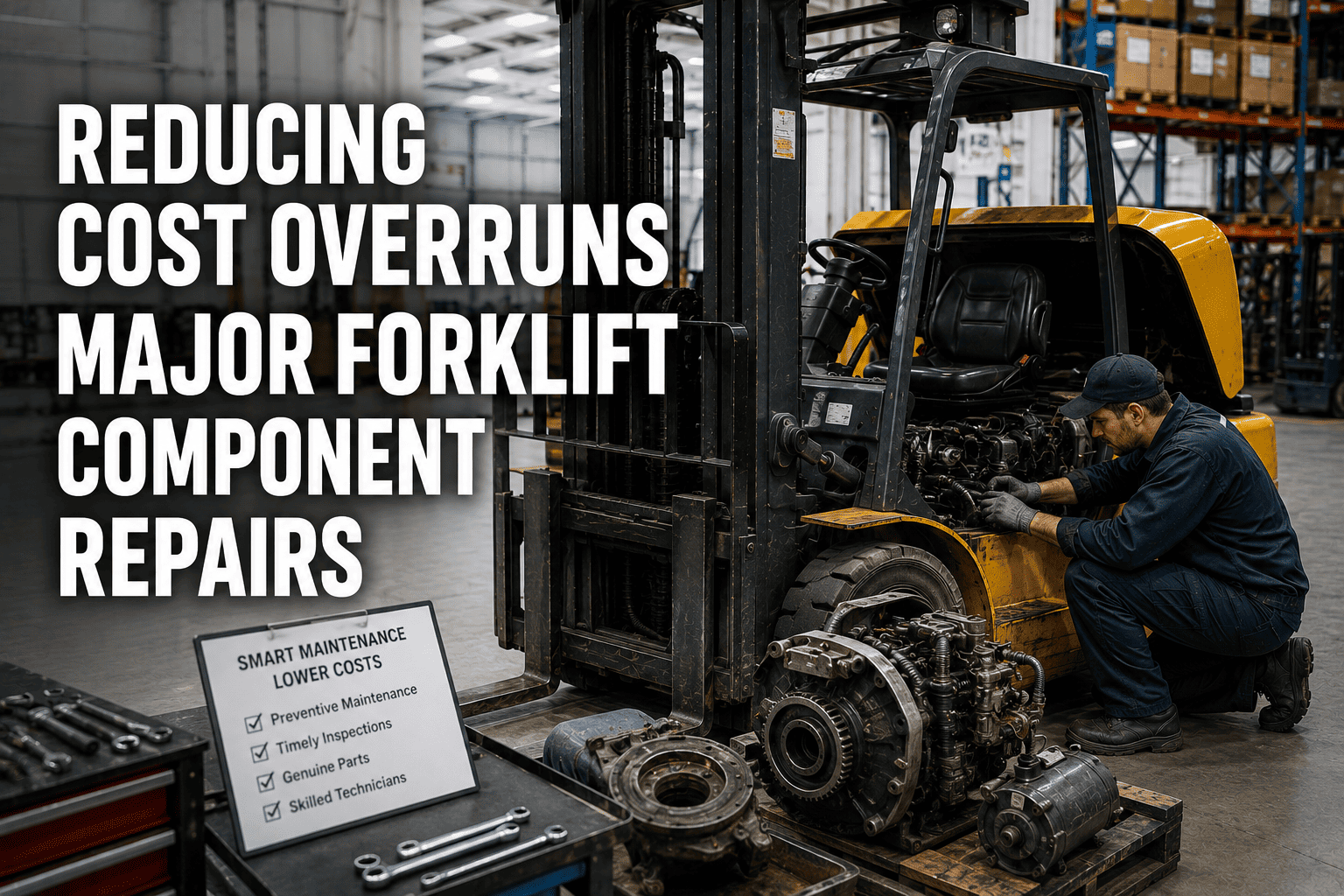
Every plant manager has a version of this story: a forklift goes in for what should be a $2,000 transmission repair, and the truck comes back three weeks later with a $6,500 invoice. Nobody lied about the estimate. The shop found more damage once they opened it up, the part took longer to source than expected, and the labor hours quietly doubled. Major component repairs are where forklift maintenance budgets actually break, and most plants never see the overrun coming because nobody is tracking the one number that predicts it: how many hours that component has actually run.
Cost overruns on major repairs — engines, transmissions, masts, hydraulics — almost always come from the same three causes: repairs done reactively after failure, scope that grows once the shop opens the unit, and no historical data to challenge the estimate. Tracking component hours and repair history turns a surprise bill into a planned capital expense. FleetRabbit gives you that data automatically, per truck, per component.
Where Major Repair Budgets Actually Blow Up
An overrun rarely comes from one bad decision. It comes from a handful of predictable gaps that show up in almost every plant's repair history.
Reactive Timing
A component that fails completely almost always costs more to fix than one caught early. Waiting for total failure turns a rebuild into a full replacement.
Scope Creep Once the Unit Is Open
A shop with no prior relationship or authorization limit tends to recommend the maximum repair it can justify once it has the mast or transmission apart, and there is rarely internal data on hand to question it.
No Component Hour Tracking
Calendar-based service intervals miss the trucks running heavy double shifts. A component budgeted for replacement at year three might actually need it a year earlier — and nobody flagged it.
Missing Repair History
Without records of what a similar repair cost last time, on a similar truck, there is no baseline to compare the current estimate against. Every quote is negotiated from zero.
What Major Component Repairs Typically Run
Costs vary by truck type and market, but the ranges are consistent enough to plan around — as long as you know which components are approaching risk before the invoice arrives.
| Component | Typical Repair Range | What Drives the Overrun |
|---|---|---|
| Engine (major repair) | $3,000 - $8,000+ | Full teardown reveals additional worn internals |
| Transmission overhaul | $1,800 - $5,000 | Clutch pack or valve body work found mid-rebuild |
| Mast repair or rebuild | $1,500 - $5,000+ | Chain, bushing, or cylinder wear discovered on disassembly |
| Hydraulic system | $2,000 - $5,000 | Contaminated fluid damaging pump and cylinders |
| Drive motor / controller | $2,000 - $6,000 | Electrical diagnostics extending labor hours |
FleetRabbit tracks component hours, repair history, and cost-per-hour across your fleet, so you walk into every major repair conversation with the data to challenge scope creep. Start your free trial and see which components on your fleet are approaching their next major repair.
The Fix: Track Component Hours, Not Just Calendar Time
Move From "Price-Per-Service" to "Cost-Per-Hour"
A truck's maintenance cost only means something in context of how hard it works. Tracking cost per operating hour reveals which units are quietly draining your reserves long before the next major repair hits.
Flag Components Approaching Risk, Not Just Trucks Due for Service
A transmission or mast has its own wear curve independent of the truck's overall service schedule. Component-level tracking catches the part that is actually close to failure, instead of waiting for a blanket interval.
Build a Repair History You Can Negotiate With
When you can show a shop what a comparable repair cost on a comparable truck last time, "we found more damage" stops being an automatic budget increase and starts being a conversation.
Building Capital Planning Around Real Repair Data
Set a Cost-Per-Hour Threshold for Retirement
Once a truck's maintenance cost consistently exceeds a set dollar figure per operating hour, it has likely entered the point where repair spend should shift toward replacement planning instead of one more major fix.
Reserve Budget by Fleet Value, Not Guesswork
Setting aside a percentage of fleet value each year for unscheduled major repairs gives finance a predictable number to plan around, instead of an emergency line item that appears without warning.
Review Every Major Repair After the Fact
Comparing the final invoice against the original estimate on every major job builds the internal benchmark data that makes the next estimate easier to evaluate. Teams that book a demo often start by mapping this exact history against their current fleet, which usually reveals which trucks are heading toward their next expensive repair.
Every untracked component is a future invoice with no baseline to question it. FleetRabbit gives your plant the component-level data to catch problems early, plan capital spend accurately, and walk into every repair conversation prepared.