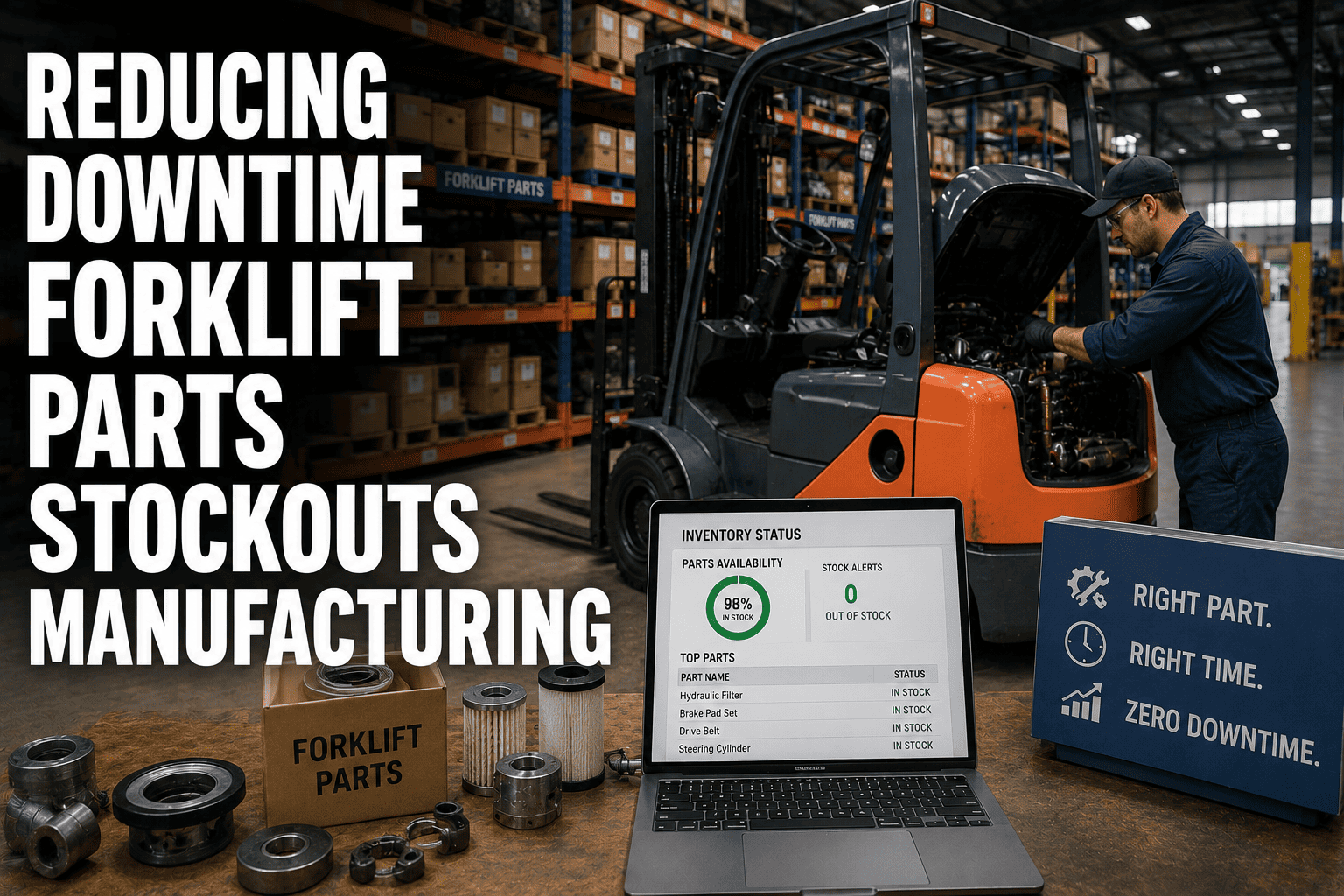
In a manufacturing plant, a broken forklift is bad, but a broken forklift with no spare parts is a disaster. A parts stockout turns a quick 30-minute fix into a production-stopping outage that lasts days. Reducing downtime from forklift parts stockouts requires linking failure history directly to inventory management. FleetRabbit ensures the spares that prevent downtime are always stocked. You can sign up for FleetRabbit to modernize your inventory, or book a demo to see our platform.
Over 30 percent of forklift downtime is extended by parts stockouts. A missing 50-dollar hose can stall a truck for 3 days, costing the plant thousands in lost production. Linking failure history to inventory management reduces stockout downtime by 70 percent, ensuring the right spares are always on the shelf.
The True Cost of Forklift Parts Stockouts
The true cost of forklift parts stockouts extends far beyond the price of the missing component. When a forklift goes down and the required part is not on the shelf, the financial damage ripples across the entire manufacturing operation. The immediate loss of productivity is obvious, but secondary costs often exceed the primary impact. The production line reliant on that forklift stalls, backing up work and delaying outbound shipments. Mechanics are forced to shift focus, wasting diagnostic time waiting for parts to arrive. Furthermore, emergency parts sourcing bypasses normal procurement channels, forcing dealers to charge premium pricing and expedited freight fees.
Why Parts Rooms Fail
Parts rooms fail because they are managed reactively rather than proactively. A plant manager orders parts only after a truck breaks down. This ensures the truck will be down for days while the part ships. Furthermore, parts rooms are often disconnected from the maintenance software. A mechanic has no visibility into what is on the shelf without physically walking to the room and checking. When the inventory system and the maintenance system are separate, parts are not ordered based on actual failure history, leading to blind stocking and constant stockouts.
The Danger of Reactive Inventory
The danger of reactive inventory is that it guarantees extended downtime. If a forklift needs a new set of forks and they are not in stock, the truck is parked until they arrive. A 2-hour repair becomes a 3-day outage. Reactive inventory also leads to hoarding. Mechanics, knowing the parts room is unreliable, will hide critical spares in their toolboxes, destroying the plant's inventory accuracy. To stop this, you can sign up for FleetRabbit to modernize your inventory, or book a demo to see our platform.
FleetRabbit links your failure history to your parts inventory, ensuring the spares you actually need are always on the shelf. Stop paying for expedited shipping and keep your forklifts moving. Start your free trial today to modernize your parts room.
Strategies for Predictive Parts Management
Predictive parts management requires a fundamental shift from reactive ordering to data-driven stocking. The first strategy is linking failure history to inventory. When a specific model of forklift repeatedly needs a certain hydraulic hose, the system should automatically flag that hose for higher stocking levels. The second strategy is setting automated reorder points. When parts inventory drops below a minimum threshold, the system should generate a purchase order instantly. The third strategy is using data to stock the right spares, ensuring the parts room is organized around the active fleet's actual needs.
| Stockout Scenario | Downtime Impact | Root Cause | FleetRabbit Solution |
|---|---|---|---|
| Tire Replacement | 2 to 4 days | No visibility into tread wear tracking | Automated tire wear alerts and reorder triggers |
| Hydraulic Hose | 3 to 5 days | Reactive ordering after a blowout | Failure history linked to hose inventory levels |
| Fork Chain | 1 to 2 days | No PM schedule for chain stretch | PM-triggered parts ordering before failure |
| Contact Bar | 1 to 2 days | Electric truck spares not tracked | Battery health monitoring linked to spares |
| Filters & Fluids | 1 day | Bulk ordering missed during PM surge | Automated reorder points based on PM schedule |
Linking Failure History to Inventory
Linking failure history to inventory is the most critical step in eliminating stockouts. A failure history database connects every work order ever written for a specific forklift to the parts used on that truck. When a mechanic opens a work order, the system knows exactly what parts are required based on past data. If a truck comes in for a brake issue, the system instantly checks the inventory level for brake pads. If the stock is low, the system generates a purchase order immediately. This connection ensures the parts room is always stocked with the items the fleet actually needs, not just what someone guessed would be useful.
Automated Reorder Points
Automated reorder points remove the human error from inventory management. Instead of a parts manager walking the aisles with a clipboard to see what is low, FleetRabbit tracks every part in real-time. When a mechanic pulls a hydraulic hose off the shelf, the system decrements the inventory. If the quantity falls below the minimum threshold, the system automatically generates a purchase order to the supplier. This automation ensures the shelf is restocked before the next failure occurs, completely eliminating the blind spot that causes stockouts.
Using Data to Stock the Right Spares
Using data to stock the right spares means analyzing failure patterns across the entire plant. FleetRabbit's dashboard analyzes work order data to find high-frequency failures. If a specific model of forklift across the plant is experiencing chain stretch, the data proves that extra chain links should be stocked. This allows the maintenance director to order a bulk supply of the right parts, rather than guessing and ordering parts for trucks that are no longer in service. To implement this, you can sign up for FleetRabbit to modernize your inventory, or book a demo to see our platform.
How FleetRabbit Prevents Stockouts
FleetRabbit is engineered to connect the maintenance bay directly to the parts room. Our platform combines work order management, failure history databases, and real-time inventory tracking into a single dashboard. We understand that a stockout is a failure of the system, not just the parts room. Our system links the exact part required for a repair to its current shelf quantity, ensuring mechanics know if a part is available before they even start a diagnosis. By connecting the tech to a centralized inventory, FleetRabbit eliminates the blind spots that lead to extended downtime.
Integrated Parts Catalog
An integrated parts catalog means a mechanic never works in a vacuum. When a work order is generated for a specific forklift, the FleetRabbit system instantly pulls up the parts diagram for that exact model. The mechanic can see the required component and instantly see if it is in stock. This context is invaluable for accurate diagnostics and repair planning. Instead of pulling a truck apart only to find the part is missing, the mechanic knows the part is ready before turning a wrench, saving hours of wasted diagnostic time.
Predictive Parts Alerts
Predictive parts alerts ensure maintenance directors catch systemic issues before they cause stockouts. If a specific forklift receives a third work order for a hydraulic leak, FleetRabbit automatically sends an alert to the parts manager. The system flags the specific hoses and seals used in that repair, ensuring they are ordered in bulk before the next failure occurs. This automated oversight prevents the slow budget drain of expedited shipping and keeps the fleet running at maximum reliability.
Key Takeaways for Plant Uptime
Reducing downtime from forklift parts stockouts is the most critical step in maximizing manufacturing uptime and protecting the maintenance budget. Relying on reactive ordering and disconnected parts rooms is a guaranteed way to stall production lines. A data-driven, predictive approach to inventory ensures the right spares are on the shelf before a failure occurs. Fleets that fix this process see a massive reduction in repair costs and a huge boost in asset availability.
Implementing a comprehensive platform like FleetRabbit links failure history to inventory, sets automated reorder points, and provides predictive parts alerts. The return on investment is immediate, not just in saved expedited shipping fees, but in eliminated line downtime and extended asset lifecycles. Manufacturing plants demand reliability, and FleetRabbit provides the exact digital tools needed to deliver it.
The path forward is clear. Evaluate your current parts room and ask how many times a truck has been parked waiting for a spare this month. If you are relying on reactive ordering, you are losing money. Plant managers who address inventory systematically protect their profitability and operational reliability. You can sign up for FleetRabbit to modernize your inventory, or book a demo to see our platform.
Frequently Asked Questions About Parts Stockouts
Every parts stockout is a failure of inventory management that stalls your production line. FleetRabbit links failure history to inventory, ensuring the spares you need are always on the shelf. See a 70 percent reduction in stockout downtime within weeks. Start your free trial today with no credit card required.