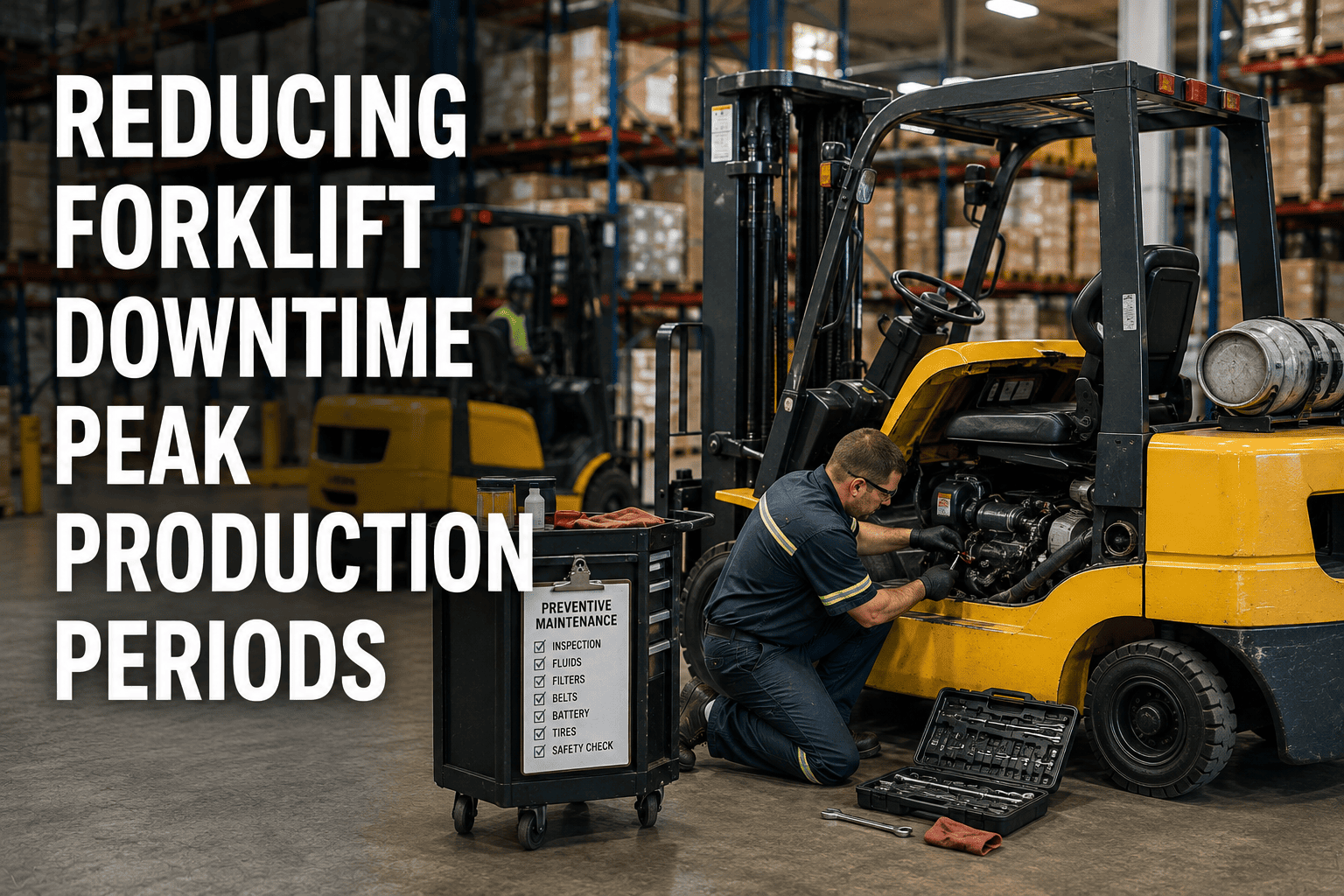
Peak production season has a way of finding every weak point in a fleet at once. The forklift that's been running a little rough for weeks finally quits the day order volume triples. The technician who could normally fix it in an hour is already buried under three other calls. And the production line that fed off that truck sits waiting, because nobody planned maintenance around the one week of the year when there's no room for it to fail. Reducing forklift downtime during peak production isn't about reacting faster once the surge hits. It's about front-loading the work before the surge starts.
Plants that run reactive maintenance into peak production see breakdown rates climb 25 to 40 percent during high-volume weeks, right when line stoppage costs run 2,000 to 8,000 dollars per hour. Front-loading PM visits, staging spare parts, and pulling marginal trucks out of rotation two to three weeks before peak cuts in-season breakdowns by roughly a third and keeps repairs off the critical path when it matters most.
Why Peak Production Is The Worst Time For A Forklift To Fail
A forklift breakdown during a normal production week is an inconvenience. The same breakdown during peak production is a chain reaction. Line stoppage costs during high-throughput periods commonly run 2,000 to 8,000 dollars an hour, and that number climbs the moment the truck that fails is the one feeding a bottleneck station rather than sitting in reserve. Unlike a slow week, there's no spare capacity to reroute the work to, so the delay compounds through the shift instead of getting absorbed by it.
The Compounding Effect Of A Single Breakdown
A forklift that goes down at ten in the morning during peak doesn't cost the plant the time it takes to fix it. It costs the time it takes to fix it, plus the backlog that builds while it's out, plus the overtime needed to clear that backlog, plus the knock-on delay to whatever shipment was depending on that production run finishing on schedule.
Why Reactive Maintenance Fails At The Worst Moment
Reactive maintenance already runs on borrowed time even in a normal week, catching problems after they surface instead of before. Peak production removes the margin that made that acceptable, because technicians who could normally get to a developing issue within a day are now stretched across a fleet running at full capacity with no buffer left in the schedule.
FleetRabbit flags which trucks are trending toward failure weeks before peak production starts, so you can service them on your terms instead of the line's. You can start a free trial before your next peak season begins.
The Three-Phase Peak Readiness Timeline
Plants that keep uptime high through peak production treat it as a three-phase window rather than a single event: the weeks before, the surge itself, and the recovery after.
| Phase | Timing | Primary Focus | Key Action |
|---|---|---|---|
| Pre-Peak | 2 to 3 weeks before surge | Clear the maintenance backlog | Complete every open PM and flagged repair before volume climbs |
| Peak Window | During the surge itself | Protect uptime, not fix problems | Monitor condition alerts and hold non-critical PM until volume drops |
| Post-Peak | 1 to 2 weeks after surge | Recover deferred maintenance | Service every truck run hard during peak before the next cycle begins |
Front-Loading Maintenance Before The Push
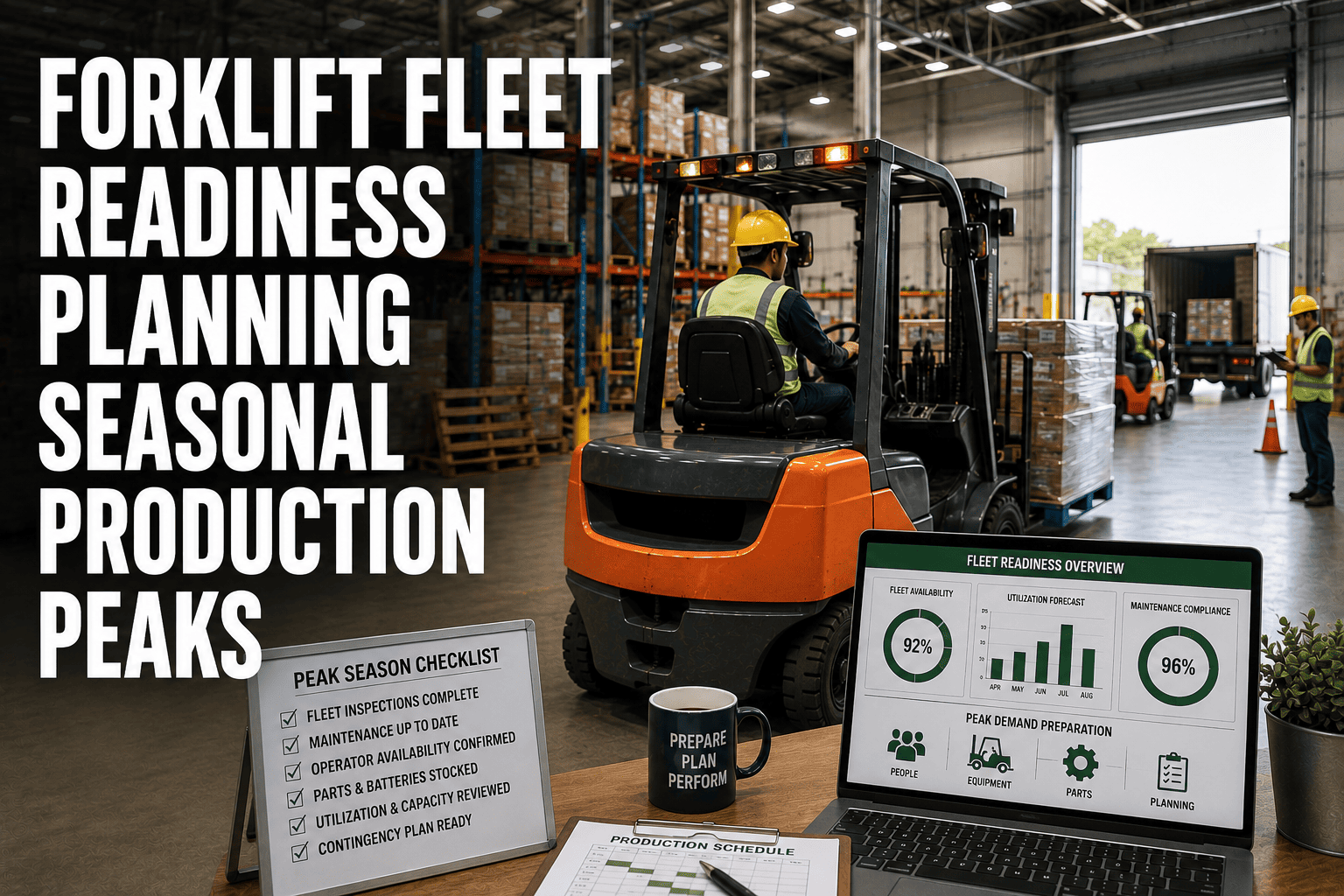
The single highest-leverage move a plant can make is finishing every open service item before peak volume arrives, rather than letting it slide into the surge window.
Clear the PM backlog first
Any truck with an overdue or upcoming service should be pulled and completed in the two to three weeks before peak, not scheduled for the middle of it.
Bench the marginal trucks
Units showing early wear signs, fault codes, or borderline hour counts should either be serviced immediately or rotated to lighter-duty tasks so a heavier-use truck can take the critical route.
Confirm technician availability in advance
Peak weeks are exactly when maintenance staff get pulled into other priorities, so locking in coverage before the surge starts prevents a shortage exactly when it would hurt most.
Staging Parts And Spares For The Surge
Even a front-loaded fleet needs a stocked shop, because peak-week failures that do happen can't wait on standard parts lead times.
Build A Peak-Specific Parts List
Pull the last two years of peak-season repair records and stock ahead of time for whichever components failed most, rather than relying on your normal reorder point.
Pre-Position Backup Units
Where the budget allows, staging one or two rental or reserve trucks near the highest-throughput lines gives maintenance a swap-in option instead of a scramble if a critical unit does go down.
FleetRabbit surfaces fault codes, run-hour trends, and wear patterns in real time, so you know exactly which trucks to service, bench, or replace before peak production locks in your schedule. You can book a demo to see your fleet's peak-readiness score.
What To Track During Peak Week Itself
Once the surge starts, the goal shifts from fixing problems to catching them before they become stoppages.
Real-Time Fault Alerts
Hydraulic pressure drops, battery degradation, and drivetrain fault codes should route straight to the maintenance team the moment they appear, not wait for the next scheduled inspection.
Utilization Balance Across The Fleet
Watching which trucks are absorbing the heaviest share of peak volume lets you rotate load away from a unit trending toward failure before it actually stops.
Deferred Work Log
Anything non-critical that gets pushed past its normal interval during peak needs to be logged and scheduled immediately for the post-peak recovery window, not forgotten once volume drops.
The plants that stay running through peak season aren't the ones with the newest forklifts. They're the ones who front-loaded maintenance, staged parts, and knew which trucks needed attention before the surge started. FleetRabbit gives you that visibility weeks in advance.