Ask most plant safety coordinators what eats their week and the answer rarely involves forklifts breaking down. It's the paperwork around them — daily pre-shift checklists collected shift after shift, certification files that need chasing before they expire, and the scramble to pull twelve months of inspection records the moment an OSHA auditor walks in. None of that work prevents an accident by itself. It just has to get done, over and over, by people who were hired to keep a plant running, not to file forms.
The good news is that this particular problem has a clean fix. Forklift compliance paperwork is repetitive, rule-based, and time-stamped by nature, which makes it one of the easiest processes in a plant to automate without changing how your team actually works. Here's what the paperwork burden really costs your team, and what it looks like once it's off their plate.
That gap represents roughly 75 to 80 percent of compliance admin time recovered, per week, per safety coordinator.
Where Compliance Paperwork Actually Eats Your Team's Week
OSHA doesn't leave forklift documentation optional. Under 29 CFR 1910.178(q)(7), every powered industrial truck needs a documented inspection before each shift, and that requirement alone generates a steady stream of paper across a multi-shift plant. Add certification renewals, incident logs, and periodic audits, and the hours add up fast.
Daily Pre-Shift Inspections, Multiplied by Every Unit and Every Shift
A single paper checklist takes an operator a few minutes to complete, but someone still has to collect it, read it, flag defects, and file it before it becomes useful to anyone. Multiply that across 20, 40, or 80 forklifts running two or three shifts, and a safety coordinator is processing hundreds of paper forms a week just to confirm the inspections happened at all.
Certification Tracking That Depends on Someone Remembering
OSHA caps refresher training at a three-year maximum interval, and most well-run programs schedule renewals closer to 30 months to leave room for scheduling delays. Tracking that manually across dozens of operators means a spreadsheet someone has to check, update, and chase down before a certification quietly lapses.
Audit Prep That Turns Into a Multi-Day Scramble
When an OSHA audit or insurance review is scheduled, someone has to physically locate the right inspection records, confirm they're complete, and organize them by date and unit. That process alone can consume between twenty and forty hours of safety staff time for a single audit cycle, time pulled directly away from the floor. If your team recognizes that scramble, it's worth seeing what a digital record system looks like — you can book a demo and walk through your own audit prep process with a FleetRabbit specialist.
FleetRabbit turns pre-shift inspections, certification tracking, and audit records into a system that updates itself, so your team spends its time on the floor instead of the filing cabinet.
What Automating Forklift Compliance Paperwork Looks Like
Automation here doesn't mean replacing your safety process. It means the same daily inspection, the same certification rules, and the same audit trail, minus the manual collecting, sorting, and re-entering that currently sits between the work happening and someone being able to prove it happened.
Operators inspect from their phone, not a clipboard
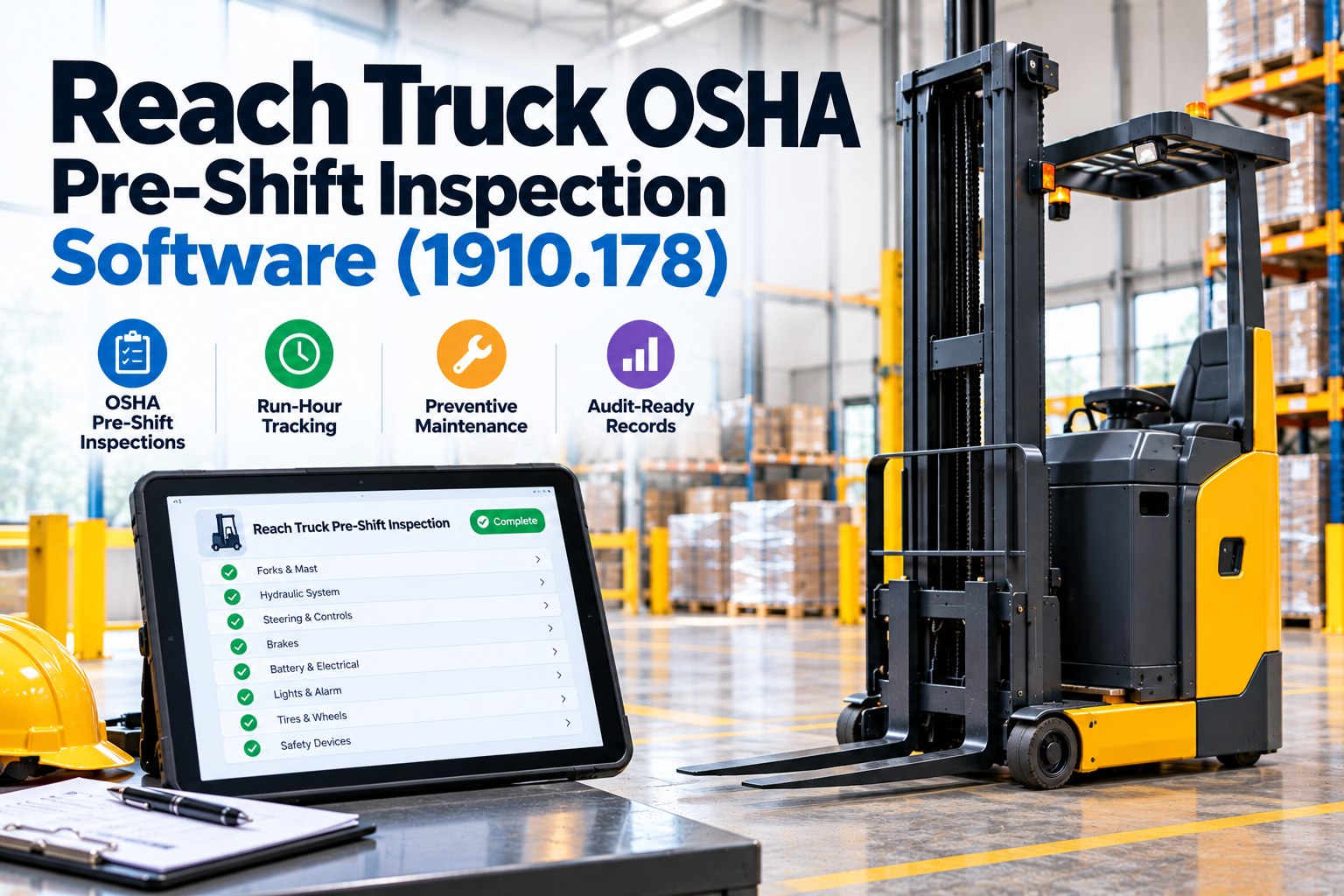
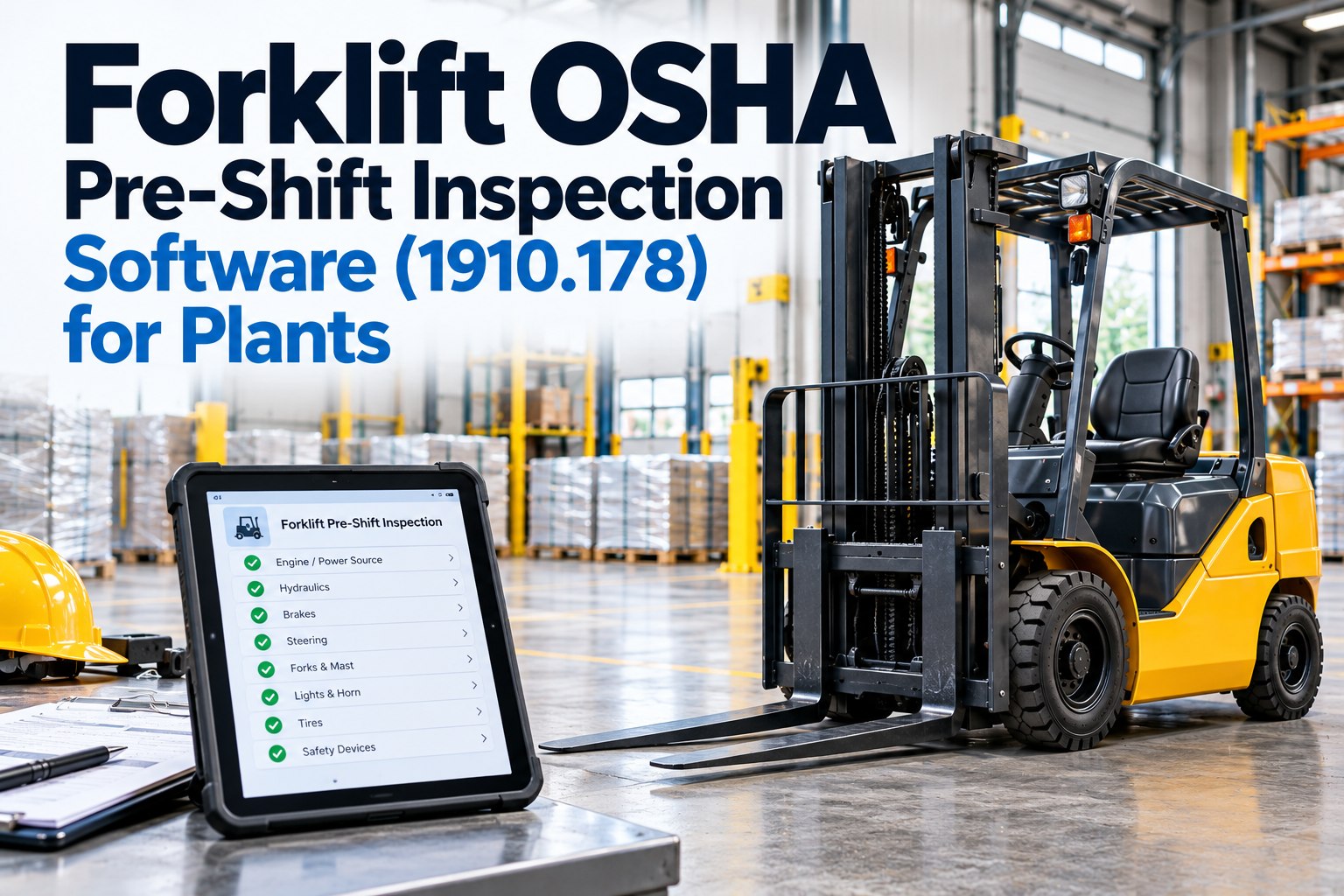
A pre-shift inspection completed on a mobile device is time-stamped, GPS-tagged, and instantly attached to that specific unit's history, removing the multi-day gap between an inspection happening and anyone being able to see it.
Defects trigger action instead of sitting in a folder
When an operator flags a problem, the right person is notified immediately instead of finding out when someone finally reads through a stack of forms at the end of the week.
Certifications renew themselves on a schedule, not a memory
Automated alerts flag every operator approaching their renewal window well before the three-year OSHA ceiling, so certification lapses stop being something your team has to remember to check for.
Every record is audit-ready before the audit is scheduled
Instead of assembling records under deadline pressure, a digital system keeps every inspection, certification, and maintenance record organized and retrievable in minutes, not days.
One Plant's Compliance Week, Two Ways
A 45-forklift plant running three shifts previously spent roughly 13 hours a week on inspection collection, certification spreadsheets, and record filing, split across a safety coordinator and a floor supervisor. After moving pre-shift inspections and certification tracking onto FleetRabbit, that same plant reports closer to 2.5 hours a week reviewing flagged issues and confirming renewals, with every record already organized for the next audit. The paperwork didn't disappear. It just stopped requiring a person to move it by hand.
The Cost of Incomplete Records When an Audit Arrives
Paperwork that falls behind isn't just an inconvenience. Studies on paper-based safety forms have found completion rates below 70 percent, meaning roughly one in three forms is missing information, unsigned, or backdated without anyone catching it until it matters.
| Compliance Gap | What It Costs |
|---|---|
| Serious OSHA Violation | Fines up to $16,550 per violation |
| Willful or Repeat Violation | Fines up to $165,514 per violation |
| Manual Record Retrieval | 20 to 40 hours of safety staff time per audit cycle |
| Incomplete Paper Forms | Over 30 percent found missing information or signatures in industry studies |
| National Recordkeeping Burden | Over 2.1 million hours a year across U.S. employers, per OSHA's own estimate |
None of these figures require an accident to happen. They're the cost of paperwork falling behind on a normal week, long before anyone gets hurt. Facilities that switch to digital inspection tracking report compliance rates above 95 percent, compared to 60 to 70 percent under paper systems, along with audit response times roughly 50 percent faster. If your team is ready to see what that looks like on your own fleet, you can sign up and connect your first units in a single afternoon.
Frequently Asked Questions
FleetRabbit automates inspection records, certification tracking, and audit reports so your safety team spends less time filing and more time keeping the floor safe.