A brand new forklift rolling off the delivery truck looks like added capacity the moment it arrives. In practice, it often sits for days or weeks before it moves a single pallet, caught between delivery and the paperwork, inspections, and training that have to happen before it can safely enter service. That gap between arrival and first productive shift is commissioning, and when it drags on, a plant ends up paying for capacity it cannot actually use.
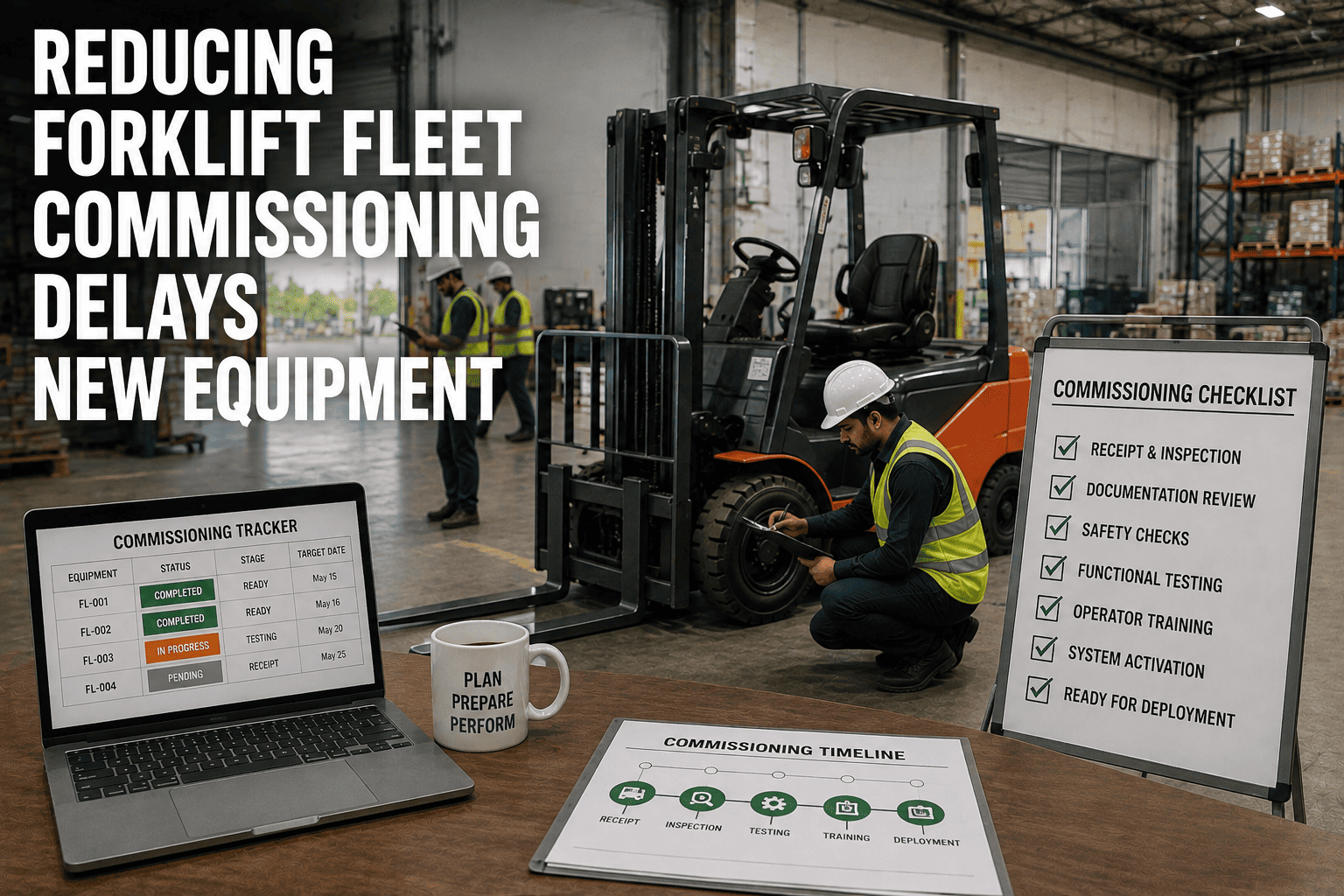
Forklift commissioning covers seven phases: delivery verification, physical inspection, safety system checks, fluid and consumable confirmation, digital asset record setup, operator training, and final sign-off. Equipment that skips any of these steps and enters service anyway starts accumulating untracked hours, missing maintenance history, and warranty risk from its very first shift. Plants that structure commissioning as a defined workflow, rather than a loose set of tasks someone gets to eventually, consistently get new trucks into production faster.
The Commissioning Phases That Actually Determine Speed
A structured commissioning process breaks down into a handful of distinct phases, each with its own checks. Understanding what each phase actually verifies makes it clear which steps can move in parallel and which cannot be rushed.
Delivery Verification And Physical Inspection
Before anything else happens, the truck that arrived has to match what was ordered: make, model, serial number, and configuration checked against the purchase order and dealer invoice. A physical inspection follows, confirming the equipment arrived in the condition specified and that fluids, tires, and attachments are ready for service.
Safety System Validation
Horns, lights, backup alarms, seatbelt interlocks, and other safety systems need to be confirmed functional before an operator ever gets behind the controls. This step exists specifically to catch anything that would otherwise only surface during actual operation.
Digital Asset Record Setup
Every new truck needs a record in the fleet management system before it starts accumulating hours: serial number, purchase or lease details, and an initial preventive maintenance schedule tied to the manufacturer's recommendations. Skip this step and the truck starts its working life with no documented history to build on.
Operator Training And Final Sign-Off
The specific operator assigned to the truck needs training on that particular machine, not just a general forklift certification, since load capacity, controls, and handling characteristics vary by model. A final sign-off confirming every phase is complete is what actually releases the truck for productive work.
FleetRabbit walks each new truck through delivery verification, inspection, digital record setup, and training sign-off in a single tracked workflow, so nothing gets missed and nothing sits waiting. Sign up to commission your next forklift digitally, or book a demo to see the workflow in action.
What Happens When Commissioning Gets Skipped
The pressure to get a new truck moving pallets quickly is real, and it is tempting to let it enter service before every step is formally closed out. The consequences of that shortcut tend to show up later, often at a worse time than the delay would have cost.
| Commissioning Step Skipped | What Happens Instead | Where The Cost Shows Up Later |
|---|---|---|
| Digital Asset Record | Hours and usage accumulate with no tracked baseline | Maintenance scheduling starts blind, missing the manufacturer's actual service intervals |
| Safety System Check | A malfunctioning alarm or interlock goes unnoticed until it fails in use | A safety incident traces back to a check that was never completed |
| Model-Specific Operator Training | A generally certified operator runs an unfamiliar truck without model-specific instruction | Higher risk of handling errors on a truck whose controls the operator has not actually learned |
| Final Sign-Off | No single point confirms every phase actually closed out | Gaps only surface when an audit or an incident forces a look back |
Cutting Commissioning Time Without Cutting Steps
The fastest commissioning process is not the one that skips phases, it is the one that runs them efficiently and in parallel wherever possible, rather than as a sequential chain that stalls whenever one person is unavailable.
Run Independent Checks In Parallel
Physical inspection and digital record setup do not have to wait on each other. Structuring commissioning so unrelated steps happen at the same time, rather than one after another, removes a meaningful chunk of the delay without skipping anything.
Make The Workflow The Default, Not An Extra Task
A commissioning checklist that lives in a shared document is easy to forget under pressure. A commissioning workflow that a truck cannot exit until every step is confirmed makes the process the default path rather than something a busy team has to remember to do.
A Fast-Start Commissioning Sequence
Verify delivery details against the purchase order immediately on arrival, run the physical and safety inspection the same day, create the digital asset record and maintenance schedule before the truck ever moves a load, and schedule model-specific operator training as early in the process as possible rather than as the last step. Sign up for a free trial to start commissioning your next truck this way, or book a demo to see the full workflow walked through.
Frequently Asked Questions
Every day a new truck sits waiting on paperwork is capacity your plant has already paid for and cannot use. FleetRabbit turns commissioning into one tracked workflow, from delivery verification to final sign-off, so new equipment reaches production without the delay.