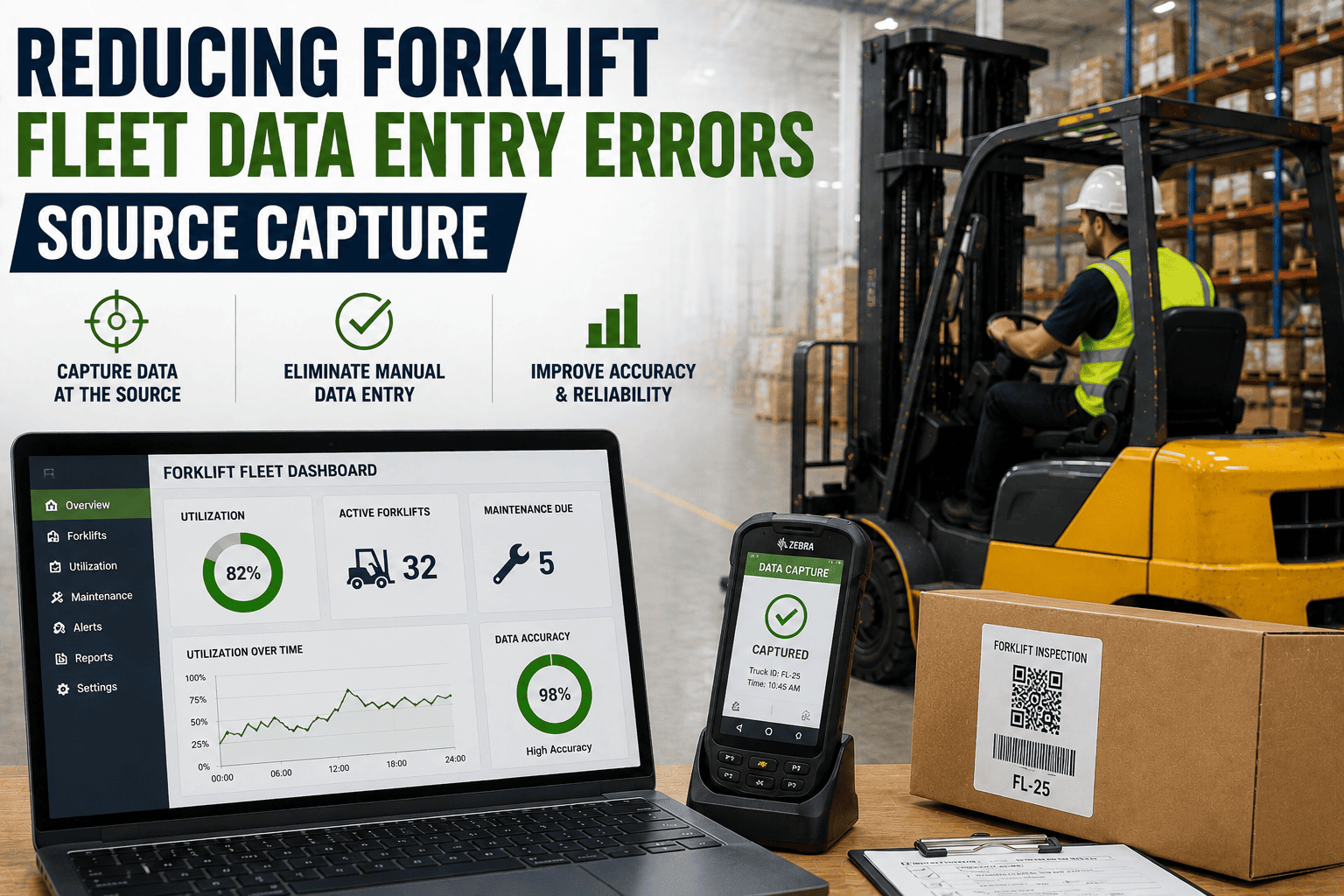
A forklift inspection happens on paper. Later, someone types it into a spreadsheet. Later still, someone else copies numbers from that spreadsheet into a maintenance system. By the time a fleet manager pulls a report, the data has passed through three human hands, and every hand is a chance to write down the wrong truck number, misread a smudged checkbox, or skip a field entirely. This isn't a rare mistake. It's the normal outcome of manual data entry, and it's why so many fleet records quietly drift away from what actually happened on the floor. Source capture fixes this by recording inspection, hour meter, and impact data at the exact moment and place it occurs, so nothing gets retyped, reinterpreted, or lost along the way.
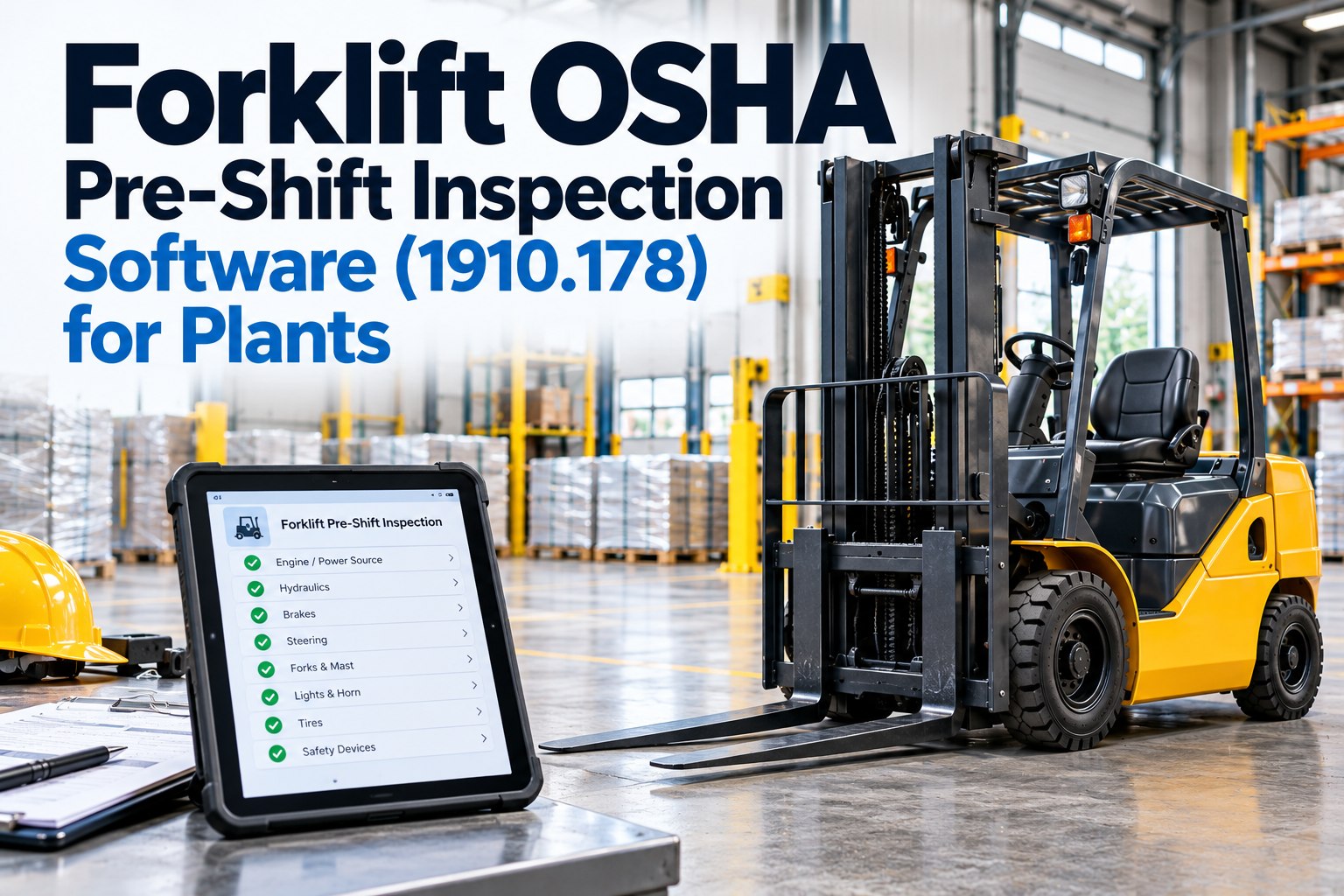
Source data capture means recording forklift inspection results, run-hours, and impact events digitally at the point they happen, instead of writing them on paper and typing them into a system later. Manual transcription in high-frequency logging environments typically produces error rates between 1 and 3 percent, which on a busy fleet can mean several wrong values entering the record every single day. Capturing data at the source removes that retyping step entirely, so what's in the system matches what actually happened.
How A Wrong Number Ends Up In Your Records
Data entry errors rarely happen because someone is careless. They happen because manual processes force information through too many hand-offs before it reaches a system that can act on it.
Why This Matters More Than It Seems
A single wrong entry looks harmless. But when errors like these repeat across hundreds of inspections a month, they quietly distort maintenance trends, mask early warning signs of wear, and generate false alerts that make teams stop trusting the system altogether.
Three Places Data Should Be Captured At The Source
The Common Thread
In each case, the person doing the work never has to type a truck number, a date, or an hour reading by hand. The system already knows which vehicle, which operator, and when, so the only thing left to enter is the actual observation.
FleetRabbit records inspections, hour meters, and impact events directly from the forklift and the operator's device, so nothing gets rewritten by hand. Sign up free to try it on your own fleet, or book a demo to see a source-captured inspection in action.
Manual Entry Versus Source Capture
| Data Point | Manual Entry Risk | Source Capture Result |
|---|---|---|
| Truck Identity | Wrong vehicle number written or selected from a list | Auto-filled from a scan or device pairing, never typed |
| Inspection Result | Illegible handwriting or a skipped checklist item | Structured digital fields with required responses before submission |
| Hour Reading | Misread gauge or a number transposed while writing it down | Logged directly from the vehicle's own meter, no reading involved |
| Impact Event | Never reported, or reported hours later from memory | Detected and timestamped automatically the moment it happens |
| Timing | Backdated or batch-entered at the end of a shift | Recorded with the exact timestamp of the actual event |
What Clean Records Make Possible
Accurate, source-captured data does more than avoid embarrassing mistakes in a report. It's what lets predictive maintenance schedules, safety trend analysis, and compliance audits actually work, because every one of those depends on trusting that the number in the system reflects what really happened on the truck.
FleetRabbit ties every inspection, hour reading, and impact event to the right truck and operator automatically, so your maintenance and safety records stay accurate without extra admin work. Get started with a free sign-up, or book a 30-minute demo to see it on your current fleet.
Frequently Asked Questions
The Bottom Line
Fleet data doesn't become unreliable because people are bad at their jobs. It becomes unreliable because it passes through too many manual steps between the moment something happens and the moment it's recorded. Capturing inspections, hour readings, and impact events at the source removes those steps entirely, so the record in your system is the same as what actually happened on the floor. That accuracy is what every downstream decision, from maintenance scheduling to safety coaching, ultimately depends on.
FleetRabbit captures inspection, hour, and impact data straight from the source, so your forklift records stay accurate without anyone retyping a single number. See it running on your own fleet with a free trial or a live walkthrough.