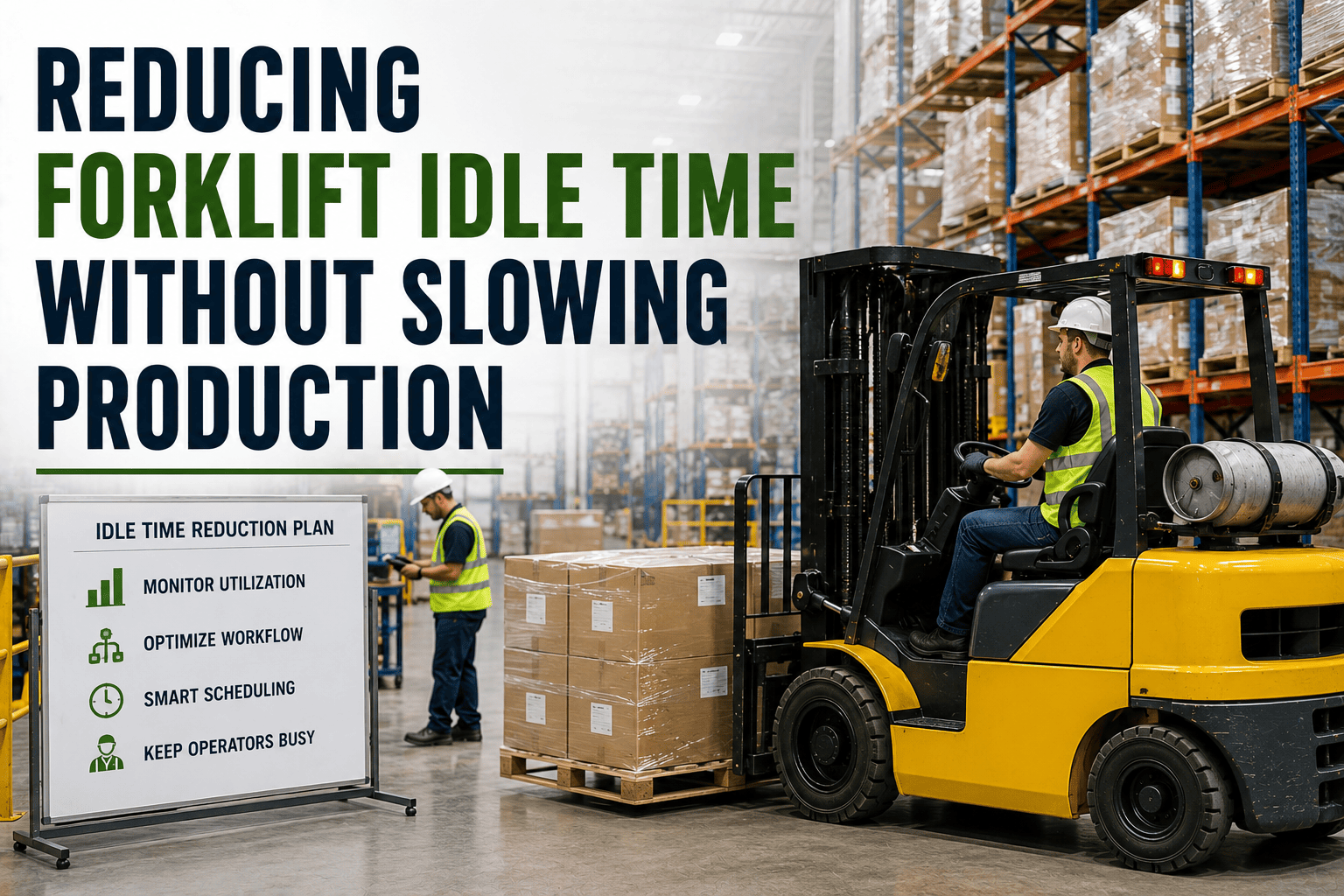
Walk any warehouse floor and you will see it: a forklift parked at a dock, engine running or motor humming, operator waiting on the next pallet. Nobody planned for that truck to sit there burning fuel or battery charge, it just happens dozens of times a shift, in small stretches that rarely get questioned individually. Add them up across a fleet and idle time becomes one of the largest hidden costs in material handling, quietly consuming energy, accelerating wear, and shortening battery life without moving a single pallet. The instinct is to cut idle time everywhere, but that backfires fast if it means operators rushing between tasks or trucks powering down when they are genuinely needed on standby. The real goal is separating the idle time that waste from the idle time that keeps production flowing.
North American forklift fleets average roughly 46.9 percent utilization, which means a typical truck spends more than half its shift not actively moving product, a mix of genuine standby and pure waste. Idle electric forklifts still draw standby power and drain battery charge, while idle internal combustion units burn fuel directly with zero output. Cutting unnecessary idle time, without touching the standby time production genuinely depends on, is one of the fastest ways to lower energy cost and extend equipment life without slowing anything down.
Not All Idle Time Is the Problem
The word "idle" gets used for two very different situations, and treating them the same is how idle-reduction efforts end up disrupting production instead of helping it. Some standby time is doing real work: it keeps a truck ready the instant the next pallet needs moving. Other idle time is pure waste, minutes stacking into hours with no operational purpose at all.
- Truck staged near a dock waiting for the next scheduled load
- Brief pause between cycles that keeps response time low
- Short waits built into a coordinated, high-throughput workflow
- Truck left running during a break, meeting, or shift change
- Long waits caused by poor task sequencing or unclear assignments
- Engine or motor left on well after the task is genuinely finished
Why the Distinction Actually Matters
Cutting productive standby to zero usually just moves the delay somewhere else, forcing operators to rush or wait on a truck that powered down too soon. Cutting wasted idle time removes cost without touching output at all, since none of that time was contributing to production in the first place. The fleets that see real savings are the ones measuring which kind of idle time they actually have before trying to reduce it.
What Idle Time Actually Costs
Idle time rarely shows up as its own line item on a budget, which is exactly why it survives unnoticed for so long. It hides inside fuel spend, energy bills, and maintenance costs instead.
FleetRabbit separates productive standby from wasted idle automatically, so you can target the minutes that are actually costing you without touching the ones production depends on. Sign up free and see your fleet's idle breakdown today.
How Idle Time Behaves by Power Type
The cost and risk of idling depends heavily on what powers the truck. Knowing the difference shapes which reduction strategy actually works for your fleet.
| Power Type | What Idle Time Costs | Best Reduction Strategy |
|---|---|---|
| Internal Combustion | Continuous fuel burn with zero output while running | Shut down the engine during any wait longer than a few minutes |
| Electric (Lead-Acid) | Standby power draw plus shortened battery life from frequent shallow charging | Reduce unnecessary standby time and avoid repeated partial charges |
| Electric (Lithium-Ion) | Lower standby draw, tolerates opportunity charging without damage | Use short opportunity-charging windows during natural breaks instead of full shutdowns |
Four Ways to Cut Idle Without Slowing Production
Why Operator Behavior Alone Rarely Solves It
Reminding operators to shut down idle trucks helps, but habits fade without visibility to reinforce them. A dashboard that flags which units are idling longest, and for what reason, turns a one-time training session into an ongoing, self-correcting process instead of a policy that quietly erodes after the first few weeks.
FleetRabbit flags trucks idling past your threshold in real time, by unit, zone, and shift, so operators and supervisors can act on it immediately instead of finding out at month end. Book a free demo to see how it works on your own fleet.
How FleetRabbit Tracks Idle Time Automatically
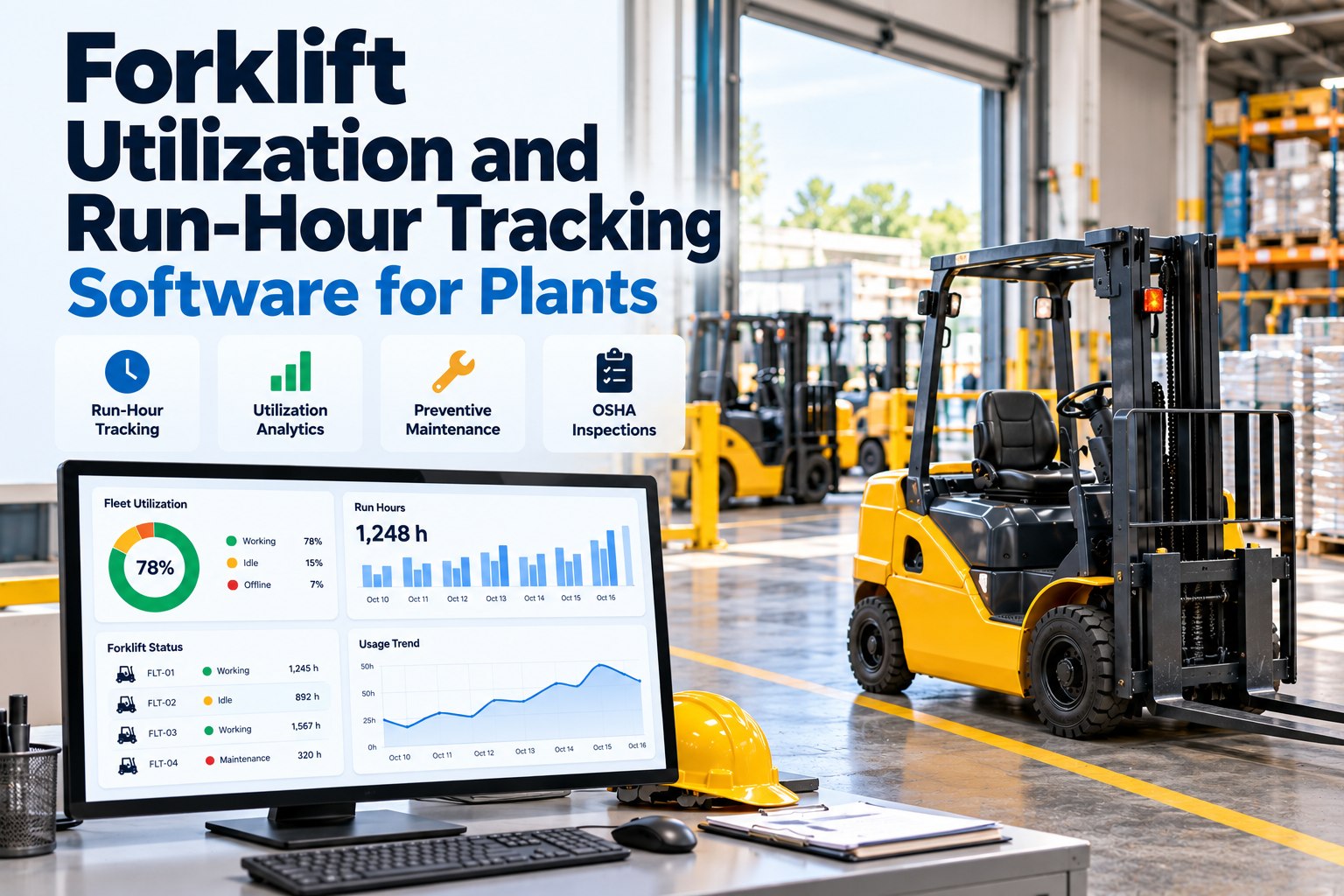
Manually spotting wasted idle time means walking the floor or reviewing engine-hour reports after the fact, long after the fuel or charge is already gone. FleetRabbit connects to telematics on every forklift to track idle minutes continuously, distinguishing standby time tied to an active task from idle time with no operational purpose. Supervisors see which trucks, zones, and shifts are driving the most waste, and can set threshold alerts so a truck idling too long gets flagged before it becomes a habit. You can start a free trial to connect your fleet in minutes, or book a demo to see idle time broken down for your own operation.
Frequently Asked Questions
Wasted idle time hides in plain sight, spread across dozens of small stretches every shift. FleetRabbit gives you the visibility to separate the idle time production needs from the idle time that's just quietly costing you, so you can cut the waste without slowing anything down.