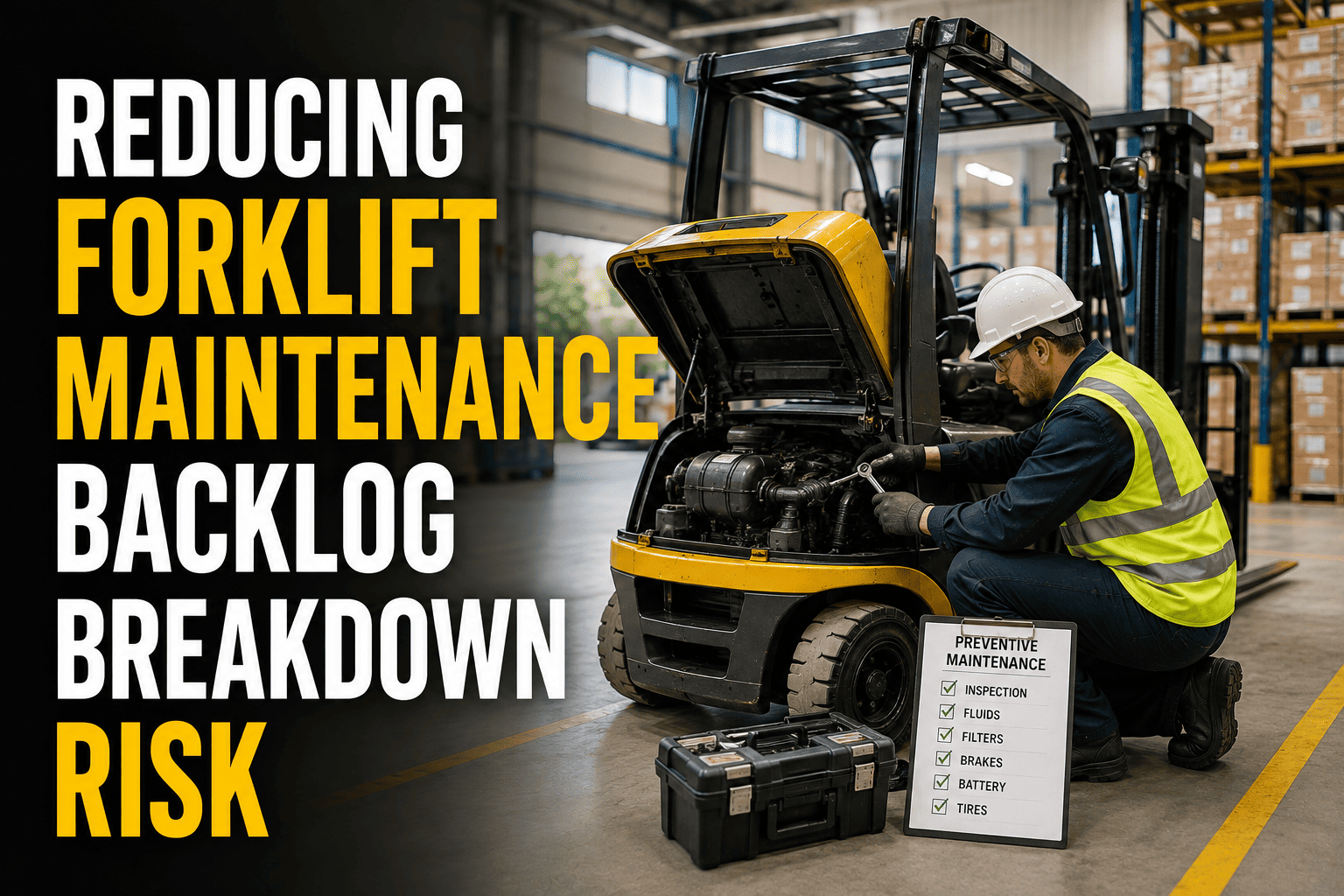
Every plant has a maintenance backlog. The question is whether anyone actually knows what's sitting inside it. Overdue oil changes, a hydraulic leak flagged three inspections ago, a fault code someone meant to follow up on, a work order that's been "open" since last month. None of it looks urgent on any single day. Together, it's the reason a forklift that seemed fine on Monday is being towed off the floor by Friday.
Backlog isn't the real problem. Not knowing which overdue item is about to become a breakdown is. Most maintenance teams sort their backlog by date, which treats a six-month-old cosmetic issue the same as a two-week-old brake concern. Here's how to see the difference before it costs you a truck.
Fleets running below 80 percent PM compliance see 60 to 70 percent more breakdowns than fleets above 95 percent, and the gap widens every week the backlog goes unaddressed.
Why "Overdue by Date" Is the Wrong Way to Prioritize
A backlog sorted purely by how long something has been open tells you nothing about which item is about to take a forklift down. Two work orders opened the same week can carry completely different risk depending on the component involved and how hard that truck is running.
Not All Backlog Carries the Same Risk
A cosmetic paint chip and a hydraulic pressure warning can both sit in the same queue, sorted by the date they were logged, with no indication of which one actually threatens uptime. Industry data on backlog composition suggests roughly a third of items in a typical queue are meaningful risk buried under a pile of low-priority noise, which is exactly why date-based sorting leaves teams reacting to whatever surfaces loudest instead of whatever matters most.
The Break-Fix Trap Feeding the Backlog
More than half of manufacturing forklift fleets still default to a break-fix model, fixing units only once they fail rather than catching issues from the data available weeks in advance. That default keeps the backlog full, because reactive repairs consume the technician hours that would otherwise go toward clearing scheduled preventive work. Once reactive work crosses roughly 40 percent of total maintenance capacity, backlogs tend to grow further each quarter instead of shrinking, turning a manageable queue into a permanent one. If your team wants to see where your current backlog actually stands, you can book a demo and walk through a risk-based view of your fleet with a FleetRabbit specialist.
FleetRabbit scores every overdue PM, open work order, and reported defect by breakdown risk and downtime cost, so your team always knows what to schedule next.
A Risk-Based Way to Burn Down the Backlog
Instead of a flat list sorted by age, a risk-based queue ranks every overdue item by how much it actually threatens the fleet, so the same hour of technician time goes to the highest-risk work first.
Repeat fault codes on a high-utilization unit
A component flagged more than once on a truck running near the top of the fleet's utilization range should move to the front of the queue regardless of when it was first logged.
Overdue preventive service on a moderately used unit
A missed service interval on a truck running average hours carries real risk, but it can typically wait for the next scheduled maintenance window without immediate danger.
Cosmetic defects and low-utilization unit findings
Items with no safety or breakdown implication, especially on trucks running well below fleet average hours, belong at the back of the queue no matter how long they've been open.
| PM Compliance Level | Breakdown Frequency vs. Best-in-Class |
|---|---|
| Below 80% compliance | 60 to 70 percent more breakdowns than fleets above 95 percent |
| Industry average, roughly 84% | Meaningfully higher breakdown rates than top-performing fleets, with backlog quietly compounding each quarter |
| 95% or higher compliance | The benchmark connected, risk-based maintenance programs typically reach within a few months |
Clearing the Backlog Without Adding Headcount
A plant carrying a backlog of 60 open items across its forklift fleet applies risk scoring instead of date sorting, moving 12 high-risk items to the front of the queue. Within 90 days, facilities taking this kind of risk-prioritized approach typically clear around 40 percent of their most critical backlog and cut unplanned failures by roughly a third, without adding a single technician. The remaining low-risk items stay in the queue, but they stop competing for attention with the work that actually threatens uptime.
None of this requires guessing which item to tackle next. It requires seeing every overdue PM, work order, and defect ranked by the risk it actually carries. Plants ready to see their own backlog this way can sign up and get a prioritized view of their fleet in an afternoon.
Frequently Asked Questions
FleetRabbit ranks every overdue PM, work order, and defect by breakdown risk and downtime cost, so your team always knows what to fix next.