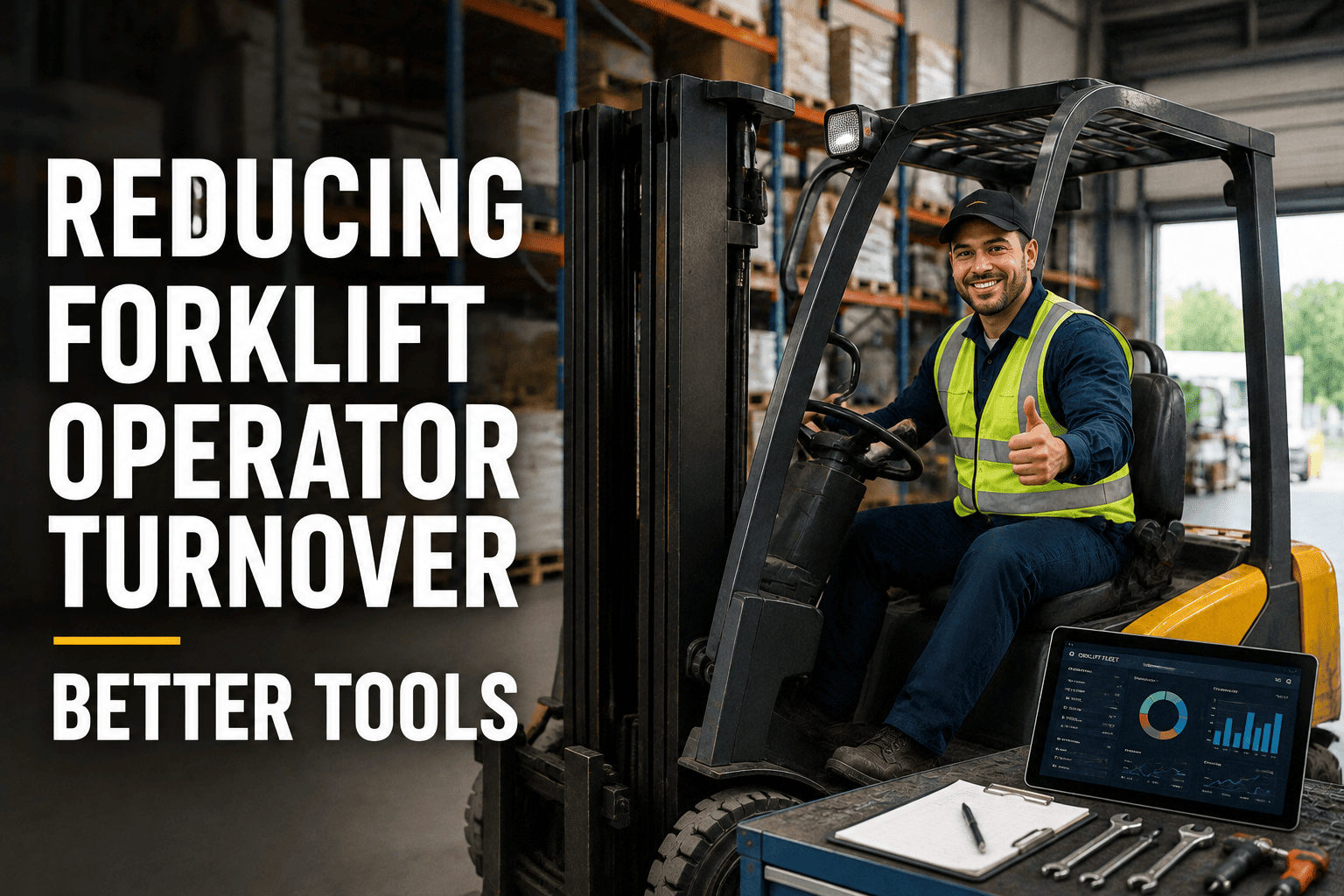
Reducing Forklift Operator Turnover With Better Tools and Fair Data

reducing-forklift-operator-turnover-better-tools

Ask most plant managers why forklift operators quit and you will hear "pay" first. Pay matters, but it is rarely the whole story. Operators also walk away from clunky machines that fight them all shift, scoreboards that feel arbitrary, and a system where the person who worked hardest and the person who cut corners end up looking the same on paper. Warehousing and manufacturing already run some of the highest turnover numbers in the workforce, and every operator who walks out the door takes weeks of training investment with them.

Quick Answer

Annual turnover among forklift operators regularly runs 35 to 45 percent, and warehousing overall trends above 40 percent industry wide. Much of it traces back to fatigue from outdated equipment, unfair or unclear performance scoring, and a lack of recognition. Giving operators fast, accurate tools and transparent, fair data is one of the most direct ways to make the job less frustrating and keep good operators from walking.

Why Operators Actually Leave

Exit interviews rarely stop at pay. When operators are asked directly, a handful of frustrations come up again and again, and most of them have nothing to do with wages.

Unfair or Unclear Scoring
When performance numbers are inconsistent or feel arbitrary, operators lose trust in the system fast, even if they are actually doing well.
Worn Out, Clunky Equipment
Outdated forklifts with sluggish controls and no visibility into faults increase physical strain and daily frustration on every shift.
No Recognition for Good Work
The operator who runs clean shifts and hits every check often gets the same treatment as one who does the bare minimum, with nothing to show the difference.
Safety Concerns Left Unaddressed
Near misses and unsafe conditions that get reported but never followed up on send a clear message that safety is not really a priority.
Keep Your Best Operators
Fair Tools Build Loyal Teams

FleetRabbit gives every operator fast, accurate tools and transparent performance data, so good work actually gets seen. Sign up free and see the difference on your next shift.

35-45%
Typical Operator Turnover
20-30%
Productivity Dip Per Replacement

What Losing an Operator Really Costs

Every departure sets off a chain reaction that goes well beyond posting a new job listing. Recruiting, certifying, and ramping up a replacement operator takes weeks, and the fleet feels the gap the entire time.

40%+
Industry Average Warehouse Turnover
20-30%
Productivity Loss During Replacement
Weeks
Time to Certify and Ramp a New Operator
Higher
Injury Risk From Undertrained Replacements

Old Habits vs a Fair, Fast System

The difference between an operator who feels supported and one who feels tracked usually comes down to how the tools around them work day to day.

The Old Way
  • Paper checklists that go missing or get filled out at the end of the shift from memory
  • Performance reviewed once a quarter, long after anyone remembers the details
  • One fleetwide average that hides who is actually doing the work
  • Faults and near misses reported verbally and easily forgotten
The FleetRabbit Way
  • Digital pre-shift checks completed in minutes, right from the truck
  • Performance visible continuously, so good weeks are never lost in a quarterly average
  • Individual operator data that recognizes consistent, careful work
  • Safety events logged instantly and routed for real follow-up

Why Transparency Changes Behavior

Operators do not need to be treated gently, they need to be treated fairly. When performance data is accurate, visible, and applied the same way to everyone on the floor, disputes over scoring drop and trust in leadership goes up. That single shift, from opaque tracking to transparent tracking, is often enough to turn a frustrated operator into a long-term one.

How FleetRabbit Supports Operator Retention

✓
Faster daily checks. Digital pre-shift inspections replace paper forms, cutting the time operators spend on admin before they can start work.
✓
Real-time fault visibility. Mechanical issues get flagged and routed to maintenance immediately, instead of operators fighting a truck that never gets fixed.
✓
Consistent, individual scoring. Every operator is measured against the same standard, so hard work is visible and recognized instead of averaged away.
✓
Safety events that get followed up on. Reported hazards are tracked to resolution, showing operators their concerns are taken seriously.

If your plant has struggled to keep experienced operators past their first year, the fix rarely starts with a bigger raise. It usually starts with the tools they use every single shift. You can sign up for a free trial and put fair, fast tools in front of your team this week, or book a short demo to see how the scoring and inspection workflow looks from an operator's seat.

QWhat is a typical turnover rate for forklift operators?
Forklift operator turnover commonly runs between 35 and 45 percent annually, with warehousing overall trending above 40 percent, well ahead of the average across most industries.
QDo operators really quit over equipment and tools, not just pay?
Yes. Fatigue from outdated equipment, unclear scoring, and a lack of recognition are consistently cited alongside pay as reasons operators leave, and they are far easier for a facility to fix quickly.
QHow does fair performance data reduce turnover?
When scoring is consistent and visible to everyone, operators trust that hard work gets recognized instead of averaged into a fleetwide number. That trust reduces the frustration that often leads to resignations.
QWhat does replacing a forklift operator actually cost a facility?
Beyond recruiting and certification time, facilities typically see a 20 to 30 percent productivity dip during the replacement period, along with higher short-term injury risk from undertrained new hires.
QCan a fleet management platform actually improve operator morale?
Yes. Faster daily checks, real-time fault reporting, and transparent individual scoring remove several of the daily frustrations operators experience, which directly supports morale and retention.
QIs this only useful for large fleets with many operators?
No. Even a small team of operators benefits from fair, transparent tracking, since trust and recognition matter regardless of fleet size, and smaller teams often feel the loss of one experienced operator the hardest.
Give Your Operators a Reason to Stay

Fair scoring, fast tools, and equipment that actually works make the job less frustrating and your best operators more likely to stick around. See what that looks like for your fleet with a free trial or a short walkthrough with our team.
August 7, 2026 By John
All Posts

Share This Story, Choose Your Platform!

Latest Posts

Scroll