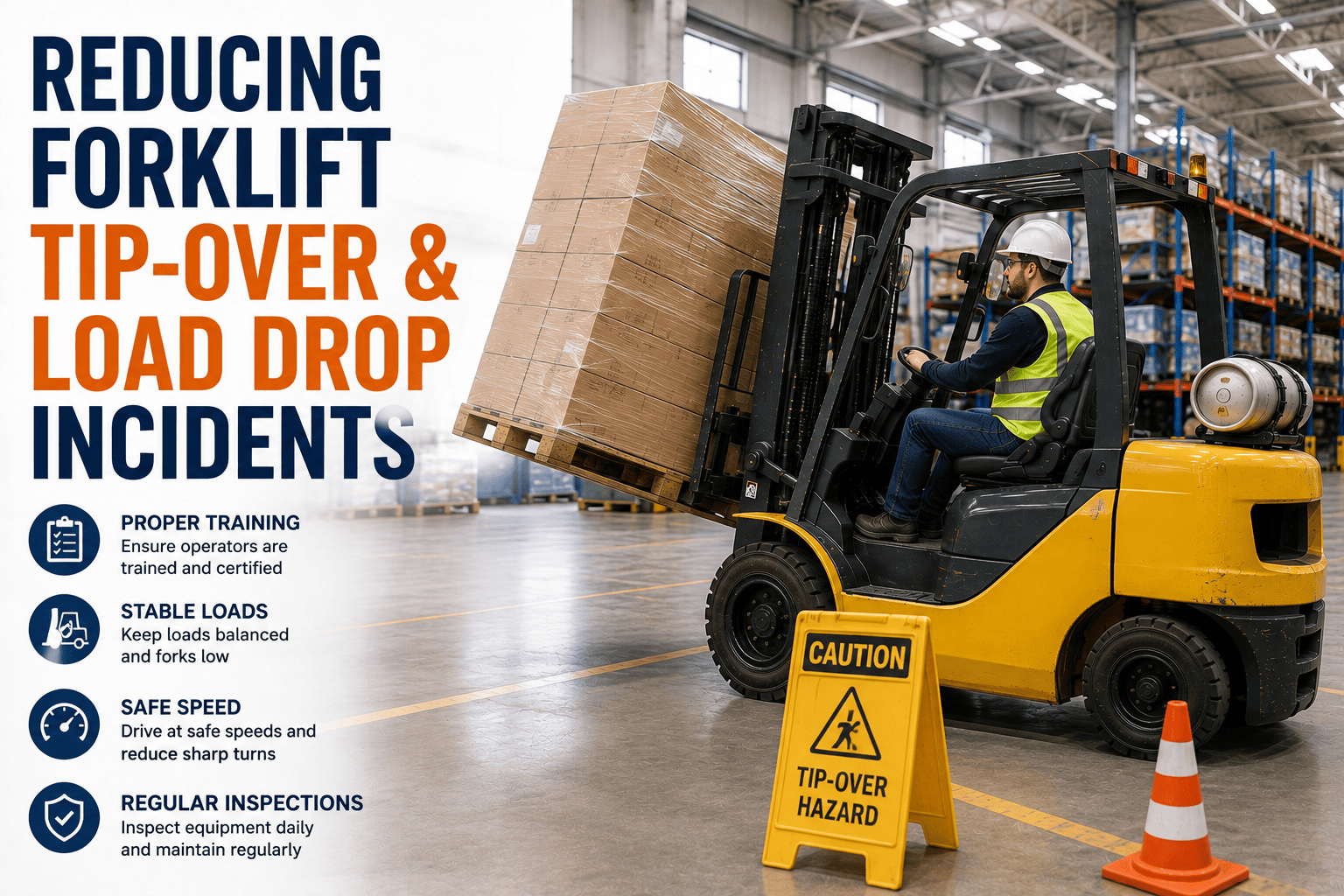
A tip-over happens in under three seconds. There is no time for an operator to react once a forklift's center of gravity crosses the edge of its stability triangle, which is exactly why tip-overs cause roughly a quarter of all forklift-related deaths in manufacturing and warehouse settings. Dropped loads are less often fatal, but they damage product, crush racking, and put anyone standing nearby at risk. Both incidents share the same root cause: a gap between how a forklift is actually being loaded and driven, and how it should be. Closing that gap is a data problem as much as a training problem.
The Real Numbers Behind Tip-Overs And Load Drops
Tip-overs are not a rare, freak occurrence. They are the single most common way a forklift incident turns fatal, and the causes behind them repeat across plants and industries in almost the same order every time.
These figures point to the same conclusion. Most tip-overs and load drops are not caused by a single reckless moment. They build up from small, repeated conditions: a mast that has not been inspected in weeks, a load that was never weighed, an operator taking a corner slightly faster because the aisle is clear today. A plant that wants to bring this number down needs visibility into those small conditions before they stack up into an incident.
Why Forklifts Tip Over In The First Place
Every forklift balances on what engineers call the stability triangle, an invisible zone formed by the front wheels and the pivot point of the rear axle. As long as the combined center of gravity of the truck and its load stays inside that triangle, the forklift stays upright. The moment a load is raised too high, carried off-center, or swung through a fast turn, the center of gravity can shift outside the triangle, and the truck goes over before an operator can correct it.
The Three Conditions That Push A Forklift Past Its Tipping Point
Elevated, Off-Center Loads
Traveling with a raised or unevenly distributed load narrows the stability triangle and makes even a gentle turn enough to tip the truck.
Speed Through Turns
Rear-wheel steering means forklifts behave differently than cars in a turn. Sharp or fast cornering shifts weight outward and past the tipping edge.
Uneven Or Damaged Surfaces
Potholes, ramps, and debris tilt the truck unexpectedly, which is why defective tires and poor floor conditions are tied to a meaningful share of tip-overs.
Load drops trace back to a related set of habits: masts tilted too fast, loads exceeding rated capacity, and forks that were never fully engaged before lifting. Neither problem is solved by a single training session. Both need ongoing visibility into how loads are handled and how equipment is performing, which is where most manual safety programs quietly fall behind.
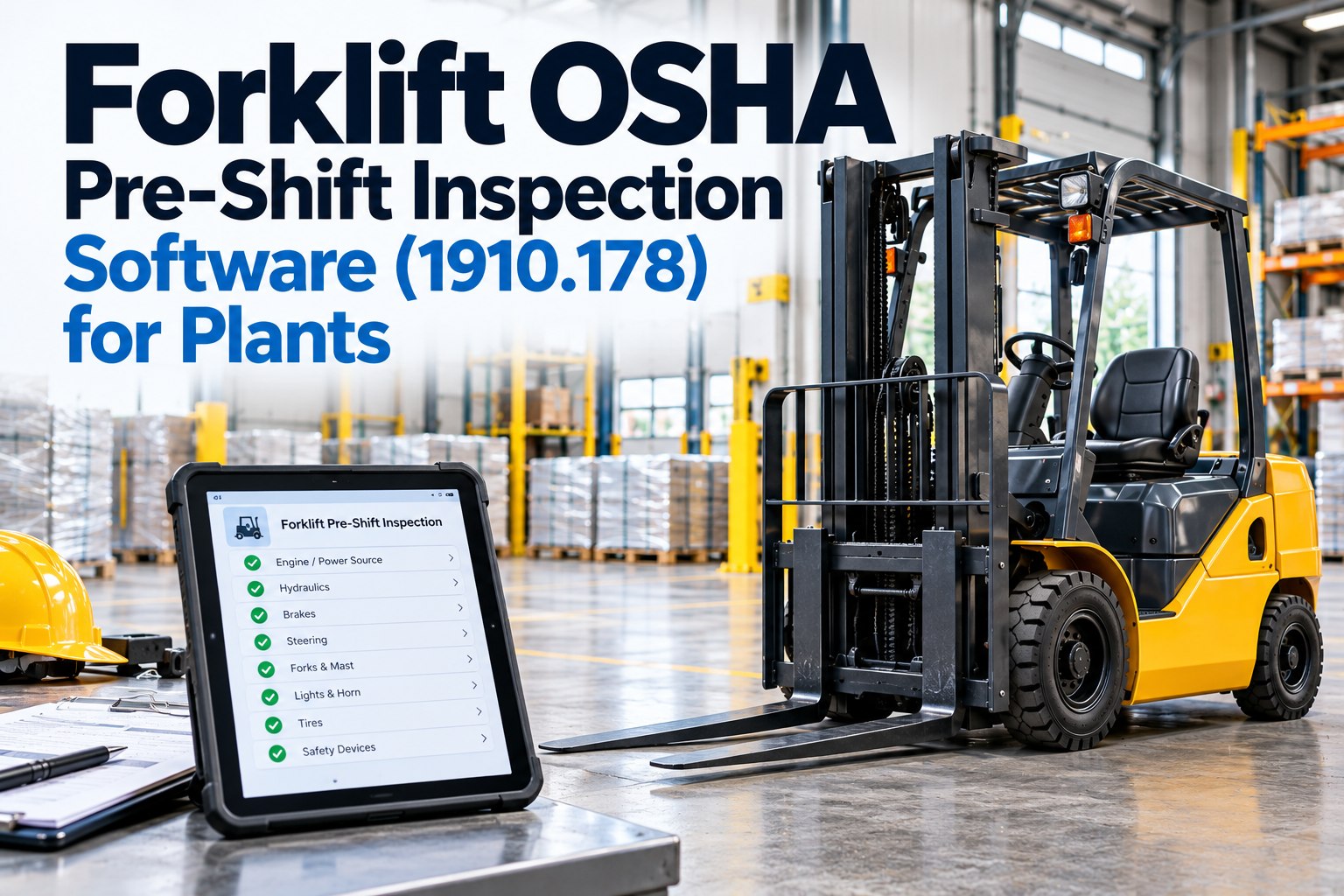
FleetRabbit logs pre-shift inspections, load and maintenance history, and equipment condition in one place, so plants can spot the exact conditions behind tip-overs and load drops before they cause an incident. Sign up to run it on your own floor, or book a walkthrough with our safety team.
Tip-Over Versus Load-Drop: Warning Signs And Fixes
Tip-overs and load drops look similar on an incident report, but the warning signs that precede them are different, and so is the fix. Knowing which pattern you are looking at changes where you focus your prevention effort.
| Incident Type | Common Warning Sign | Underlying Condition | Practical Fix |
|---|---|---|---|
| Tip-Over On A Turn | Operator regularly travels with mast raised | Elevated center of gravity narrows stability margin | Enforce lowered-load travel and conservative speed zones |
| Tip-Over On A Ramp | Truck leans or tires show uneven wear | Surface grade combined with worn or defective tires | Inspect tires and surfaces on a fixed schedule, not after damage appears |
| Load Drop On Lift | Forks not fully seated before raising | Rushed pickup skips the engagement check | Build a mandatory fork-engagement check into every lift |
| Load Drop On Tilt | Mast tilted quickly at height | Fast tilt shifts load balance suddenly | Set tilt-speed limits and retrain on gradual mast control |
Building A Prevention System That Actually Holds Up
Most plants already have a safety policy. The ones that go years without a tip-over or load-drop incident have something more specific: a system that catches small deviations from that policy before they become a pattern. That system usually comes down to four habits, tracked consistently rather than reviewed once a year.
Why Data Beats A Poster On The Wall
A safety poster reminds an operator what to do. It does not tell a plant manager which truck has failed three pre-shift inspections this month, or which aisle sees the most near-misses. FleetRabbit's inspection and maintenance tracking gives that visibility automatically, turning scattered paper checklists into a record that actually flags risk before it becomes an incident. You can book a demo to see how the reporting looks against your own fleet.
Frequently Asked Questions
FleetRabbit gives plant managers real visibility into inspections, maintenance, and load-handling patterns across the forklift fleet, so the small warning signs get caught long before they become an incident report. Sign up free to get your first fleet inspection running today, or book a demo to walk through it with our team.