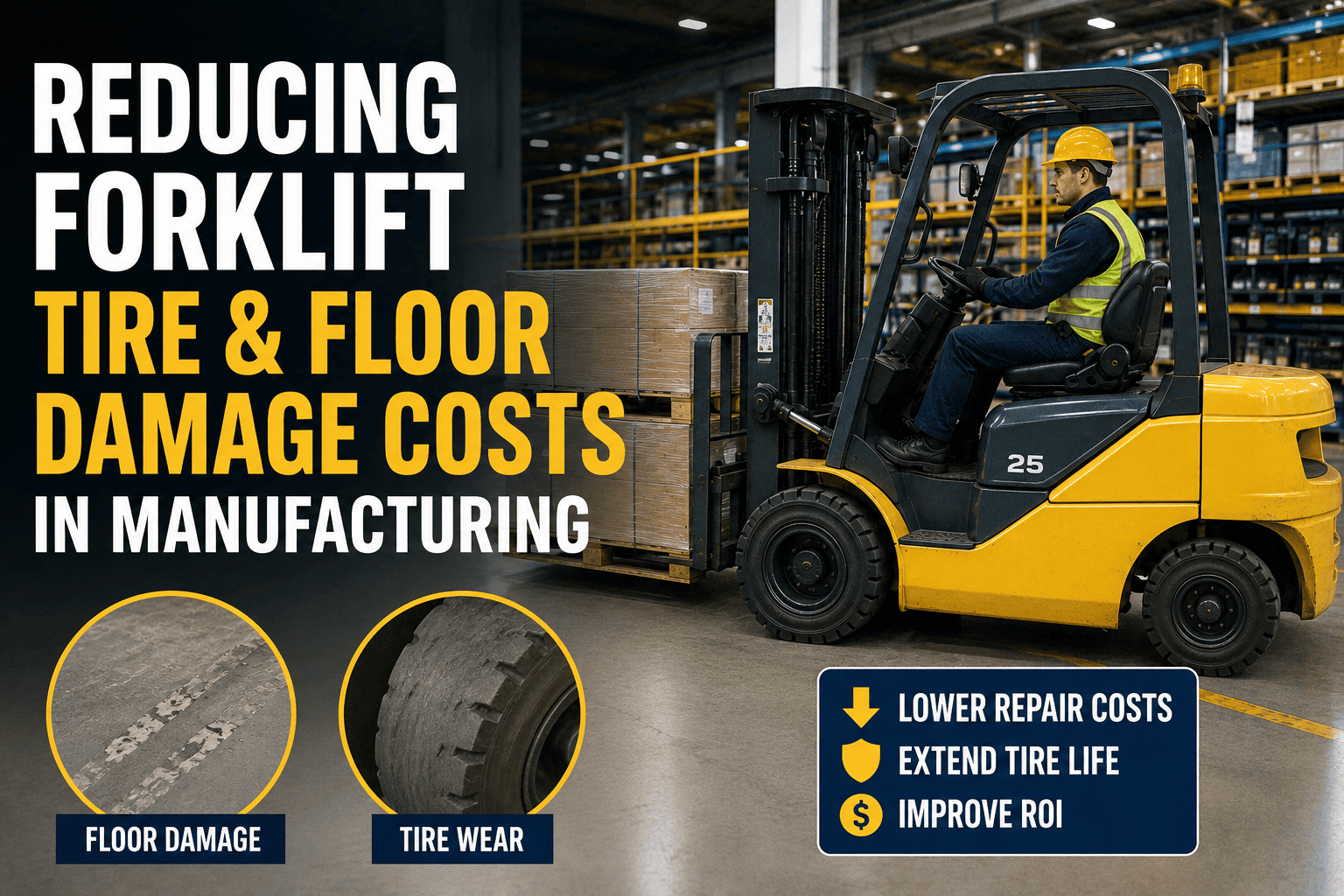
Walk any manufacturing plant floor and you can usually spot the trouble before anyone tells you about it. Ruts near the dock doors. Black scuff trails at every turn. A forklift that rattles louder than it did last quarter. Worn tires and damaged floors feed each other in a cycle that quietly drains plant budgets, and most operations only notice once the repair bill or the safety incident report lands on their desk.
Forklift tires typically need replacement every 2000 to 3000 operating hours, but rough or damaged floors can cut that lifespan in half. Roughly 40 percent of forklift maintenance spend goes toward tires, and about half of those repairs trace back to bad concrete and worn expansion joints. Left unmanaged, worn tires and damaged flooring compound into repair bills that can exceed 18000 dollars per truck when axle, transmission, and mast components take the hit.
Why Tires And Floors Fail Together
Forklift tires and plant flooring are locked in the same feedback loop. A tire is designed to cushion the load, the operator, and the truck itself against the driving surface. When that surface has cracked joints, potholed dock aprons, or embedded debris, the tire absorbs a constant series of small shocks that chew through tread far faster than normal wear. Industry data on forklift maintenance shows tires account for roughly 40 percent of total maintenance activity, and dealers attribute about half of that tire work directly to bad concrete and failing expansion joints.
How Worn Tires Damage The Floor Right Back
The relationship runs both ways. As tread wears down and flat spots or chunking develop, the tire loses its ability to cushion impact. That hard contact transfers directly into the slab, widening hairline cracks, chipping joint edges, and grinding grooves into high-traffic lanes near racking, dock doors, and turning radiuses. A plant that delays tire replacement to save a few hundred dollars often pays several times that in accelerated floor repair within the same year.
The Hidden Multiplier: Vibration Damage
Persistent vibration from worn tires on rough floors does not stop at the tire and the slab. It travels up through the mast, steer axle, and chassis, straining mounting bolts and bearings, and it can shake batteries and electronic components loose over time. That is how a routine tire delay eventually shows up as a five-figure repair line item rather than a routine parts swap.
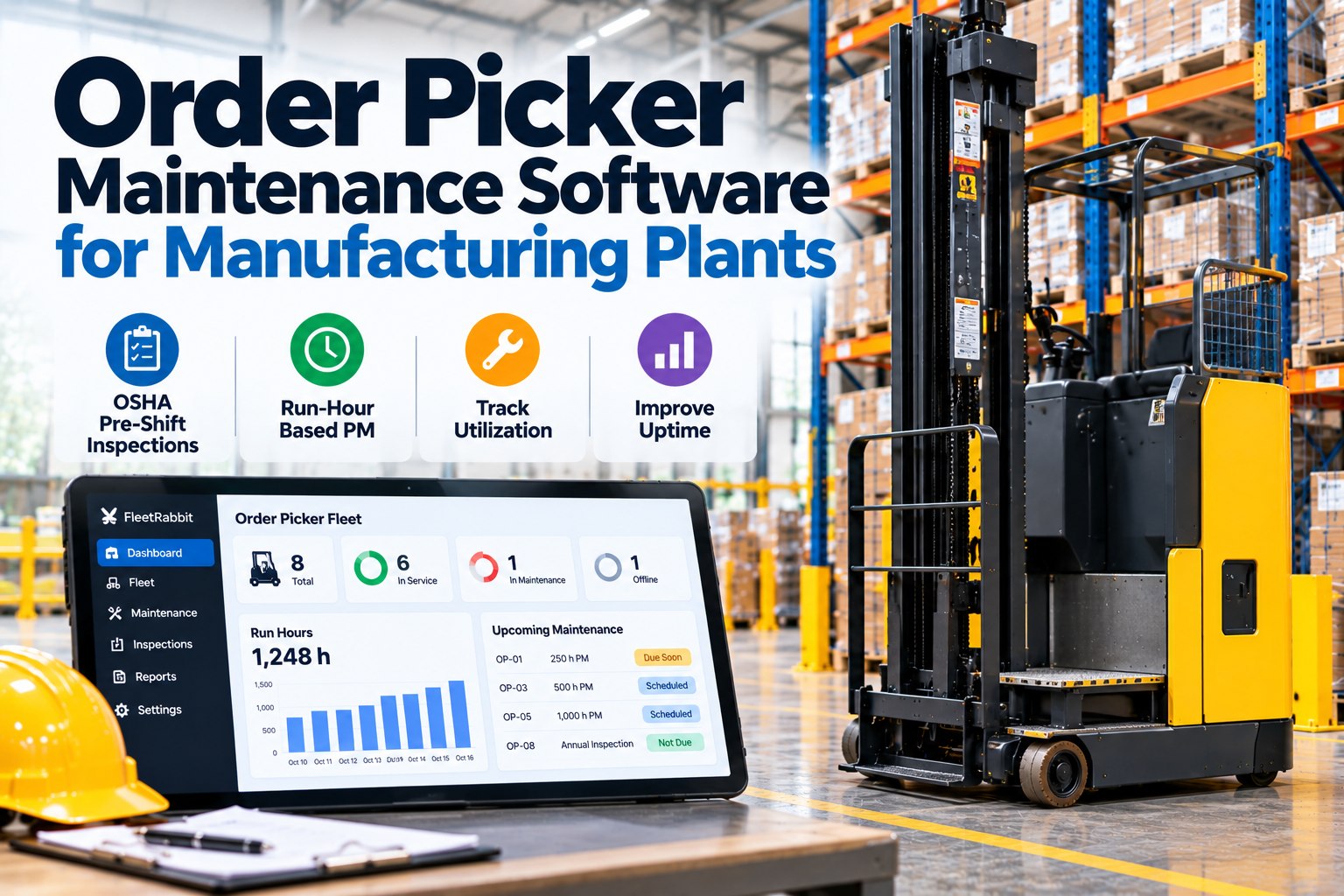
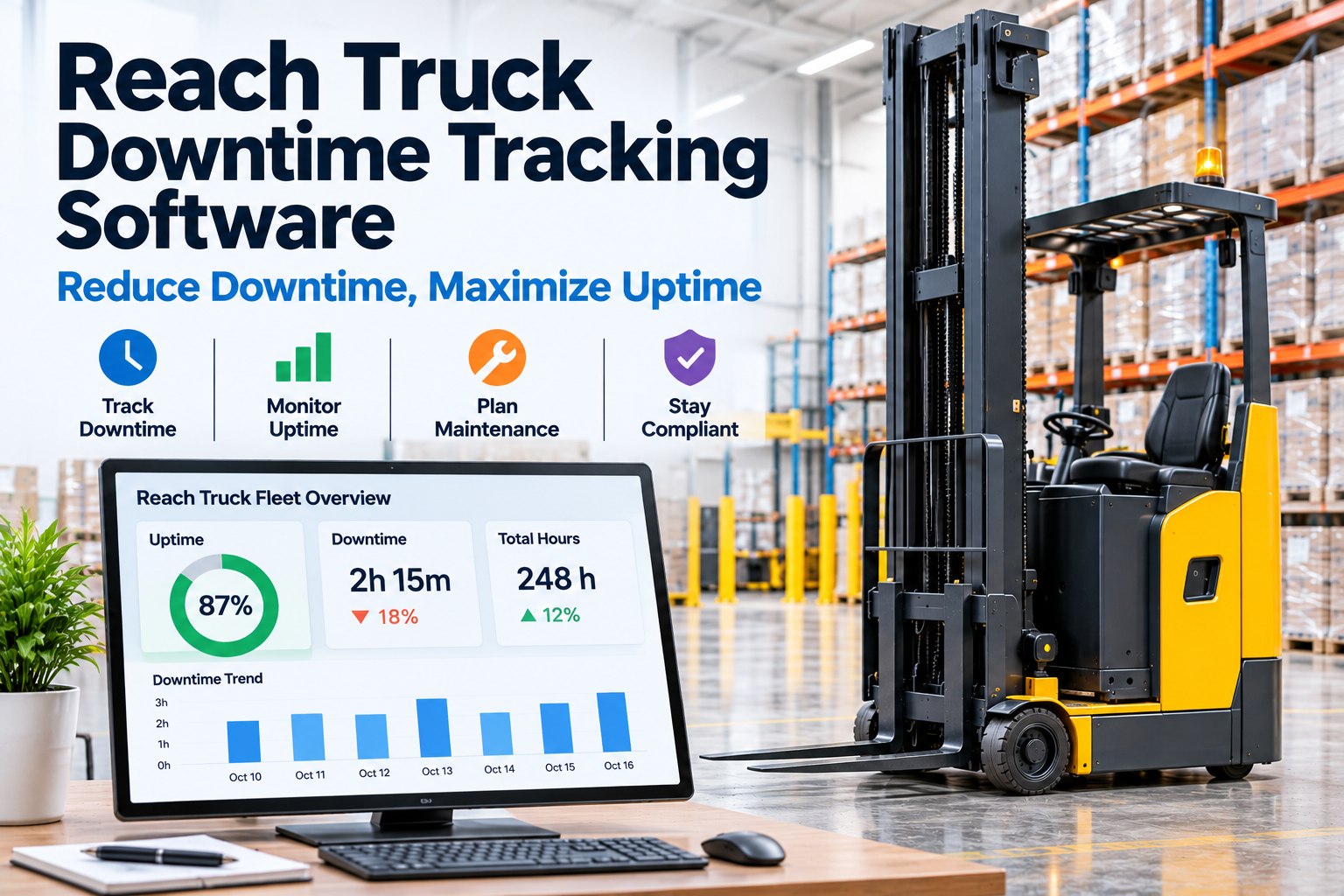
FleetRabbit logs tire condition and replacement intervals per forklift, flags trucks approaching their wear line, and helps you schedule swaps before floors, axles, or masts take the damage. Start your free trial and see your fleet's tire health in one dashboard.
Breaking Down The Cost Per Truck
Understanding where the money actually goes helps plant and maintenance managers prioritize spending correctly. Tire type, floor condition, and how quickly wear gets caught all shift where the dollars land.
| Cost Area | Typical Range | What Drives It | How To Control It |
|---|---|---|---|
| Standard Tire Replacement | 150 to 600 dollars per tire | Tire type, load capacity, and whether non-marking compounds are required | Replace as a matched set and buy on schedule rather than after failure |
| Premature Replacement From Bad Floors | 300 to 1200 dollars extra annually per truck | Cracked joints, debris, potholed dock aprons cutting tire life in half | Track hours-per-tire by truck and flag routes crossing damaged flooring |
| Localized Concrete Repair | 15 to 40 dollars per square foot | Spalled joints, cracked slabs, and rutted lanes from hard tire impact | Repair small damage early before it spreads across a full aisle or bay |
| Cascading Mechanical Damage | Up to 18000 dollars per incident | Mast trunnion, steer axle pivot, and differential wear from prolonged vibration | Replace tires at the wear line, not weeks or months past it |
| Non-Marking Tire Premium | 15 to 25 percent above standard rubber | Required in food processing, pharmaceutical, and clean-room environments | Reserve non-marking compounds for zones that truly require them |
Matching Tire Type To Your Plant Floor
Not every tire belongs in every plant. Cushion tires suit smooth, dry factory floors and are typically the most economical choice for indoor manufacturing. Polyurethane tires resist chunking and tearing better, making them a strong fit for beverage, cold storage, or spill-prone areas. Solid pneumatic tires handle rougher or outdoor-adjacent surfaces at a higher upfront cost but often a lower cost per operating hour once floor damage is factored in. Choosing the wrong tire for your floor condition is one of the most common and most avoidable causes of both premature tire failure and accelerated floor wear.
Signs Your Tire-Floor Combination Is Failing
Chunking, tearing, flat spots, and uneven wear on tires are early warning signs, and so are new cracks, rutting, or chipped joints appearing along the same forklift routes. When both issues show up together, it almost always points to a mismatch between tire type, floor condition, or driving behavior rather than a single faulty part.
Calculating Your Plant's Real Exposure
Start by pulling tire replacement records for the past 12 months and note the average hours each tire lasted before replacement. Compare that against the manufacturer's rated 2000 to 3000 hour lifespan. A meaningful gap signals floor-driven wear. Next, walk high-traffic lanes near dock doors, racking aisles, and turning zones to document cracking, spalling, and rutting, then estimate square footage needing repair at 15 to 40 dollars per square foot. Finally, review maintenance logs for mast, axle, and steering repairs on trucks running the most-damaged routes, since these often carry the largest hidden cost.
A Quick Way To Estimate Annual Impact
Multiply the number of trucks running on compromised floor sections by the extra tire cost per truck, then add estimated concrete repair and any mechanical repairs tied to those same routes. Most plants running 10 or more forklifts on aging concrete find this combined figure is significantly higher than what shows up as a single line item in the maintenance budget.
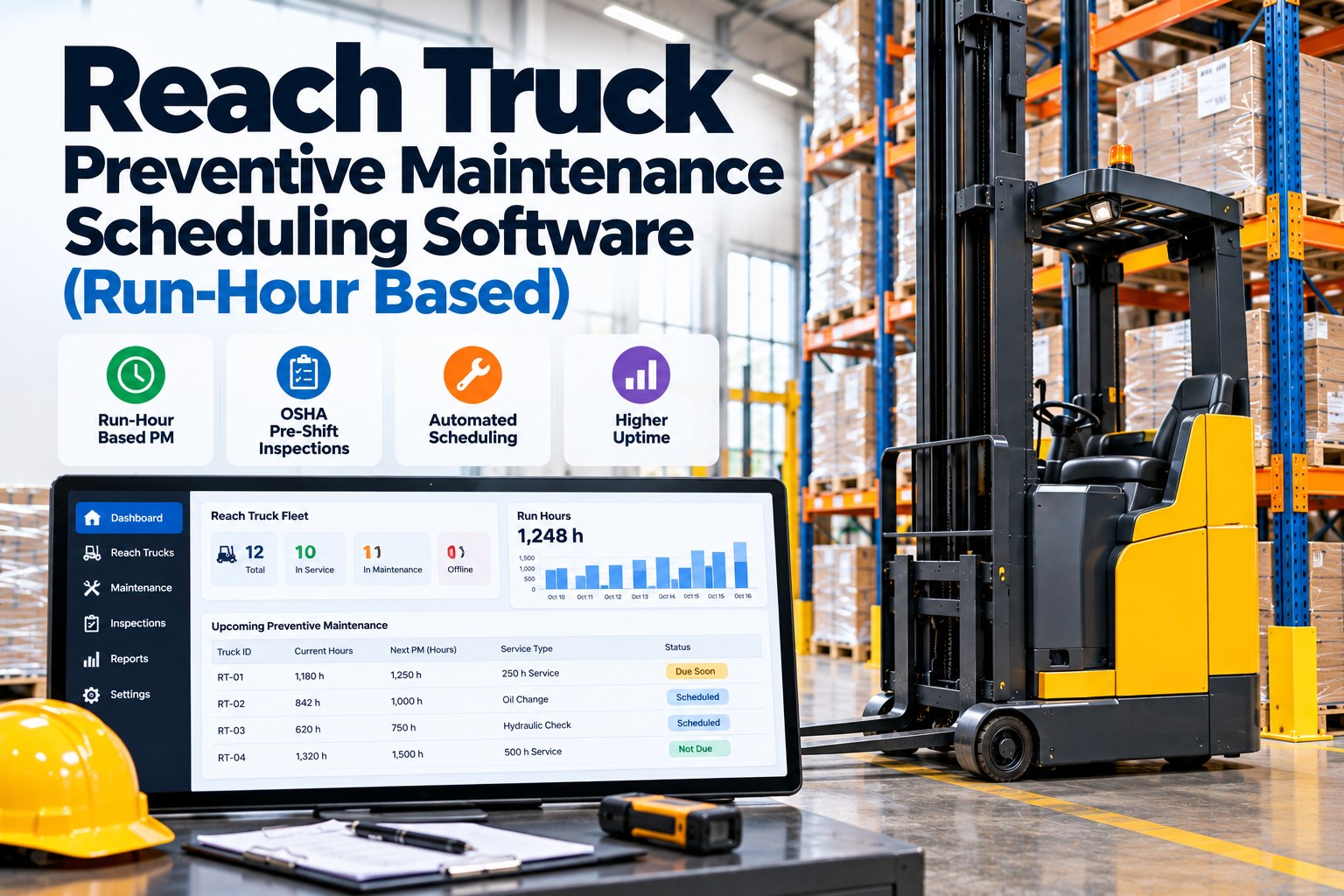
FleetRabbit's maintenance scheduling flags trucks approaching their tire wear line by hours, not by calendar guesswork, and keeps a full repair history per vehicle so you can spot floor-driven wear patterns early. Book a demo and walk through your fleet's data with our team.
Best Practices That Actually Reduce Cost
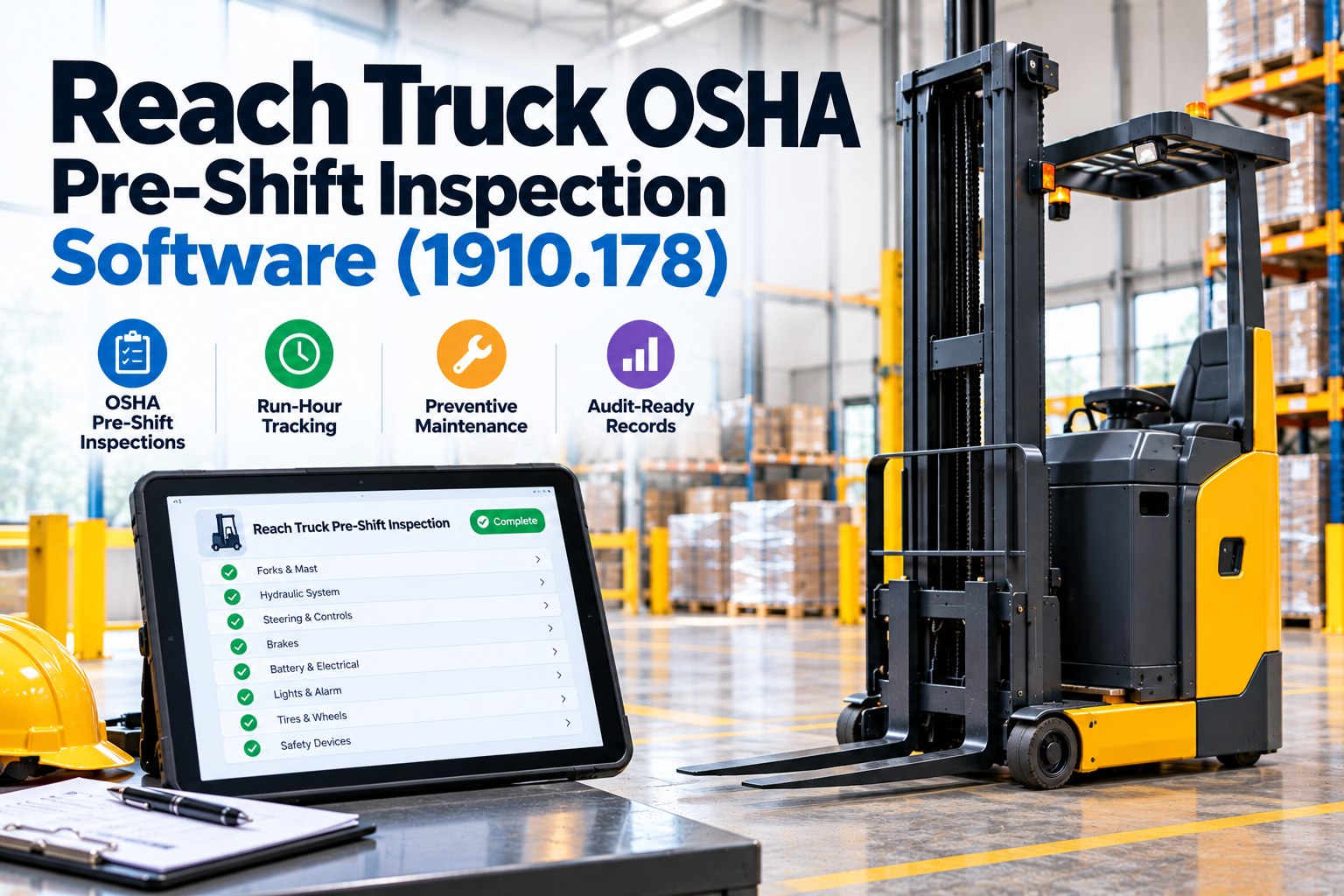
Plants that keep tire and floor damage costs under control tend to do a handful of things consistently rather than relying on any single fix. Pre-shift tire checks catch chunking, tearing, and flat spots before they escalate. Housekeeping programs that clear nails, pallet debris, and grit from aisles protect tread from being ground down. Expansion joint maintenance, including elastomeric fill upkeep or epoxy-lined replacements, removes the transition gaps that chew through tires fastest. Operator training on smooth acceleration and turning reduces the aggressive maneuvers that accelerate both tire and floor wear.
Tracking Hours Per Tire By Truck
Calendar-based replacement schedules miss the reality that not every truck wears tires at the same rate. A truck running dock-to-dock over cracked aprons all shift needs closer monitoring than one operating in a clean, climate-controlled aisle. Tracking actual operating hours per tire, by individual truck, is what lets a maintenance team replace tires right at the wear line instead of guessing.
Frequently Asked Questions
Every tire replaced past its wear line risks floor damage, mechanical repairs, and safety exposure that cost far more than the tire itself. FleetRabbit tracks tire condition by truck so your team replaces on time, every time. Start your free trial today, or book a demo to see it mapped to your fleet.