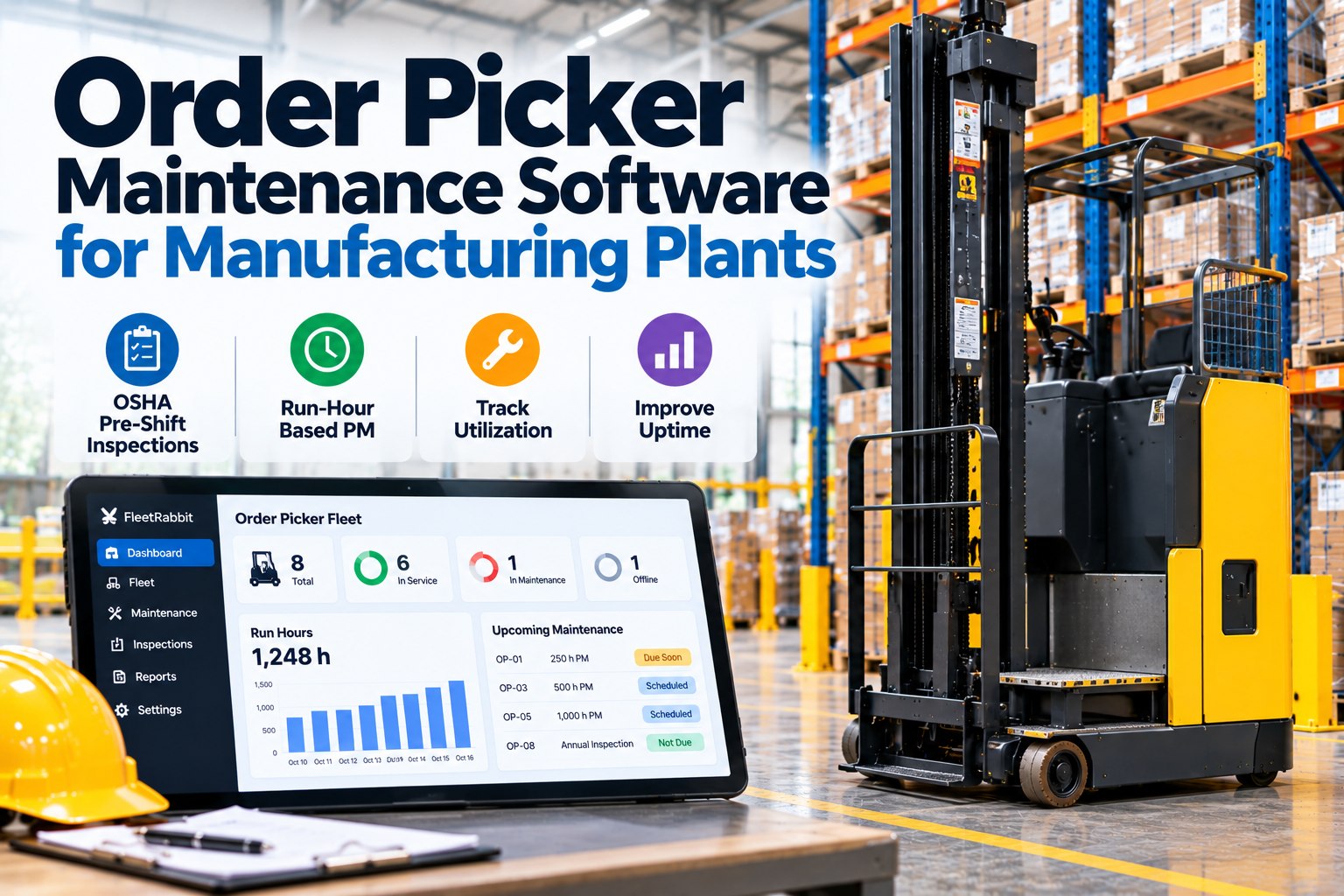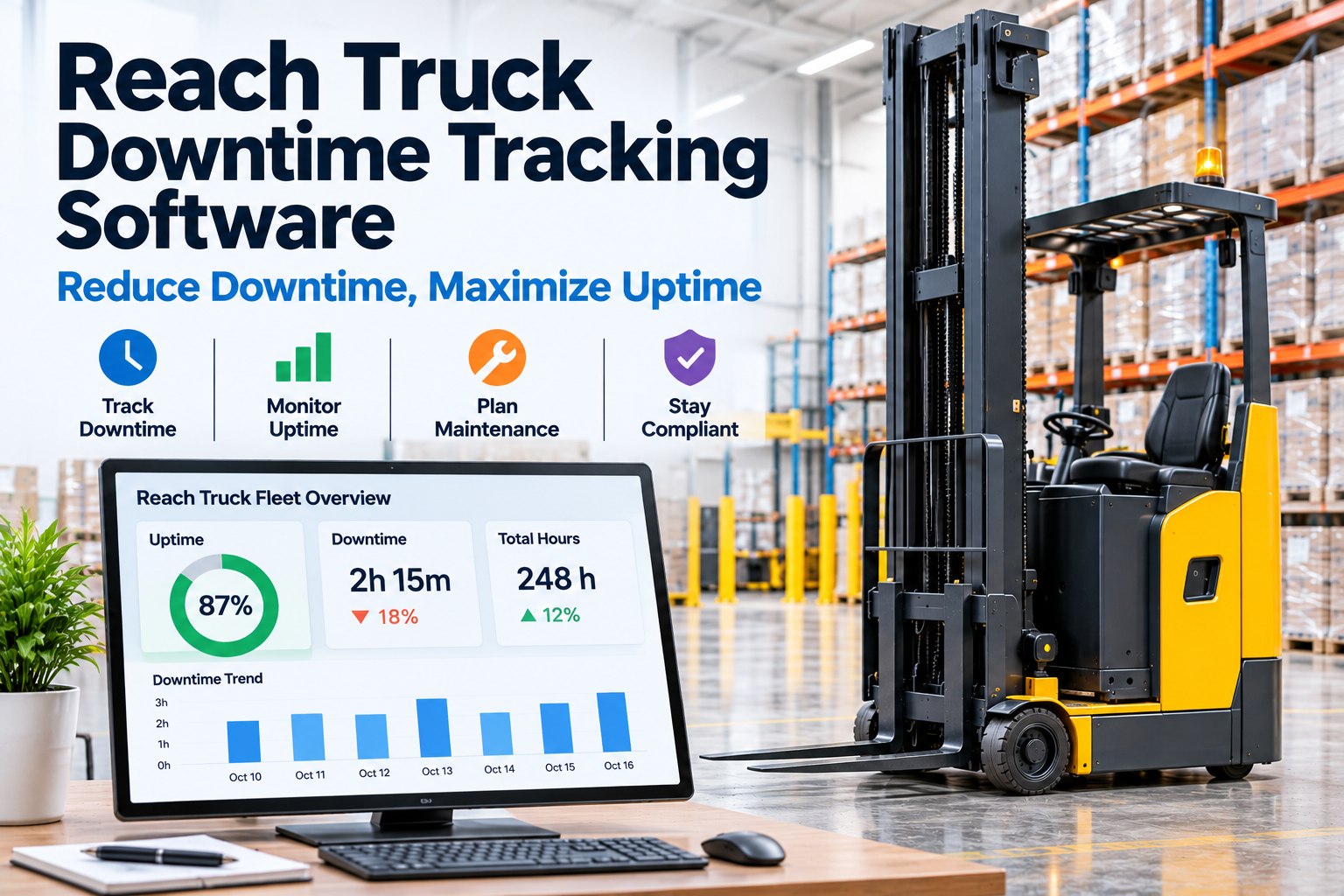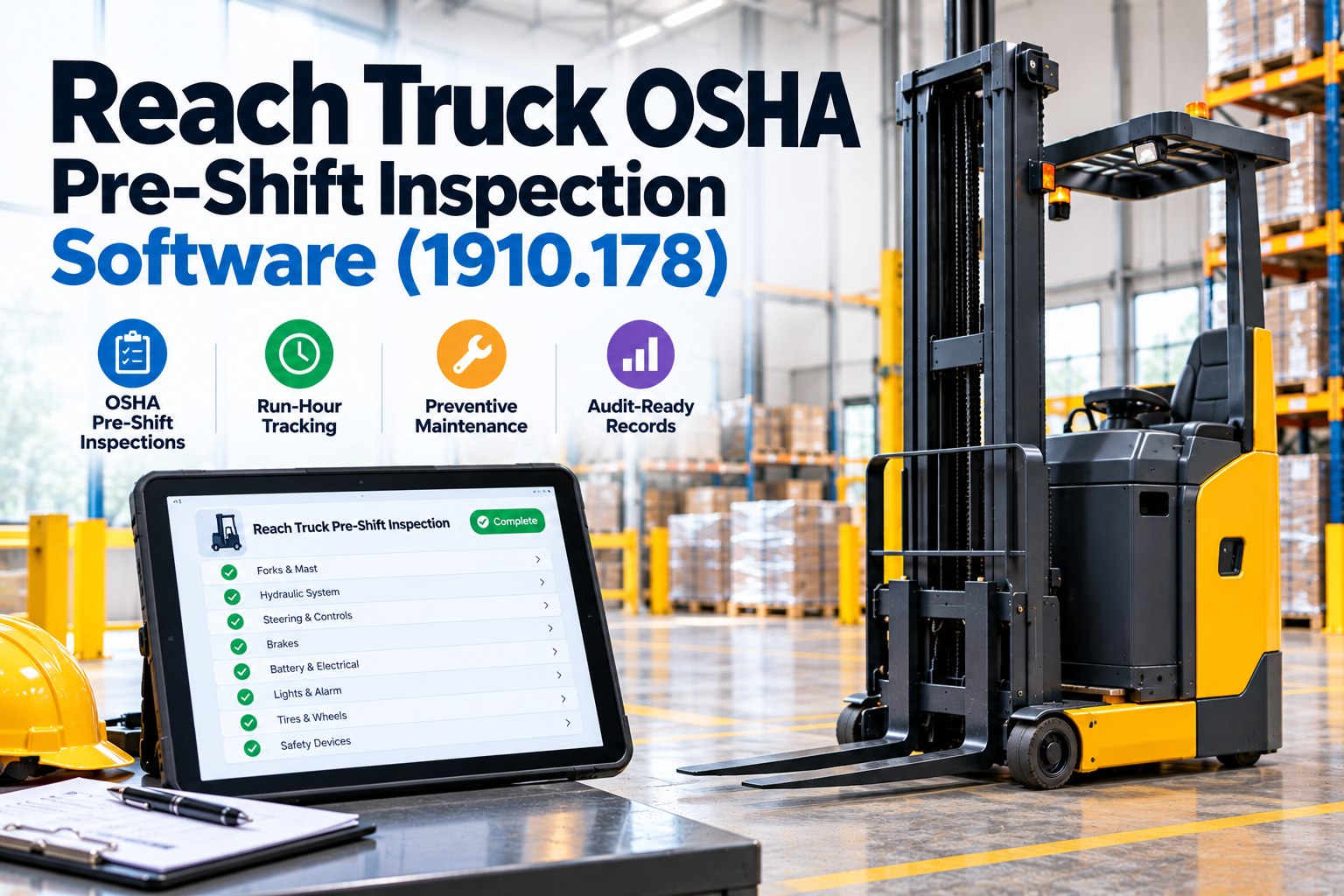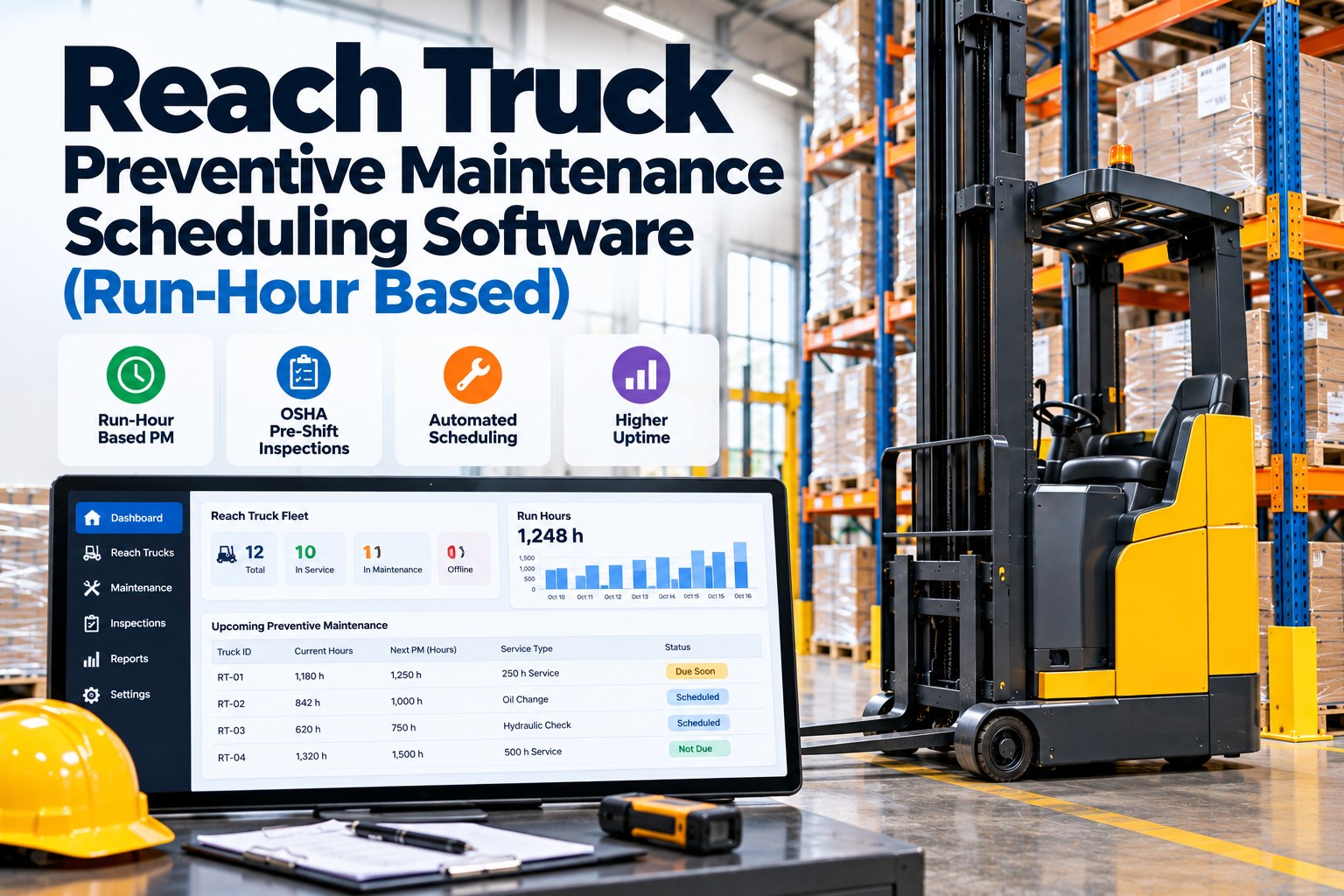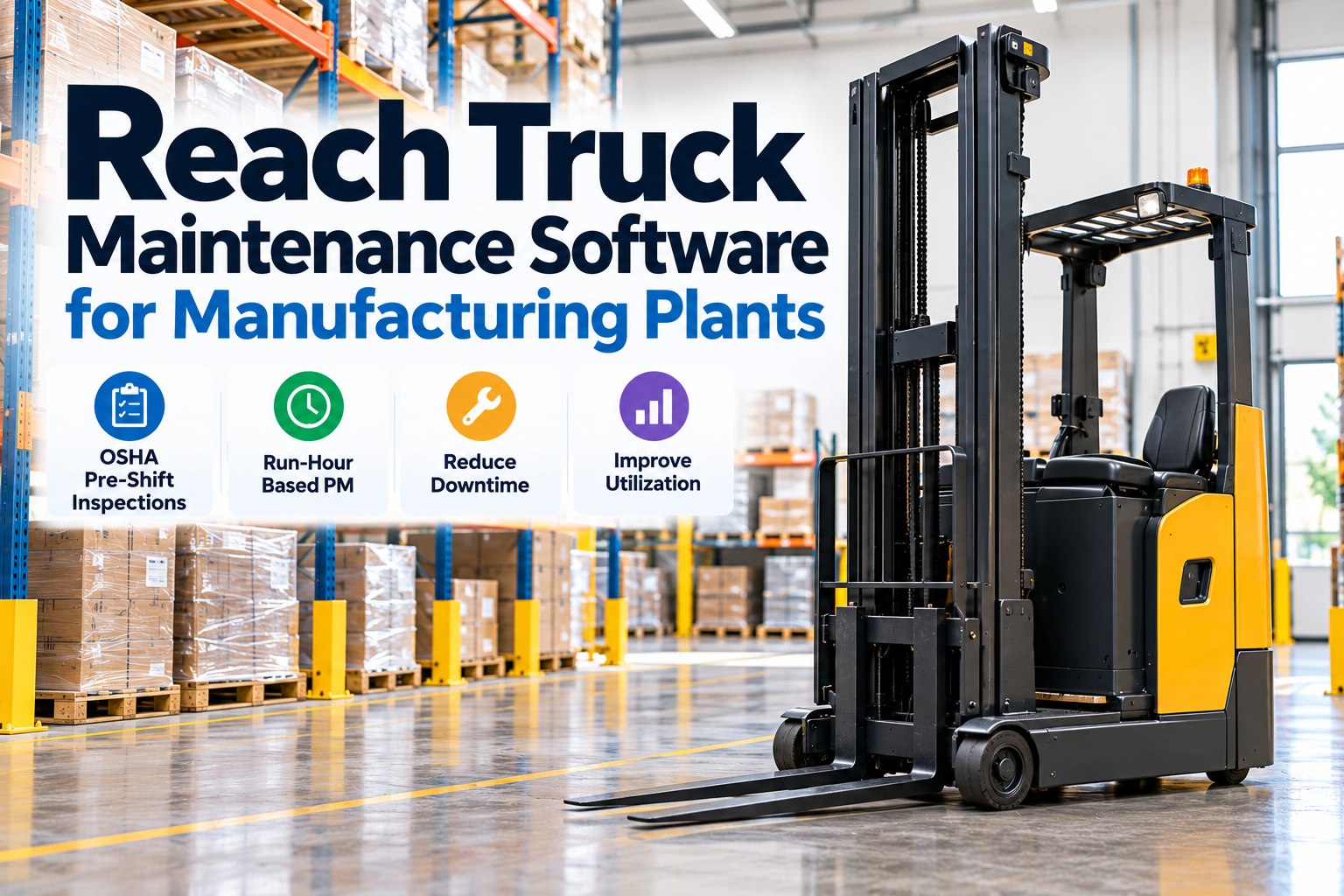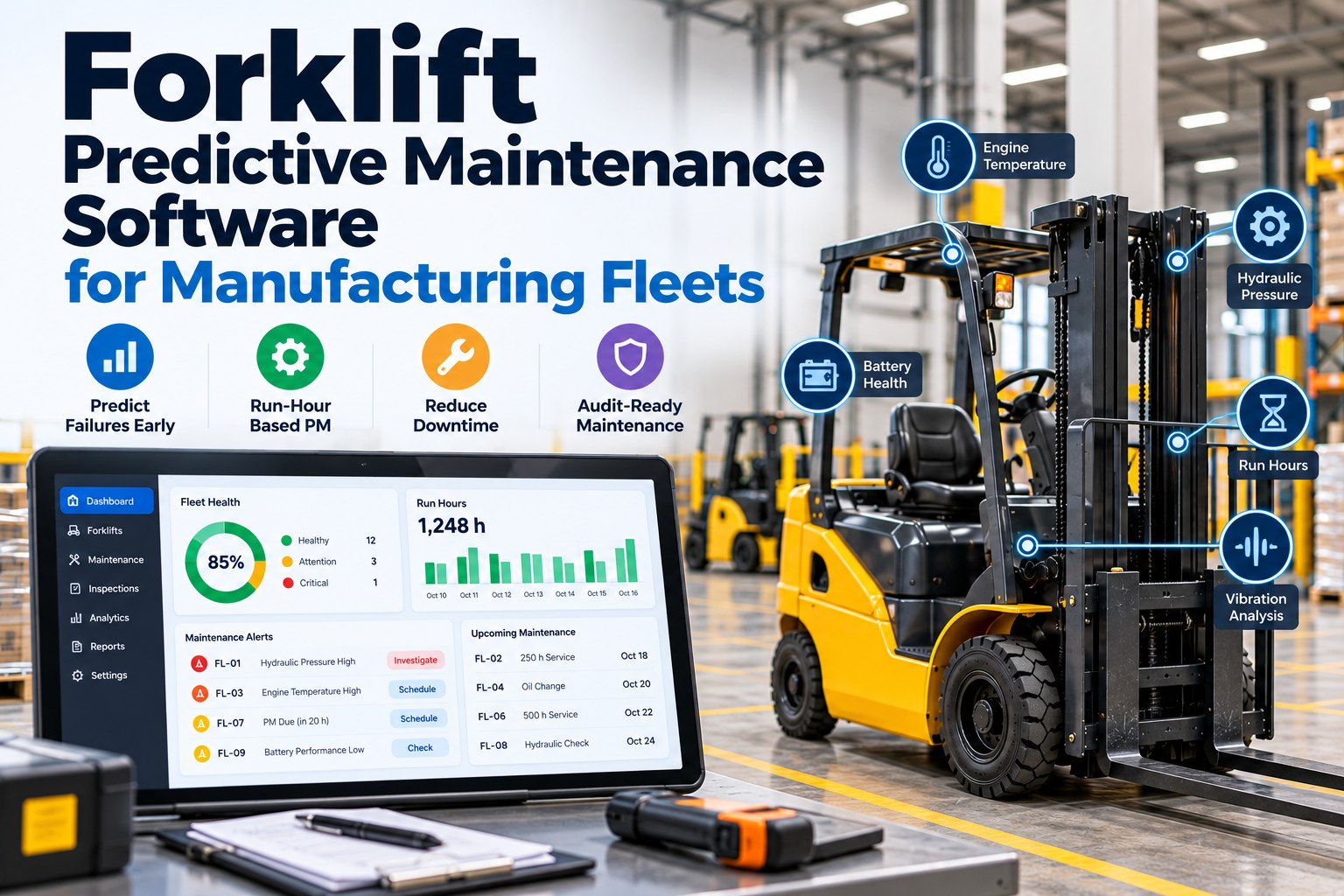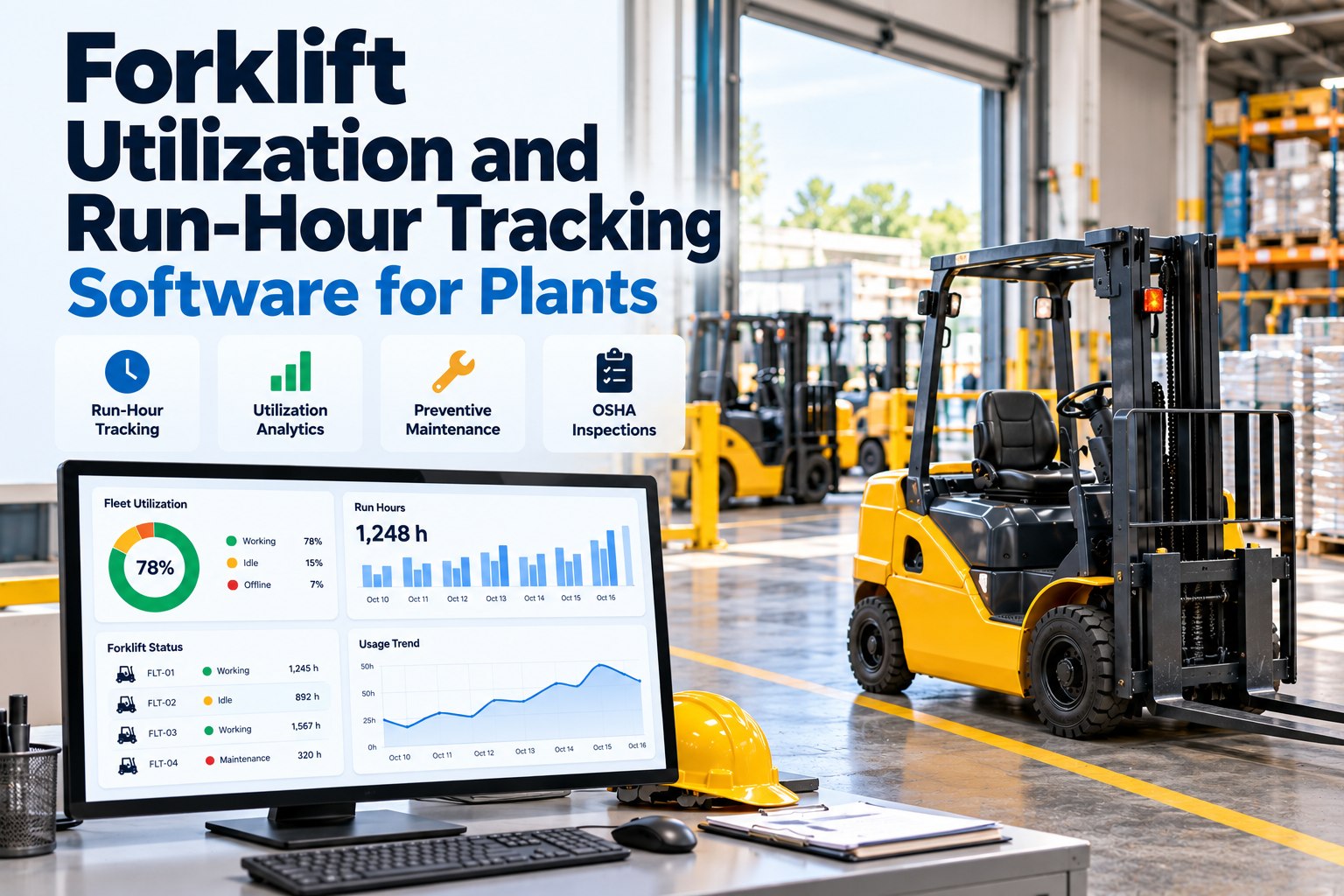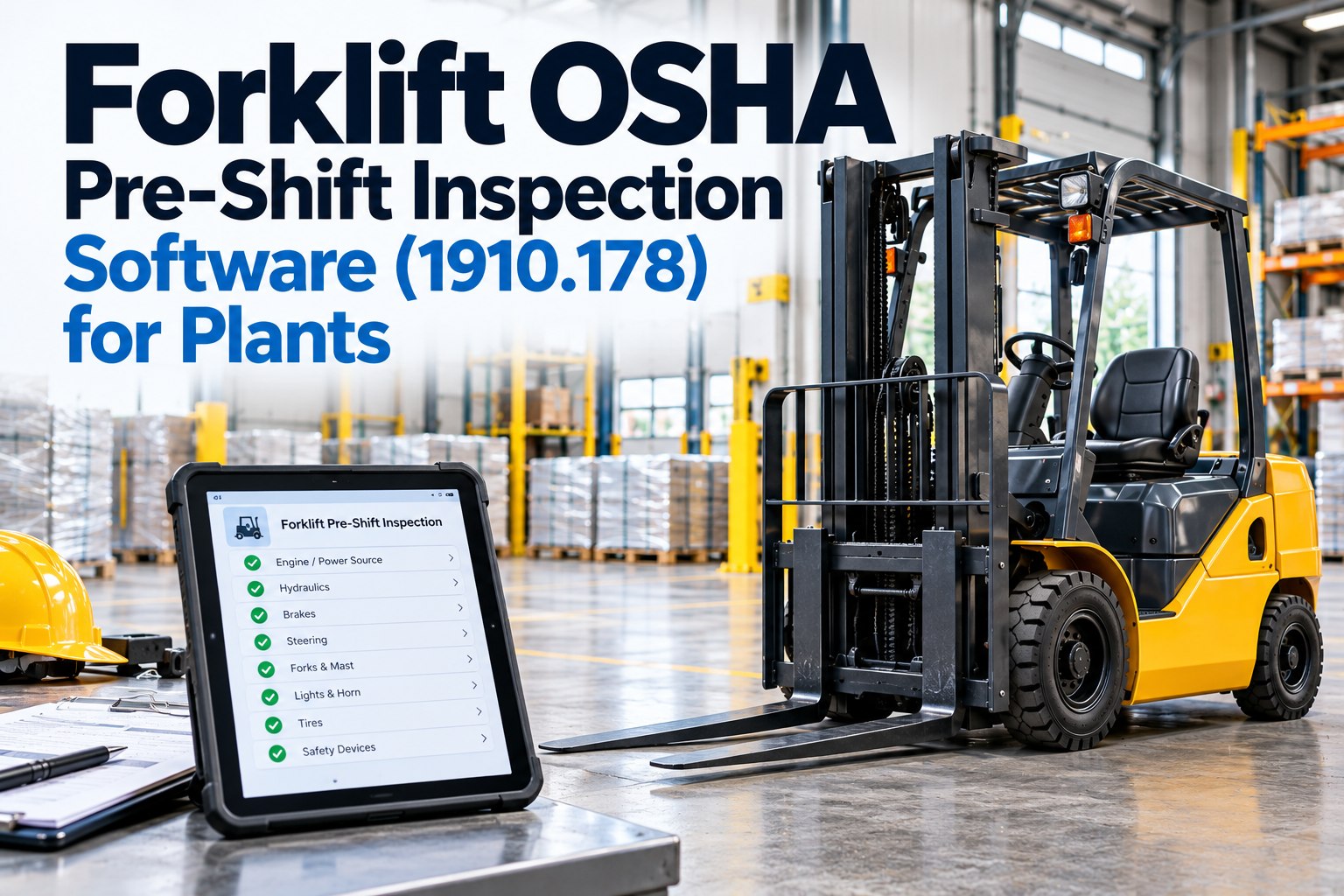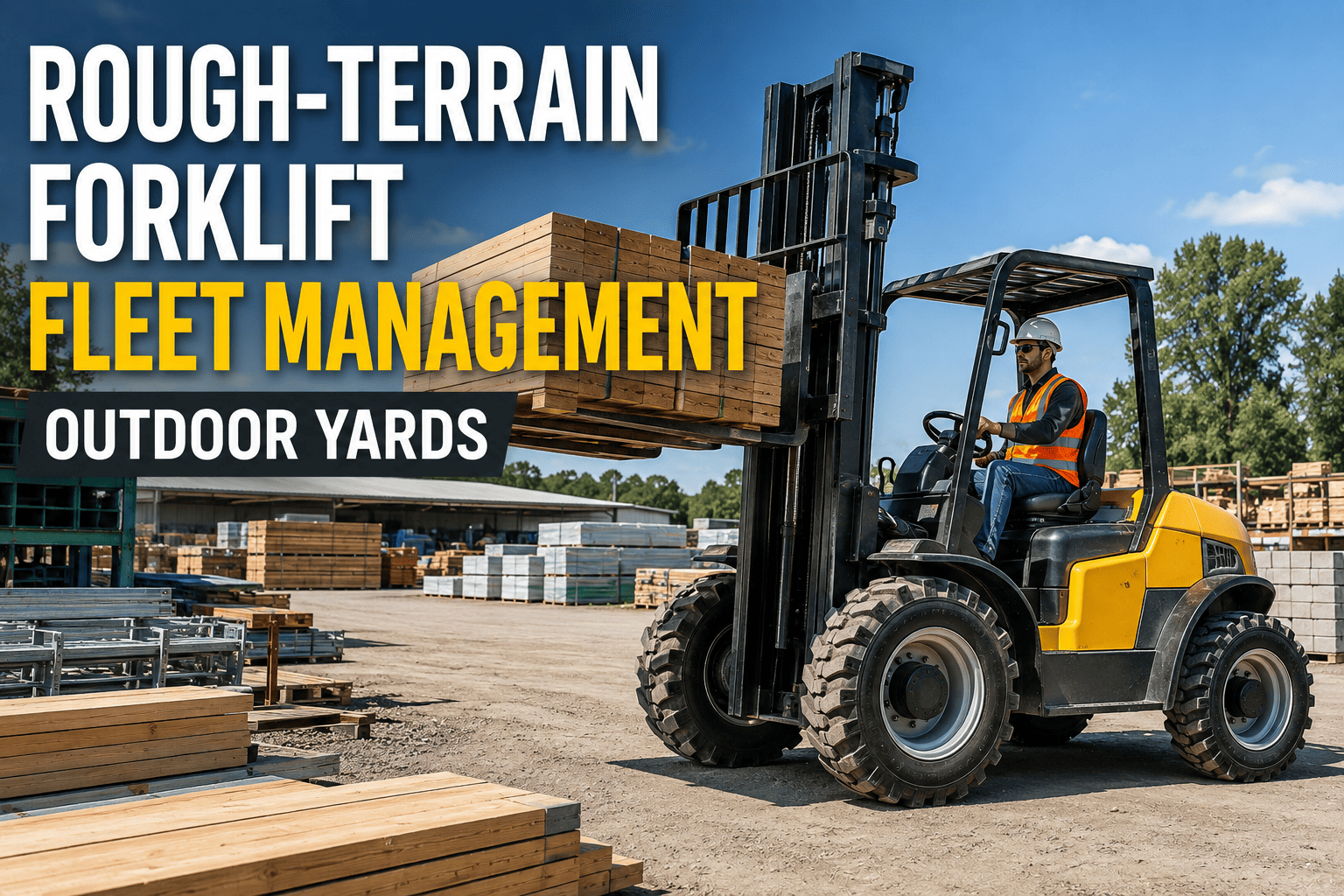
Rough-terrain forklifts live a harder life than almost any other machine in a material handling fleet. While a warehouse forklift glides across smooth, climate-controlled concrete, a Class VII rough-terrain unit spends its shift grinding through gravel, mud, sawdust, and standing water in a lumber yard, scrap yard, or open manufacturing lot. That difference in environment changes everything about how these machines should be inspected, maintained, and tracked.
Yard managers who treat a rough-terrain forklift like an indoor cushion-tire unit usually pay for it later, in the form of blown pneumatic tires, clogged air filters, seized pins, and unplanned downtime during the busiest part of the season. This guide breaks down what actually wears out on outdoor yard forklifts, how often it should be checked, and how a platform like FleetRabbit keeps every unit accounted for without a single missed inspection.
Rough-terrain Class VII forklifts operate on unpaved, uneven, and often wet outdoor ground, which means tires, undercarriage components, and air intake systems wear 2 to 3 times faster than on indoor equipment. Daily walkaround checks plus weekly undercarriage and tire inspections prevent the majority of yard breakdowns. Digital inspection tracking through FleetRabbit keeps every rough-terrain unit compliant and reduces yard downtime significantly.
Why Outdoor Yard Conditions Change The Maintenance Game
A rough-terrain forklift is built differently from the start. Large pneumatic tires, high ground clearance, and a reinforced frame allow it to move loads across lumber stacks, scrap piles, and gravel lots without tipping. But those same design features create maintenance demands that don't exist indoors.
1. Tires Take The Brunt Of The Damage
Pneumatic tires flex and absorb shock on uneven ground, which is exactly why they wear faster than solid cushion tires. Sharp scrap edges, nails in lumber yards, and gravel embed themselves in tread and cause slow leaks that operators often miss until a tire goes flat mid-shift.
2. Dust And Debris Choke Air And Fuel Systems
Outdoor yards generate constant airborne dust, sawdust, and dirt. Air filters that would last months indoors can clog in a matter of weeks in a lumber yard, reducing engine performance and forcing the engine to work harder, which accelerates wear on other components.
3. Weather Exposure Accelerates Corrosion
Rain, humidity, and temperature swings attack exposed hydraulic lines, electrical connections, and undercarriage metal. A forklift parked outdoors year-round corrodes faster than one stored in a covered bay, even with identical usage hours.
Stop Guessing When Your Yard Fleet Needs Service
FleetRabbit tracks every rough-terrain forklift in your yard with digital inspection logs, tire wear alerts, and maintenance scheduling built for outdoor equipment. See exactly which unit needs attention before it breaks down mid-shift.
What To Inspect And How Often
Outdoor rough-terrain equipment needs a tighter inspection rhythm than indoor forklifts. The table below lays out the core inspection points specific to yard and construction-site forklifts, along with the frequency that keeps small issues from turning into shop visits.
| Component | What To Check | Inspection Frequency | Risk If Skipped |
|---|---|---|---|
| Pneumatic Tires | Tread wear, embedded debris, air pressure, sidewall cracks | Daily before shift start | Blowouts, loss of stability on uneven ground |
| Air Filter | Dust buildup, restriction level | Weekly, more often in dry or sawdust-heavy yards | Engine strain, reduced power, higher fuel use |
| Undercarriage And Frame | Cracks, loose bolts, mud or debris packed into moving parts | Weekly | Structural fatigue, steering or lift failure |
| Hydraulic Lines | Leaks, cracking from sun and weather exposure | Weekly | Sudden loss of lift or tilt function |
| Electrical Connections | Corrosion, loose terminals, moisture intrusion | Bi-weekly | Intermittent failures, no-start conditions |
| Brakes | Response time and wear, especially on sloped yard surfaces | Weekly | Rollaway risk on uneven or graded ground |
Building A Yard-Ready Inspection Routine
A written checklist means nothing if it lives in a binder in the yard office. The most reliable outdoor forklift programs move inspections into the operator's daily routine and make the results visible to the maintenance team in real time.
Start Every Shift With A Walkaround
Before the ignition turns, the operator should walk the full perimeter of the machine checking tire condition, visible leaks, and anything loose or damaged from the previous shift. This takes under five minutes and catches the majority of developing issues before they become breakdowns.
Log Every Finding Digitally
Paper checklists get lost, skipped, or filled out from memory at the end of the day. Digital inspection forms accessed from a phone or tablet capture real conditions in real time and flag anything abnormal directly to the maintenance queue.
Track Wear Patterns Over Time
A single flat tire is an incident. Three flat tires on the same unit in a month is a pattern that points to a bigger problem, whether that's terrain, tire pressure, or load handling technique. Tracking history across weeks and months is what turns raw inspection data into decisions.
Rotate Tires On A Set Schedule
Uneven wear across the front and rear tires of a rough-terrain forklift is common given how weight shifts during lifting. Rotating on a fixed mileage or hour interval extends total tire life and reduces the odds of an unplanned flat.
Keep A Spare Parts Buffer For Common Failures
Yards that stock the parts that fail most often, tires, filters, and hydraulic seals, cut repair turnaround time dramatically compared to yards that order parts after a breakdown happens.
Warning Signs A Yard Forklift Needs Attention Now
Some issues can wait for the next scheduled service. Others signal a problem that could strand the machine or put an operator at risk. Recognizing the difference matters most on rough terrain, where a failure rarely happens in a convenient spot.
Why Digital Tracking Matters More Outdoors
Indoor fleets can sometimes get away with loose maintenance habits because the environment is forgiving. Outdoor rough-terrain fleets do not get that luxury. Terrain, weather, and heavier duty cycles mean the gap between a healthy machine and a broken one is much narrower, and it closes faster.
This is where a connected platform changes the outcome. Instead of relying on memory or paper logs scattered across a yard office, teams using FleetRabbit get a live view of every rough-terrain unit, its last inspection, its open maintenance items, and its usage hours, all from one dashboard. Supervisors can assign inspections, set reminders based on hours or calendar days, and see exactly which machine is falling behind before it turns into an unplanned repair. If you manage a yard with multiple Class VII units, it is worth seeing how this looks with your own fleet, and you can book a short demo to walk through it.
Give Your Yard Fleet The Tracking It Deserves
Outdoor equipment breaks down differently than indoor equipment, and it needs a maintenance system built for that reality. FleetRabbit gives yard managers digital inspections, wear tracking, and maintenance alerts made for rough terrain conditions.
Frequently Asked Questions
Your Rough-Terrain Fleet Works Hard. Its Maintenance Should Be Just As Reliable.
Outdoor yard conditions do not slow down, and neither should your inspection process. FleetRabbit keeps every Class VII forklift tracked, inspected, and ready for the next load, no missed checklists, no surprise breakdowns.